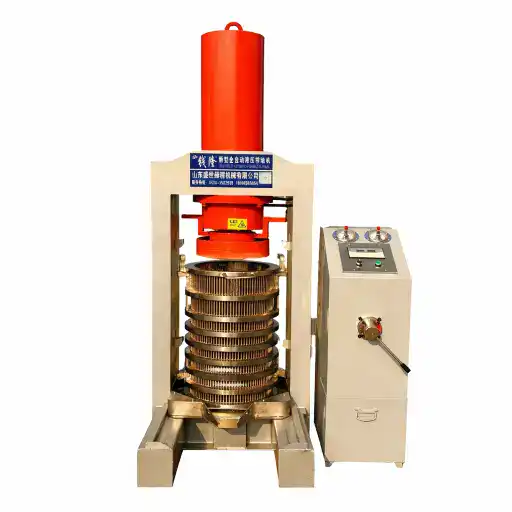
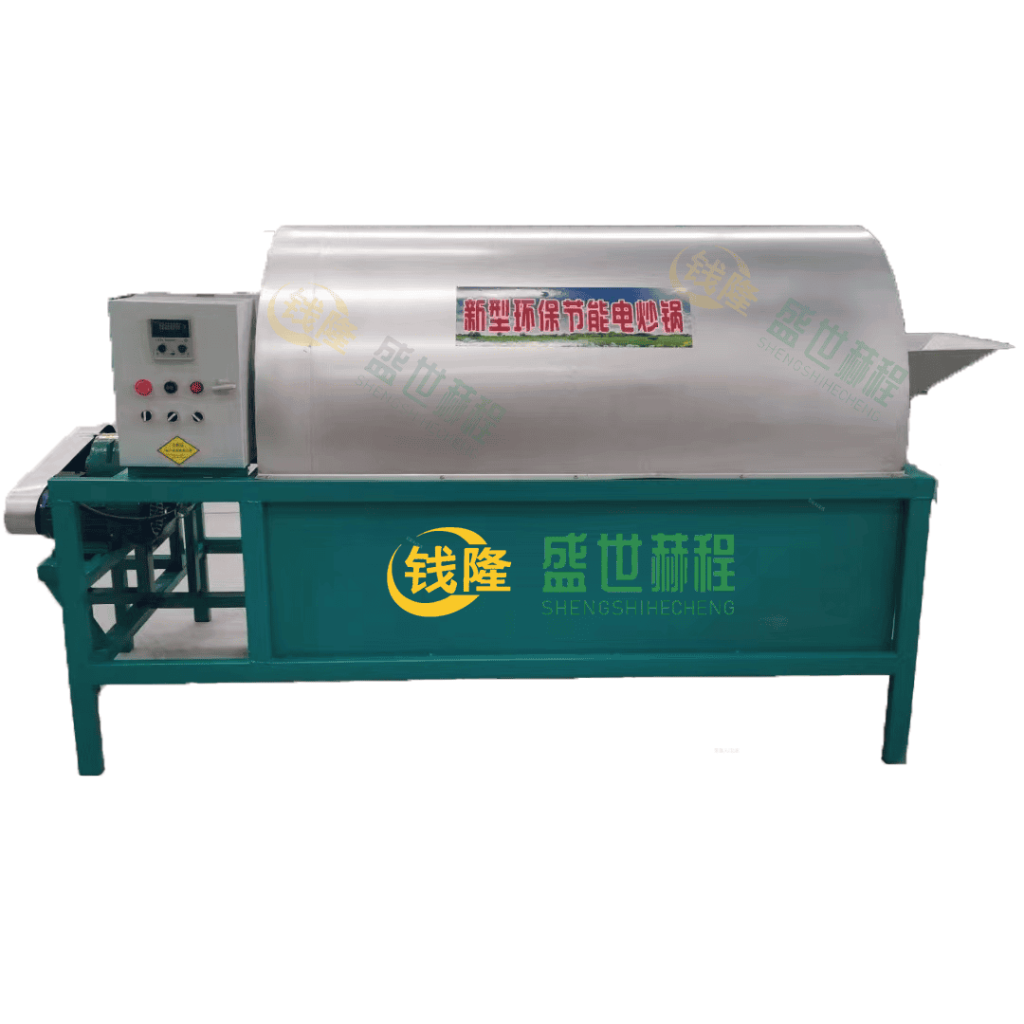
Automatic electromagnetic drum roaster
Roast prepared oilseed before a hydraulic hot-press cycle
This rotating drum roaster uses source-described electromagnetic heating with adjustable power levels and automatic control. In an edible-oil line, it sits after cleaning and any required size preparation, then discharges the roasted material toward the hydraulic press.
Hot-press workflow
Treat roasting as one controlled stage in the full line
The roaster must receive consistent feed and discharge at a pace the press section can accept. The source page does not publish batch size, throughput, temperature range, power demand, or overall dimensions, so those values require model-specific confirmation.
Material fit
Start with the product group, then confirm the process recipe
The current page lists several oilseeds and additional non-oil applications. Suitability still depends on particle size, moisture, target roast, discharge condition, cleaning requirements, and any risk of cross-contamination.
Edible-oil preparation
Published oilseed examples
Flaxseed, sesame, sunflower seed, peanut, soybean, and rapeseed are listed on the source page. Chili seed is also included among the published material examples.
- Confirm whole, cracked, granular, or powdered feed
- Define the required roast endpoint for the selected oil process
- Plan immediate or controlled transfer to the press section
Separate production scope
Medicinal and chemical materials
The source also mentions Chinese herbal materials and chemical raw materials. These require a separate suitability review, dedicated cleaning controls where needed, and clear material-safety information.
- Do not share food and non-food runs without an approved cleaning plan
- Provide dust, vapor, flammability, and contamination information
- Confirm whether the proposed model is intended for the stated material
Published product features
Electromagnetic heat, adjustable power, and automatic control
These are qualitative descriptions from the current product page. Request the final component list, control logic, electrical drawing, and model-specific technical data before ordering.
Electromagnetic heating
The source describes fast temperature rise and section-adjustable power. Confirm installed power, actual heat-up behavior, and the temperature-control method for the quoted model.
Rotating drum
The drum format supports material movement during heating. Ask for drum dimensions, usable load, rotation control, and the proposed internal arrangement.
Automatic operation
The current page states one-button start and fully automatic control. Confirm which loading, heating, rotation, timing, alarm, and discharge functions are actually automated.
Flameless heat source
The machine is presented as an alternative to open-flame roasting. Electrical safety, ventilation, dust control, guarding, and local compliance still belong in the site plan.
Technical confirmation
Request the missing model data before sizing the line
The live page does not provide a specification table. A usable proposal should state the following values and the material basis used to select them.
| Item to confirm | Why it affects the project | Information the buyer should send |
|---|---|---|
| Batch or continuous capacity | Determines how the roaster balances with crushing and pressing. | Oilseed, prepared form, hourly or daily input, and operating hours. |
| Installed electrical power | Sets the site supply, cable, breaker, and operating-load discussion. | Local voltage, frequency, phase, and available connected load. |
| Temperature and control range | Defines whether the control method matches the selected roasting recipe. | Required product endpoint and any existing process reference. |
| Drum and machine dimensions | Affects floor layout, loading, discharge, access, and shipping. | Workshop dimensions, doorway, ceiling, and preferred material flow. |
| Construction materials | Supports cleaning, food-contact, wear, and contamination review. | Product-contact requirement and cleaning procedure expected on site. |
| Automation scope | Clarifies what the operator must load, monitor, and discharge manually. | Preferred control language, alarms, recipes, and line-integration needs. |
Machine video
Use the operating footage to review material handling
The existing video provides a visual reference for the drum arrangement. During technical review, focus on the loading point, operator position, drum movement, control location, discharge direction, and the connection to the next machine.
Operation planning
Control feed consistency and discharge timing
- Remove foreign material that could damage the drum or contaminate the product.
- Standardize batch mass, particle size, moisture, power setting, and roast time.
- Define the safe loading and discharge sequence before production starts.
- Coordinate roasted-material discharge with available press capacity.
- Provide ventilation, dust control, guarding, and emergency isolation for the installation.
Cleaning and maintenance
Keep the drum, drive, and controls inspectable
- Request the approved drum-cleaning method for each processed material.
- Inspect the drive, bearings, seals, fasteners, guards, and discharge mechanism.
- Keep dust away from electrical cooling and control components.
- Confirm wear-part names, quantities, lubrication points, and service intervals.
- Ask for electrical diagrams, alarm definitions, and troubleshooting procedures.
Related equipment and routes
Connect roasting to preparation, pressing, and filtration
Specify the drum roaster around the material and press schedule
Send the oilseed, incoming and prepared form, required production schedule, roast target, press configuration, workshop layout, electrical supply, destination, and cleaning requirements.