
On this page
Cold pressed almond oil, also known as badam oil in South Asia, is widely used in food, cosmetic, and pharmaceutical industries due to its high nutritional value and natural processing method.
Unlike refined oils, cold pressed almond oil is extracted without chemical solvents and without high-temperature treatment, allowing the oil to retain its original flavor, nutrients, and bioactive compounds.
This makes cold pressing the preferred method for producing premium edible almond oil.
Badam vs Almond: Understanding the Raw Material
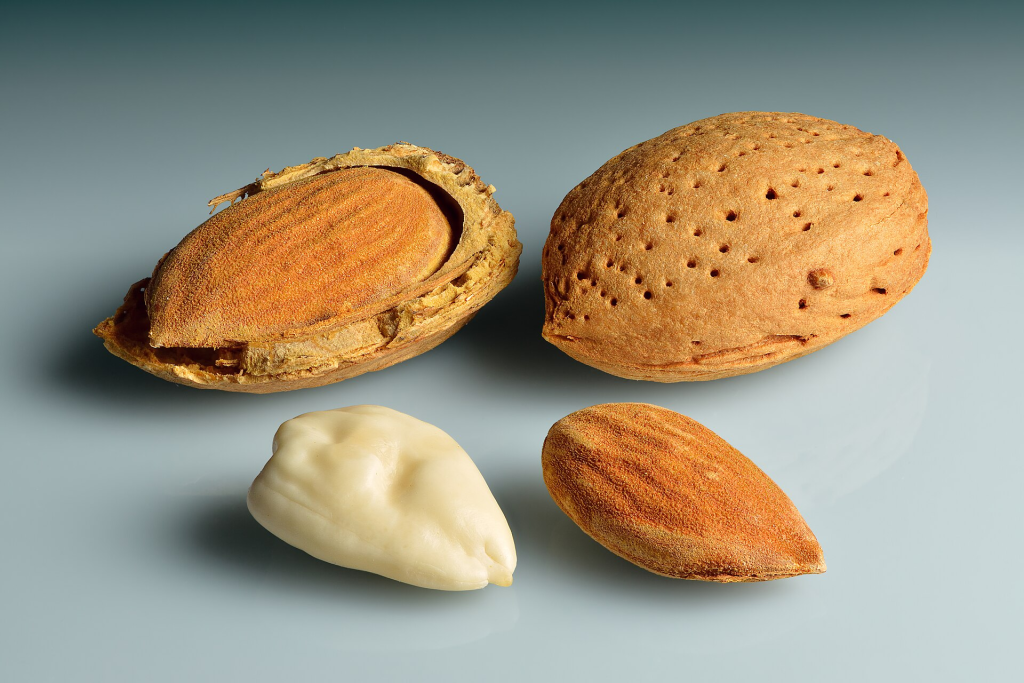
In many international markets, especially in India, Pakistan, and the Middle East, the word “Badam” simply refers to sweet almond (Prunus dulcis).
In practical terms:
- Badam = Sweet almond (edible variety)
- It is the same almond used worldwide for almond oil production.
However, in some regions (such as China), “almond” is sometimes confused with apricot kernels, which are a completely different plant species and are not suitable for food-grade almond oil.
For cold pressed oil production, only sweet almond (badam) should be used.
Industrial Cold Pressing Process Flow
For commercial-scale almond oil production, the most widely used and stable process is:
Process Flow:
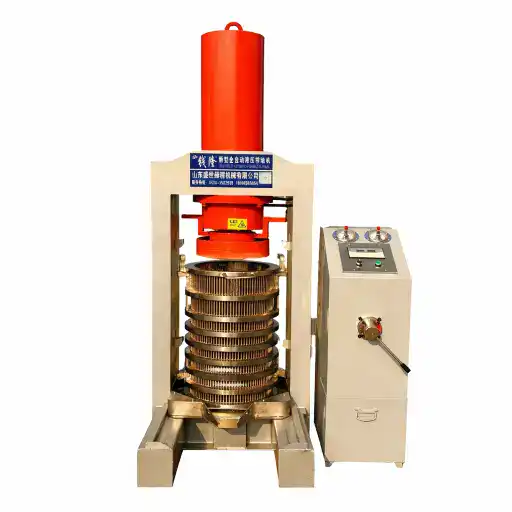
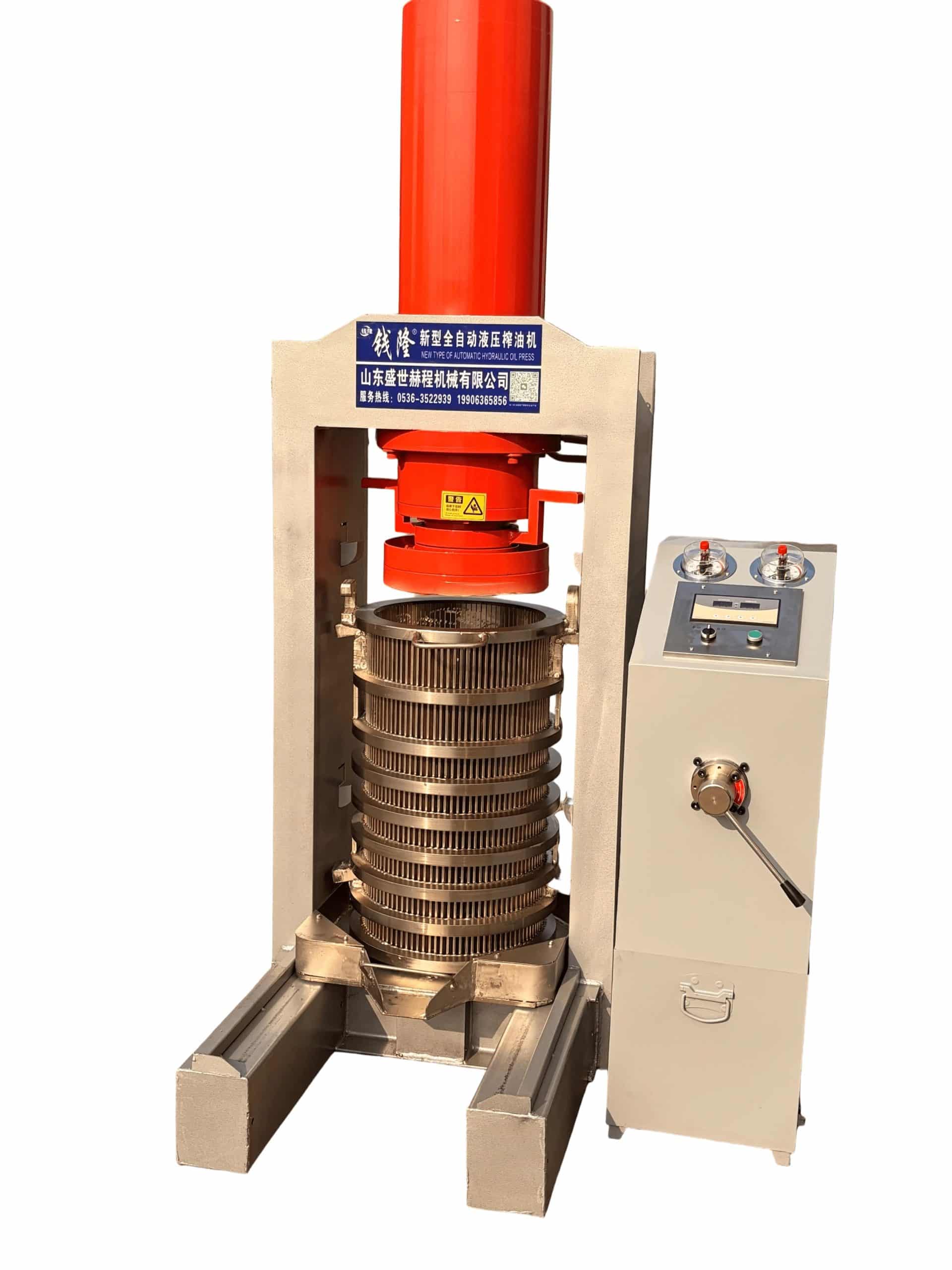
Pre-crusher / Pre-press machine → Hydraulic Cold Press Machine (355–500 models)
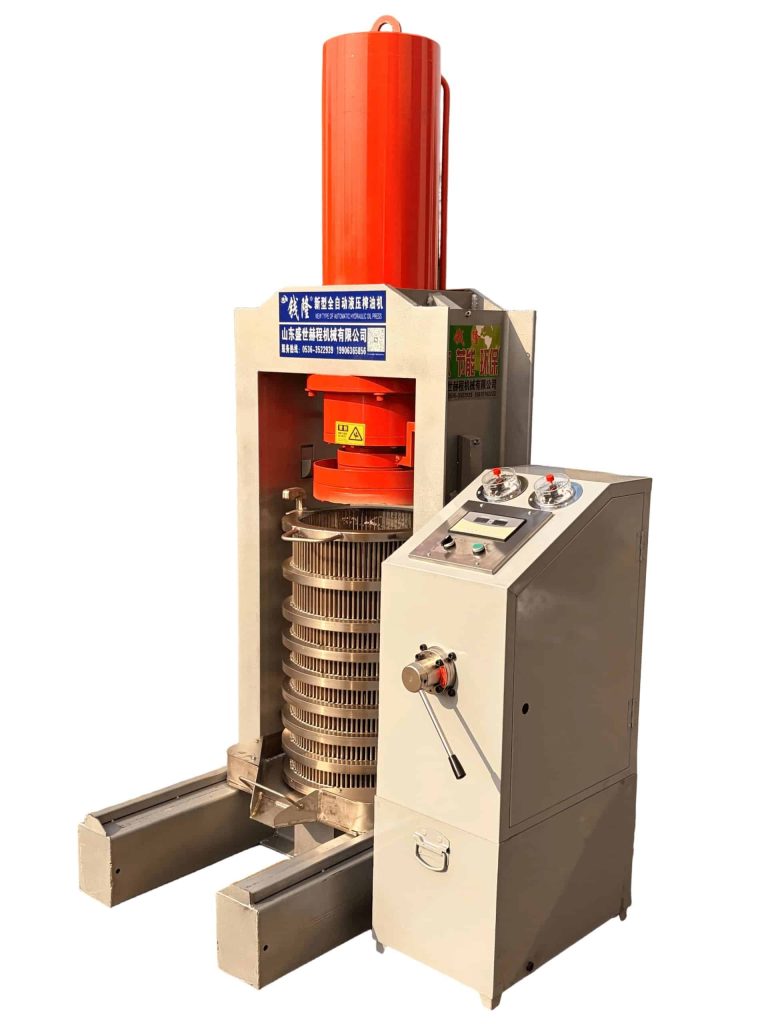
This two-stage configuration ensures:
- Better material uniformity
- Higher oil yield
- Lower mechanical loss
- Stable long-term production
Pre-crushing breaks down whole almonds into smaller particles, which allows oil to be released more efficiently during hydraulic pressing.
Recommended Pressing Parameters
Based on industrial operation experience, the following parameters are recommended for cold pressed almond oil:
Typical Operating Data:
- Batch capacity: up to 100 kg per barrel
- Pressing time: approximately 2 hours per batch
- Press type: hydraulic cold press
- Temperature: low-temperature pressing (no external heating)
- Applicable models: hydraulic press models 355 – 500
Engineering Explanation:
Cold pressing time has a direct impact on oil yield.
- Short pressing time → lower oil recovery
- Excessively long time → reduced efficiency
Around 2 hours per batch is considered the optimal balance between:
- Oil extraction rate
- Production efficiency
- Equipment protection
This configuration allows the oil to flow out naturally under high pressure while keeping the temperature low, which protects sensitive nutrients such as:
- Vitamin E
- Unsaturated fatty acids
- Natural antioxidants
Why Hydraulic Cold Press Is Preferred for Almond Oil
Compared with screw presses or high-temperature extraction systems, hydraulic cold pressing offers several key advantages:
1. Higher Oil Quality
No friction heating, no burning taste, natural almond aroma preserved.
2. Higher Whole Cake Quality
The pressed cake remains solid and dry, suitable for further processing (protein powder, animal feed, etc.).
3. Stable Industrial Operation
Pressure is applied evenly, reducing mechanical wear and extending machine lifespan.
4. Suitable for Premium Market
Hydraulic cold press is widely used for:
- Organic almond oil
- Cosmetic-grade almond oil
- Pharmaceutical-grade carrier oil
From Factory Perspective: Not Just “No Heat”
In real industrial production, cold pressed oil is not simply about “no heating”.
High-quality almond oil depends on:
- Proper raw material grading
- Pre-crushing treatment
- Controlled pressure system
- Sufficient pressing time
- Reasonable batch capacity
Only when these parameters are matched correctly can a factory achieve:
- Stable output
- High oil yield
- Consistent product quality
- Commercial profitability
Typical Industrial Configuration Example
A standard commercial almond oil production line may include:
- Almond cleaning and grading system
- Pre-crusher / pre-press machine
- Hydraulic cold press (355–500 model)
- Oil filtration system
- Storage tanks
- Bottling or packaging system
Such a line can replace hundreds of manual workers and is suitable for medium and large-scale edible oil factories.
Conclusion
Cold pressed almond (badam) oil production is a combination of mechanical engineering and food processing technology.
Using pre-crushing + hydraulic cold pressing, with a batch size of 200 kg and pressing time around 2 hours, is currently one of the most reliable and widely adopted industrial solutions for producing high-quality almond oil.
This process ensures:
- Natural flavor retention
- Maximum nutrient preservation
- Stable industrial output
- Strong market competitiveness
It is the preferred technology for factories targeting the premium edible oil market.
Project planning
Configure the right oil press and production line
Send your oilseed, target output, bottle or packaging requirements, power supply, and destination country. We will match the machine, supporting equipment, and line layout.