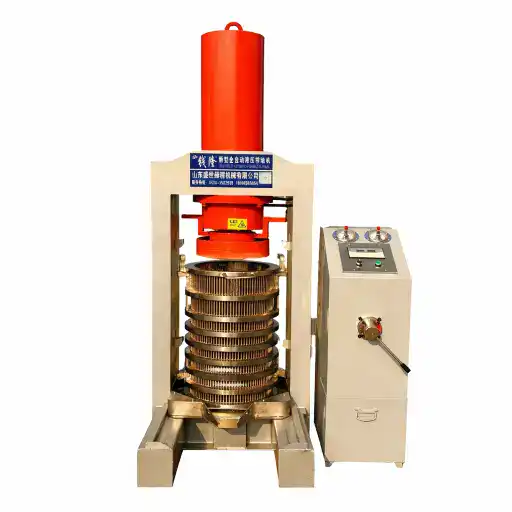
FBJ-500 oil cake pulverizer
Reduce pressed cake into screened particles for the next handling step
The pulverizer receives oil cake after pressing and uses rotating hammer blades to break blocks inside a crushing chamber. A bottom sieve controls the discharge opening before the material moves to reprocessing, storage, bagging, or an approved feed workflow.
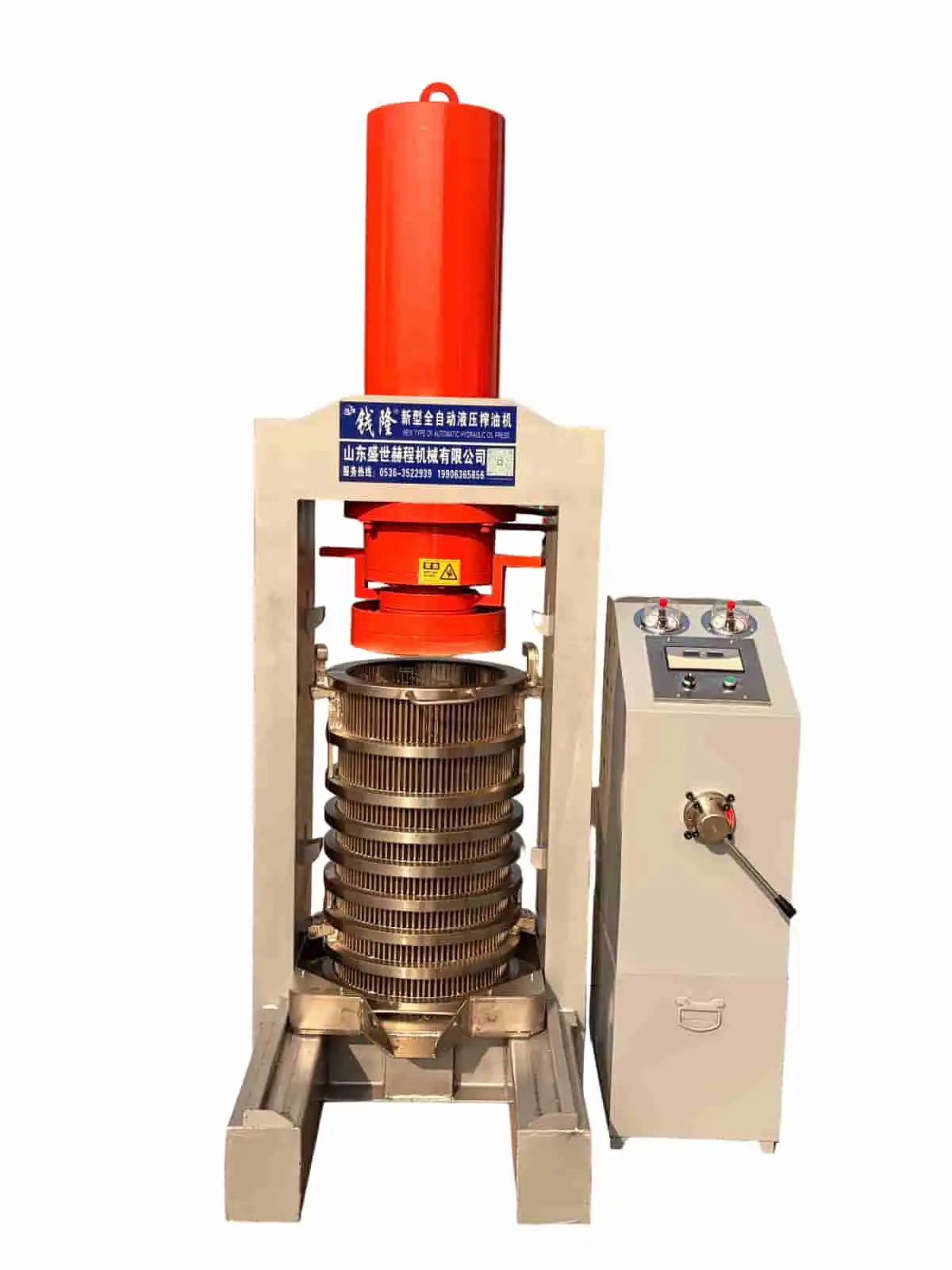
Post-press workflow
Treat cake handling as its own production branch
The oil and cake leave the press on separate paths. Oil moves to filtration, while cake condition, intended use, particle size, cooling, storage, and any second processing step determine the pulverizer scope.
Confirm the downstream purpose before choosing particle size
Material intended for another pressing step may need a different preparation from cake intended for storage or an approved feed process. Define the oilseed, cake dimensions, temperature, moisture, hardness, and required discharged form before ordering.
Working principle
Hammer impact inside a screened crushing chamber
The source describes a simple frame-mounted machine composed mainly of the motor and crushing box. Cake entering the chamber is repeatedly struck until particles can pass through the lower sieve.
Feed inlet
Prepared cake pieces enter through the upper opening. Feed dimensions must fit the listed inlet and avoid bridging.
Hammer rotor
High-speed rotating hammer blades provide repeated impact inside the enclosed crushing chamber.
Bottom sieve
The published machine uses a lower sieve plate with a listed 20 mm opening before discharge.
Frame and drive
The motor, belt or coupling arrangement, crushing box, bearings, and frame require guarded access and routine inspection.
Published FBJ-500 reference
Use the confirmed mechanical values for layout planning
The legacy capacity entry is internally questionable and is not suitable for line sizing. Request corrected throughput in writing for the actual cake and target discharge size.
| Parameter | Source-listed value | Buyer confirmation |
|---|---|---|
| Model | FBJ-500 | Confirm model plate and final build. |
| Motor power | 11 kW | Confirm voltage, frequency, phase, starting method, and overload protection. |
| Overall dimensions | 600 x 600 x 800 mm | Confirm the dimension order, guards, motor projection, and service envelope. |
| Approximate weight | 292 kg | Confirm shipping weight and lifting points. |
| Feed opening | 525 x 145 mm | Match the prepared cake-piece dimensions and feeding method. |
| Sieve opening | 20 mm | Confirm whether other sieve sizes are available for the intended use. |
| Crushing structure | Hammer type | Request rotor, hammer, bearing, and screen material details. |
| Throughput | Confirm by material test | The prior page lists 1–4 kg/h, an implausible unit for this 11 kW machine; do not size from it. |
Application routes
Keep reprocessing and feed use as separate decisions
The machine can reduce bean, peanut, cottonseed, and other source-listed cake materials, but the acceptable particle form and compliance requirements differ by destination.
Process route A
Prepare cake for another processing step
Pulverizing can make dense cake easier to meter, mix, condition, or present to a separately selected second process.
- Confirm whether the cake will be re-pressed and by which machine
- Define required particle size, moisture, and temperature
- Check whether additional heating or conditioning is required
- Balance pulverizer throughput with the next machine
Process route B
Prepare cake for storage, bagging, or approved feed handling
Reduced particles can be easier to convey and pack, but feed suitability is not established by crushing alone.
- Verify the oilseed cake is permitted for the intended animal and market
- Test composition, contaminants, moisture, and storage stability as required
- Prevent cross-contamination during crushing and packing
- Follow local feed, labeling, and traceability requirements
Upstream pressing footage
Start specification work with the cake that actually leaves the press
The existing video shows hydraulic pressing and the resulting cake-handling context. Send equivalent footage of the intended cake so the supplier can assess diameter, thickness, breakability, and feed preparation before the pulverizer.
- Oilseed and hot- or cold-press route
- Press model, barrel, partitions, and cake dimensions
- Cake temperature and moisture at the proposed crushing point
- Required particle form and downstream destination
Operating safety
Control access to the rotor and feed opening
- Inspect and tighten connecting bolts with the machine isolated.
- Confirm correct three-phase supply and phase-loss protection before starting.
- Stop immediately if abnormal noise, vibration, heat, or smell appears.
- Never repair, clear, or reach into the machine while the rotor is moving.
- Do not feed metal, iron pieces, stones, or other foreign objects.
Maintenance and wear parts
Plan for impact wear and screen replacement
- Request hammer-blade, pin, rotor, bearing, belt, and sieve part numbers.
- Inspect hammer wear and rotor balance at the supplied interval.
- Keep guards installed and verify fasteners after maintenance.
- Clean residual cake before changing material or shutting down.
- Use lockout and verify the rotor has stopped before opening access points.
Related pressing equipment
Plan both outputs from the hydraulic press
Send a cake sample description before selecting the pulverizer
Include the oilseed, press model, cake dimensions, temperature, moisture, hardness, hourly quantity, required particle size, downstream use, electrical supply, and destination.