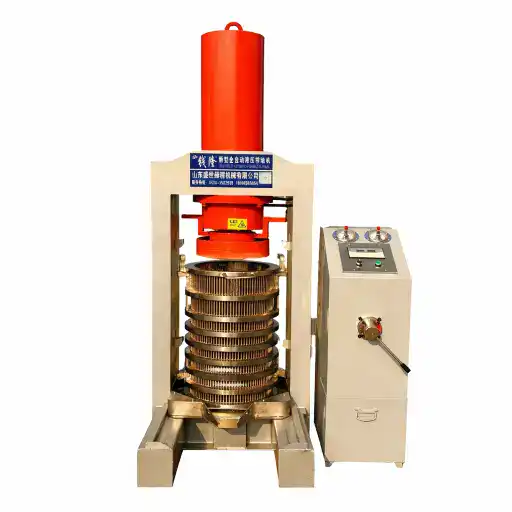
Sesame hot-press production line
Configure the route from prepared sesame to filtered or bottled oil
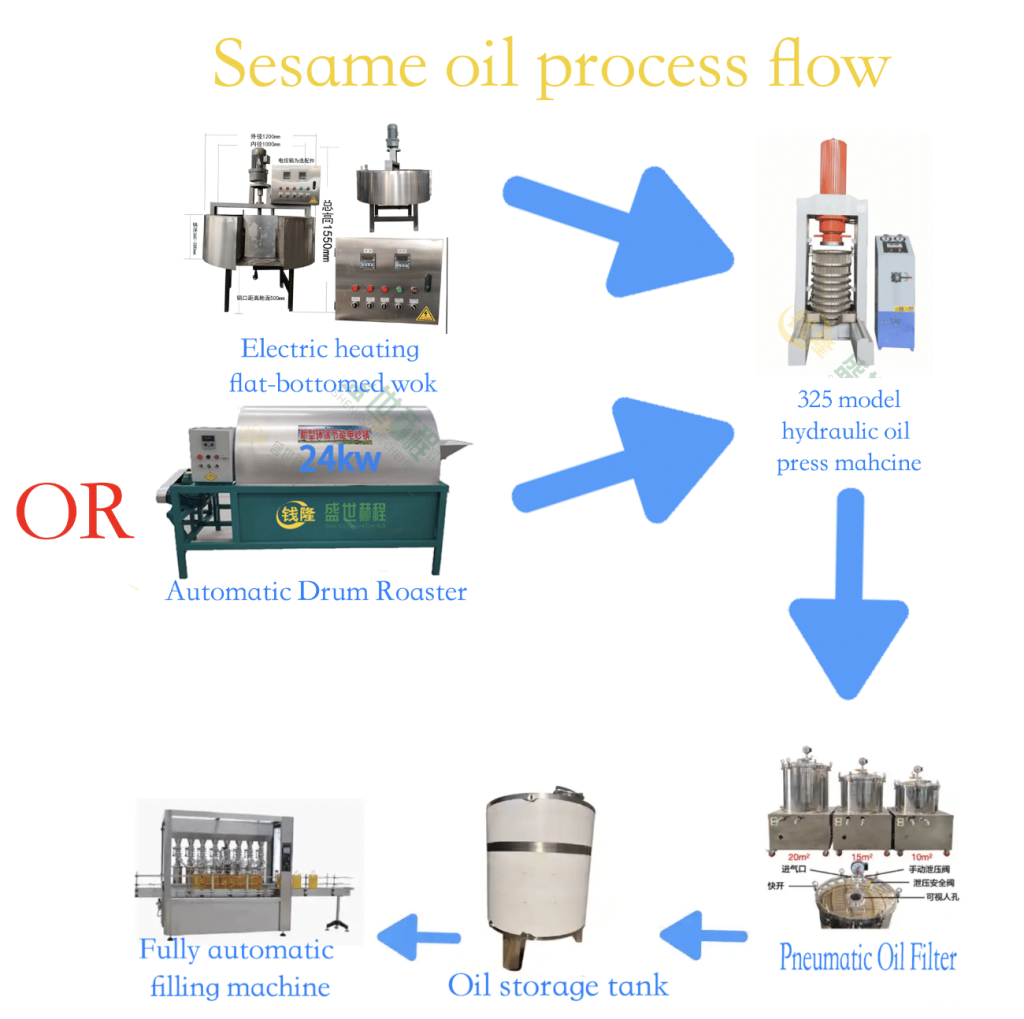
The baseline line combines seed preparation, roasting, batch hydraulic pressing, pneumatic filtration, clean oil storage, and filling. Screening, washing and drying, further refining, and cake pulverizing are selected according to the incoming sesame and the required finished product.
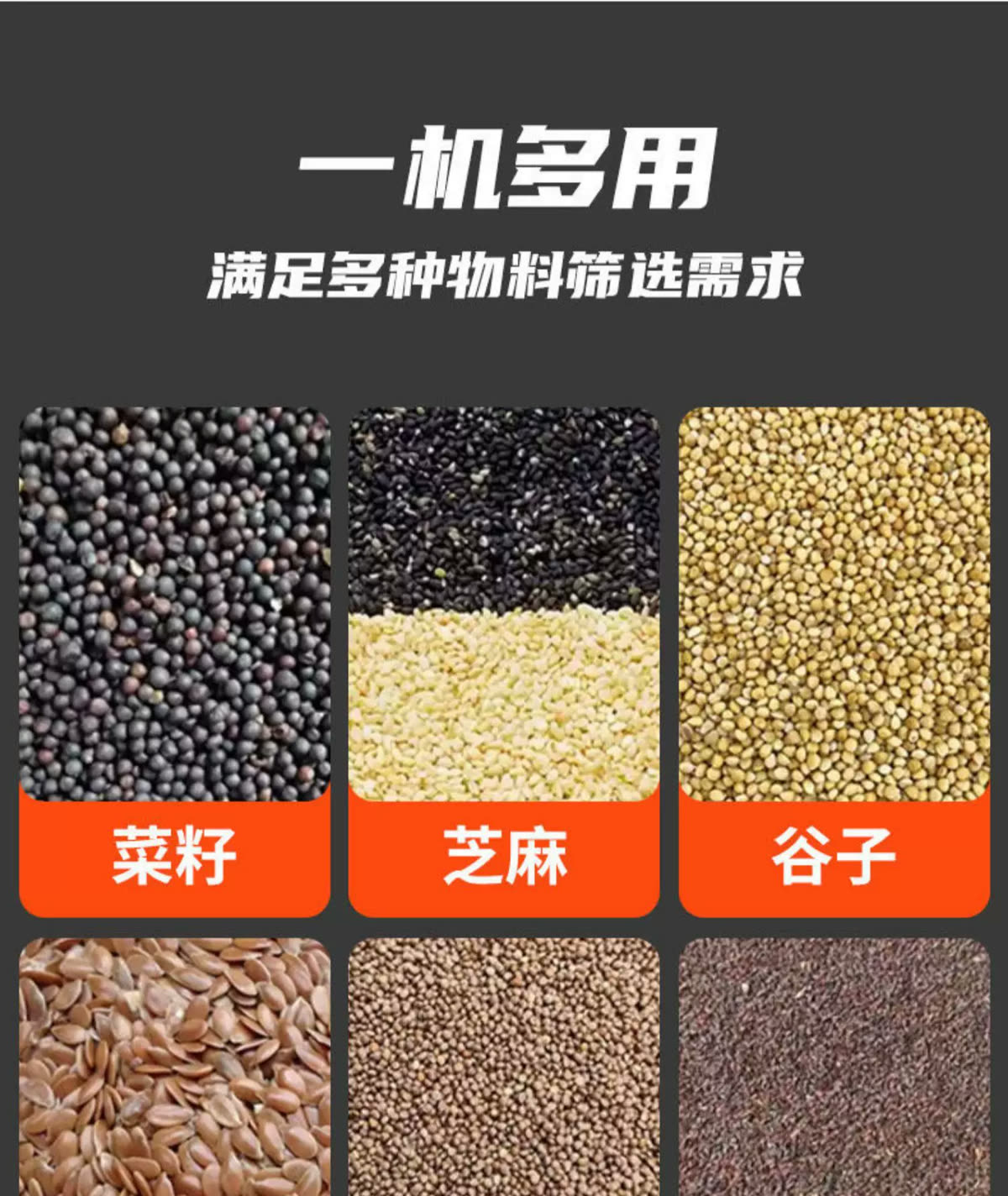
Incoming sesame
Define the seed condition before selecting the line
Dry screening can remove straw, shells, oversized pieces, fine particles, and light dust before washing, roasting, or pressing. Add washing, draining, and drying only when the raw material and process require them.
- Send representative seed photos or a sample and describe the impurity level.
- Confirm whether the project needs dry screening only or washing and drying.
- If stones are similar in size to sesame, specify a separate destoner or gravity separator.
Practical process flow
Keep preparation, pressing, and oil finishing in one balanced sequence
The exact front end depends on seed cleanliness. The hot-press route then moves through roasting, hydraulic pressing, paper filtration, storage, and packaging.
Plan the sesame cake outlet as a separate branch
Collect the pressed cake at the press discharge. The current process allows it to remain whole for its intended use or move to a cake pulverizer for further processing.
Key equipment and modules
Build the line around four connected equipment sections
Each section should be selected against the same raw-material schedule and finished-oil requirement.
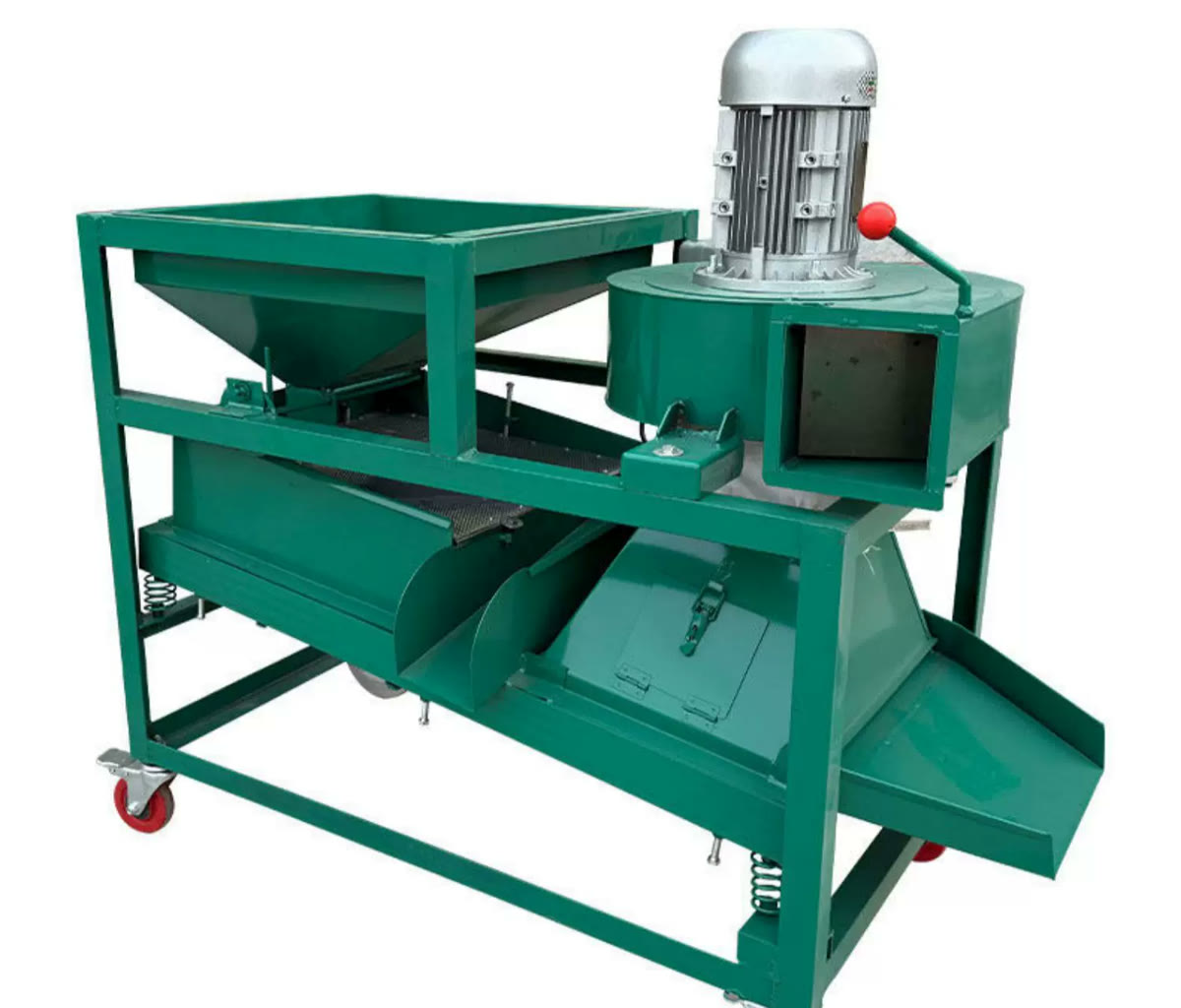
Oilseed screening machine
Use size separation and air dust removal for straw, shells, coarse debris, fines, and light dust. Washing and drying can follow when the process calls for them.
Review sesame screening →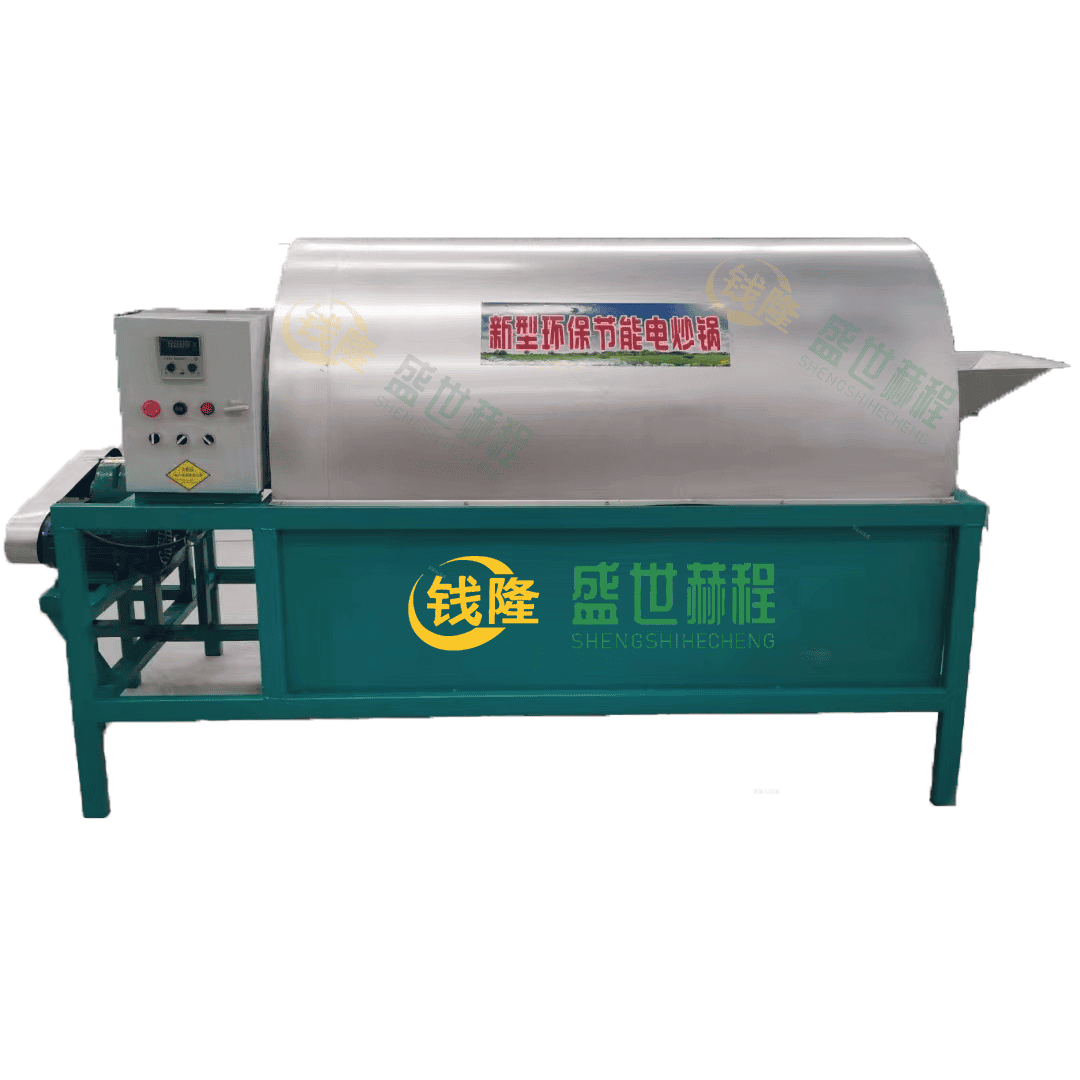
Automatic drum roaster or heated wok
The live sesame route places either an automatic drum roaster or an electric heating flat-bottomed wok before the hydraulic press.
Review the automatic drum roaster →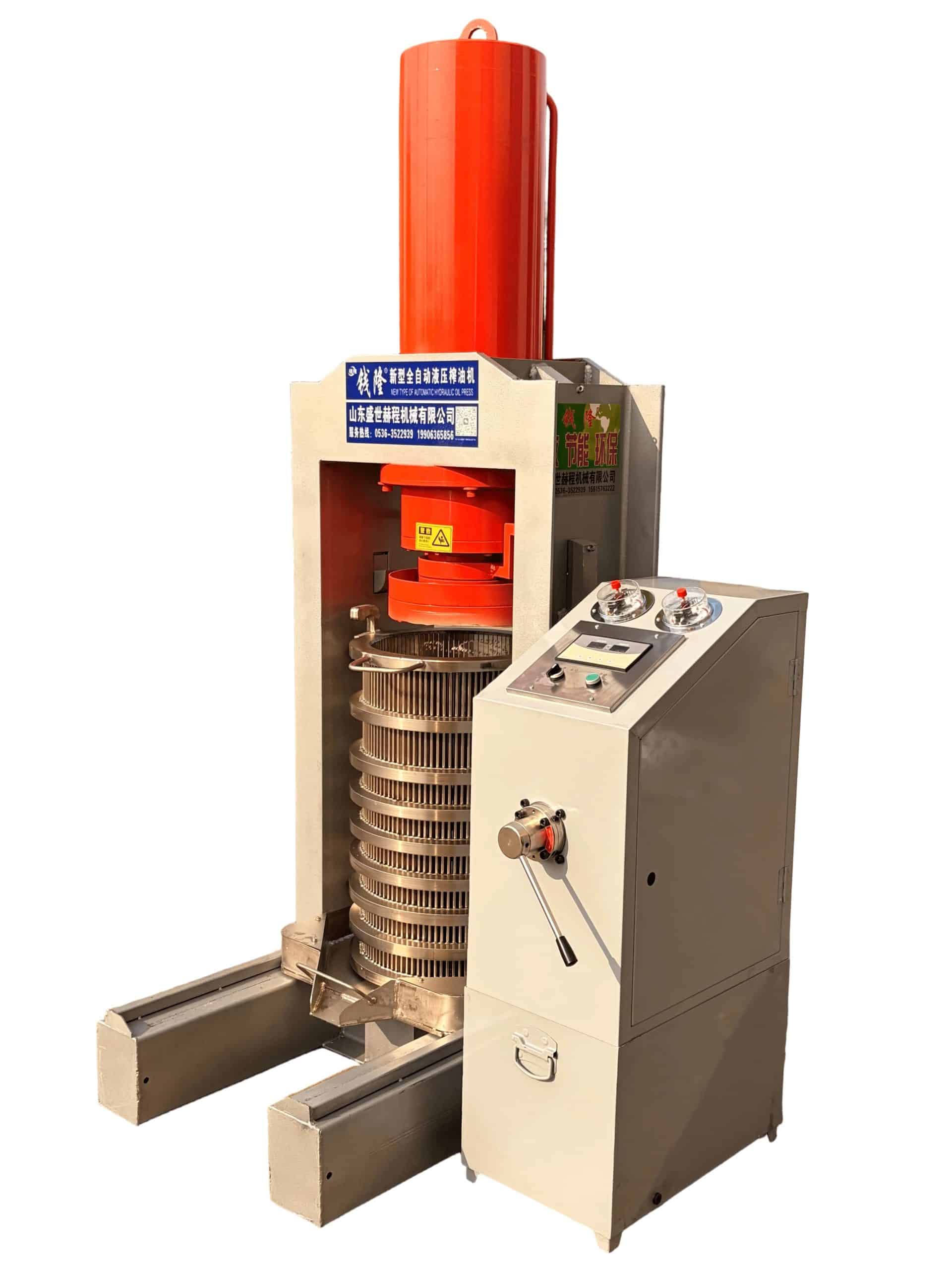
325 hydraulic oil press
The current sesame process recommends the 325 hot-press model and uses partitions to separate the material inside the pressing chamber.
Review 300 and 325 hot-press models →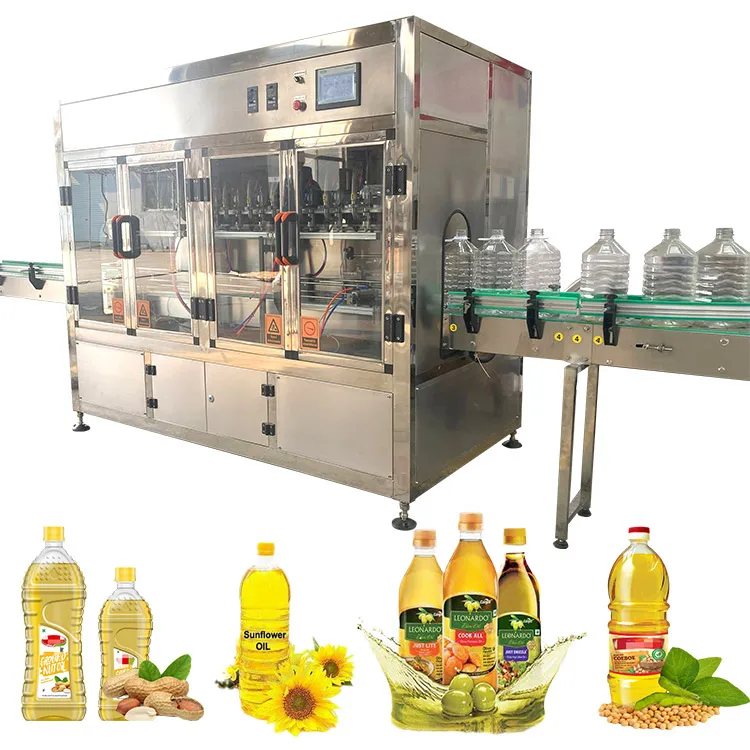
Filtration, storage, and filling
Clarify collected oil with a pneumatic multi-layer paper filter, transfer it to clean food-grade storage, and match filling equipment to the selected container.
Review pneumatic oil filtration →Buyer configuration checklist
Information needed for a workable equipment proposal
- Sesame type, moisture, cleanliness, and representative sample or photos
- Impurity types and whether similar-size stones require gravity separation
- Dry screening only, or washing followed by draining and drying
- Planned daily raw-material volume, operating hours, and batch schedule
- Hot-press process and preferred roasting arrangement
- Filtered crude oil or further refined finished oil
- Bottle volume, closure, label, and packaging automation level
- Workshop dimensions, voltage, phase, frequency, and destination country
Ask for the complete line balance
The current sesame example uses one roasting stage with multiple batch presses. The roaster, press count, filter, storage, and filling section should therefore be configured against the same operating schedule.
Related technical pages
Review the modules that change the final line scope
Restored original media
Sesame line and hot-pressing videos
The three original sesame references are restored together with the earlier process image.
Korean-style sesame oil press production line
Original operating reference restored from the earlier page.
Sesame hot-pressing process
Original operating reference restored from the earlier page.
Sesame hydraulic hot-pressing process
Original operating reference restored from the earlier page.
Restored photographs
Restored machine detail
Original photograph restored from the earlier page.
Sesame project guides
Compare the line against the intended business route
These pages cover material choice, small-shop operation, factory planning, and packaged-oil production.
Turn the sesame sample and finished-oil target into a line layout
Send the raw-seed condition, preparation route, planned operating schedule, finished-oil specification, bottle format, workshop dimensions, power supply, and destination.