Cocoa cracking and winnowing
Separate roasted cocoa beans into nib and shell before wet grinding
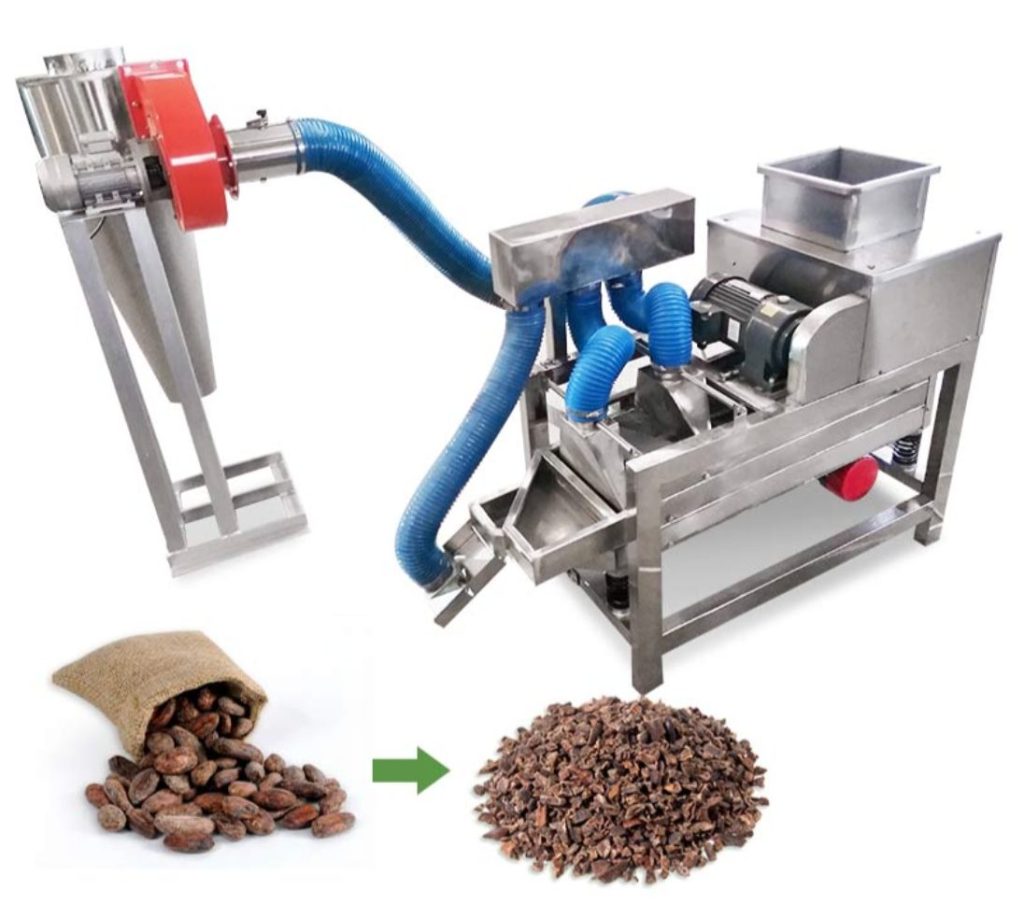
This machine combines mechanical cracking, screening, and airflow separation. It receives roasted, cooled cocoa beans and prepares cocoa nibs for liquor grinding; it does not roast beans, make cocoa liquor, or press cocoa butter.
Process boundary
Crack the brittle shell, then separate by size and airflow
Roasting and cooling make the shell easier to break away from the nib. The machine then meters the beans into a cracking section, classifies the broken material, and uses airflow to draw lighter shell away from the heavier nib fraction.
- Input: cleaned, roasted, and adequately cooled cocoa beans
- Main product: cocoa nibs prepared for wet grinding
- By-product: shell and dust requiring contained collection
- Acceptance: shell carryover and nib loss measured from a representative bean sample
Feed preparation
Bean condition controls separation more than a headline peeling rate
The current page advertises a peeling rate of up to 99%, but it does not publish the bean variety, roast profile, moisture, feed grading, airflow setting, sampling method, or allowable nib loss. Treat the figure as an unverified source claim until a controlled trial defines the result.
Before the machine
Provide repeatable roasted beans
- Remove stones, metal, string, and oversized foreign material
- Record bean origin, size distribution, moisture, and roast profile
- Cool beans sufficiently to prevent uncontrolled condensation or soft shells
- Separate unusually small, flat, or broken beans when required
At the outlets
Measure both cleanliness and product loss
- Shell remaining in the collected nib fraction
- Good nib carried into the shell or dust outlet
- Distribution of whole and broken nib particles
- Dust, noise, airflow discharge, and housekeeping requirements
Operating sequence
Keep cracking, classification, and aspiration under one test method
Current-page model references
Confirm the exact machine against the supplied bean sample
The table preserves the two source-listed configurations. The page does not provide overall dimensions, screen arrangement, adjustment range, dust connection, material grades, or the test basis for capacity.
| Reference | CBPM-1 | CBPM-2 | Confirmation required |
|---|---|---|---|
| Source-listed capacity | 50–100 kg/h | 100 kg/h | Bean size, roast condition, feed rate, shell target, nib-loss limit, and operating time. |
| Voltage | 380 V | 380 V | Phase, frequency, controls, protection, plug or isolator, and destination standard. |
| Drive motor | 0.4 kW | 0.75 kW | Which mechanism the motor serves, nameplate efficiency, and overload protection. |
| Fan motor | 0.37 kW | 1.1 kW | Air volume, static pressure, adjustment method, ducting, and dust collection. |
| Weight | 120 kg | 150 kg | Shipping or net weight, packing dimensions, lifting points, and floor support. |
Material-contact construction is not fully specified
The original page describes food-grade contact parts without naming stainless-steel grade, surface finish, weld treatment, seals, hoses, or certificates. Request a complete contact-material schedule and cleaning procedure.
Equipment details
Plan collection points for nib, shell, and dust
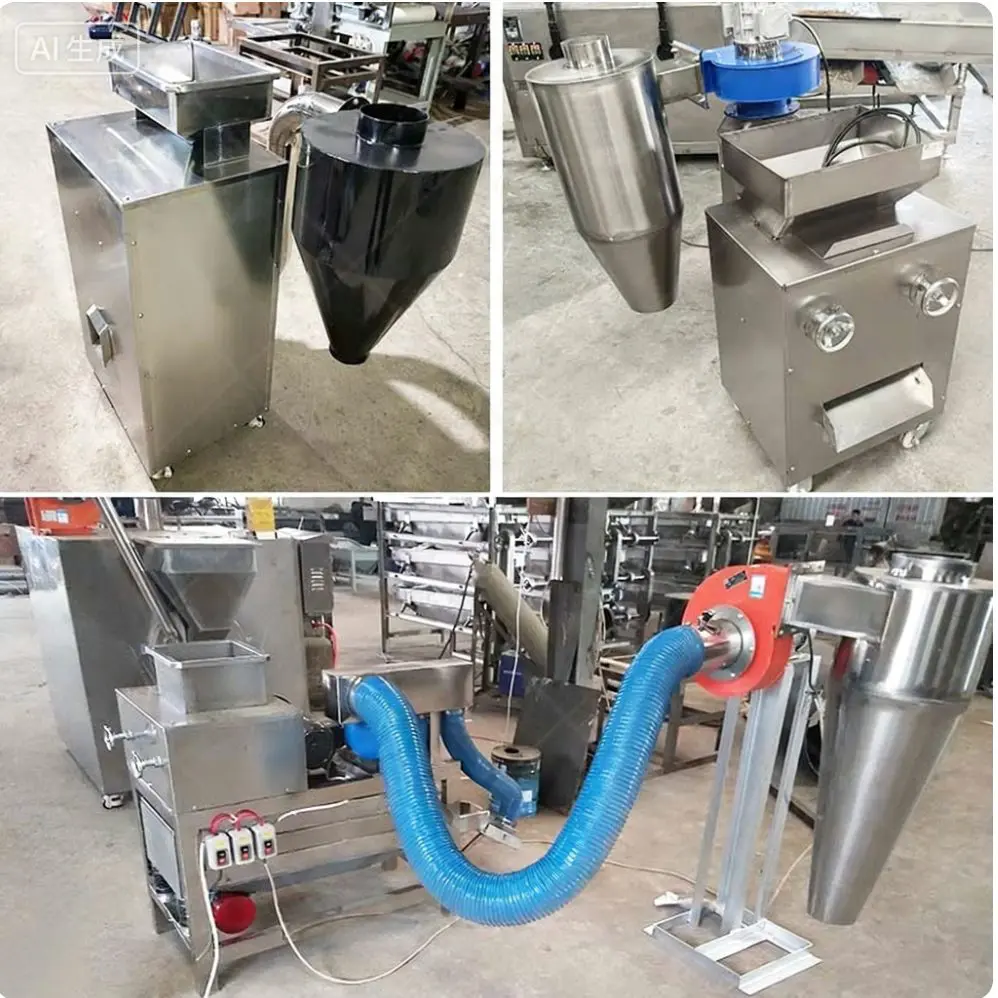
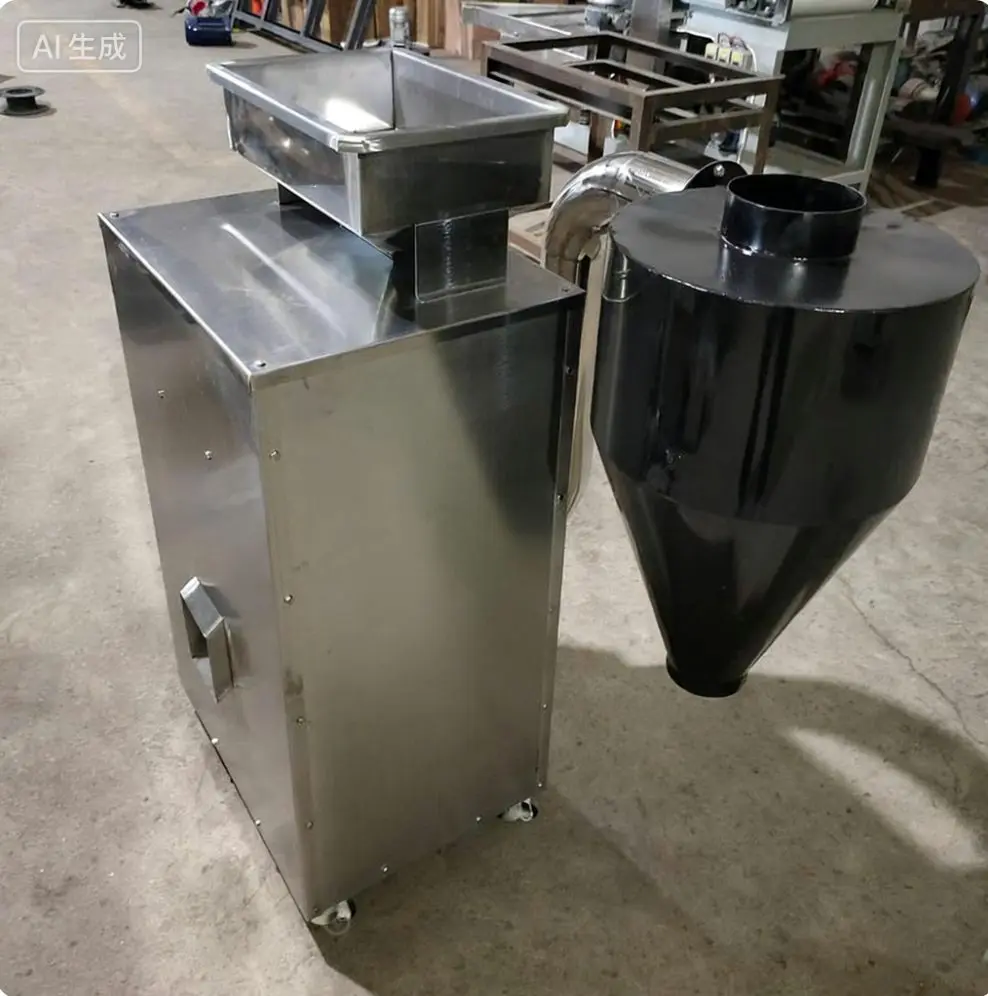
The hosted machine views show separate product paths and an aspiration hose. Final layout should identify outlet heights, containers, duct routing, access for screens and cracking parts, and the method used to prevent shell and dust from returning to the clean nib area.
- Confirm hopper height and upstream feed method
- Provide guarded access to cracking and screening components
- Size shell bags, bins, cyclone, or dust collector for the agreed route
- Allow dry-cleaning access and controlled allergen changeover
Connected cocoa stages
Place winnowing between roasting and cocoa-liquor grinding
Restored original media
Cocoa bean peeling machine photographs
Three original machine views restored from the earlier product page.
Cocoa Bean Peeling Machine
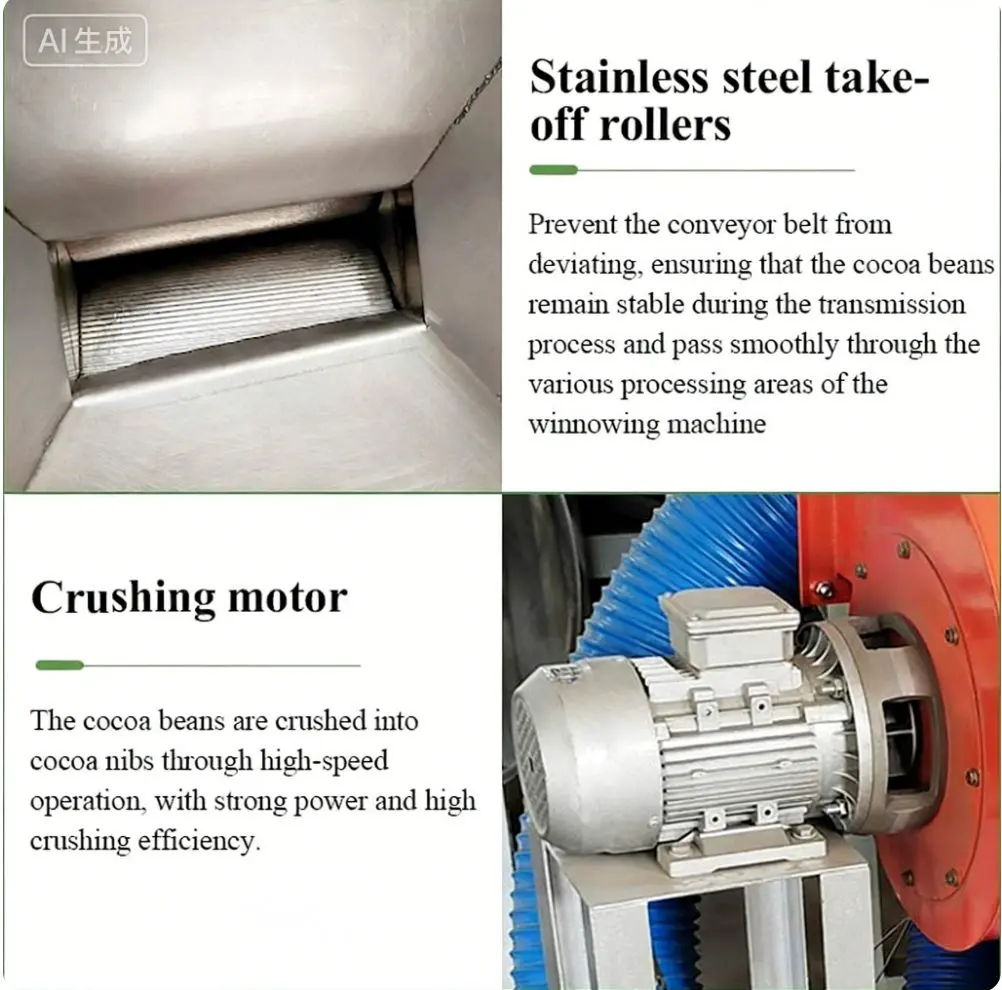
Cocoa Bean Peeling Machine
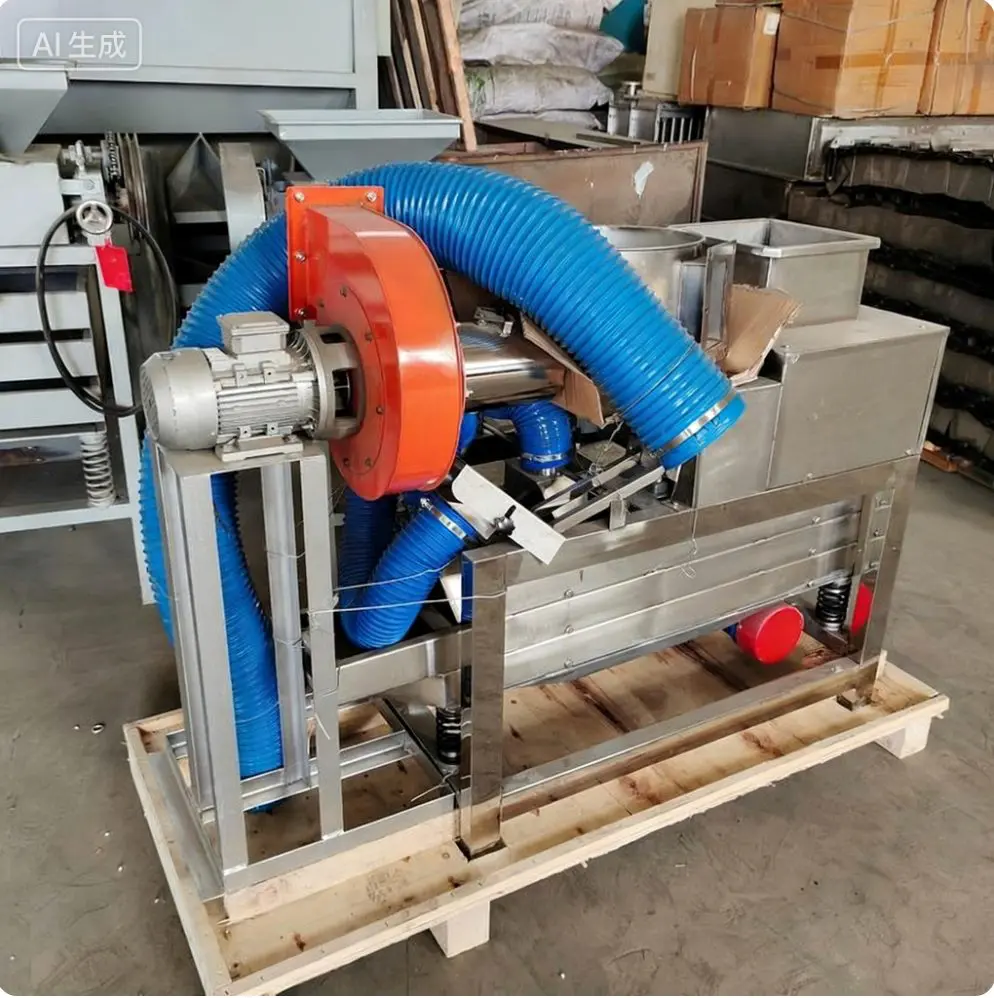
Cocoa Bean Peeling Machine
Test the winnower with the beans you actually buy
Send bean origin, size distribution, roast and moisture data, required nib cleanliness, allowed nib loss, hourly demand, utilities, dust-control plan, and destination.