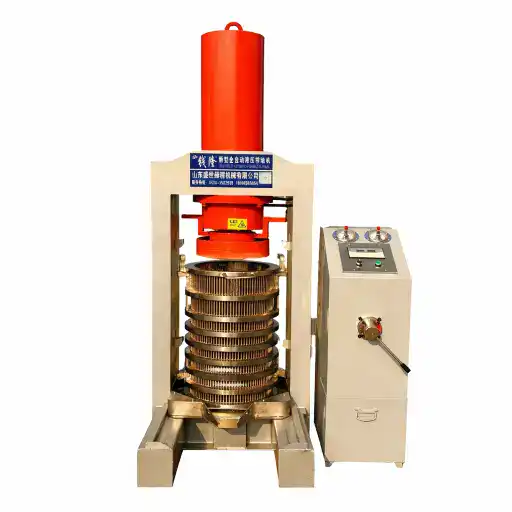
Hydraulic cocoa liquor separation
Press conditioned cocoa liquor into cocoa butter and press cake
The source configuration uses a Model 325 batch hydraulic press. The press should receive prepared cocoa liquor or mass after roasting, shell removal, and nib grinding; whole beans and dry nibs are not treated here as a validated direct feed.
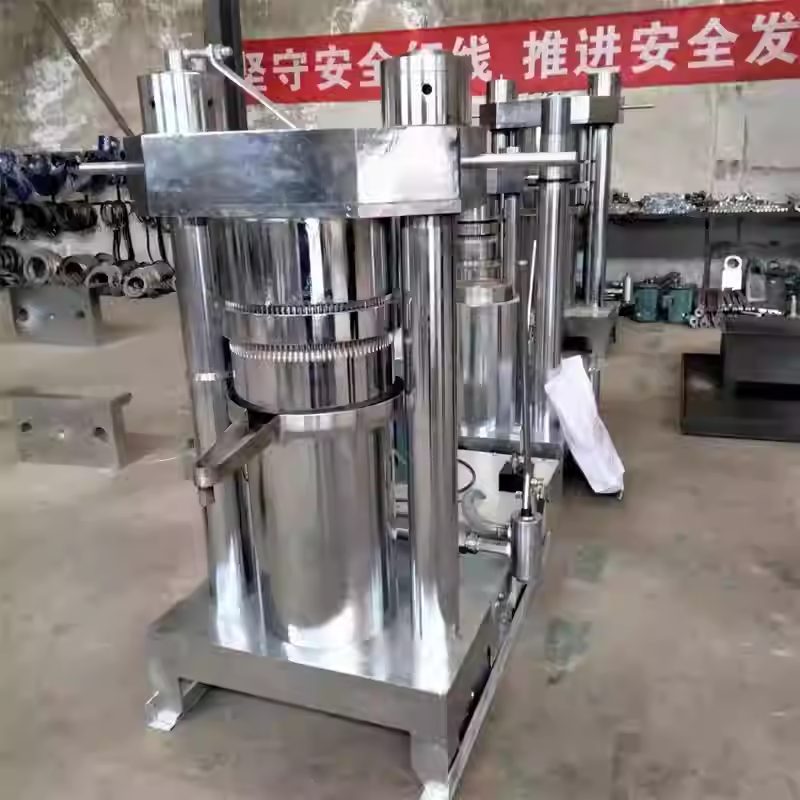
Core separation stage
Apply static pressure while liquid cocoa butter drains
Conditioned cocoa liquor is loaded into the pressing arrangement. Hydraulic pressure drives the piston through the batch while expressed cocoa butter drains and the remaining cocoa solids consolidate into cake.
- Input: pumpable or loadable cocoa liquor at the trial-approved condition
- Liquid outlet: cocoa butter requiring collection, filtration, and controlled storage
- Solid outlet: cocoa press cake for sale, storage, coarse crushing, or powder milling
- Acceptance: butter quality, cake residual fat, complete cycle, safety, and cleanability
Pressing basis
Batch load is not bean-input capacity or guaranteed butter output
The press receives cocoa liquor after roasting losses, shell removal, nib recovery, and wet grinding. Practical throughput depends on liquor composition, temperature, loading density, pressure profile, drainage endpoint, unloading, cleaning, and operating hours.
Prepare the liquor
Define what enters the press
- Cocoa origin, roast profile, shell carryover, and liquor particle-size method
- Liquor temperature, viscosity, moisture, composition, and holding time
- Batch loading method, filter media, safe fill level, and drainage path
- Any alkalization or other treatment performed before pressing
Define both outlets
Butter and cake need separate specifications
- Butter sampling, filtration, storage temperature, packaging, and release criteria
- Cake residual-fat target, thickness, integrity, cooling, and storage
- Mass-balance method, retained material, rework, and cleaning loss
- Approved food, cosmetic, industrial, or disposal route for every stream
Reference operating flow
Condition, load, press, drain, and unload as one complete cycle
Source-listed Model 325 references
Use the published figures for preliminary configuration only
The figures below come from the current page. They do not establish butter recovery, cake residual fat, daily throughput, energy per kilogram, or performance with a new cocoa liquor.
| Reference point | Published value | What must be confirmed |
|---|---|---|
| Pressing force | 325 tons | Machine calculation basis, hydraulic safeguards, tooling, controls, and acceptance documentation. |
| Hydraulic working pressure | 55–60 MPa | Setpoint sequence, allowable range, hold period, relief devices, and maintenance procedure. |
| Motor power | 2.2 kW | Voltage, phase, frequency, connected auxiliaries, enclosure, and destination electrical standard. |
| Barrel reference | 390 mm inner diameter; 800 mm height | Usable volume, plates or basket, filter media, loading level, drainage, and cleaning access. |
| Source batch range | 5–100 kg; 60–80 kg is described as recommended | Liquor density, temperature, free volume, cake target, and safe loading procedure. |
| Source cycle examples | 30–40 minutes for a hot-press example; about 2 hours for a cold-press example | Definitions of hot and cold, liquor condition, pressure profile, drainage endpoint, unloading, and cleaning time. |
The source does not publish a matched comparison with smaller Korean-style presses
Its statements about higher efficiency and larger productivity are not supported by side-by-side liquor, batch, cycle, butter, cake, utility, or labor data. Compare press options through a controlled material trial and complete-cycle calculation.
Project controls
Design the surrounding system as carefully as the hydraulic frame
| Area | Required project decision | Missing source detail |
|---|---|---|
| Liquor holding | Agitation, temperature control, transfer, residence time, and batch identification. | No tank, pump, heating, or line-layout specification is published. |
| Butter collection | Drain pan, enclosed transfer, filtration, sampling, heated storage, and packaging. | No butter filtration grade or transfer temperature is published. |
| Cake handling | Ejection tools, cooling, lifting, breaking, storage, and downstream milling route. | No cake dimensions, residual-fat result, or unloading method is guaranteed. |
| Contact materials | Complete material, surface-finish, seal, filter, and certificate schedule. | The source uses a general food-grade statement without identifying grades or finishes. |
| Safety | Guarding, relief, interlocks, lockout, hot-product protection, and pressure inspection. | No destination-specific conformity package is stated. |
Connected cocoa stages
Feed the press with liquor and route cake to dry size reduction
Restored original media
Hydraulic cocoa butter press reference photograph
Original press photograph restored from the earlier cocoa butter page.
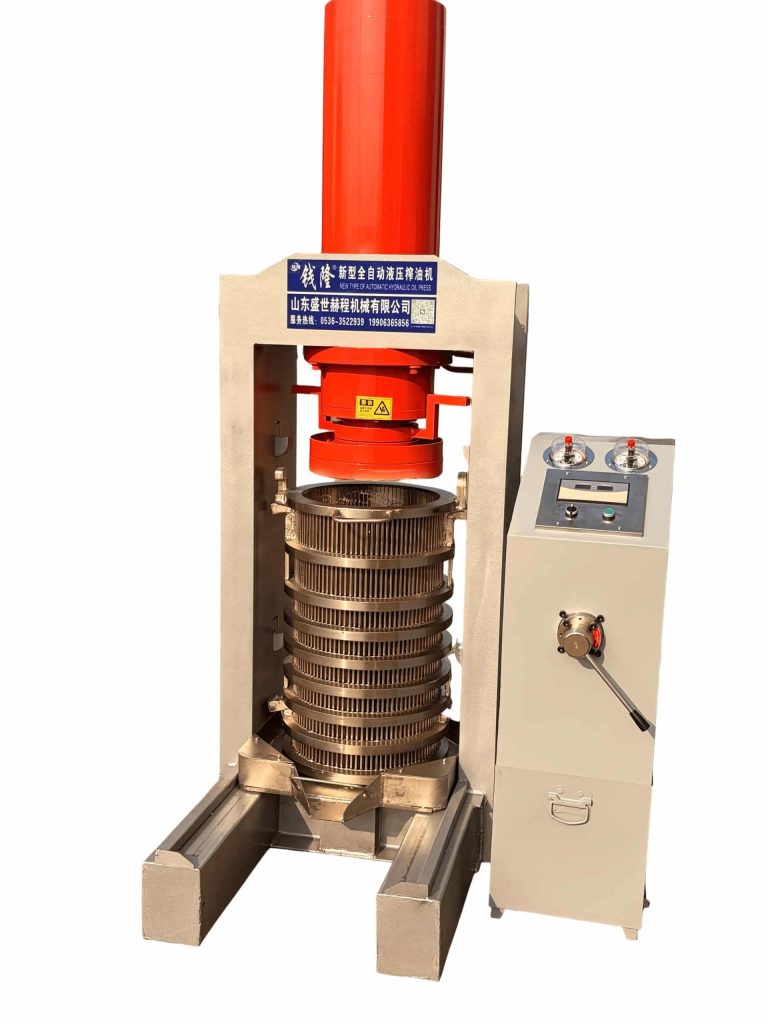
300-325 hydraulic oil press machine
Original photograph restored from the earlier page.
Qualify the press with your cocoa liquor and outlet targets
Send liquor composition and temperature, batch demand, butter and cake specifications, operating hours, utilities, contact-material requirements, layout, and destination.