Automatic pressure-sensitive labeling for bottled liquids
Match the labeling mode to the bottle geometry and label construction
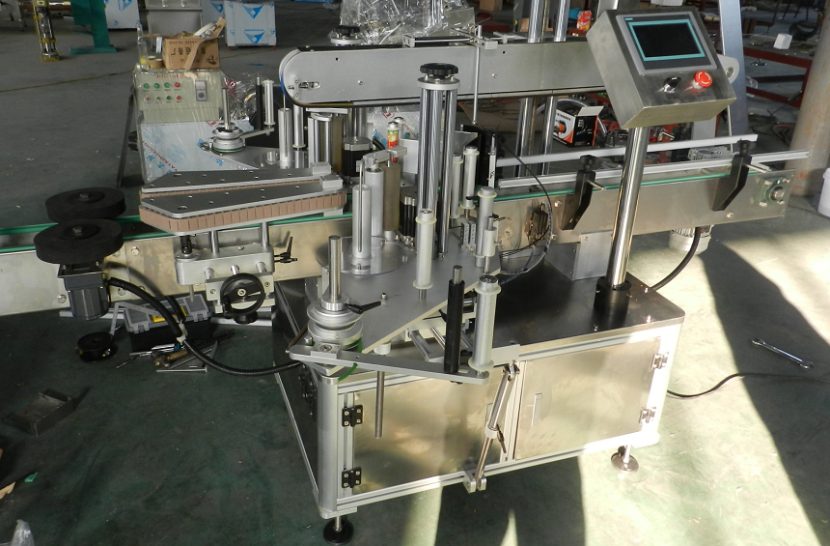
The current machine is described for self-adhesive labels on round, square, and flat plastic or glass containers. Its source-listed modes include square-bottle side or corner labeling and positioned labeling on round bottles, controlled through a PLC, touch interface, and fiber-optic sensing.
Application boundary
Select one verified labeling task for each bottle format
The page combines several container shapes and application modes. Final compatibility depends on the exact bottle, label position, label roll, surface condition, and required orientation.
Round bottles
The source lists single-position labeling for round bottles with a published diameter range of 80–150 mm. Confirm how the bottle is oriented and whether the application is partial-wrap or full-wrap.
Square and flat bottles
The source lists side and corner labeling for square or flat containers. Supply panel geometry, corner radius, handle position, mold seams, and the exact start and finish points.
Self-adhesive labels
This page describes pressure-sensitive labeling. It does not establish suitability for wet-glue labels, shrink sleeves, roll-fed film labels, or unsupported clear-label sensing.
Bottle surface
Oil, condensation, dust, panel flex, texture, and bottle deformation can affect adhesion and alignment. Test bottles should represent the actual filled and capped package.
Operating sequence
Control bottle spacing before dispensing and applying the label
Labeling quality depends on a stable bottle path, repeatable product detection, correct web tension, and an application mechanism selected for the container shape.
Published specification
Container, speed, and accuracy references from the current page
The two output figures use different bottle examples and labeling modes. They are not a universal line-speed guarantee. Final performance must be demonstrated with the actual bottle and label.
| Parameter | Source-listed value | Test or quotation check |
|---|---|---|
| Round-bottle diameter | Φ80–Φ150 mm | Confirm bottle height, straight-wall labeling area, ovality, base stability, and positioning feature. |
| Square / flat bottle length | 100–180 mm | Confirm which measured direction the source calls length. |
| Square / flat bottle width | 80–180 mm | Confirm guide width, corner radius, handle clearance, and panel shape. |
| Square / flat bottle height | 50–350 mm | Confirm conveyor-to-label position and top-stabilization requirement. |
| Square side / corner labeling speed | 45 bottles/min based on a 5 L square bottle | Request label size, application geometry, conveyor spacing, and test duration. |
| Round positioned-labeling speed | 35 bottles/min based on a 1.8 L round bottle | Confirm orientation method, label length, wrap angle, and bottle spacing. |
| Side-labeling deviation | ≤ ±1.5 mm | Define the reference edge, sample method, bottle tolerance, and acceptable conditions. |
| Round circumferential-positioning deviation | ≤ ±2.0 mm | Confirm the bottle registration feature and measurement method. |
| Head-to-tail misalignment | ≤ ±1.5 mm | The source excludes packaging-material and label tolerances; include those in final acceptance criteria. |
The source does not publish a label-roll specification
Label length, height, gap, roll outer diameter, core diameter, winding direction, backing material, transparency, adhesive, and liner stiffness must be supplied before the label head and sensor can be approved.
Bottle sample package
Provide the filled container in production condition
- Bottle drawing, material, filled weight, dimensions, corner radius, neck, cap, handle, mold seams, and panel stiffness
- Required label panel, start position, orientation mark, wrap angle, and acceptable skew
- Surface texture, treatment, oil exposure, condensation, dust, and expected bottle temperature
- All bottle colors and transparency levels that may affect detection
- Representative samples across supplier and molding tolerances
Label roll package
Approve the complete web, adhesive, and artwork
- Die-cut label dimensions, gap, liner width, core, roll diameter, winding direction, and splice details
- Paper, film, clear, metallized, or other face material and the intended adhesive
- Artwork register, barcode or QR quality, foil, varnish, and low-contrast registration marks
- Application and storage temperature range supplied by the label manufacturer
- Production rolls, not only hand-cut samples, for final machine testing
Line interfaces and change parts
Define every adjustment between capped bottle and coded pack
The current page states that the machine can connect with filling, capping, coding, and carton equipment. Mechanical and control interfaces are not specified.
| Interface | Current source | Project confirmation |
|---|---|---|
| Upstream bottles | Round, square, and flat plastic or glass containers | Confirm bottle stability, spacing, cap height, product residue, and the required infeed accumulation. |
| Conveyor | Conveying-type labeling arrangement; height and speed not published | Match working height, width, direction, guide rails, line speed, transfer plates, and stop logic. |
| Bottle handling | Rolling-bottle structure described | Define separator, top hold-down, wrap belt or roller, positioning device, side guides, and format-specific change parts. |
| Label sensing | Electronic fiber-optic sensor | Confirm sensor model and suitability for the label gap, clear label, clear liner, metallic face, and registration mark. |
| Controls | PLC and touch-control interface | Confirm brand, recipes, language, speed tracking, counters, alarms, password levels, backup, and external signals. |
| Downstream coding | Date coding can be connected | Choose coding before or after labeling according to whether the mark is on the bottle, cap, or label. |
| Guarding | Not published | Define guards and interlocks around nip rollers, belts, reels, moving bottle devices, drives, and conveyor transfers. |
Controls and quality checks
Use format recipes only after mechanical setup is verified
Product detection
Confirm sensor position and response for every bottle color and shape. A stable trigger is required before label-delay settings can be repeated.
Label registration
Verify gap detection, peel position, web tension, application pressure, and bottle speed before adjusting label start position.
Inspection
Define checks for missing labels, double labels, skew, wrinkles, bubbles, corner lift, head-to-tail alignment, barcode readability, and the reject method.
Line synchronization
Agree how the labeler responds to upstream starvation, downstream backup, reel end, label break, sensor fault, emergency stop, and controlled restart.
Operation and safety
Keep hands clear of reels, nip points, and moving bottle devices
- Thread the web and change reels only under the supplied safe-stop procedure.
- Guard rotating reels, belts, rollers, gears, drives, and bottle-stabilizing mechanisms.
- Keep emergency stops accessible from operator, reel-change, and conveyor positions.
- Isolate electrical and stored mechanical energy before clearing jams or servicing the label head.
- Confirm the final guarding and electrical-safety scope for the destination country.
Maintenance and spares
Clean the web path before label tracking deteriorates
- Inspect peel plate, drive rollers, nip rollers, wrap belt, guides, bearings, sensors, and conveyor transfers.
- Remove adhesive residue with approved cleaning materials without damaging rollers or sensors.
- Check web tracking, tension, fasteners, air lines if fitted, and bottle-handling alignment.
- Request part numbers for belts, rollers, sensors, motor, drive, PLC, HMI, switches, and format parts.
- Record verified settings and retain a labeled sample for each bottle-label recipe.
Quotation checklist
Information needed for a testable labeling proposal
- Every bottle and label drawing plus representative production samples and rolls
- Application mode, panel, start point, wrap angle, orientation need, and acceptance tolerances
- Required bottles per minute by format, operating hours, and changeover frequency
- Upstream capper discharge and downstream coder, inspection, and carton equipment data
- Conveyor height, direction, speed, controls, accumulation, and reject requirements
- Electrical and pneumatic utilities, workshop layout, safety standard, documentation, and destination
Set acceptance criteria before the factory trial
Record bottle and label lots, machine settings, tested speed, sample quantity, test duration, label position, skew, head-to-tail alignment, wrinkles, bubbles, adhesion, barcode readability, rejects, stops, and restarts.
Related packaging equipment
Complete the bottle route around the selected label application
Prove the label application with the actual bottle and production roll
Send bottle and label drawings, samples, labeling mode, required output, conveyor and adjacent-machine data, utilities, acceptance criteria, workshop layout, and destination country.