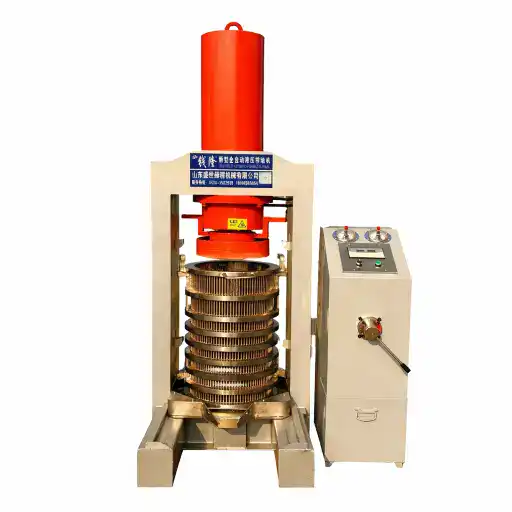
Edible oil refining line planning
Define the crude oil and required treatment before selecting refining modules
Refining is a selective purification process. The route should address impurities that affect the intended use, storage, or further processing of the oil while retaining beneficial components such as tocopherols and sterols as much as possible.
Raw material context and equipment
Refining follows oilseed preparation, pressing, and crude-oil collection
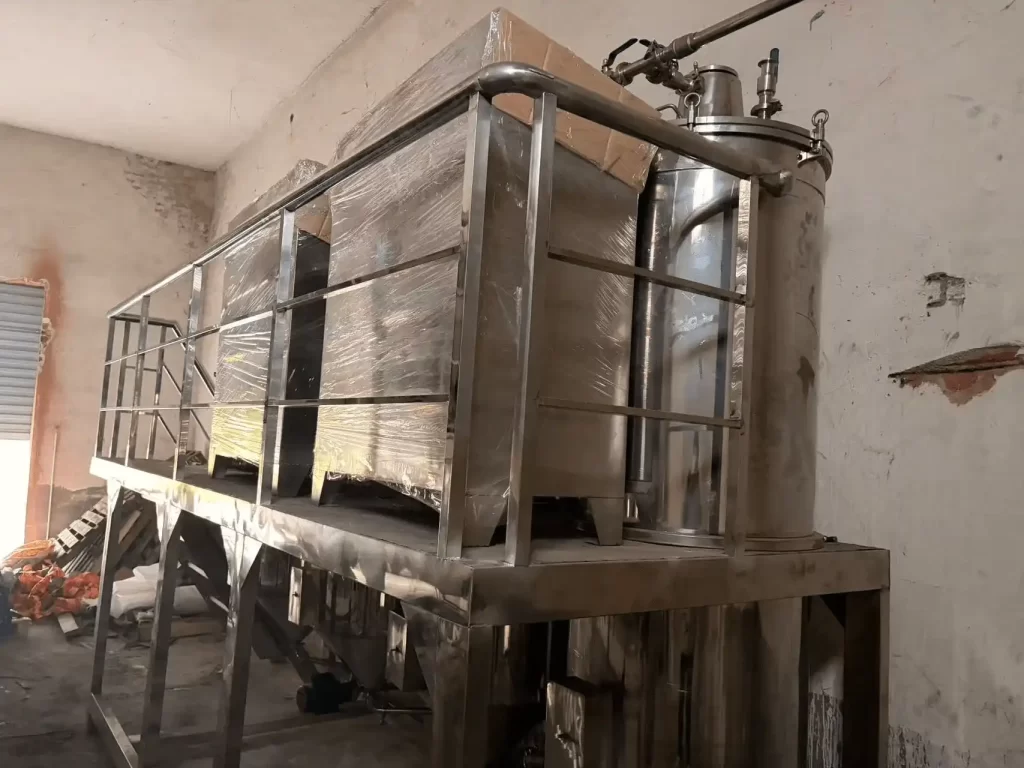
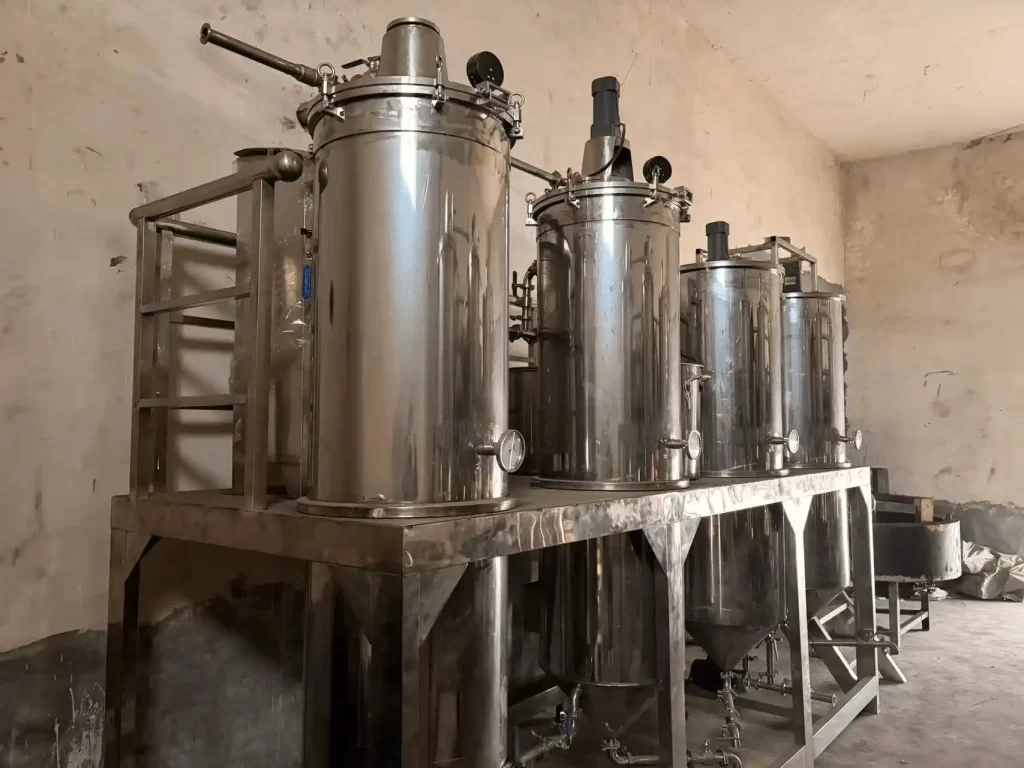
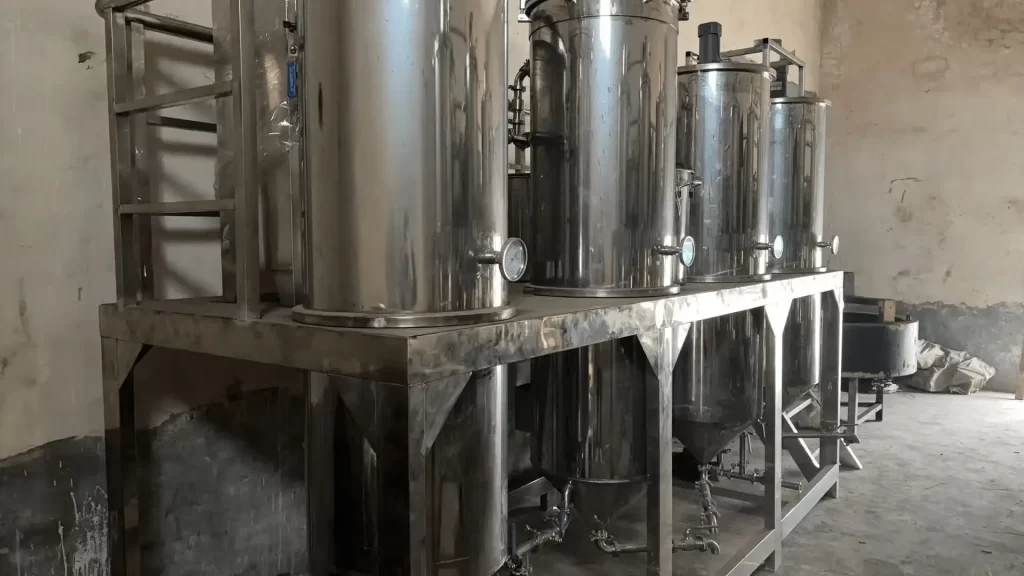
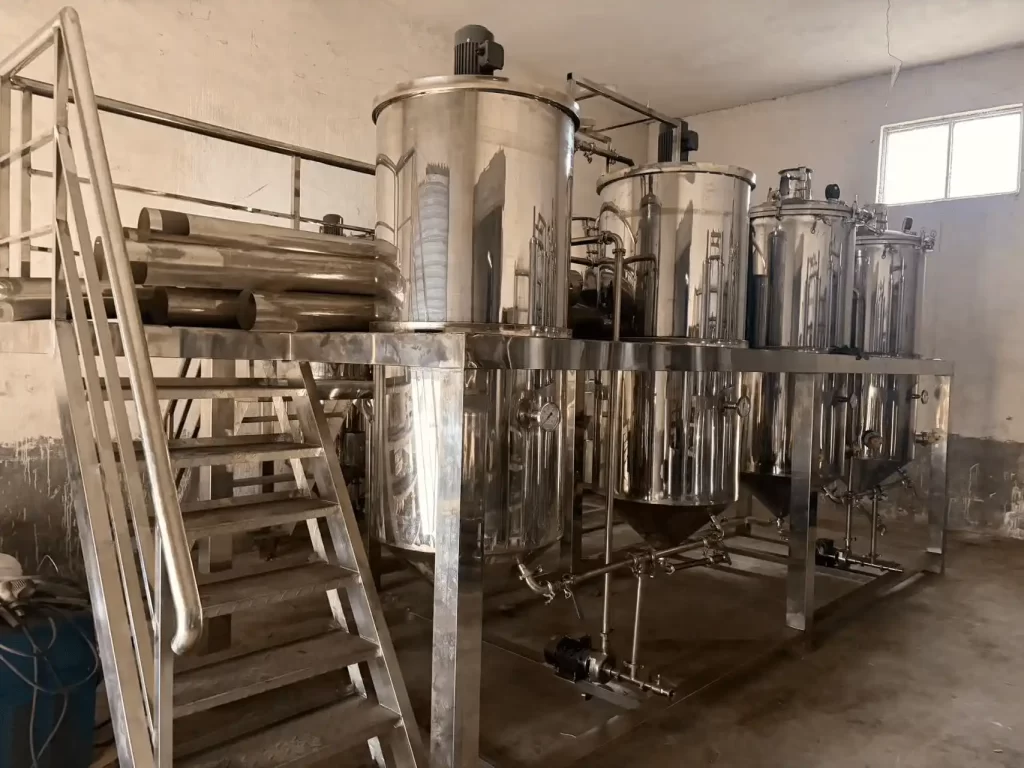
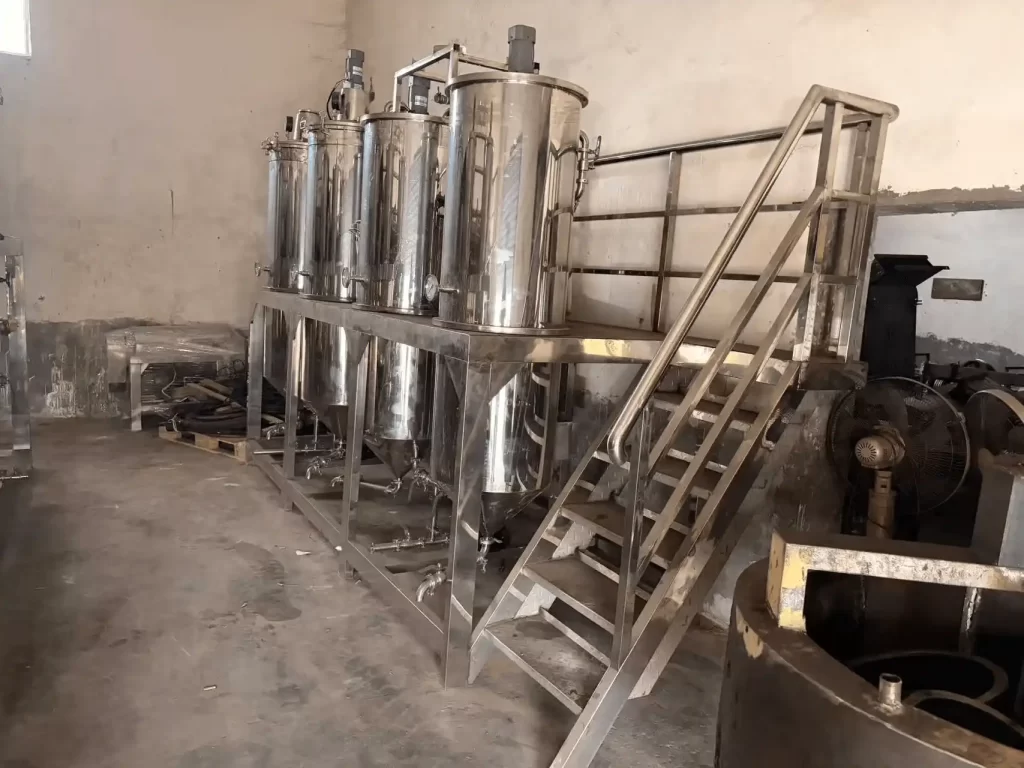
The equipment photographs below are existing examples from the site. They illustrate refining arrangements, not a fixed standard configuration for every crude oil.
Purpose and method
Select operations around the actual crude-oil condition
The live page identifies gossypol, phospholipids, proteins, sugars, mucilage, metals, and moisture among the components that may need attention. Their presence and the treatment required vary by oil and finished-product target.
Mechanical methods
Sedimentation, filtration, and centrifugal separation remove or separate material through physical handling.
Chemical methods
Acid treatment, alkali neutralization, oxidation-reduction, and esterification are listed as chemical approaches.
Physicochemical methods
Hydration, adsorption, steam distillation, liquid-liquid extraction, and cooling crystallization combine physical and chemical effects.
Methods are often combined within one stage
The source page uses alkali refining as an example: neutralization removes free fatty acids, the resulting soapstock can adsorb pigments and other impurities, and gravity settling or centrifugation can then separate the phases.
Process stages
The published batch route contains five treatment stages
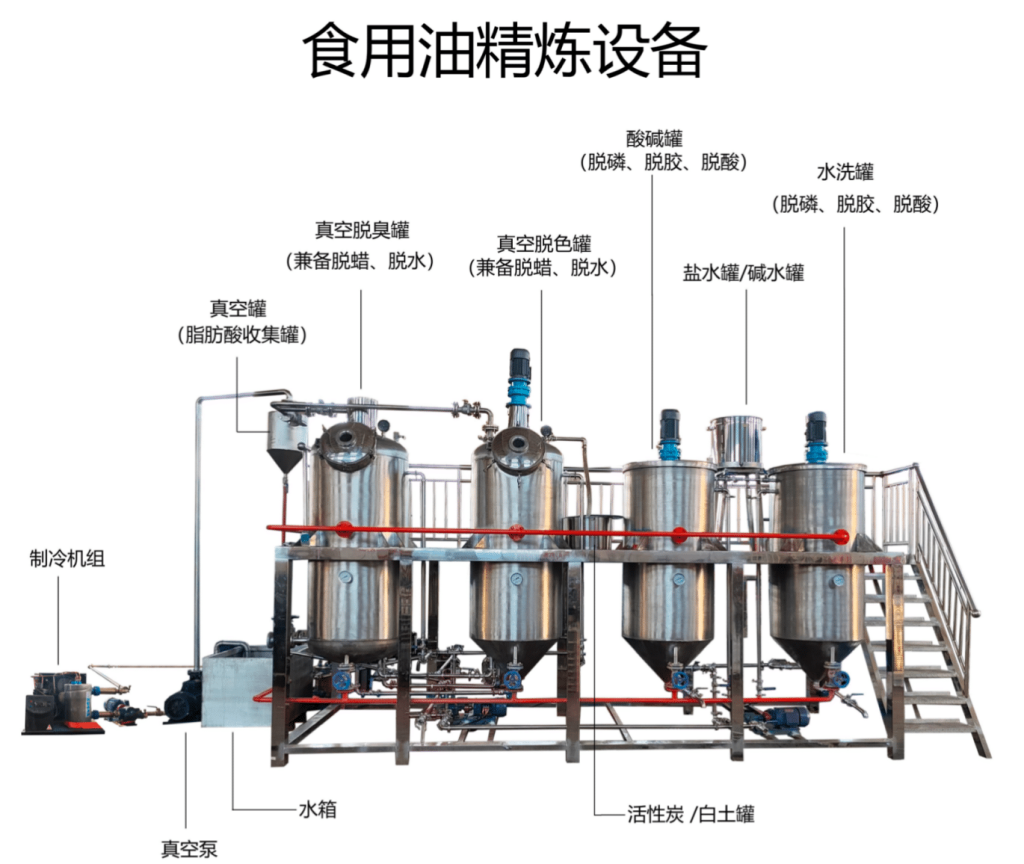
The first step below is a project decision gate. The following five are the process stages listed on the live page; the exact route and operating settings must be confirmed for the crude oil.
| Stage | Treatment role | Operating actions to plan | Configuration questions |
|---|---|---|---|
| Degumming | Address gums and phospholipid-related impurities according to the selected process. | Dosing or hydration, heating, mixing, reaction time, and phase separation as required. | Which method is proposed, what crude-oil data supports it, and how are separated gums discharged? |
| Neutralization / deacidification | Use alkali neutralization when the selected route calls for free-fatty-acid removal. | Controlled dosing, heating, mixing, reaction, then oil-soapstock separation. | Confirm dosing, reaction-vessel, settling or centrifugal separation, and soapstock-handling scope. |
| Water washing and drying | Wash the treated oil where required, then remove residual moisture before the next stage. | Water addition, mixing, settling or separation, discharge, heating, and drying time. | Confirm water supply, wastewater route, drying arrangement, and transfer between stages. |
| Bleaching | Use adsorption where the proposed treatment needs pigment or trace-impurity reduction. | Adsorbent handling, contact time, heating and mixing, followed by solids filtration. | Confirm the adsorption method, filtration module, spent-material handling, and cleaning access. |
| Deodorization | Use the proposed steam-distillation step to address odor-related components where required. | Heating, steam contact, controlled treatment time, cooling, and clean discharge. | Confirm the deodorization arrangement, utility inputs, controls, cooling, and finished-oil transfer. |
Equipment modules
Define the hardware separately from the process sequence
This is a scoping framework, not a standard bill of equipment. Some operations may share a vessel in one proposal and use separate modules in another.
| Module group | Where it is used | Items to confirm in the proposal |
|---|---|---|
| Feed, holding, and transfer | Crude-oil intake, interstage movement, and finished-oil discharge. | Included tanks, transfer method, connections, level control, cleaning access, and integration with pressing or storage. |
| Reaction and treatment vessels | Degumming, neutralization, washing, drying, and bleaching as selected. | Which stages are included, whether vessels are shared, working sequence, agitation, heating, dosing points, and discharge paths. |
| Heating, mixing, and controls | Stages requiring controlled heating, stirring, reaction, or settling periods. | Heat source, installed controls, temperature monitoring, utility demand, and which functions operate intermittently. |
| Separation and filtration | Oil-soapstock separation, washing-water separation, and removal of treatment solids. | Settling, centrifugation, or filtration method; discharge arrangement; filter consumables; and by-product handling. |
| Deodorization section | Steam-distillation treatment when required by the selected route. | Steam and heat arrangement, treatment controls, cooling, transfer, and service access. |
| Cleaning and planned shutdowns | Cooling, cleaning, inspection, and safe preparation between batches. | Drain and cleaning points, access around vessels, shutdown sequence, and buyer responsibility for utilities and waste handling. |
Published batch reference
A 1-ton batch is described as an 8–12 hour process example
These values come from the current live page. They are reference planning values, not a guaranteed cycle time or a specification for every oil, recipe, or equipment configuration.
| Reference point | Live-page value | Planning interpretation |
|---|---|---|
| Operating mode | Batch operation for the small and medium example | Material advances through defined treatment, settling, discharge, and preparation periods rather than continuous feed and discharge. |
| Worked batch quantity | 1 ton per batch | Use this only as the source-page scenario; request a vessel and line balance for the required batch and daily output. |
| Worked cycle time | 8–12 hours, depending on oil type and process settings | Confirm the included stages, heat-up, reaction, settling, transfer, cleaning, and operator time for the actual oil. |
| Power use through the cycle | Heating and stirring are intermittent; reaction, settling, waiting, and preparation periods occur | Elapsed batch time does not mean every motor or heater runs at full load for the full period. |
| Continuous-operation context | The source gives 10 TPD and 20 TPD or higher as examples of larger continuous lines | Do not apply continuous-line assumptions to a small batch system without a separately engineered continuous proposal. |
Do not size the project from batch time alone
Daily output also depends on the selected stages, vessel working capacity, transfer time, cleaning, utility availability, staffing, and the number of batches planned per shift.
Project integration
Refining is optional within the wider oil-production line
The live page notes that some projects stop at crude-oil pressing and filtration, while others add refining for their target color, odor, consistency, storage, or downstream processing requirements.
Initial scope
Pressing and filtration first
A project can begin with oilseed preparation, hydraulic pressing, and filtration when that output matches the buyer’s product plan.
- Define oilseed preparation and press route
- Collect and filter crude oil
- Provide clean interim storage
- Reserve connection points and floor area for later modules
Downstream scope
Add selected refining and filling modules
When the finished-oil target calls for further treatment, define the refining stages and how treated oil moves into storage or packaging.
- Match treatment stages to crude-oil data and target requirements
- Balance batch size with upstream crude-oil supply
- Confirm finished-oil storage and transfer
- Select filling equipment around the container plan
Buyer configuration checklist
Information needed before a refining line can be configured
- Crude oil type, source process, current filtration, and available oil-analysis data
- Required batch quantity, daily output, operating hours, and planned number of batches
- Finished-oil application, target quality requirements, and applicable local standard
- Which stages are required: degumming, neutralization, washing and drying, bleaching, and deodorization
- Existing pressing, filtration, storage, or filling equipment that must connect to the line
- Workshop dimensions, floor loading information, access route, and service clearances
- Available electrical supply, heat source, water, steam if required, drainage, and cooling arrangement
- Plans for soapstock, gums, wastewater, spent adsorbent, and other separated materials
- Destination country, preferred control level, documentation needs, and installation constraints
Ask for the process basis with the equipment list
A useful proposal should state the crude-oil assumptions, included treatment stages, batch basis, module list, utility requirements, interconnections, controls, cleaning access, and buyer-supplied items.
Finished-oil results depend on the feed oil, selected process, operating settings, and quality-control plan. The equipment photographs and worked batch example should not be read as a product-standard promise.
Related project pages
Continue the line and equipment review
Restored original media
Edible-oil refining equipment photographs
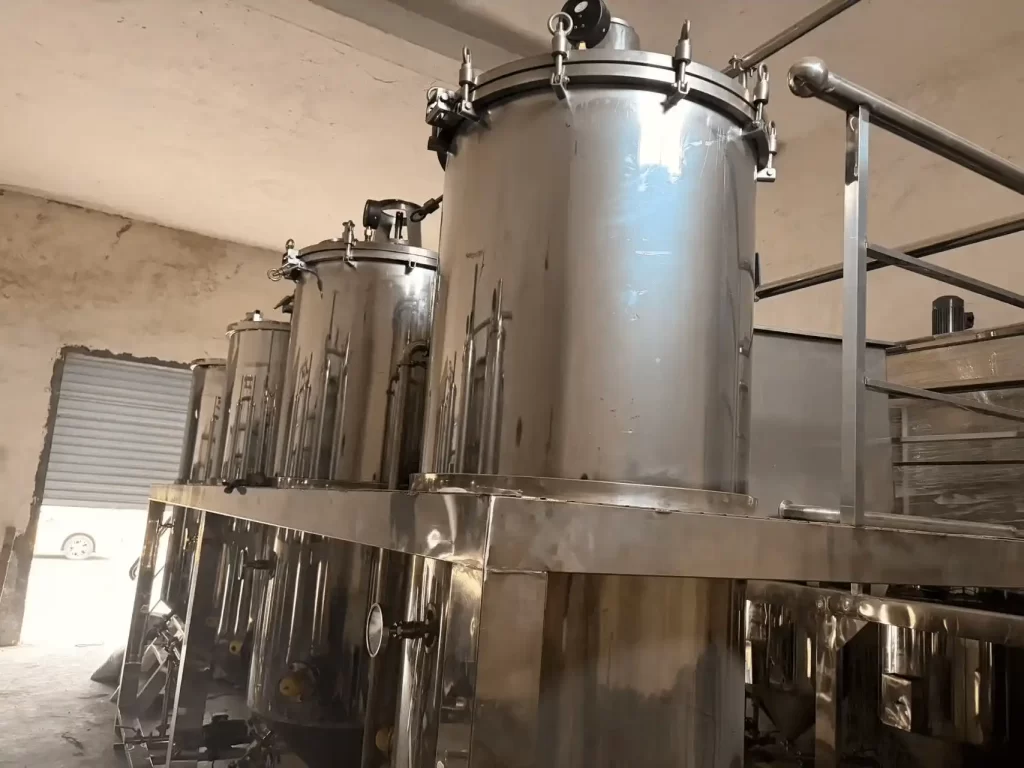
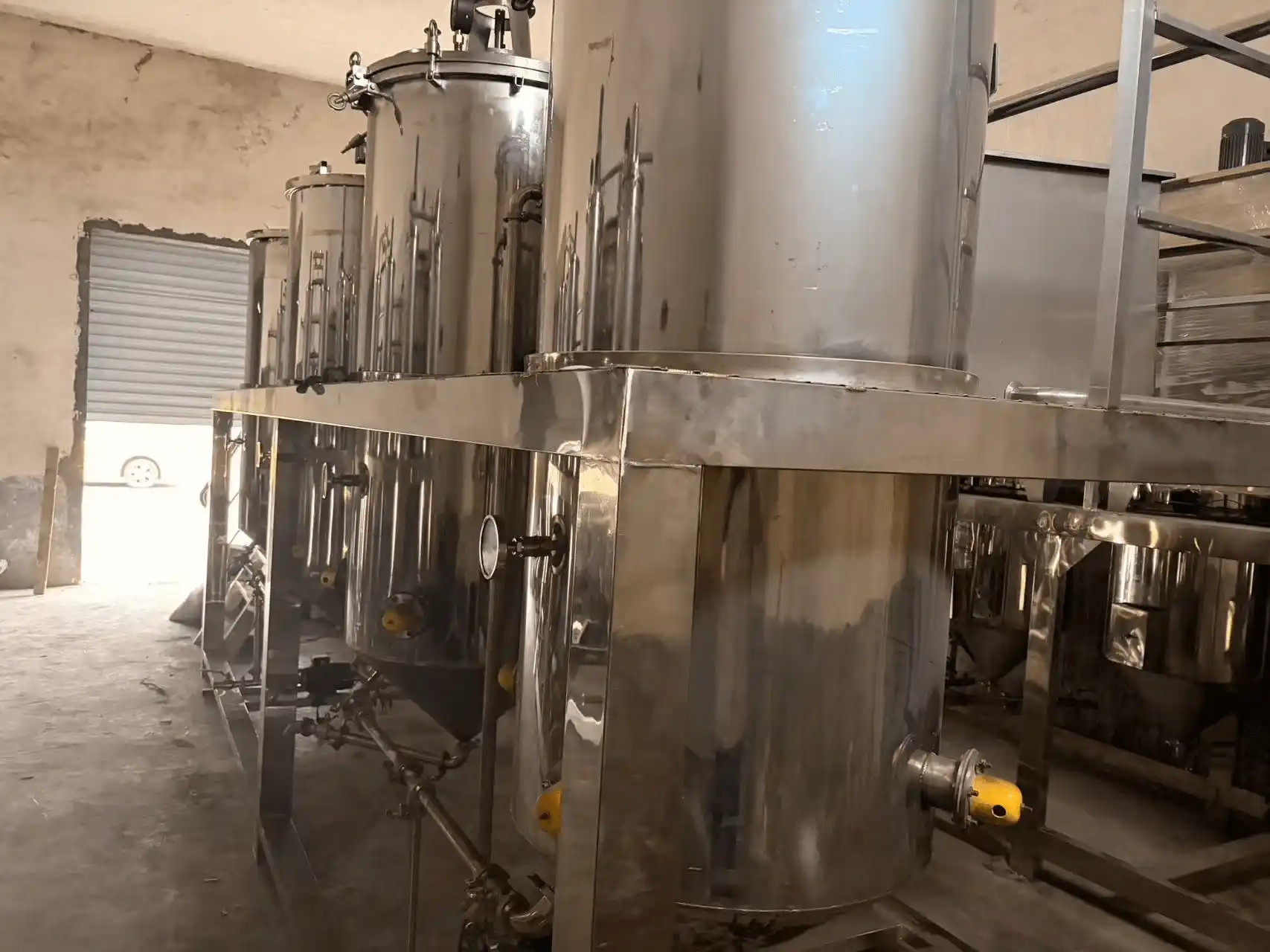
Original vessel and complete-unit photographs restored from the earlier refining page.
Restored machine detail
Edible oil refining machine1
Edible oil refining machine1
Edible oil refining machine1
Edible oil refining machine1
Turn the crude-oil data into a defined refining scope
Send the oil type, available analysis, batch and daily target, required treatment stages, finished-oil requirements, utilities, workshop dimensions, upstream and downstream equipment, and destination.