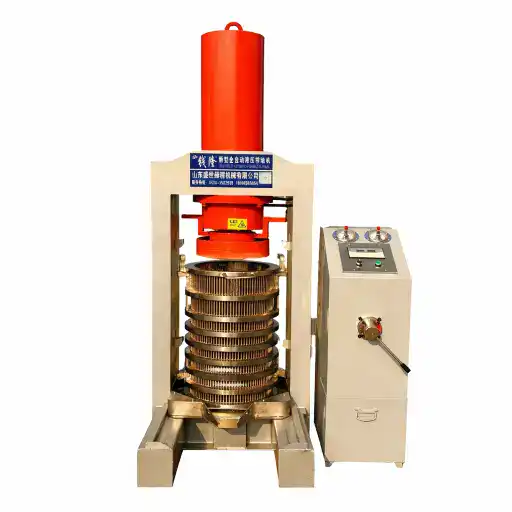
Cocoa ingredient processing
Configure the line from prepared cocoa beans to butter, press cake, and powder
This hub connects the six equipment stages covered on the site: roasting, cracking and shell separation, nib grinding, hydraulic butter pressing, press-cake crushing, and powder milling. Finished chocolate production, recipe formulation, conching, tempering, and molding are outside this process unless separately specified.
Core separation stage
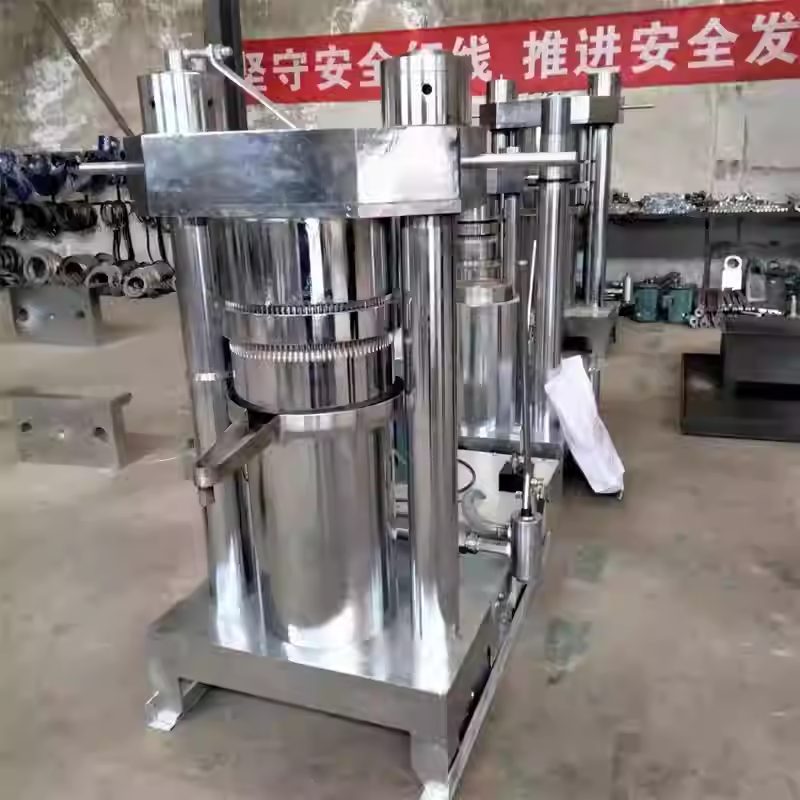
Press conditioned cocoa liquor, not whole beans
The hydraulic press receives cocoa liquor produced after roasting, shell removal, and nib grinding. Under pressure, liquid cocoa butter drains from the press while the remaining cocoa solids form a compact cake for downstream crushing and milling.
- Input to the press: prepared cocoa liquor or mass
- Primary outputs: cocoa butter and cocoa press cake
- Powder production requires separate cake crushing and grinding
- Actual separation depends on liquor composition, temperature, loading, cycle, and target cake condition
Feedstock and line boundary
Define what arrives at the factory and which cocoa ingredients leave it
A credible proposal needs the incoming bean specification and the required butter, cake, or powder specification. The line cannot be sized from bean tonnage alone.
Incoming basis
Cleaned, fermented, and dried cocoa beans
The published equipment sequence starts with cocoa beans. Fermentation and primary drying at origin are not assumed to be part of this line unless added to the project scope.
- Bean variety, origin, moisture, fermentation condition, and defect level
- Foreign material, stones, metals, dust, and sorting requirement
- Shell condition and expected nib recovery after winnowing
- Food-safety, traceability, and destination-market requirements
Finished scope
Cocoa butter plus cake or powder
The press section produces butter and cake. Powder follows only after the cake is cooled or conditioned as required, reduced to a suitable feed size, and milled to the agreed result.
- Butter quality, filtration, storage, temperature, and packaging
- Target residual fat and physical condition of the press cake
- Powder fineness, color, temperature control, and packaging
- Whether alkalization or any other treatment is required
Practical process flow
Keep flavor development, shell removal, liquor preparation, and fat separation in sequence
The recipe and equipment settings depend on the bean and product target. Machine capability should not be treated as a universal cocoa process setting.
Core equipment
Select each machine against the same material balance
These existing site images show the main equipment families. Final model selection should account for bean input, nib yield, liquor flow, press cycle, butter outlet, cake handling, and powder demand.
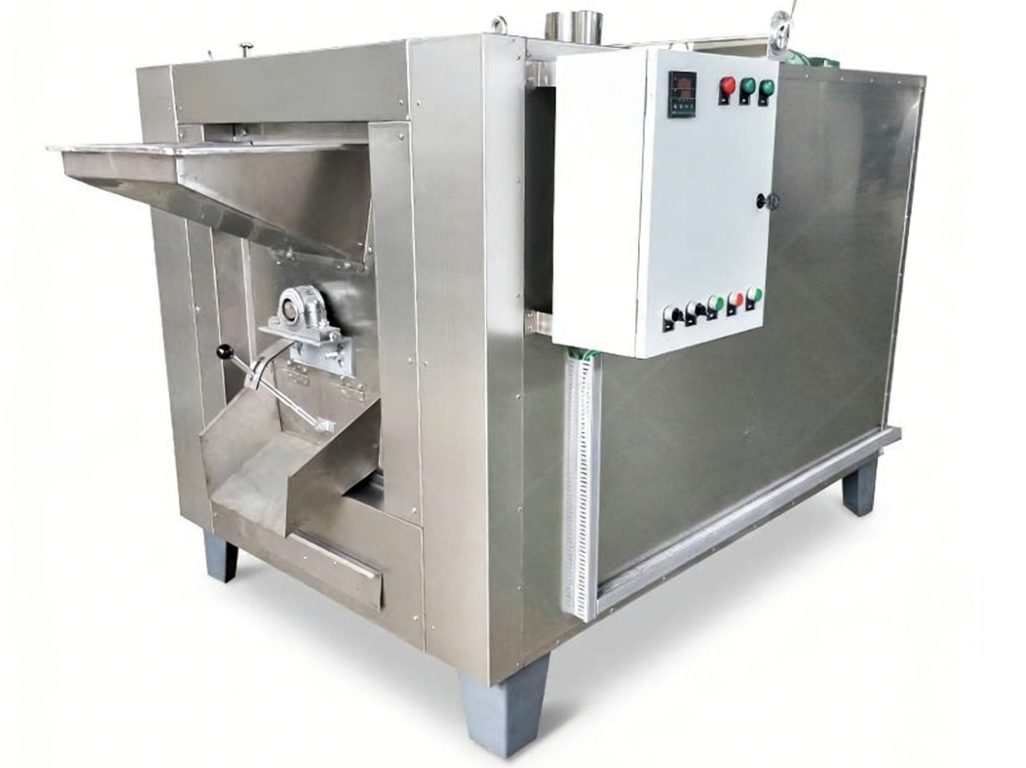
Cocoa bean roaster
Develop the approved roast profile and prepare the shell for cracking. Specify heating source, batch or continuous operation, cooling, exhaust, and cleaning.
Review cocoa roasting →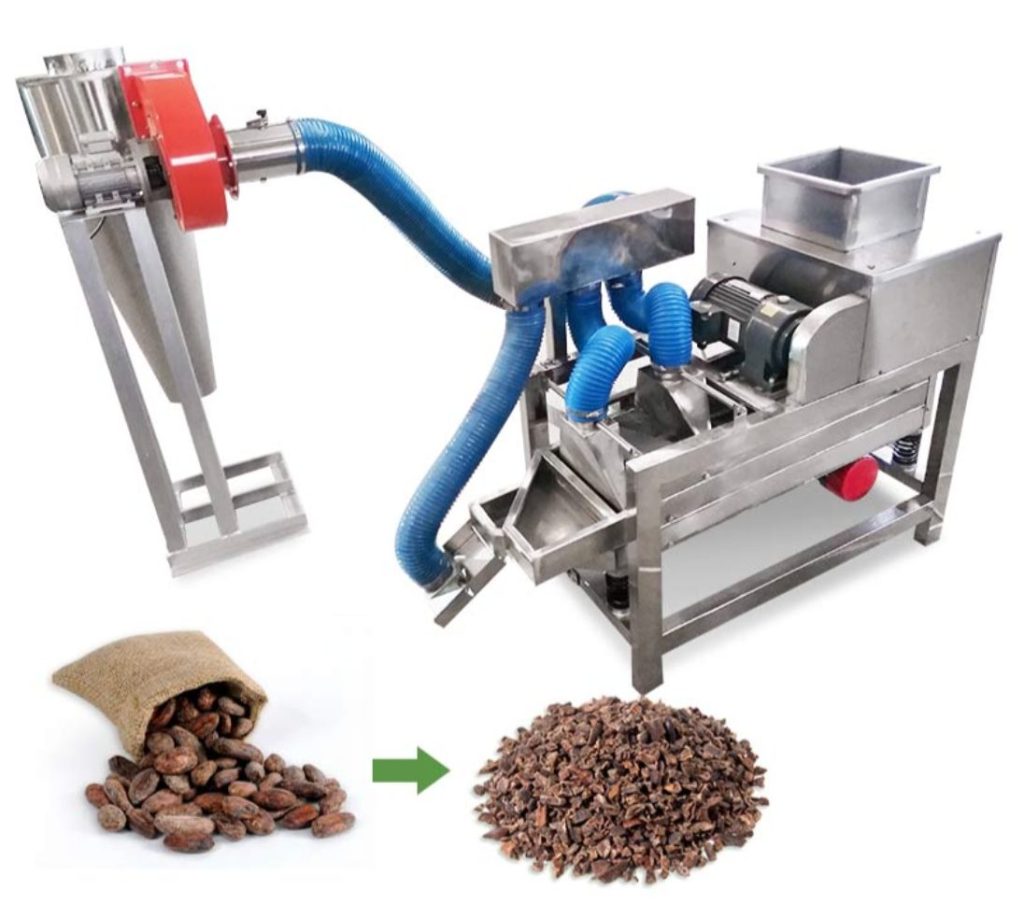
Cracking and winnowing
Break roasted beans and use air separation to divide nibs from shell. Confirm feed uniformity, shell carryover, nib loss, dust collection, and product outlets.
Review cocoa bean peeling →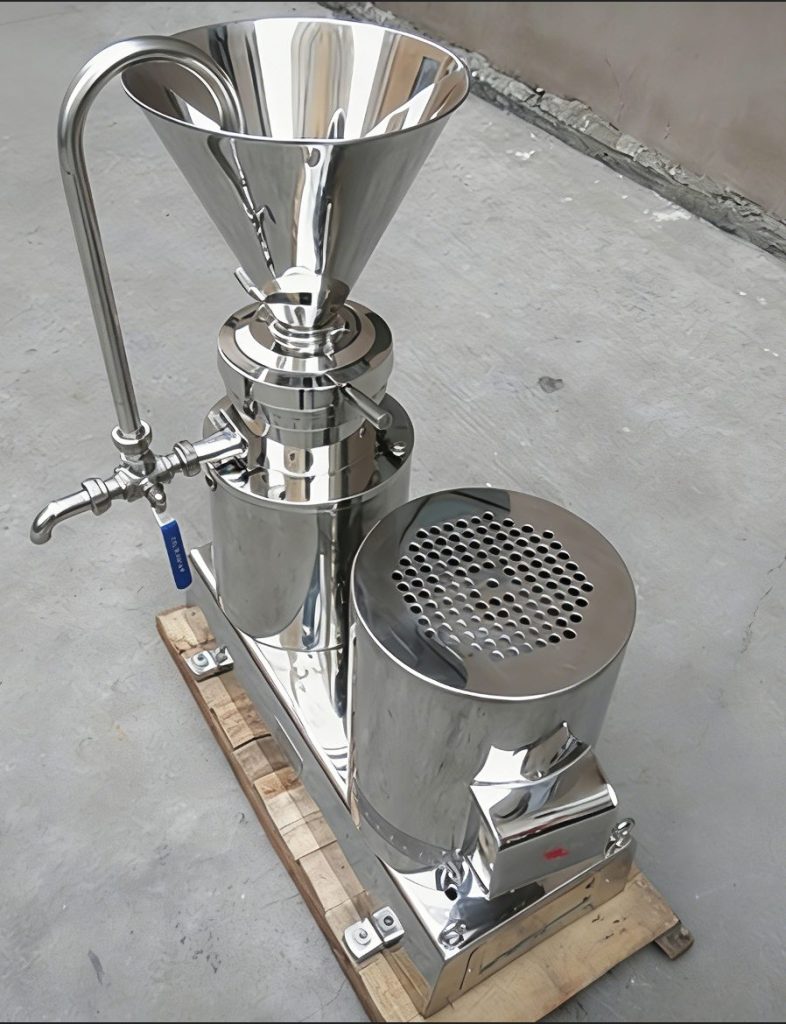
Cocoa nib grinding
A colloid mill reduces prepared nibs into cocoa liquor. Select the mill for feed condition, required circulation, viscosity, temperature management, and cleaning.
Review cocoa nib grinding →Hydraulic cocoa butter pressing
Condition cocoa liquor for batch pressing, then separate liquid cocoa butter from the remaining cocoa solids. Match batch load and cycle to the verified liquor flow.
Review cocoa butter pressing →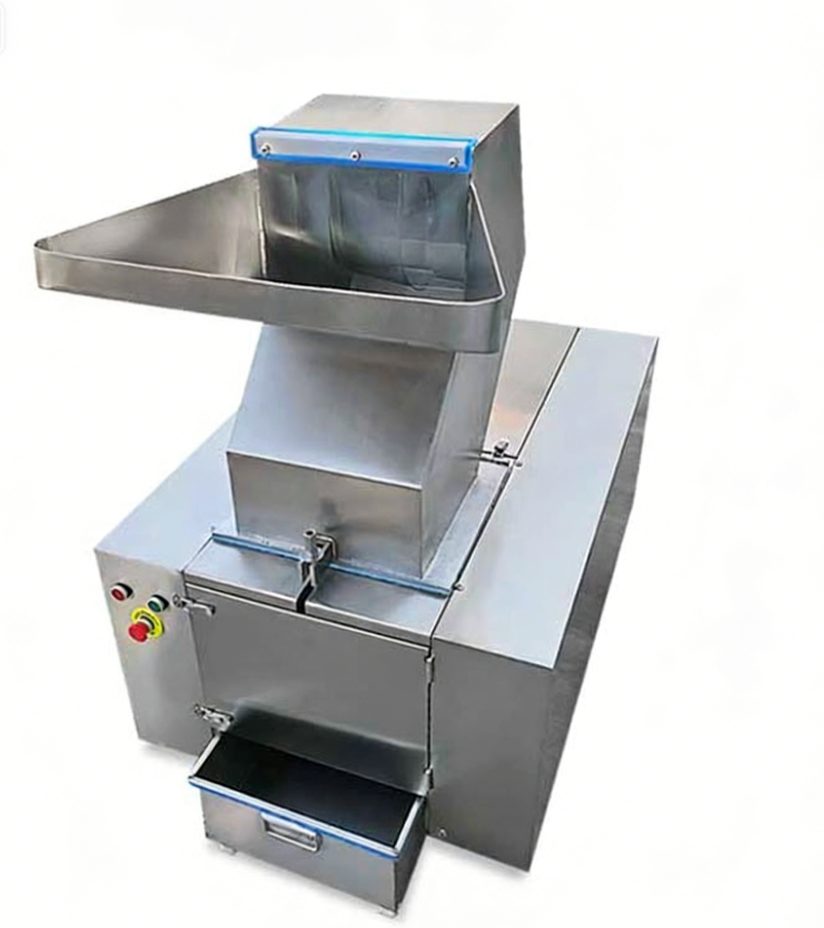
Cocoa press-cake crushing
Break cooled or conditioned press cake into a controlled feed size before fine powder milling. Confirm cake hardness, inlet size, screen, dust control, and cleaning access.
Review cocoa cake crushing →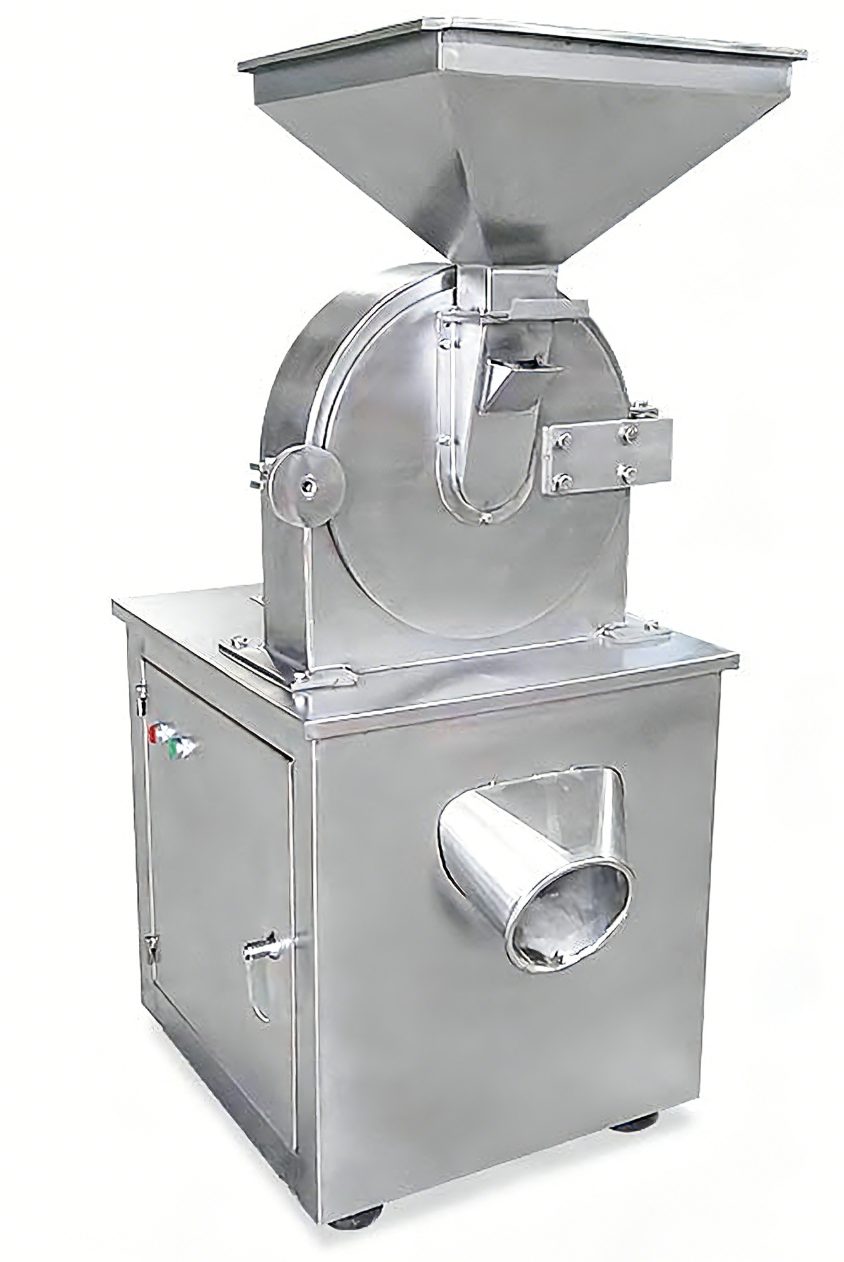
Cocoa powder milling
Mill prepared cocoa cake through the selected screen after coarse crushing. Temperature control, dust collection, sieving, and packaging may be separate modules.
Review cocoa powder grinding →Source-listed press references
Use the Model 325 values for preliminary press selection only
The figures below come from the current cocoa butter press page. They describe the listed machine, not guaranteed cocoa butter output, cake residual fat, or total line capacity.
| Press reference | Published value | What must be confirmed |
|---|---|---|
| Pressing force | 325 tons | Approved machine configuration, pressure controls, press tooling, and acceptance documentation. |
| Hydraulic working pressure | 55–60 MPa | Operating setpoints, allowable range, controls, maintenance, and safety devices for the supplied unit. |
| Barrel reference | 390 mm inner diameter and 800 mm height | Usable volume, basket or plate arrangement, filter media, loading method, and drainage path. |
| Source-listed batch range | 5–100 kg; the linked page recommends 60–80 kg for stable operation | Practical load from cocoa liquor density, temperature, viscosity, cake target, and safe fill level. |
| Source-listed cycle examples | 30–40 minutes for a hot-press example; about 2 hours for a cold-press example | Define what hot or cold means for this product, including liquor temperature, preparation, pressure profile, drainage endpoint, unloading, and cleaning. |
| Motor reference | 2.2 kW | Voltage, phase, frequency, connected load, hydraulic-station arrangement, and local electrical requirements. |
Press capacity is not bean-input capacity
The press receives cocoa liquor after cleaning, roasting, shell removal, and grinding. Calculate the number of presses from the verified liquor flow, batch load, complete cycle, operating hours, and maintenance allowance.
Process-control points
Product quality depends on the complete recipe, not one machine setting
The proposal should identify the variables the operator controls and the measurements used to release butter, cake, or powder.
| Stage | Control points | Buyer specification |
|---|---|---|
| Bean preparation | Cleaning, sorting, bean moisture, roast profile, cooling, and storage time. | Accepted bean grade, flavor objective, food-safety limits, and traceability. |
| Cracking and winnowing | Crack size, airflow, shell separation, nib loss, dust, and recirculation. | Maximum shell carryover, nib recovery method, and by-product handling. |
| Liquor grinding | Feed size, mill gap, circulation, temperature, viscosity, and transfer. | Required liquor condition at the press inlet and any particle-size test. |
| Hydraulic pressing | Liquor temperature, batch load, pressure profile, time, drainage, and unloading. | Butter quality, cake residual-fat target, cake integrity, and sampling method. |
| Powder preparation | Cake conditioning, pre-crushing, screen, grinding heat, sieving, and dust control. | Fineness, color, moisture, residual fat, packaging, and storage conditions. |
Roaster temperature capability is not a cocoa recipe
The live pages contain different roasting ranges. Set the production profile from the actual bean, flavor target, food-safety plan, and validated trials rather than publishing one universal temperature.
Outputs and downstream scope
Specify butter handling separately from cake and powder handling
Liquid outlet
Cocoa butter
Define filtration, temperature control, holding time, tank material, transfer, solidification or liquid filling, container, traceability, and the target food or cosmetic standard.
- Do not mix food and cosmetic release criteria by assumption
- Confirm whether polishing filtration is included
- Plan heated or insulated transfer where required
Solid outlet
Cocoa cake and cocoa powder
Choose whether cake is sold, stored, or milled. Powder production may require cooling, pre-crushing, milling, sieving, dust collection, metal control, and packaging.
- State the target residual fat and powder fineness
- Confirm whether alkalized powder is required
- Define bag or container size and storage conditions
Common scope decisions
Clarify what is included before comparing cocoa line quotations
Buyer configuration checklist
Information needed to balance the cocoa line
- Bean origin, variety, moisture, fermentation, defects, and representative sample
- Incoming bean quantity, operating hours, and planned product schedule
- Required butter, cake, and powder quantities and quality specifications
- Roast-profile development responsibility and required cooling method
- Shell carryover, nib loss, liquor condition, and press-cake target
- Powder fineness, alkalization requirement, dust control, and packaging format
- Food or cosmetic compliance, traceability, cleaning, and allergen controls
- Electricity, gas or other heat source, cooling water, compressed air, and ventilation
- Workshop dimensions, hygienic zoning, storage, installation, and destination country
Request a process basis with the machine list
A useful quotation should state the bean assumptions, mass balance, product targets, model and quantity of each machine, utility demand, transfer method, controls, cleaning access, excluded operations, and acceptance tests.
Restored original media
Additional cocoa processing-line photograph
Original cocoa equipment photograph restored from the earlier line page.
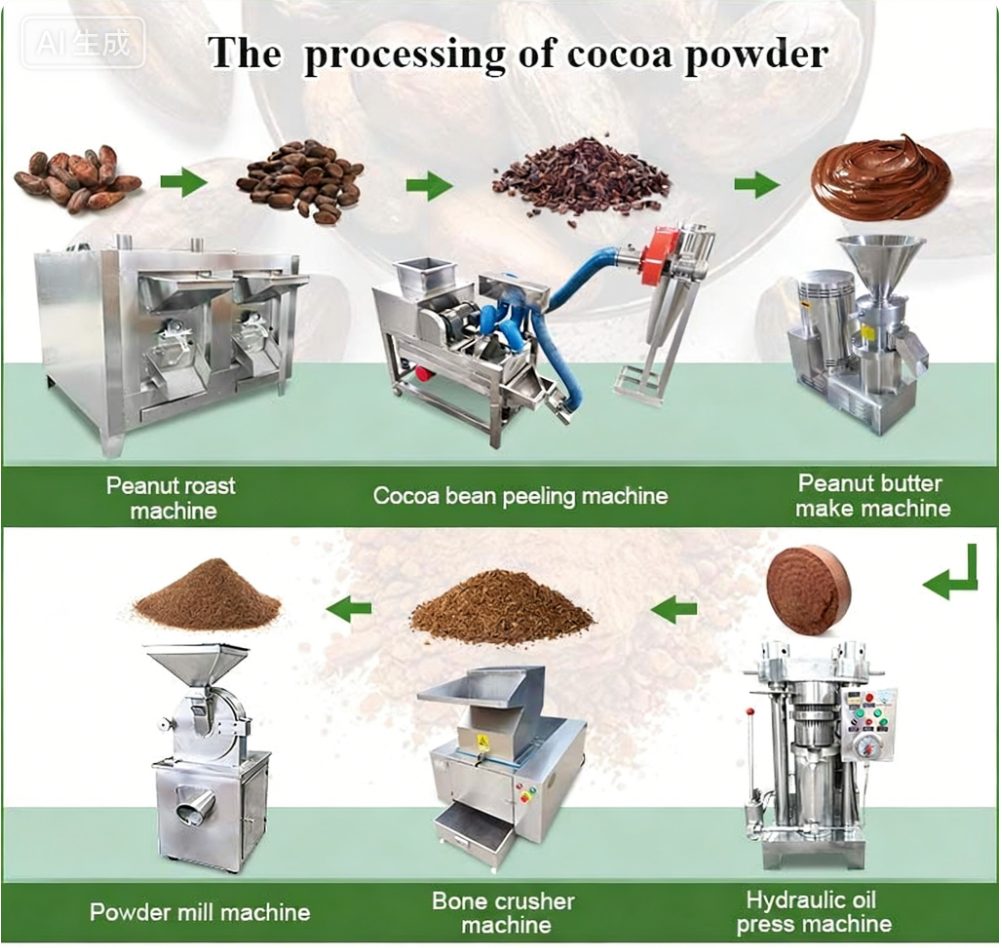
Cocoa Processing Line
Original photograph restored from the earlier page.
Turn the cocoa bean sample and ingredient targets into a balanced line
Send the bean specification, input schedule, butter and powder requirements, utilities, packaging, workshop layout, quality-control plan, and destination for a configuration review.