Rotary empty-bottle feeding for automatic filling lines
Create a controlled single-file bottle supply before filling
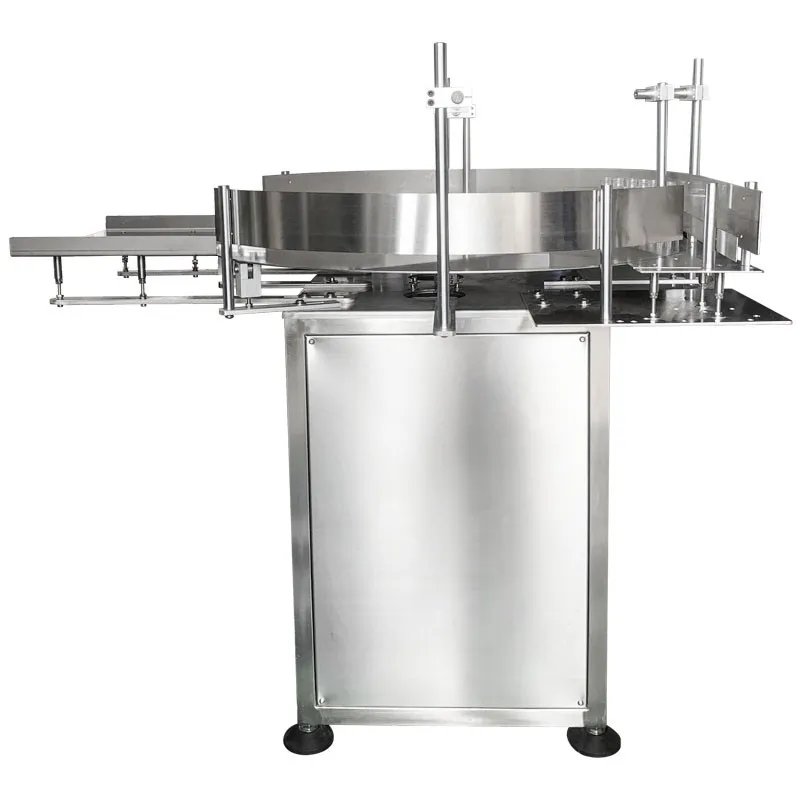
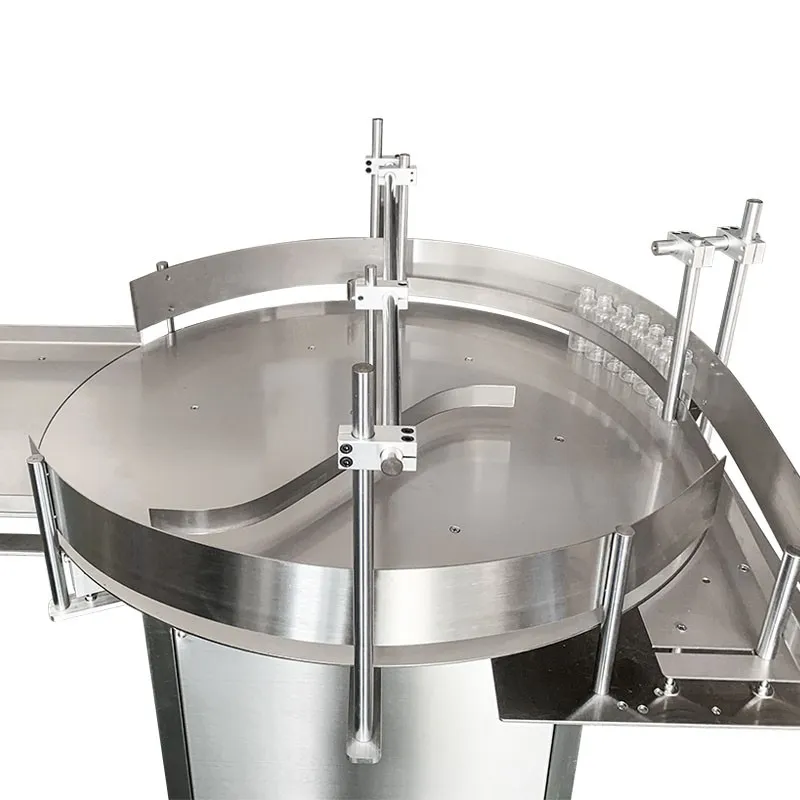
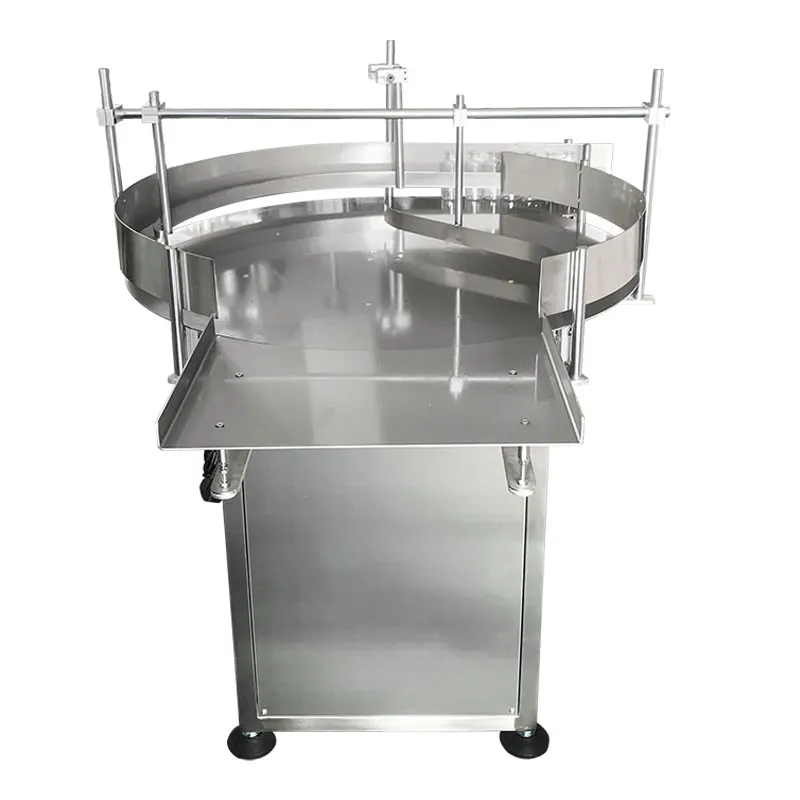
The genuine site media shows a rotary bottle feeding and accumulation table with adjustable guide rails. It can support a steady handoff to the filling conveyor when the incoming bottle orientation, output rate, guide arrangement, and conveyor interface have been confirmed.
Application boundary
Confirm whether bottles arrive upright or randomly oriented
The current text says bottles can be loaded in bulk, sorted, and delivered upright. The attached product photographs show a low-profile rotary table but do not show a hopper, elevator, or bottle-erecting mechanism.
What the photographs support
- Rotary accumulation surface for empty bottles
- Adjustable guide rails that direct bottles toward an outlet
- Transfer into a narrow downstream conveyor path
- Compact front-end position before the filling machine
What still requires written confirmation
- Whether bottles must be placed upright by an operator
- Whether randomly oriented bottles can actually be erected
- Supported bottle shapes, dimensions, materials, and stability limits
- Usable output and buffer capacity for each bottle format
Do not assume a high-level bulk bottle elevator is included
If the project requires operators to dump bags of random bottles into a hopper, request a separate bottle-elevator and orienting arrangement or written confirmation that the proposed machine performs that function.
Operating sequence
Use the rotary table as a controlled buffer and single-file feeder
This sequence reflects the photographed rotary-table arrangement. The exact loading orientation and guide geometry must be approved with the intended bottle.
Published data status
The current page provides no dimensional or performance table
Use the source descriptions only as an initial functional outline. A line-ready quotation needs a model-specific drawing, bottle range, test output, utilities, controls, and change-part schedule.
| Parameter | Current source | Required confirmation |
|---|---|---|
| Machine principle | Described as a rotary sorting structure; attached media shows a rotary table | Confirm upright accumulation only or true random-bottle orienting. |
| Speed control | Described as adjustable; no range or control method published | State table and discharge-conveyor speeds, adjustment method, and tested bottle output. |
| Bottle range | No dimensions, shape range, or material limits published | Approve each bottle drawing and representative sample. |
| Input condition | Text states bulk loading; media does not show an erecting mechanism | Define manual upright placement, random loading, hopper, elevator, and operator rate. |
| Output rate | Not published | Test bottles per minute, accumulation behavior, and stable handoff to the filler. |
| Conveyor interface | Not published | Confirm working height, width, direction, transfer plate, guide spacing, and line speed. |
| Power and utilities | Not published | Confirm voltage, frequency, phase, installed power, and whether compressed air is required. |
| Dimensions and weight | Not published | Request overall and shipping dimensions, weight, lifting points, and service clearances. |
| Controls and safety | Simple controls are described; hardware and guarding are not listed | Define drive, sensors, external signals, emergency stops, guards, alarms, and jam response. |
Bottle and line interfaces
Balance accumulation without creating pressure at the filler
The turntable should supply bottles steadily while responding to downstream stops. The proposal should define how the table, discharge conveyor, and filler exchange run, stop, and low-bottle signals.
Bottle stability
Tall, light, narrow-base, handled, square, and asymmetrical bottles can behave differently on a rotary surface. Test the actual empty container at startup, steady state, and restart.
Discharge geometry
Confirm outlet width, guide-rail transition, dead plate, conveyor height, travel direction, and whether the bottle can bridge or rotate at the handoff.
Downstream synchronization
The filler should be able to pause or slow bottle supply before excessive back pressure builds. Define the control signal and restart behavior in the line description.
Operator loading
When bottles are loaded manually, check container-bin position, reach, loading frequency, safe access, and the number of bottles the table can hold without unstable stacking.
Bottle trial
Approve every container format through a physical run
- Bottle drawing, material, empty weight, height, width or diameter, base geometry, neck, handle, and center of gravity
- Required output, downstream filler speed, operating hours, and planned accumulation time
- Input orientation, packaging method for empty bottles, and operator or elevator loading plan
- Acceptable scuffing, static behavior, bottle tipping, jams, and deformation
- Representative samples across supplier and molding tolerances
Change parts and adjustments
Record guide settings for repeatable changeover
- Table guide position, sweep profile, discharge-rail width, and conveyor guide spacing
- Any format-specific rail, wedge, divider, orienting part, or transfer plate
- Table and conveyor speed settings for each approved bottle
- Tools, scales, format labels, and storage for loose change parts
- Emptying and cleaning sequence before switching bottle or product families
Controls and guarding
Define stop logic for jams and downstream backup
- Confirm independent, linked, manual, and automatic operating modes.
- Specify downstream-full and downstream-ready signals, sensors, alarm logic, and restart sequence.
- Guard the rotary drive, transmission, transfer pinch points, and any powered guide mechanism.
- Keep the emergency stop accessible from the bottle-loading and discharge positions.
- Use isolation and lockout procedures before clearing bottles or adjusting guides.
Cleaning and maintenance
Keep the bottle-contact path smooth and correctly aligned
- Inspect the table surface, guide rails, fasteners, discharge transition, bearings, drive, and leveling feet.
- Remove dust, bottle fragments, labels, and packaging debris before they affect bottle movement.
- Check abnormal noise, vibration, guide movement, and bottle scuffing during each format run.
- Request motor, drive, bearing, rail, sensor, switch, and electrical part numbers.
- Confirm permitted cleaning agents and whether any contact components require tool removal.
Quotation checklist
Information needed before selecting the feeding principle
- All bottle drawings and samples, including the smallest, largest, and least stable formats
- Whether bottles arrive upright in trays or bags, or randomly oriented in bulk
- Required output, filler speed, line efficiency target, operating schedule, and buffer expectation
- Filler infeed conveyor height, width, direction, speed, guide spacing, and available control signals
- Electrical supply, workshop layout, operator loading position, access, and safety standard
- Required change parts, startup spares, documentation, testing, and destination country
Use a witnessed bottle run as the acceptance basis
Record the exact bottle, input orientation, table and conveyor settings, observed output, test duration, restarts, downstream stops, tipping, jams, scuffing, and the final change-part list.
Related packaging equipment
Continue from empty-bottle feed into the packaging line
Restored original media
Automatic bottle unscrambler photograph
Original machine photograph restored from the earlier product page.
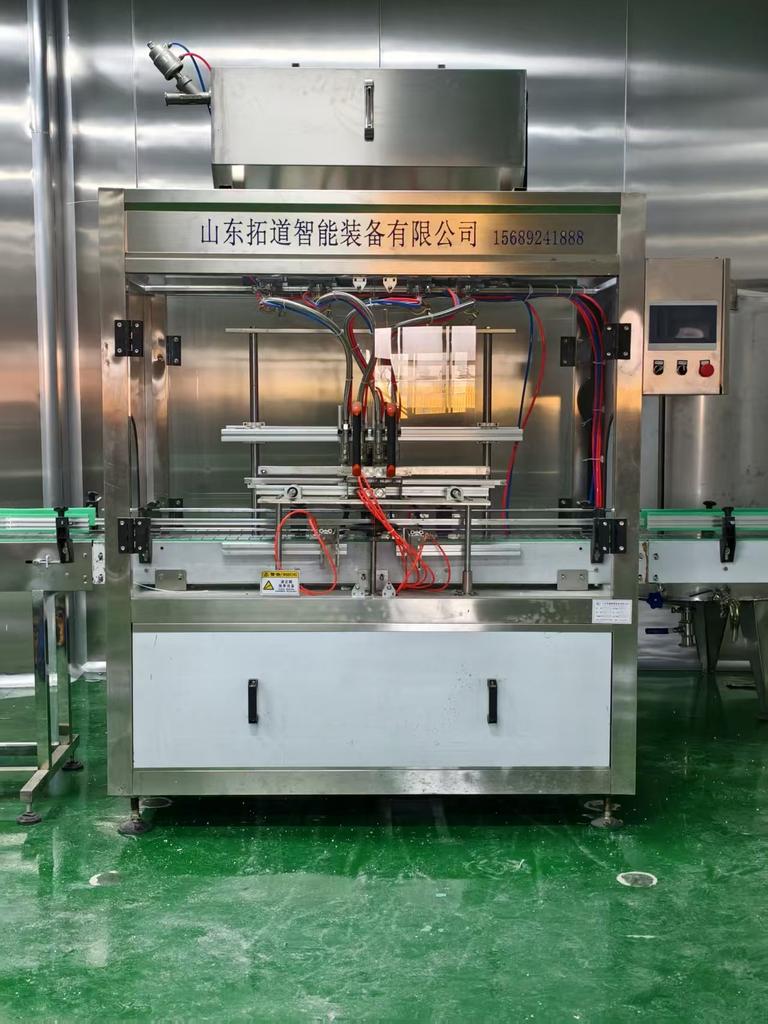
Reference image of an automatic bottle unscrambler machine for edible oil filling lines.
Original photograph restored from the earlier page.
Choose the bottle feeder from the real incoming bottle condition
Send bottle samples and drawings, input orientation, required output, filler infeed details, line signals, utilities, workshop layout, changeover needs, and destination country.