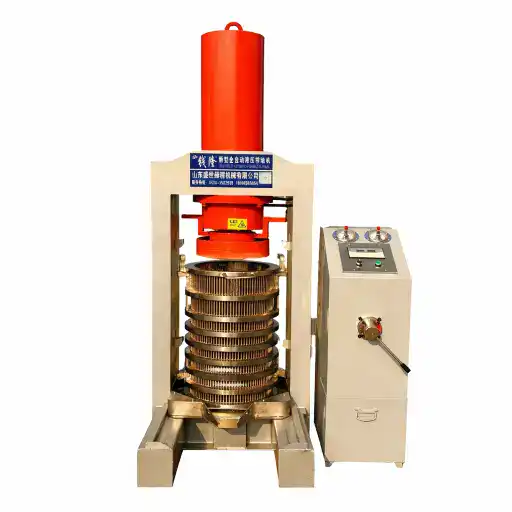
Peanut / groundnut press selection
Choose the oil style and feed condition before choosing the press
Peanut projects can use a roasted hot-press route or a direct cold-press route after cleaning, shelling when required, and crushing. The right choice depends on the incoming material, the finished-oil target, the available preparation equipment, and the batch rhythm the workshop can support.
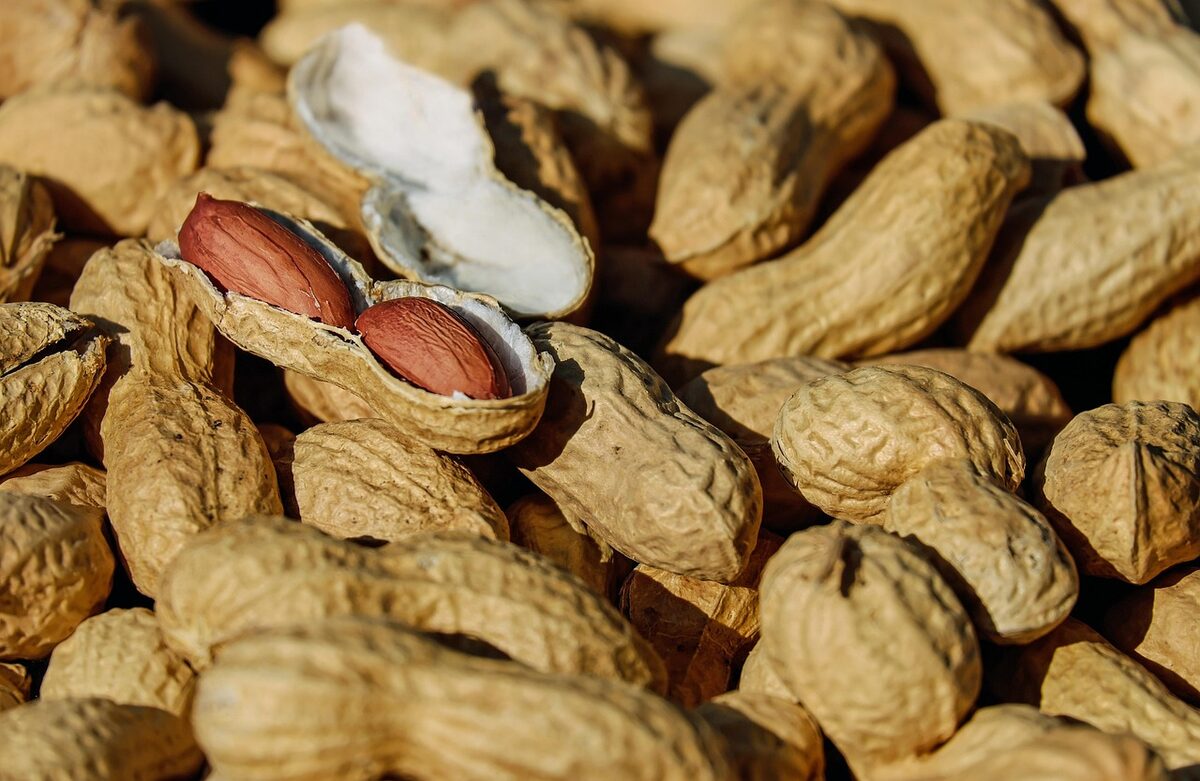
First decision
Hot pressing and cold pressing require different preparation
Do not treat the two routes as interchangeable settings on the same line. Roasting, press family, batch timing, and the expected oil profile all change.
Roasted feed
Peanut hot-press route
Clean and shell the peanut when needed, crush it, roast the crushed material, and load a hot-press hydraulic machine. This route requires the roasting section and press section to run at a compatible batch rhythm.
- Confirm whether the supply is in-shell or already shelled
- Define the required roast result with a representative sample
- Provide hot water and electrical supply for the source-listed wok route
- Match filtration and oil storage to the press schedule
No roasting stage
Peanut cold-press route
Prepare and crush the kernels, then load the selected cold-press hydraulic machine without the roasting stage. A material trial should confirm feed form, batch load, cycle, oil condition, and cake discharge.
- Control shell content, foreign material, and incoming moisture
- Specify the crushed result rather than assuming whole-kernel feeding
- Choose the barrel and press force from the tested batch
- Plan clean collection, filtration, and protected storage
Material qualification
Peanut condition changes every part of the practical result
Use the sample and the required finished oil to set the preparation route. A model number alone cannot define oil recovery, cycle time, or the number of machines.
| Input to confirm | Why it matters | What the trial should record |
|---|---|---|
| In-shell or kernel | Determines whether shelling and extra cleaning are part of the project. | Usable kernel yield, remaining shell, and feed consistency. |
| Moisture and storage condition | Affects crushing, roasting, barrel loading, and oil flow. | Incoming moisture, preparation setting, and observed pressing behavior. |
| Kernel size and damage | Changes the crushed feed and may affect fines or uneven roasting. | Crusher setting, particle form, fines, and handling loss. |
| Hot or cold product target | Determines whether roasting is included and which press family is compared. | Oil appearance, aroma target, filtered result, and cake condition. |
| Operating schedule | Sets the required number of crushers, roasters, presses, and filters. | Loading, pressing, unloading, cleaning, and filtration time. |
Published hot-line example
Use the existing machine count as a worked reference only
The source page describes one specific balance for crushed peanut. It does not publish the peanut variety, moisture, roast endpoint, operator method, or acceptance criteria behind the figures.
| Stage | Source-page reference | Required project check |
|---|---|---|
| Crushing | One pre-press machine at a listed 500 kg/hour. | Confirm material, feed condition, crusher setting, and discharge specification. |
| Roasting | Five electric heated woks at a listed 100 kg per batch each; hot water is required. | Confirm batch duration, usable load, heating power, water requirement, and roast target. |
| Pressing | Five Model 325 presses; 390 mm diameter by 800 mm barrel, up to 100 kg crushed powder, and 14 partitions. | Confirm safe working load, partition arrangement, actual cycle, and cake unloading method. |
| Cycle reference | About 1.5 hours for two barrels including feeding and unloading. | Verify with the actual peanut preparation and operator workflow. |
| Oil finishing | Pneumatic paper filtration, clean storage, and optional filling. | Define required clarity, storage volume, container, and packaging schedule. |
Do not use the source oil-yield figures as a guarantee
The original guide publishes peanut oil-yield and residual-oil percentages without a documented variety, moisture, analytical basis, sample mass, or test method. Request a representative material test and agree how oil and cake results will be measured.
Equipment sequence
Build the press decision around preparation and filtration
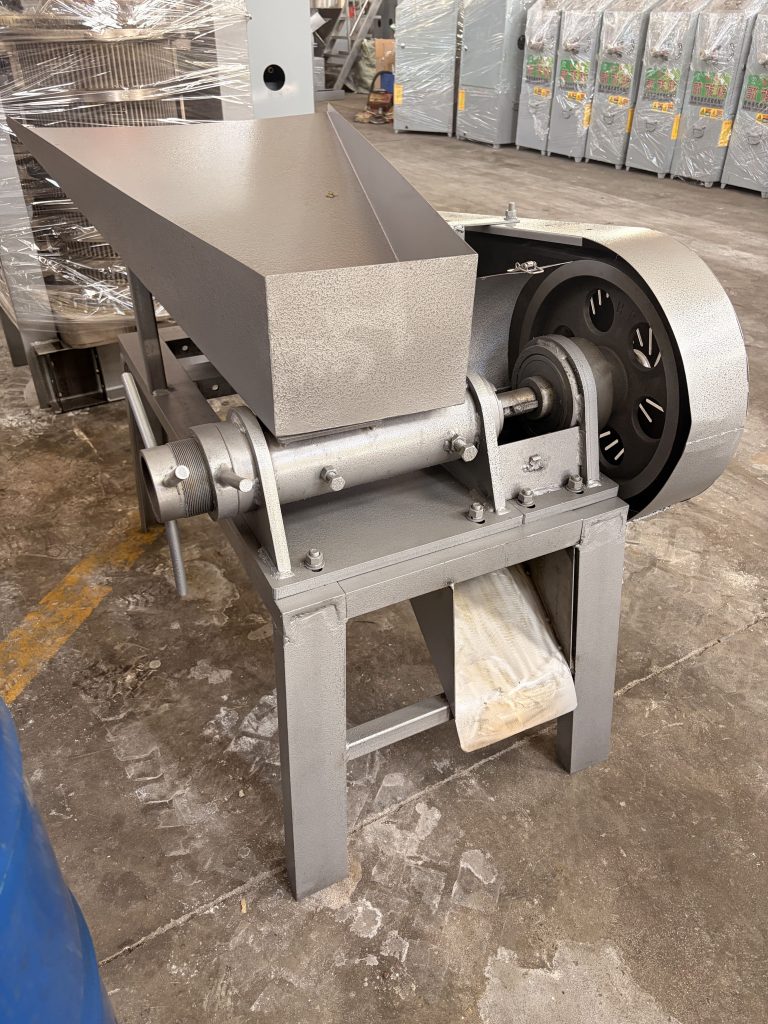
Crushing
Specify the required crushed result and confirm whether the source-listed 7.5 or 11 kW pre-press configuration suits the material.
Review the pre-press crusher →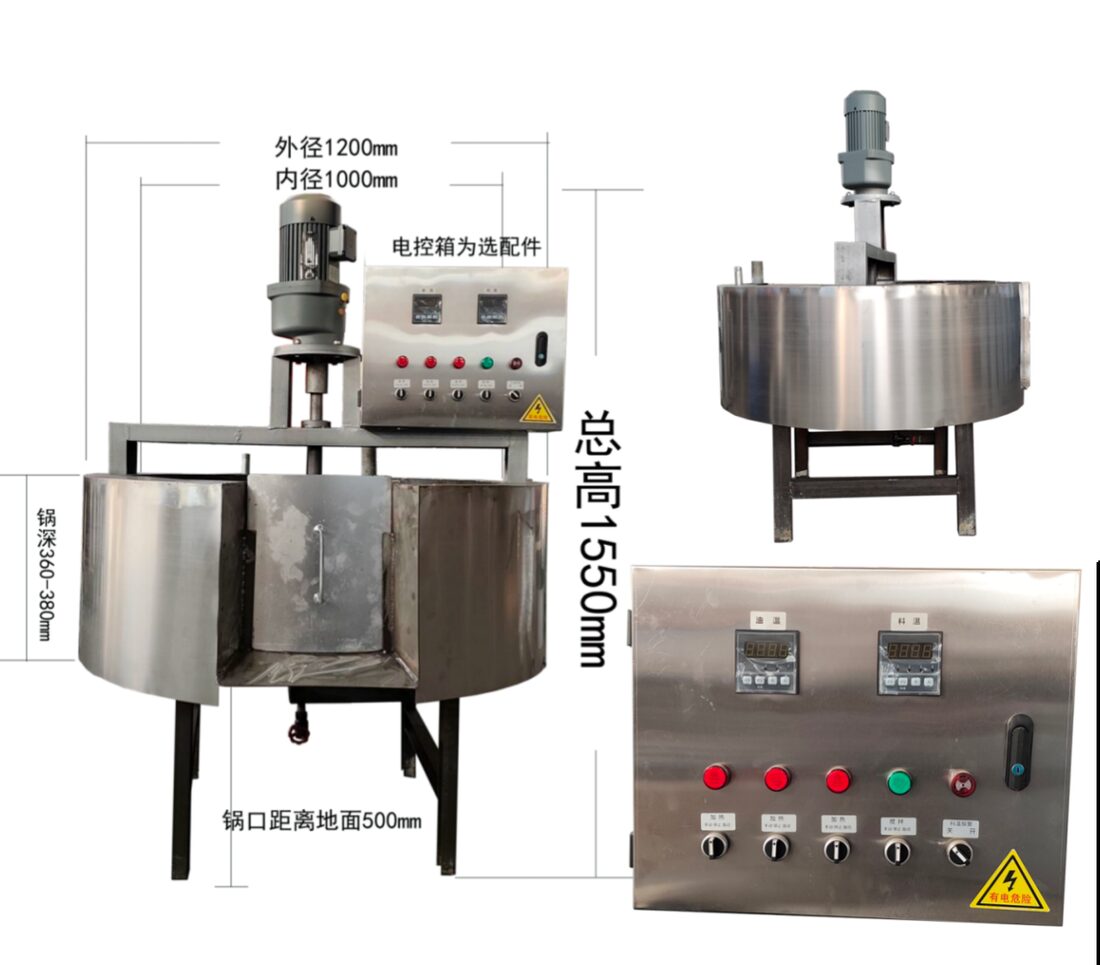
Roasting for the hot route
Confirm usable batch load, heat source, water input, operating time, and discharge method around the required roast result.
Review the electric heating wok →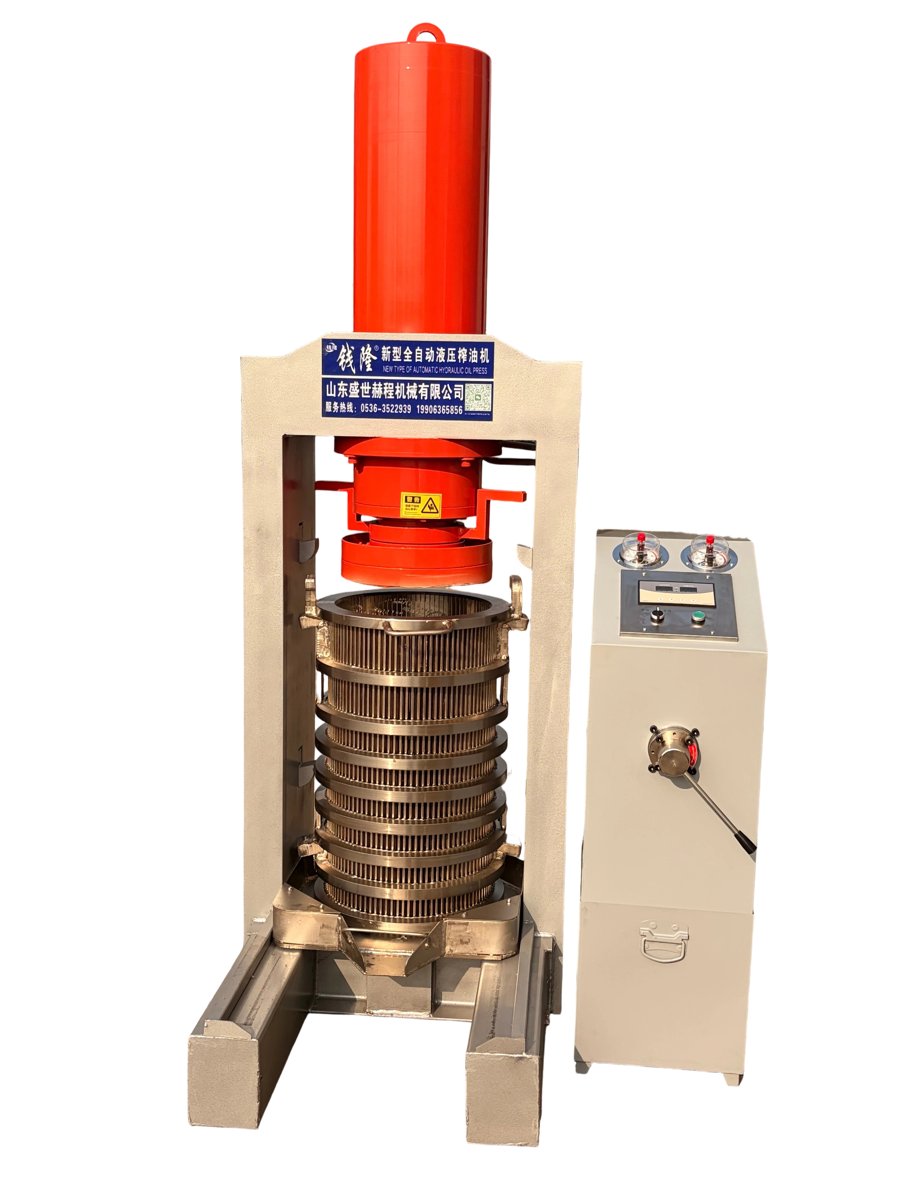
Hydraulic pressing
Compare hot- and cold-press families only after the feed preparation, barrel, batch load, cycle, and finished-oil target are defined.
Compare hydraulic press families →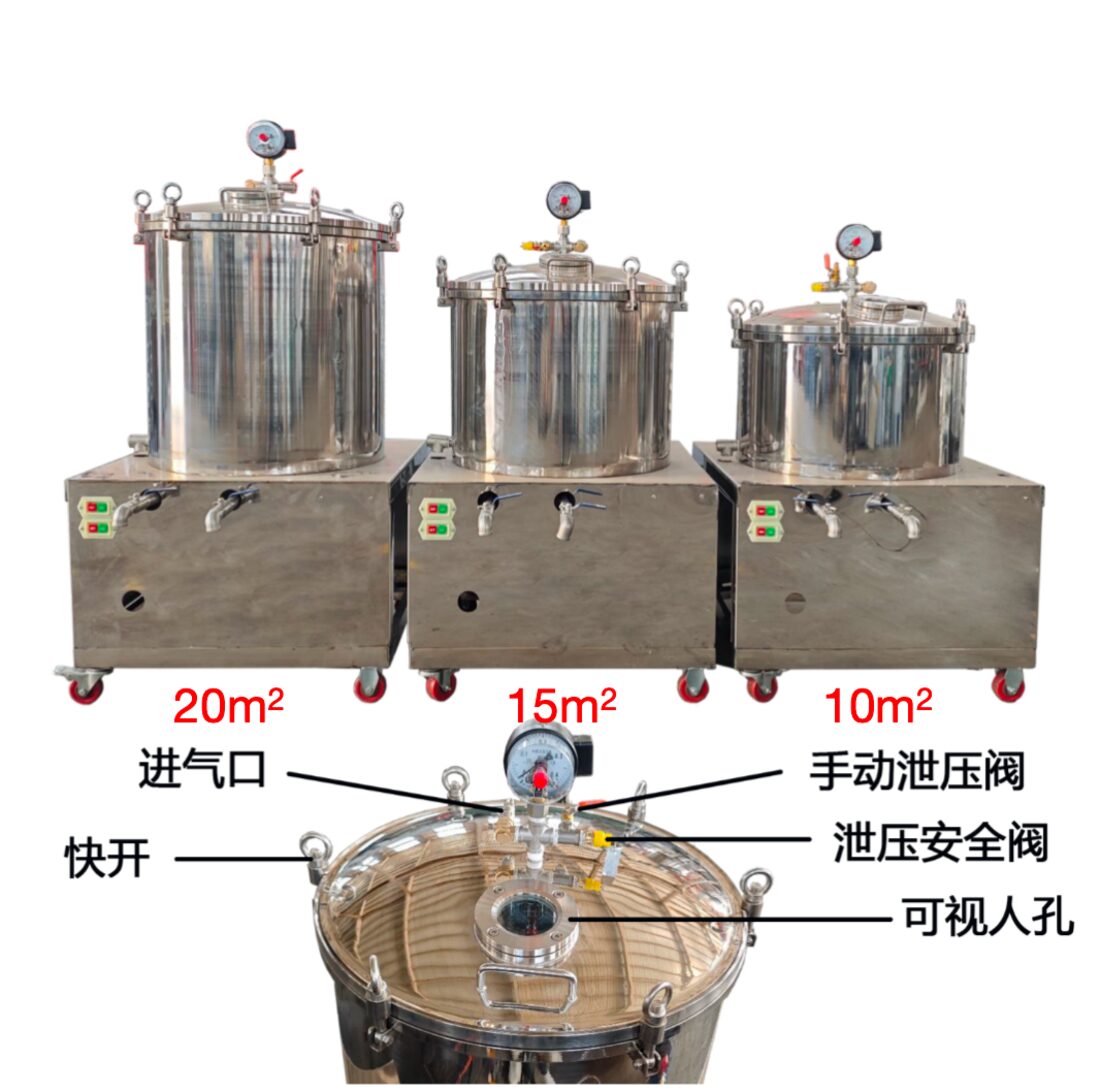
Oil filtration
Match the filter to actual crude-oil flow, solids load, paper-change routine, clean-oil storage, and filling schedule.
Review the pneumatic oil filter →Existing operating reference
Watch the press cycle, then verify it with your peanut
The video is an operating reference from the existing page. It does not by itself establish the peanut grade, preparation condition, batch load, cycle time, or oil result for a new project.
- Record the actual feed weight and preparation condition
- Separate pressing time from loading and unloading time
- Measure collected oil and cake on an agreed basis
- Inspect filtration time and final oil condition
Related planning pages
Continue from guide to equipment scope
Restored original media
Additional peanut process media
The earlier guide used this on-site hot-pressing reference and the original peanut oil process chart.
On-site Hot-Pressing of Peanuts | Hydraulic Oil Press Machine
Original operating reference restored from the earlier page.
Restored process chart
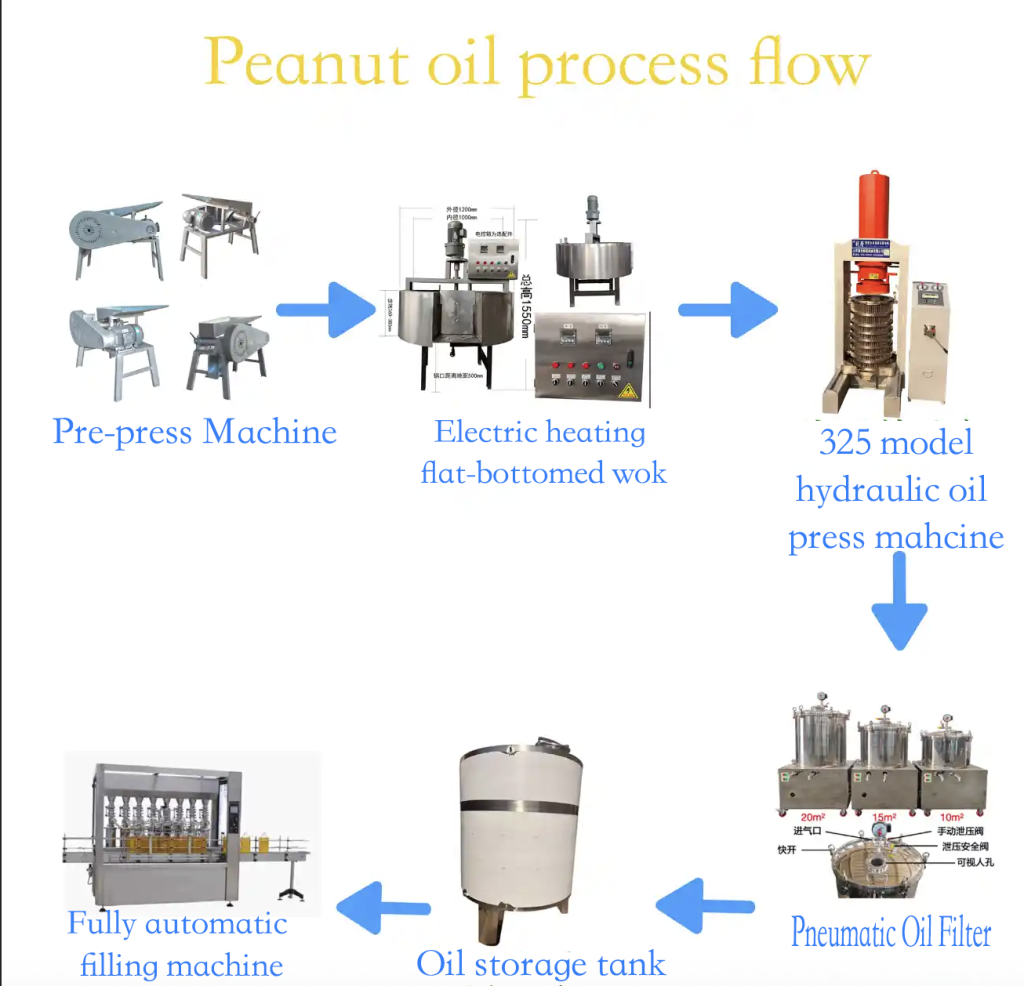
Peanut oil process flow
The original chart connects pre-pressing, heating, hydraulic pressing, filtration, storage, and filling.
Size the peanut process from a real sample and operating target
Send whether the supply is in-shell or kernel, sample photos or material, moisture information, hot or cold preference, daily input, operating hours, oil and cake requirements, utilities, workshop dimensions, packaging scope, and destination.