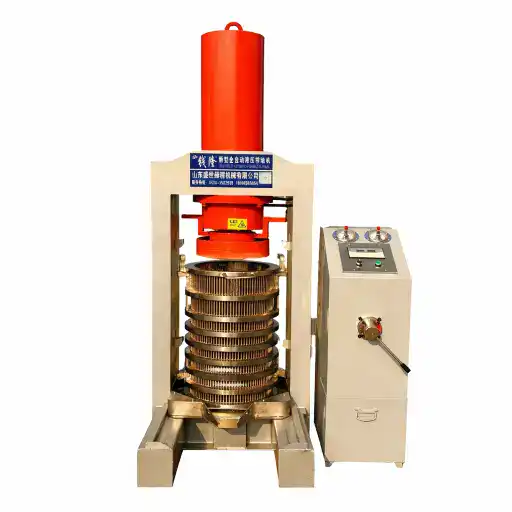
Dry cleaning before washing, roasting, or pressing
Vibration screening and air dust removal for small oilseeds
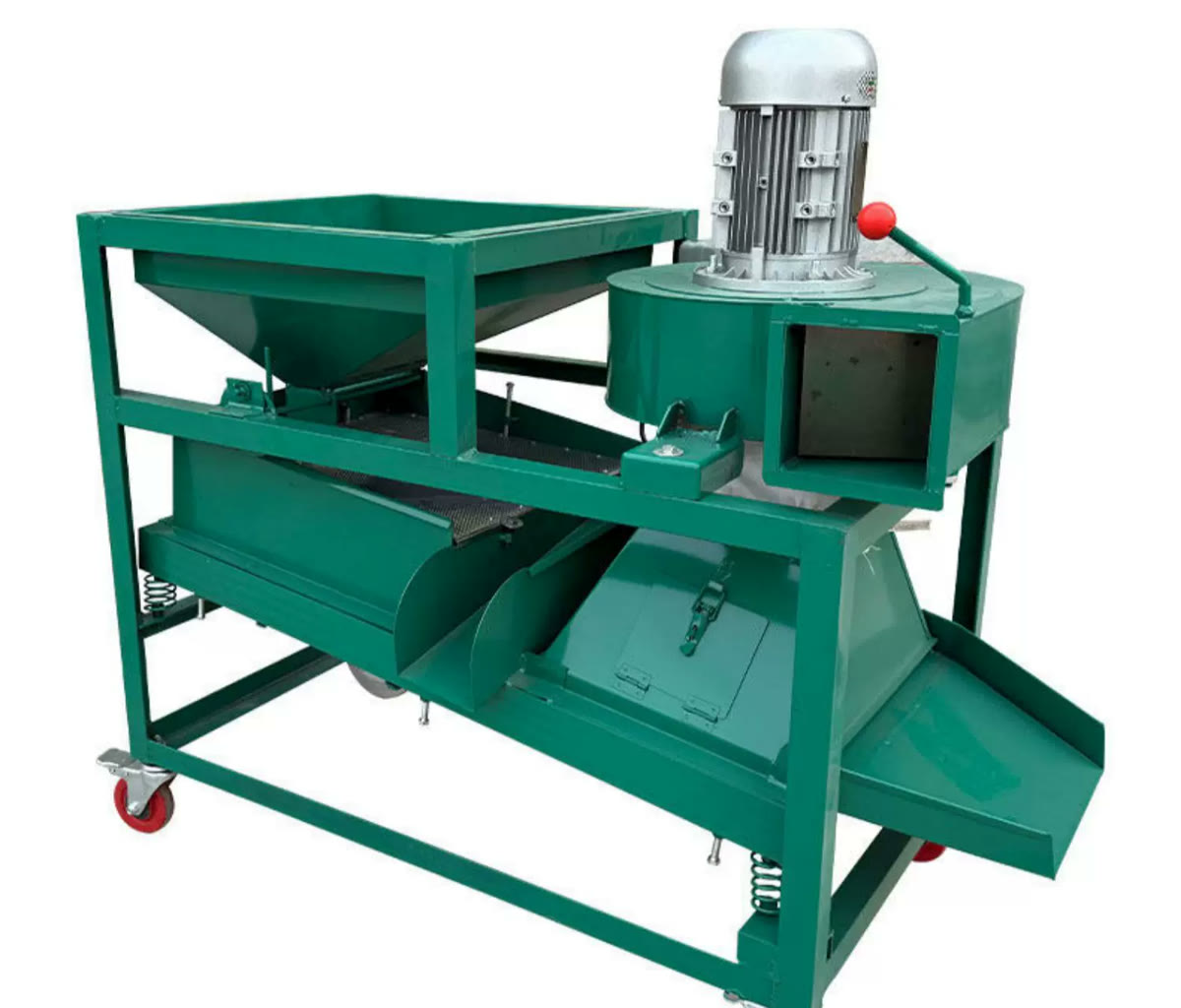
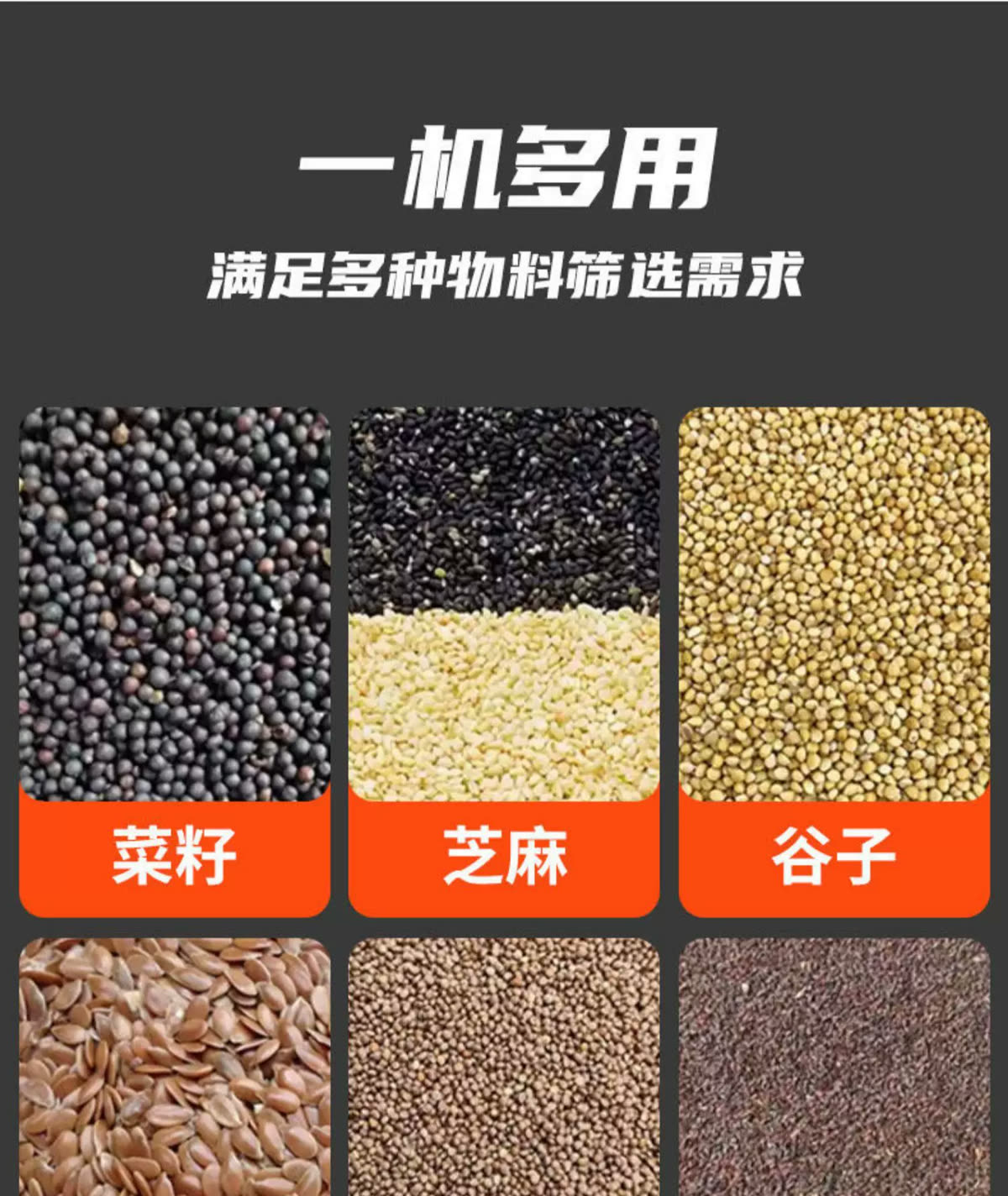
This oilseed screening machine separates straw, shells, oversize pieces, fine particles, and loose light dust from sesame, rapeseed/canola, flaxseed, millet, perilla seed, and similar small grains. Closed, open fixed-screen, and open removable-screen structures are available.
Product highlights
Select the structure, mesh, and electrical configuration around the raw seed
Double-layer screening
Large debris, qualified seed, and fine material leave through separate discharge paths.
Air dust removal
A centrifugal fan draws away light dust and chaff; a cloth collection bag can connect to the fan outlet.
Model 80: up to 1 tonne/hour
This is the stated maximum for suitable conditions. Actual output depends on the seed, impurities, moisture, mesh, and feed rate.
220V or 380V options
Available combinations depend on model and structure. Confirm voltage, phase, and frequency before production.
Real sesame test
Watch feeding, vibration, dust extraction, and separate discharge
The hosted demonstration shows raw sesame entering the enlarged hopper, spreading across the vibrating screen deck, and leaving through the product and impurity outlets while the fan removes light material.
This is not a gravity destoner
The machine separates by particle size and air response. Stones that are similar in size and weight to the seed may require a separate gravity destoner or another dedicated separation step.
Operating sequence
Control the feed and let the screen and fan perform different separation jobs
Machine structures
Choose enclosure and screen access around the workshop routine
Closed type
Metal panels enclose the screen deck to reduce dust escape into the work area. Models 60, 80, and 100 are listed.
Typical reason to choose it: indoor oil shops and production areas where dust containment is a priority.
Open fixed-screen type
The exposed deck is convenient to observe and clean, while the mesh remains fixed in its frame. Models 60 and 80 are listed.
Typical reason to choose it: one main raw material with a stable mesh requirement.
Open removable-screen type
The screen frame can be removed, making mesh changes easier when the same machine processes different small seeds. Models 60 and 80 are listed.
Typical reason to choose it: multi-seed workshops that need to change grading apertures.
Correct model interpretation
Model 60, 80, and 100 identify nominal machine-width classes
The number is not an hourly-capacity rating. Overall width changes with the open or closed structure because the enclosure and fan arrangement add to the machine envelope.
Model 80 does not mean 80 kg/hour
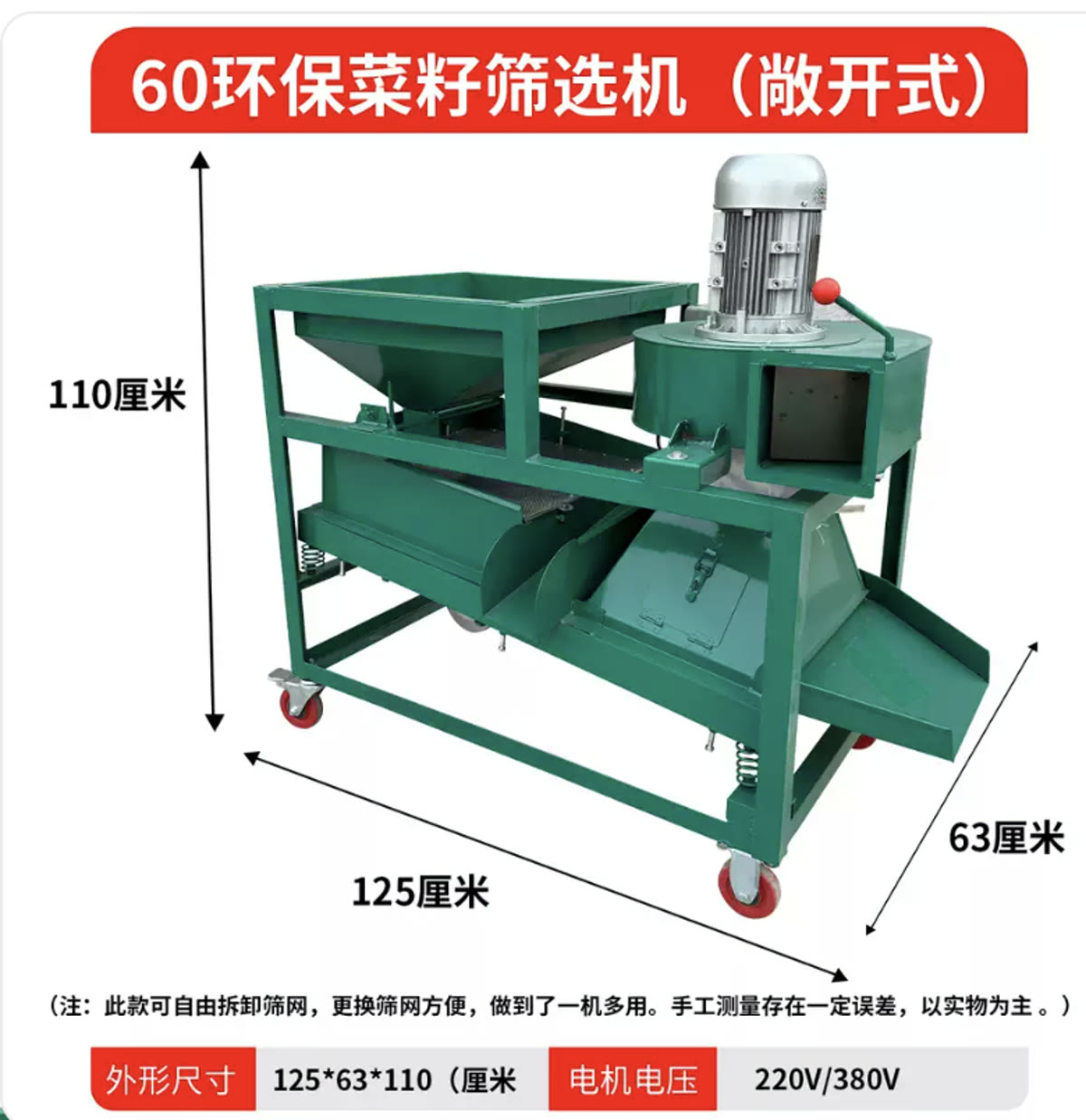
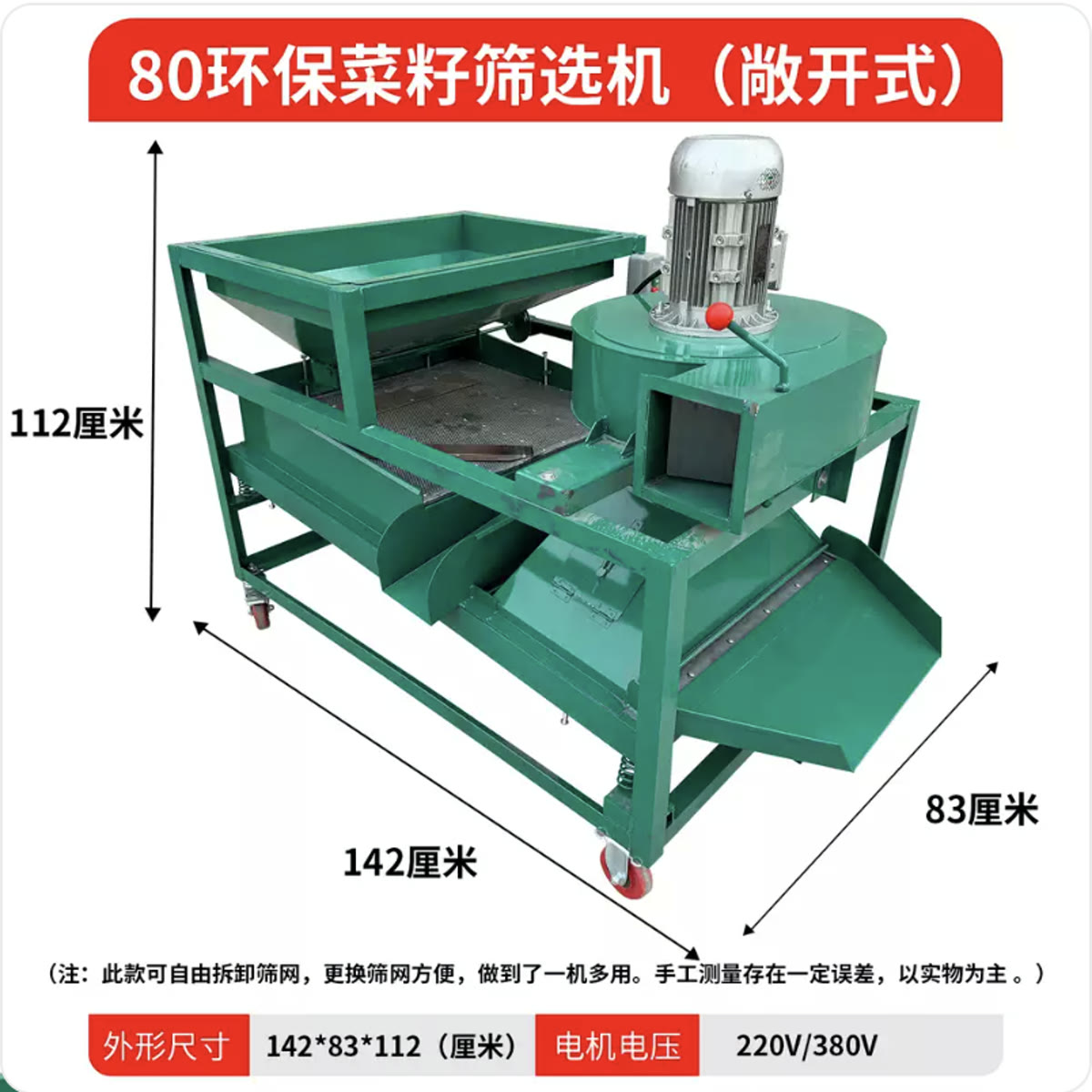
For the open removable-screen build, Model 80 is approximately 83 cm wide. The confirmed closed Model 80 is approximately 92 cm wide. Model 80 is stated to screen up to approximately 1 tonne per hour under suitable operating conditions.
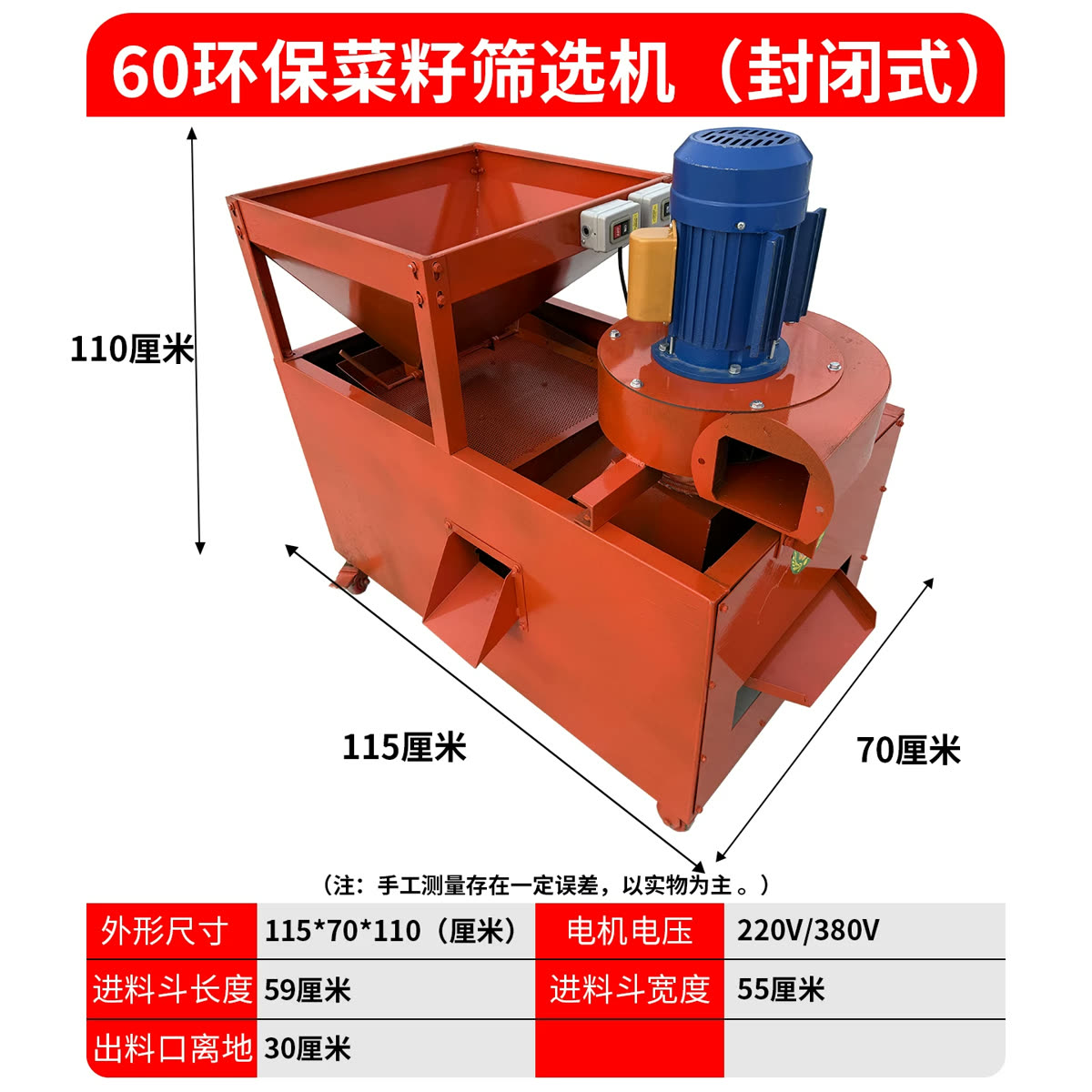
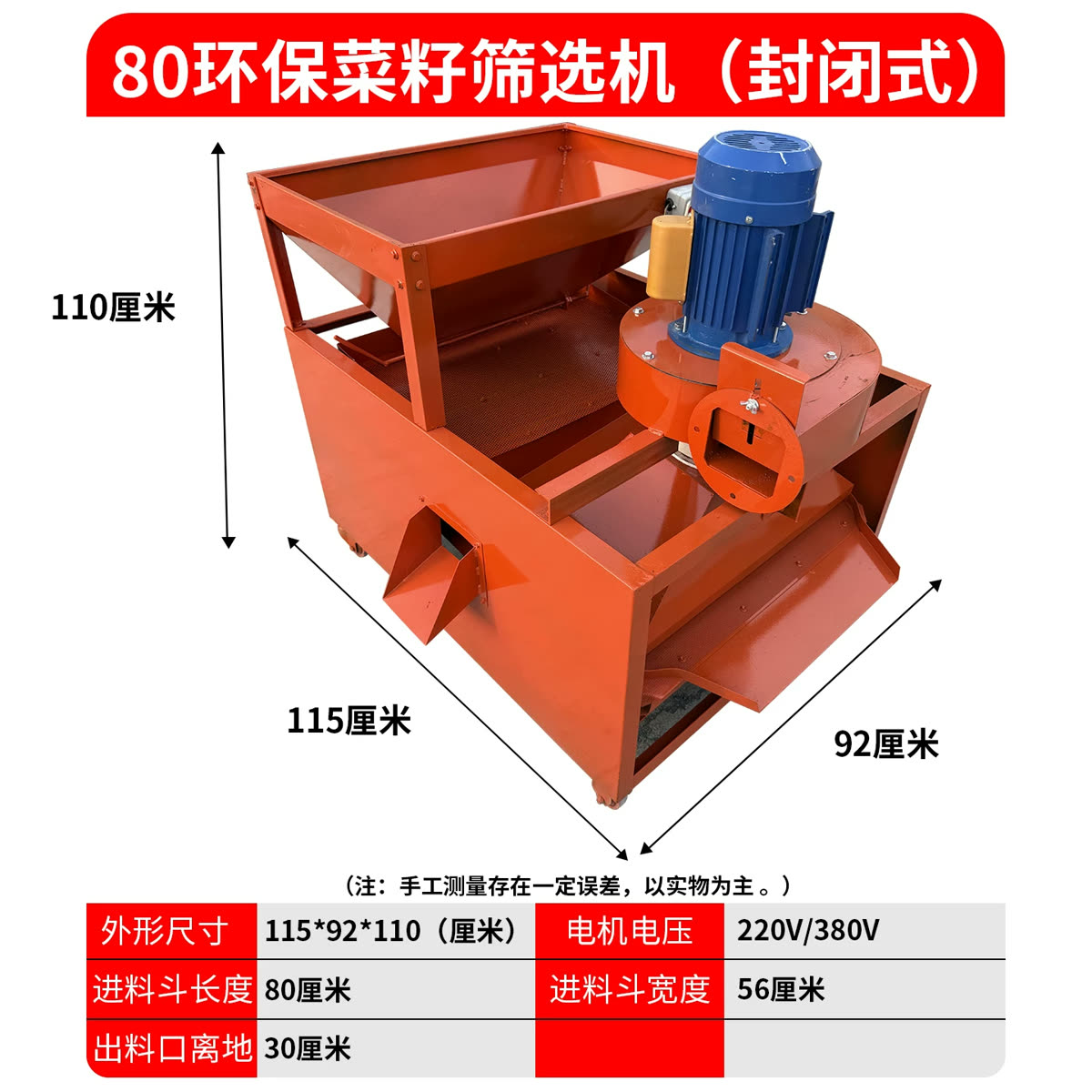
Confirmed dimensions and specifications
Use the full machine envelope when planning floor space
The dimensions below are the values shown in the current published source material. Manual measurement can vary slightly, and final motor power, weight, packing size, mesh, and connections should be confirmed for the selected build.
| Configuration | Stated maximum capacity | Overall dimensions | Feed hopper | Outlet height | Screen arrangement |
|---|---|---|---|---|---|
| Model 60 closed | Confirm for the material | 1150 × 700 × 1100 mm | 590 × 550 mm | 300 mm | Double layer |
| Model 80 closed | Up to 1,000 kg/hour | 1150 × 920 × 1100 mm | 800 × 560 mm | 300 mm | Double layer |
| Model 60 open removable | Confirm for the material | 1250 × 630 × 1100 mm | Confirm with selected build | Confirm with selected build | Double layer, removable mesh |
| Model 80 open removable | Up to 1,000 kg/hour | 1420 × 830 × 1120 mm | Confirm with selected build | Confirm with selected build | Double layer, removable mesh |
Published model and voltage combinations
Voltage alone does not define the electrical supply. Confirm phase and frequency for the destination before the motor and controls are finalized.
| Machine structure | Model 60 | Model 80 | Model 100 |
|---|---|---|---|
| Closed type | 220V or 380V | 220V or 380V | 380V |
| Open fixed-screen type | 220V or 380V | 220V or 380V | Not listed |
| Open removable-screen type | 220V or 380V | 220V or 380V | Not listed |
Suitable materials
Match the mesh to the seed and the impurity, not only the machine model
- Sesame: remove straw, shells, fines, and loose dust before washing or roasting.
- Rapeseed / canola: separate light impurities and uneven particles before pressing.
- Flaxseed / linseed: select the aperture around the raw seed and required grading.
- Millet and small grains: use the double-layer deck for dry cleaning and size separation.
- Perilla seed: reduce leaf fragments and chaff before downstream processing.
- Other small seeds: send a sample or clear photos before the screen is selected.
Buyer configuration checklist
Information needed before the mesh and model can be confirmed
- Raw material name and representative photos or sample
- Impurity types, approximate amount, and whether similar-size stones are present
- Required operating schedule and target hourly output
- Closed, open fixed-screen, or open removable-screen preference
- One material or several materials sharing the machine
- Local voltage, phase, frequency, and electrical standard
- Workshop access, floor-space limits, and dust-collection arrangement
- Whether washing, drying, roasting, or pressing follows screening
Capacity must be checked with the actual seed
The published up-to-1-tonne/hour value applies to Model 80 under suitable conditions. Moisture, impurity loading, screen aperture, feeding rate, and the required cleaning result can reduce practical throughput. No throughput is stated here for Models 60 or 100.
Related process pages
Connect screening to the correct next stage
Configure the screening machine from the raw-material evidence
Send the seed name, impurity photos or video, required output, preferred screen structure, local power supply, workshop limits, and the next processing stage.