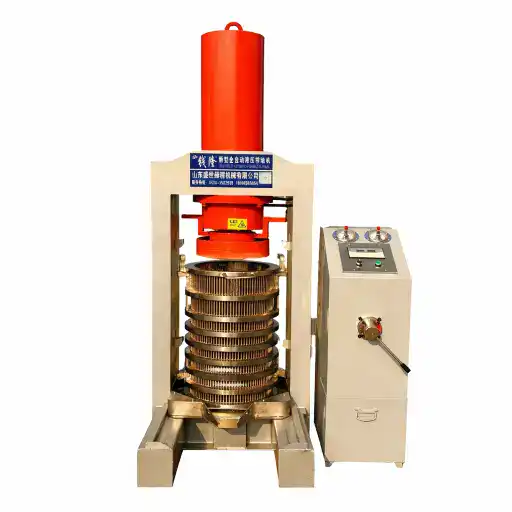
Hydraulic press selection worksheet
Choose the process, barrel, and line scope before choosing a model number
A useful recommendation requires more than a daily-output target. Define the oilseed, feed condition, hot or cold route, practical batch, complete cycle, workshop constraints, oil finishing, and cake handling before comparing machines.
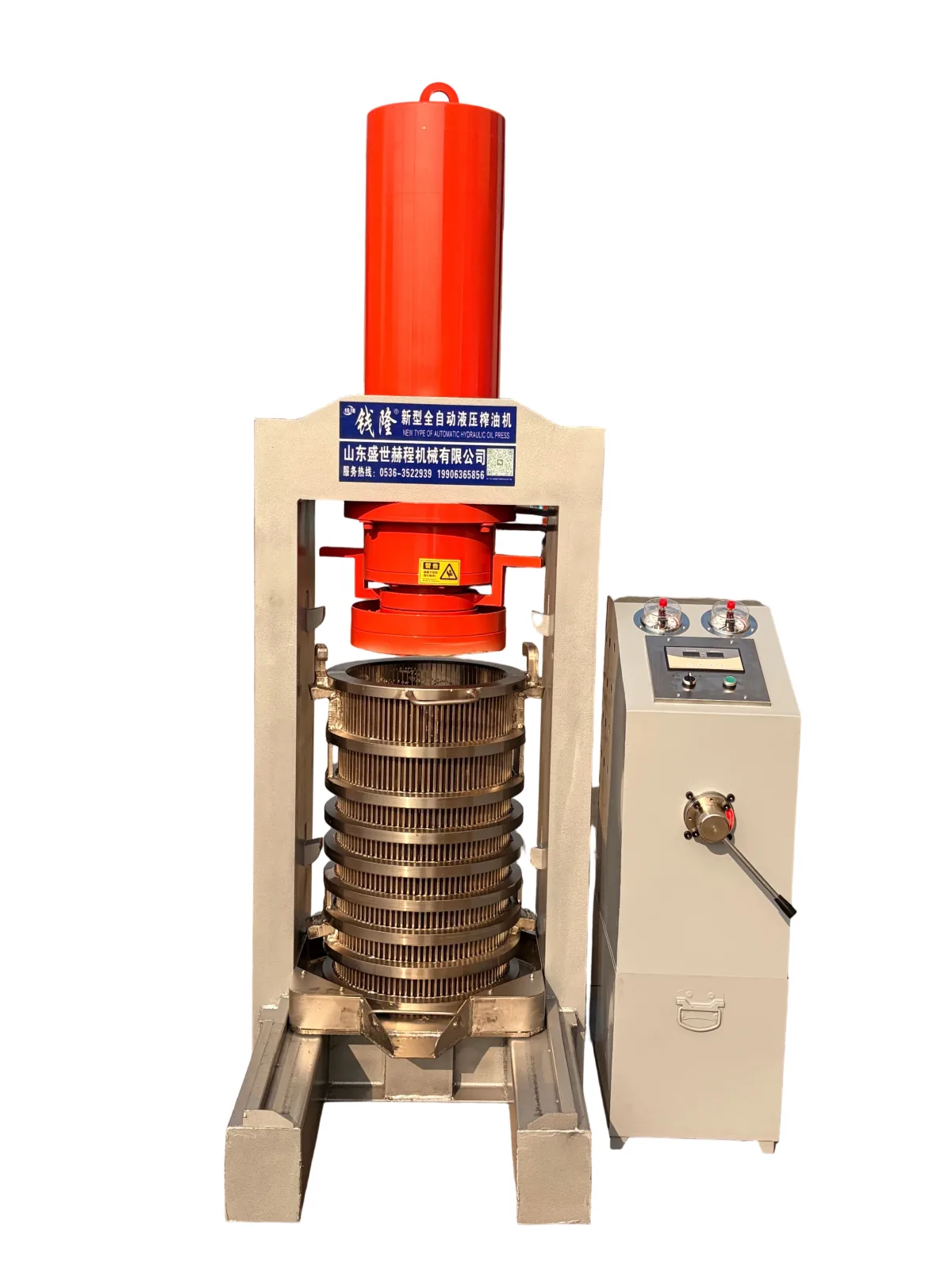
Seven selection gates
Answer these questions in order
Each answer changes the next one. Skipping directly to tonnage often produces a press that cannot be balanced with the material, cycle, or workshop.
Buyer input sheet
Replace vague requirements with data the supplier can size
| Selection field | Buyer should provide | Supplier should return |
|---|---|---|
| Raw material | Oilseed name, variety, whole or kernel, shell content, moisture, oil content if tested, contaminants, and representative sample. | Accepted feed specification, preparation route, unsuitable conditions, and material-test plan. |
| Product target | Hot or cold claim, maximum accepted temperature, oil clarity, filtration, cake condition, and intended market. | Proposed process settings, sampling points, test methods, and acceptance criteria. |
| Production target | Prepared feed per shift or day, operating hours, days per week, changeovers, and planned growth. | Practical batch, complete cycle, machine count, utilization assumptions, and bottleneck calculation. |
| Site | Voltage, phase, frequency, available load, water, compressed air, floor, ceiling, doors, drainage, and local conditions. | Connected loads, utility quality, overall drawing, service clearances, weights, lifting, and installation scope. |
| Line boundary | What arrives before the press and what must leave after it. | Included and excluded cleaning, crushing, heating, filtration, storage, refining, filling, cake, and transfer modules. |
| Compliance | Destination, food-contact requirements, local machinery rules, language, and required documents. | Applicable declarations, material records, manuals, drawings, labels, and limitations for the supplied configuration. |
| Service | Local maintenance capability, preferred spares, response channel, and expected operating schedule. | Commissioning plan, training, warranty terms, remote support, wear-parts list, part numbers, and lead times. |
Product-family routes
Use the process route to select the family
The ranges below are source-listed product references. They are press-volume and machine references, not guaranteed finished-oil output.
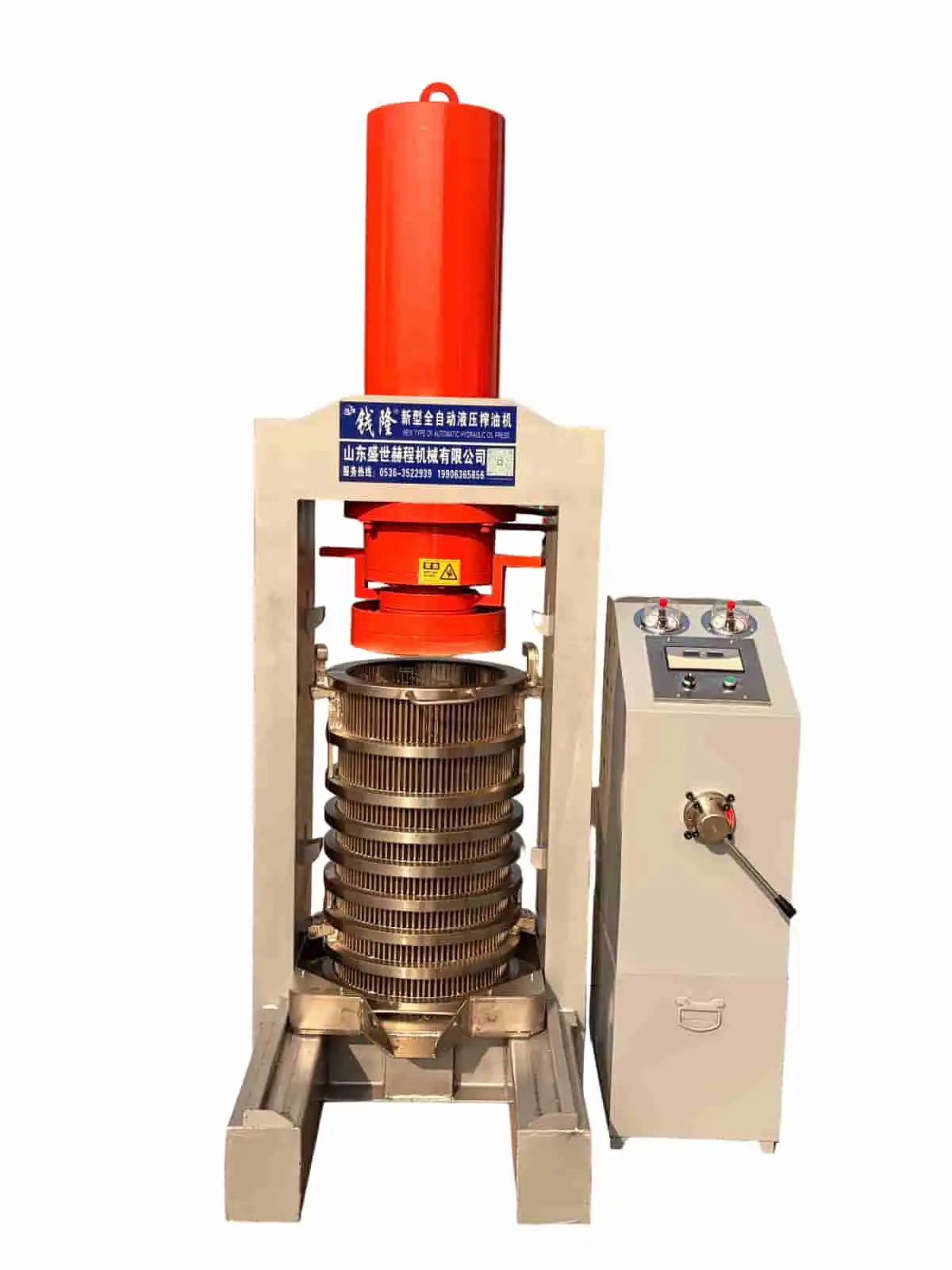
300 / 325 hot-press family
The published family uses 300- or 325-ton down pressure and a 60 MPa hydraulic system. The standard 390 mm barrel is listed for 5-100 kg; an alternate 300 mm barrel is listed for 5-60 kg.
Review the source-supported family →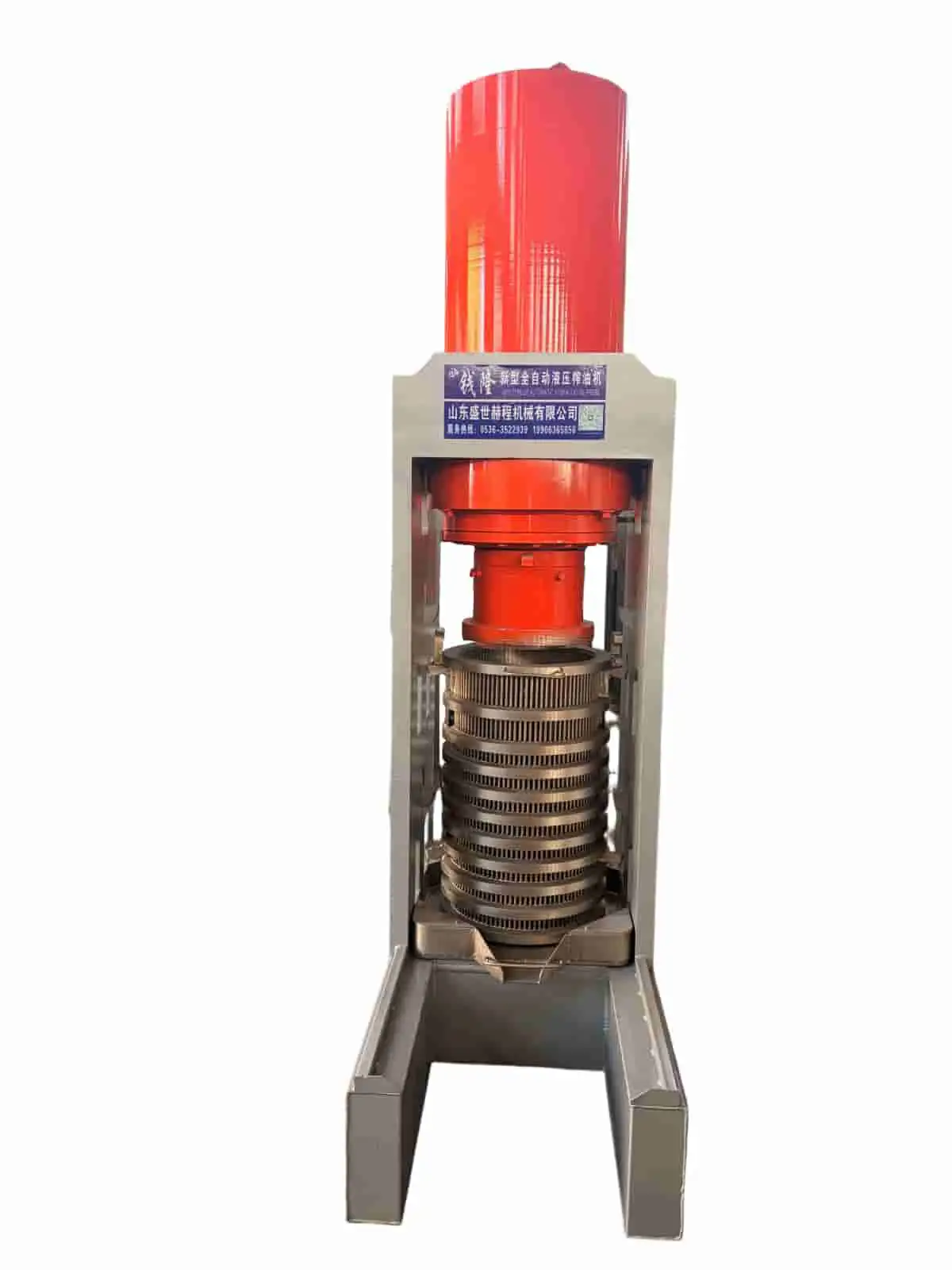
370-630 ton cold-press family
Five model codes correspond to 370, 410, 500, 600, and 630 tons of listed down pressure. The same 5-100 kg and 5-60 kg barrel-range choices are shown on the family page.
Compare cold-press models →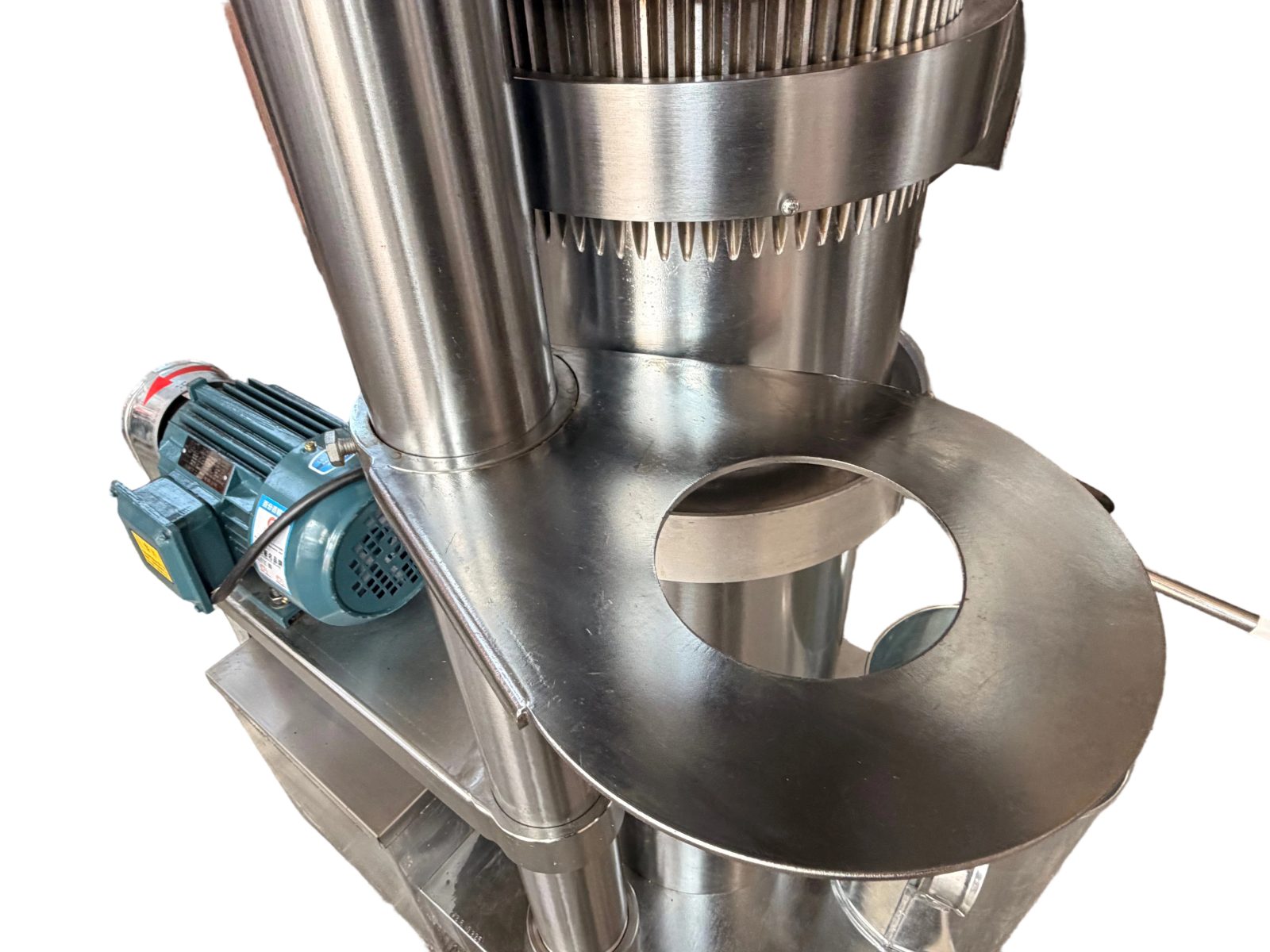
5-20 kg small-shop systems
The small-shop family is listed around nominal 5-20 kg batch operation, including KHOP-10KG, KHOP-15KG, and KHOP-20KG pages. It is a separate business and machine class from the industrial families.
Review shop-scale systems →Capacity method
Calculate from the complete cycle
For a batch press, daily raw-material capacity is built from the verified practical batch, the complete load-to-reload cycle, available production time, planned utilization, and number of presses.
Press volume is not oil output
The kilograms listed for a barrel describe prepared material loaded per batch. Saleable oil depends on seed oil content, preparation, pressing result, settling or filtration loss, and the defined product boundary.
Time the whole job
Include work outside the pressure hold
- Prepare and stage the material
- Load the barrel and separator arrangement
- Build pressure and complete drainage
- Release pressure and eject the cake
- Remove cake and clean contact surfaces
- Reload safely for the next batch
- Allow for changeovers, inspection, maintenance, and operator breaks
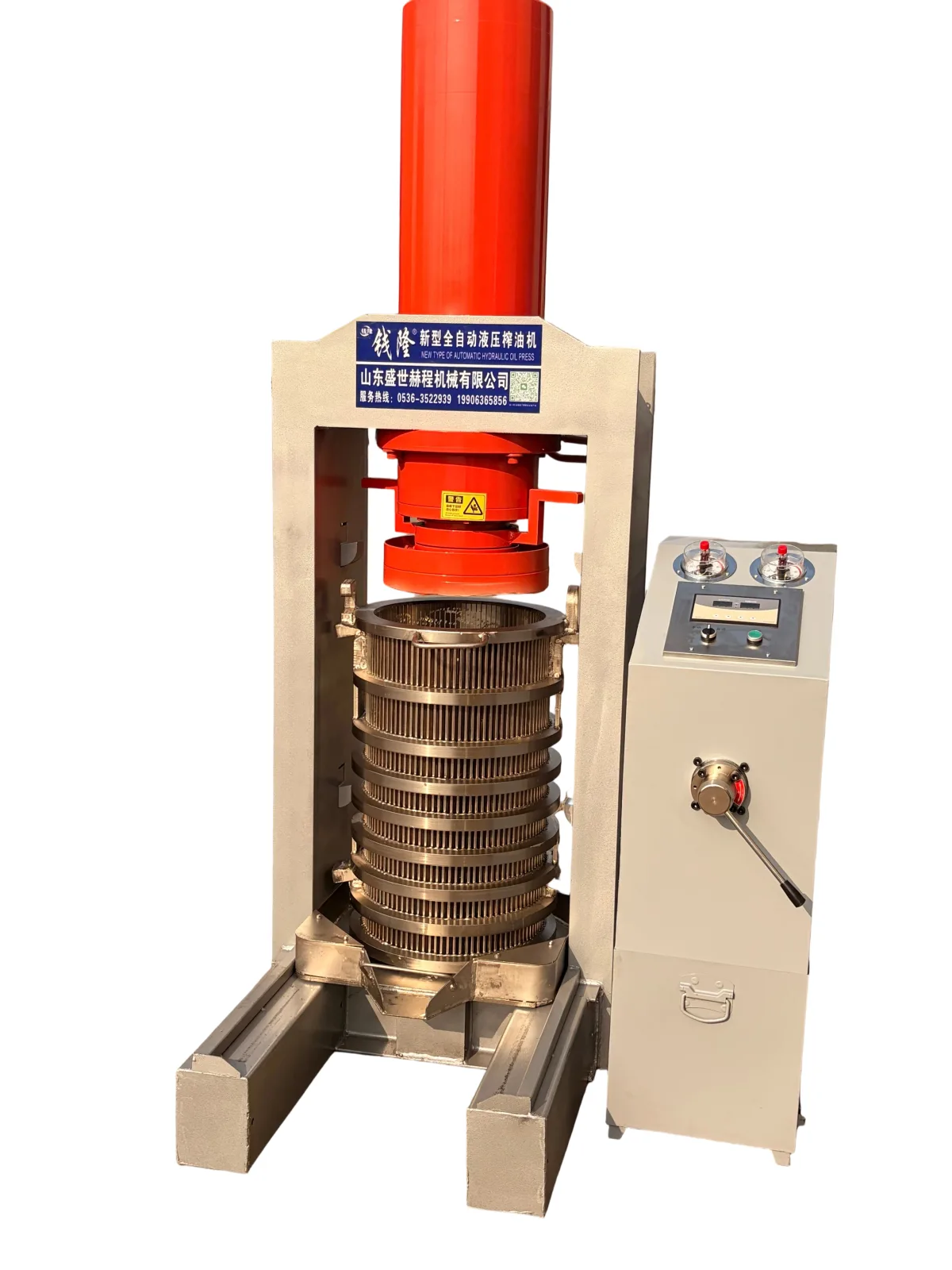
Barrel and cake geometry
A model code does not define the supplied chamber
The published industrial pages show 390 mm and 300 mm barrel-diameter routes, both with an 800 mm listed height. The diameter changes the listed press-volume range and cake surface-pressure entry, so the technical quotation should identify the exact barrel and separator arrangement.
- Confirm internal diameter, usable height, basket construction, and drainage path
- Confirm practical load for the actual prepared material, not water volume
- Define cake diameter, layer count, separators, cloth or wrapping method
- Confirm loading and ejection method, operator platform, and service access
- Request the calculation basis and engineering unit for any cake-pressure value
Line balance
Select supporting machines with the press
A press can only receive the feed form it was designed and tested to handle. Upstream and downstream modules must match the same oilseed, batch rhythm, hygiene plan, and product specification.
Before the purchase order
Freeze the technical scope in writing
- Model code, actual down pressure, barrel, frame, and hydraulic configuration
- Overall and foundation drawings with service and ejection clearances
- Voltage, frequency, phase, connected load, controls, and language
- Included accessories, separator plates, tools, filters, hoses, and spares
- Manuals, electrical and hydraulic diagrams, component list, and labels
- Packing method, shipping dimensions, weights, Incoterm, and excluded site work
Acceptance test
Use representative material and agreed measurements
- Record raw-material lot and preparation
- Weigh each batch and all collected outputs
- Time loading, pressing, drainage, ejection, and reload
- Inspect leakage, pressure stability, controls, and safety devices
- Test oil and cake using the agreed laboratory or field method
- Document deviations, corrective action, and retest requirements
Related decision tools
Use the next guide for the question still open
Send a complete selection brief
Include the oilseed, incoming form, hot or cold requirement, target feed per day, operating hours, product specification, site utilities, destination, and required line boundary.