Permanent coding for bottles, caps, labels, and packs
Select the laser source from the actual marking surface
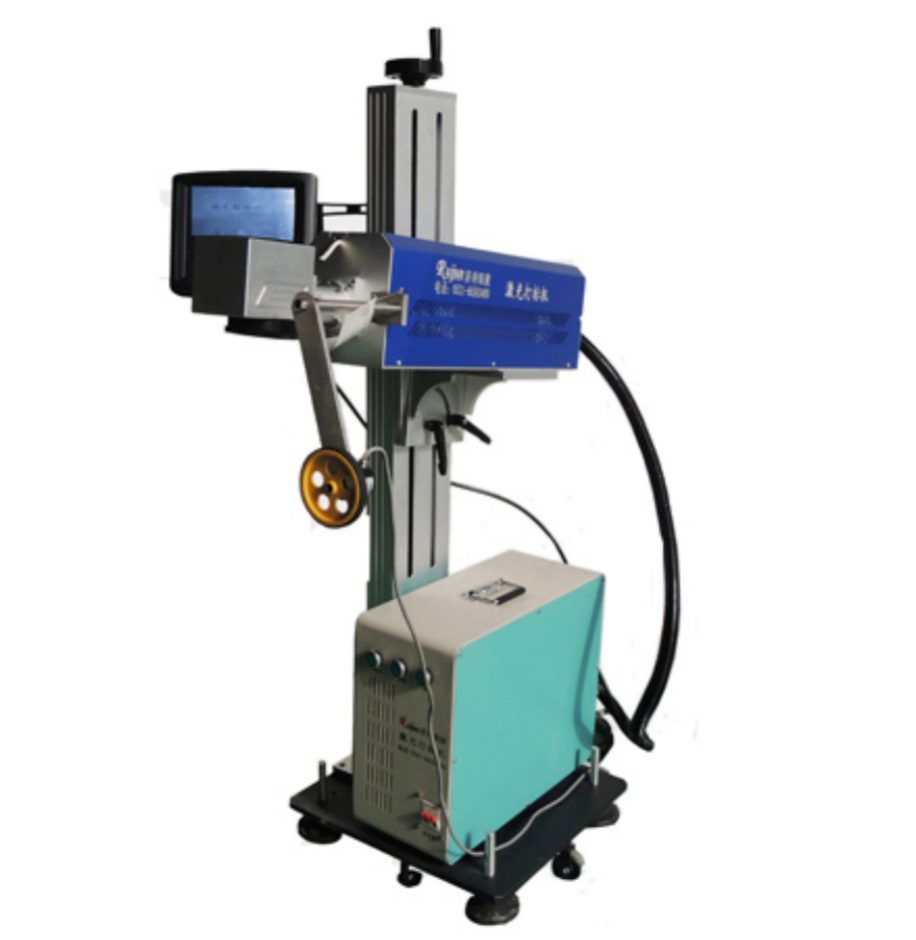
The current page presents a non-contact system for dates, batch numbers, serial numbers, barcodes, QR codes, text, logos, and vector graphics. The laser platform must be resolved before configuration because the same source identifies both a CO2 RF laser and a 1064 nm wavelength.
Specification conflict
Do not approve the machine until the laser type and wavelength agree
The live source lists a “CO2 RF Laser” and “1064 nm” in the same specification group. Those entries describe different laser configurations and cannot be treated together as one confirmed machine specification.
Documents to request
- Exact laser-source model, manufacturer, rated output, wavelength, and serial-number format
- Marking-head, field-lens, controller, software, and extraction model list
- Nameplate photograph, component datasheets, electrical drawing, and final bill of materials
- Laser-safety class, guarding plan, interlocks, warnings, and destination-country documentation
Samples to mark before ordering
- Actual bottle, cap, label, carton, film, or other intended coding surface
- Every color, resin, coating, pigment, supplier, and thickness that may change the result
- Required text, date, barcode, QR code, logo, line count, and maximum coding area
- Samples before and after filling, capping, labeling, handling, and storage where relevant
Broad material lists are not a compatibility guarantee
The source mentions plastics, glass, metals, rubber, ceramics, and other materials. Mark contrast, permanence, depth, heat effect, fumes, and readable code quality depend on the selected laser source and the exact substrate.
Application boundary
Define the coding surface, line state, and inspection target
Marking surface
Choose whether the code sits on the bottle body, cap, applied label, carton, or another component. Curvature, focus variation, color, coating, and surface motion all affect the optical setup.
Code content
The source lists text in Chinese and English, production dates, real-time clock data, batch and serial numbers, barcodes, QR codes, logos, and vector graphics.
Static or moving product
Confirm whether the product stops below the marking head or is coded while moving. The source does not publish an encoder, product sensor, conveyor-speed range, or dynamic marking test basis.
Quality and traceability
Define readability, contrast, permanence, barcode grade, data source, duplicate-code prevention, rejection, record retention, and operator authorization before software setup.
Operating sequence
Position coding according to the surface that carries the mark
A bottle-body or cap code may be applied before labeling, while a code on the pressure-sensitive label must follow the labeler. The line position should be selected from the approved sample and inspection plan.
Source-listed system values
Treat the current laser data as unresolved until documented
The table reproduces values from the live page so the conflicts are visible during quotation review. It does not certify that all rows belong to the photographed machine.
| Parameter | Source-listed value | Required clarification |
|---|---|---|
| Laser type | CO2 RF laser | Conflicts with the separately listed 1064 nm wavelength; provide the source model and datasheet. |
| Wavelength | 1064 nm | Resolve against the stated CO2 RF laser type before material compatibility is discussed. |
| Beam quality | M2 < 1.8 | Confirm the applicable laser model, measurement method, and datasheet. |
| Pulse frequency | 20–200 kHz | Confirm whether this belongs to the proposed source and how it is controlled. |
| Cooling | Air-cooled | State ambient limits, airflow clearance, filter service, and cabinet heat rejection. |
| Maximum power consumption | ≤ 800 W | Confirm complete-machine load, supply voltage, frequency, phase, and protection. |
| Noise | < 50 dB | Request measurement distance, operating state, and included extraction equipment. |
| MTBF | 100,000 hours | Request the component basis, test or calculation method, exclusions, and warranty terms. |
| Exhaust | Source describes a built-in exhaust system | Confirm airflow, filtration, duct connection, discharge location, noise, and replacement filters. |
Source-listed marking values
Verify performance on the actual substrate and code
Spot size, line width, depth, character rate, scan speed, and field size describe different parts of the marking task. They should not be combined into an output promise without a sample test.
| Parameter | Source-listed value | Acceptance check |
|---|---|---|
| Focused spot in working-principle text | 15–20 µm | Confirm lens, field, working distance, source, and measurement method. |
| Minimum spot diameter | 0.02 mm | Confirm with the proposed field lens and substrate. |
| Minimum character size | 0.02 mm | Specify actual font, stroke, content, viewing method, and readability target. |
| Minimum line width | 0.001 mm | This is smaller than the listed 0.02 mm minimum spot and requires documentary correction. |
| Repeat accuracy | ±0.001 mm | Define fixture, focus, field position, sample count, and moving or static test method. |
| Marking depth | 0.1–5 mm depending on material | Do not apply to packaging without a substrate-specific test for damage, migration, and legibility. |
| Printing speed | 0–20 characters/second based on 3 × 2 mm Arabic numerals or English characters | Confirm line count, font, field, substrate, conveyor motion, and code-change time. |
| Engraving speed | ≤ 10,000 mm/s | Scanner travel speed is not finished-code throughput; validate the complete mark cycle. |
| Standard marking fields | 110 × 110, 150 × 150, 220 × 220, or 300 × 300 mm | Select the lens from the required code size, working distance, focus tolerance, and line layout. |
Use the approved sample as the performance reference
The quotation should attach photographs and physical samples marked with the proposed source and lens, plus the exact power, speed, frequency, focus, field, line motion, and extraction settings.
Controls and data
Map code generation, authorization, and production records
The source describes a Windows-based Chinese and English interface with live preview, adjustable content, and several data ports. Protocols and line-control details are not published.
Content creation
Source-listed content includes text, dates, serials, barcodes, QR codes, logos, and vector graphics, with CorelDRAW and AutoCAD mentioned as compatible design sources.
Communication ports
Serial, parallel, USB, and network communication are listed. Confirm physical connectors, protocols, data format, triggering, acknowledgements, and behavior after a network interruption.
User permissions
The source describes operator-level authorization intended to limit parameter changes. Request the account levels, audit trail, password policy, backup, restore, and recipe-locking method.
Production records
Database-based records grouped by date and storage exceeding one year are listed. Confirm fields, retention capacity, export, time synchronization, backup, and recovery.
Line interfaces
Synchronize trigger, focus, conveyor motion, and inspection
| Interface | Current source | Project confirmation |
|---|---|---|
| Product handling | Described for static and high-speed production lines | Define conveyor height, speed range, direction, product spacing, guide rails, stabilization, and focus variation. |
| Trigger and speed tracking | Not published | Specify product sensor, encoder, line-speed compensation, trigger delay, missed-product logic, and stop/restart behavior. |
| Marking head | Adjustable optical-path height and interchangeable lenses are described | Confirm stand adjustment, working distance, focal range, field lens, head orientation, vibration, and format scales. |
| Coding surface | Broad material list published | Approve each bottle, cap, label, carton, color, coating, and supplier through a physical mark test. |
| Data connection | Serial, parallel, USB, and network listed | Define message source, protocol, variable fields, duplicate prevention, response, time source, and offline mode. |
| Fume extraction | Built-in exhaust described | Complete a fume assessment and define capture hood, airflow, filter stages, ducting, discharge, and service interval. |
| Code inspection | Not published | Specify vision or scanner hardware, barcode grading, reject device, reject verification, and record linkage. |
| Line signals | Not published | Agree ready, run, fault, emergency stop, product-present, code-complete, reject, and downstream-full interfaces. |
Laser safety and guarding
Engineer the complete marking station, not only the laser head
- Confirm laser classification, accessible emission, protective enclosure, interlocks, shutter, key control, warning indicators, and emergency stop.
- Assess reflections and beam escape for every product shape and material.
- Define trained personnel, operating procedures, maintenance access, signage, and any required protective equipment.
- Validate fume capture and filtration for the marked substrate and coating.
- Document destination-country electrical, laser, machinery, and workplace-safety requirements.
Maintenance and spares
Protect optics, extraction, controls, and repeatable focus
- Inspect the lens and protective optical components using the supplied cleaning procedure.
- Service cabinet airflow and extraction filters at intervals based on the actual substrate and duty.
- Check stand position, focus reference, fasteners, cables, sensors, encoder if supplied, and conveyor alignment.
- Back up software, recipes, fonts, logos, communication settings, user accounts, and production records.
- Request source, galvanometer, lens, controller, computer, power supply, fan, filter, sensor, and cable part numbers.
Quotation checklist
Information needed for a technically complete coding proposal
- Actual substrates, colors, coatings, dimensions, drawings, and representative production samples
- Required code artwork, variable fields, maximum area, contrast, permanence, barcode grade, and inspection method
- Static or moving operation, products per minute, conveyor speed, spacing, height, direction, and adjacent equipment
- Confirmed laser-source model, wavelength, lens, working distance, controller, software, and marking-head arrangement
- Trigger, encoder, data source, communication protocol, time source, permissions, records, backup, and offline behavior
- Electrical supply, environment, extraction route, safety enclosure, workshop layout, documentation, and destination
Factory acceptance should include the complete data path
Test the final product code at the required line condition, verify every variable field, scan or grade the code, create rejects, interrupt the network, restart the line, confirm records, and retain approved marked samples.
Related packaging equipment
Place the marker around the selected coding surface
Resolve the laser platform through a real substrate test
Send marked-product requirements, physical samples, code files, line speed and conveyor data, data-interface needs, extraction route, safety standard, workshop layout, and destination country.