
On this page
- Cold Press Oil Processing Technology for High-Value Oil Production
- Introduction
- What Is Real Cold Press Oil?
- The Real Cold Press System = Two Machines
- Step 1 – Crushing & Pre-Pressing (Key Step Most People Ignore)
- Step 2 – Hydraulic Cold Pressing
- Why Hydraulic Pressure Is Essential for Cold Press
- Temperature Control: The Real Quality Factor
- Why Cold Press Yield Is Lower but Value Is Higher
- Typical Cold Press Industrial Applications
- Cold Press vs Hot Press: Real Industrial Difference
- The Real Cold Press Logic (Most Important)
- Conclusion
Cold Press Oil Processing Technology for High-Value Oil Production
Introduction
Cold press oil processing is widely used for high-value edible oils, nutritional oils, and specialty oils.
Unlike traditional hot pressing or screw extrusion, cold pressing focuses on oil quality rather than maximum throughput.
The core principle of cold press technology is:
Low temperature + high pressure + slow extraction = premium oil quality
This article explains the complete industrial cold press workflow, from raw material preparation to final oil extraction.
What Is Real Cold Press Oil?
In industrial terms, cold press oil means:
- No high-temperature frying
- No chemical solvent
- No extreme mechanical friction heat
- Oil temperature usually below 60°C
- Nutrients and natural aroma preserved
Cold pressing is not about speed.
It is about controlled pressure and minimal thermal damage.
The Real Cold Press System = Two Machines
Many people think cold press is just one machine.
In real factories, cold press is always a system.
Cold Press System Structure:
- Crushing / Pre-Press Machine
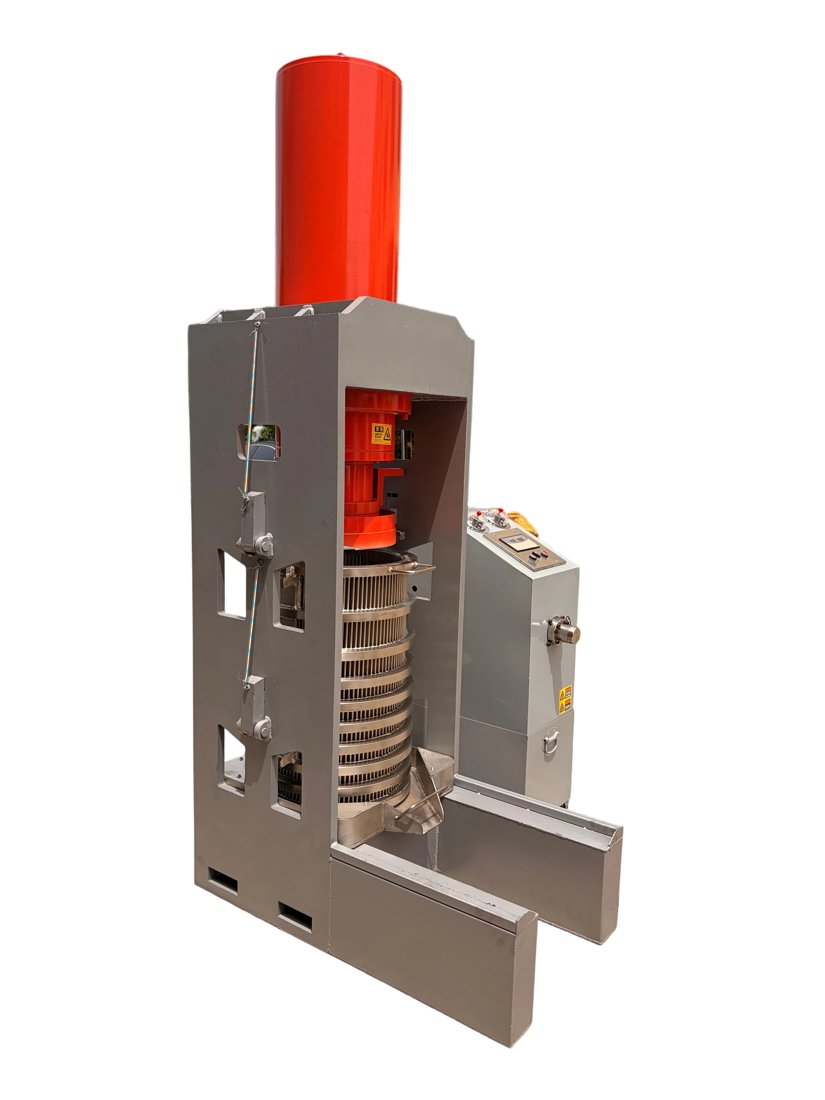
- Hydraulic Oil Press Machine
This two-step system is mandatory for stable cold pressing.
Step 1 – Crushing & Pre-Pressing (Key Step Most People Ignore)
Before hydraulic pressing, raw materials must be crushed or pre-compressed.
Why crushing is necessary:
- Increase oil cell exposure
- Improve pressure transmission
- Prevent uneven stress inside barrel
- Allow higher loading capacity
- Protect hydraulic components
Without crushing:
- Pressure is wasted
- Oil release is incomplete
- Barrel life is shortened
This is the most overlooked step in cold press processing.
Step 2 – Hydraulic Cold Pressing
After crushing, materials enter the hydraulic chamber.
Hydraulic pressing characteristics:
- Extremely high pressure
- Very slow pressing speed
- No high friction
- No temperature spike
- Uniform force distribution
This is fundamentally different from screw presses.
Hydraulic pressing uses pure force, not shear force.
Why Hydraulic Pressure Is Essential for Cold Press
Cold press seeds are usually:
- Hard
- Dense
- High fiber
- High oil cell resistance
Examples:
- Walnut
- Almond
- Pine nut
- Flaxseed
- Hemp seed
- Perilla seed
- Tea seed
- Coconut
These materials cannot rely on:
- Friction heat
- High-speed extrusion
They require:
Long-duration static pressure to release oil.
Only hydraulic systems can do this.
Temperature Control: The Real Quality Factor
In screw oil presses:
- Temperature rises from friction
- Oil oxidizes
- Nutrients degrade
In hydraulic cold press:
- Pressure generates almost no heat
- Oil temperature remains stable
- Natural antioxidants preserved
This is why:
| Factor | Cold Press |
|---|---|
| Color | Natural |
| Flavor | Pure |
| Aroma | Original |
| Shelf life | Longer |
| Oxidation | Minimal |
Cold press is not just marketing — it is physical reality.
Why Cold Press Yield Is Lower but Value Is Higher
Cold pressing sacrifices:
- Speed
- Throughput
- Maximum extraction
In exchange for:
- Nutritional value
- Premium pricing
- Brand positioning
- Export quality
So the real business logic is:
Cold press = lower yield per batch, higher profit per liter.
This is why cold press is used for:
- Health brands
- Organic products
- Cosmetic oils
- Pharmaceutical oils
- Boutique food brands
Typical Cold Press Industrial Applications
Cold press technology is mainly used in:
Edible Oils
- Walnut oil
- Almond oil
- Hemp seed oil
- Flaxseed oil
- Pumpkin seed oil
- Perilla oil
- Coconut oil
- Tea seed oil
Nutritional & Functional Oils
- Sea buckthorn oil
- Pine nut oil
- Grape seed oil
Industrial Materials
- Activated carbon decolorizer
- Chemical waste clay
- Special adsorbents
Cold press is not only for food — it is a high-pressure material separation technology.
Cold Press vs Hot Press: Real Industrial Difference
| Item | Cold Press | Hot Press |
|---|---|---|
| Temperature | Low | High |
| Nutrient retention | Very high | Medium |
| Oil yield | Medium | High |
| Equipment stress | Low | High |
| Product price | Premium | Standard |
| Brand positioning | High-end | Mass market |
Hot press = volume business
Cold press = value business
The Real Cold Press Logic (Most Important)
Cold press is not about machines.
It is about product positioning strategy.
You choose cold press when:
- Raw material is expensive
- Product price is high
- Quality matters more than speed
- Brand targets premium customers
If your oil sells cheap:
→ cold press is not necessary, if possible you can choose the hot pressing model.
If your oil sells premium:
→ cold press is mandatory.
Conclusion
Cold press oil processing is a system engineering, not a single machine.
Its core structure is:
Crushing → Hydraulic Pressure → Low Temperature → Slow Extraction
This process sacrifices speed and volume, but delivers:
- Maximum nutritional value
- Minimal oxidation
- Natural aroma
- Premium market positioning
Cold press is not the fastest way to make oil.
It is the most professional way to make high-quality oil.
Project planning
Configure the right oil press and production line
Send your oilseed, target output, bottle or packaging requirements, power supply, and destination country. We will match the machine, supporting equipment, and line layout.