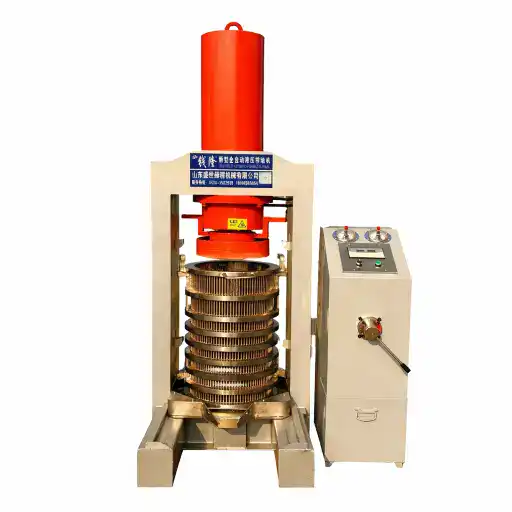
Crude palm oil treatment project
Configure palm oil refining from feed analysis and finished-oil specification
A palm refinery is a connected system of pretreatment, separation, bleaching, deodorization, filtration, heat recovery, vacuum, storage, and by-product handling. The correct route depends on the actual crude palm oil and the legal specification for the intended market.
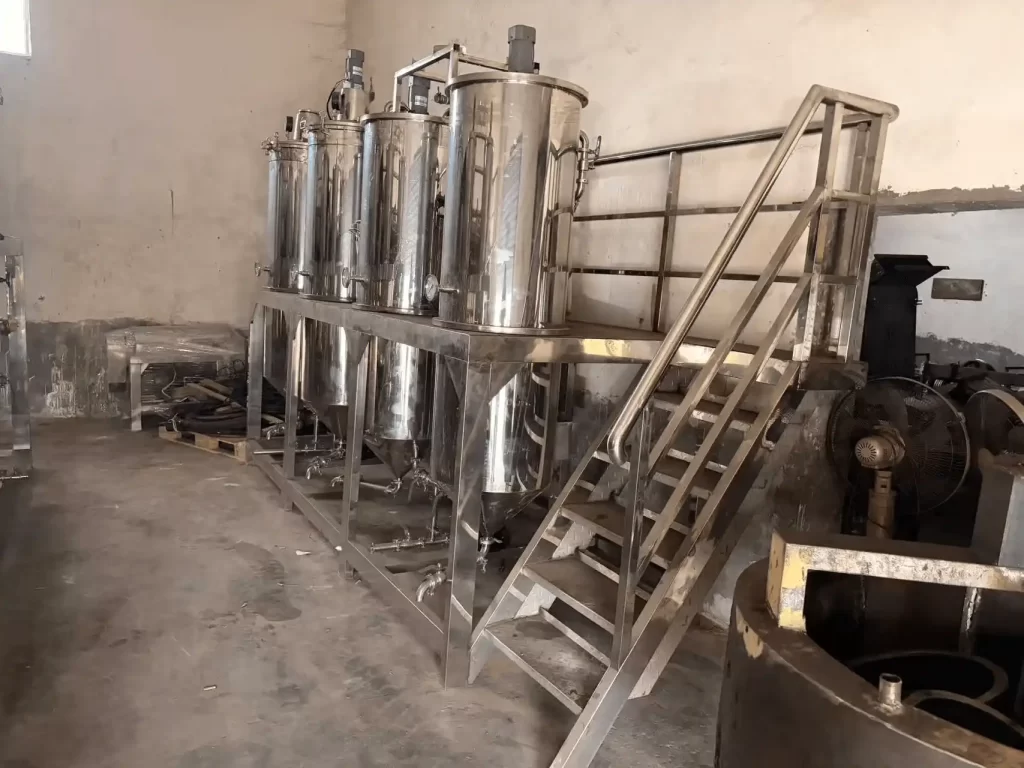
Reference equipment
Treat the hosted system as a compact plant reference, not proof of every capacity
The photographs show an installed vessel-based refining system. Final equipment quantity, vessel volume, heating area, vacuum duty, filtration, automation, and building services must be calculated from the crude palm oil analysis and operating schedule.
- Feed: traceable crude palm oil with representative laboratory data
- Product: refined oil released only against the agreed legal and buyer specification
- Optional downstream scope: fractionation into palm olein and palm stearin
- Required project outputs: oil, gums or soapstock, spent adsorbent, distillate, condensate, and wastewater routes
Feed and product basis
Do not select a refinery from tons per day alone
Free fatty acids, moisture, impurities, phosphorus, metals, oxidation, carotenoids, trace contaminants, storage history, and desired product all influence the process route and oil loss.
Incoming crude palm oil
Document the normal and worst-case feed
- Source mill, fruit condition, storage time, tank temperature, and traceability
- FFA, moisture and volatile matter, insoluble impurities, phosphorus, iron, and copper
- Oxidation indicators, color, odor, and any market-specific contaminant tests
- Daily and seasonal volume, delivery pattern, tank heel, and blend variability
Finished product
Define the release specification before designing the process
- Refined palm oil, palm olein, palm stearin, or industrial-grade outlet
- Destination food law, customer specification, packaging, and shelf-life study
- Required color, odor, FFA, moisture, impurities, stability, and contaminant limits
- Laboratory methods, sample points, release responsibility, and traceability records
Process route
Choose chemical or physical deacidification from feed quality and product requirements
The current page describes water or acid degumming, caustic neutralization, bleaching, and deodorization. That is one possible route; some palm projects use different pretreatment and physical deacidification within deodorization. The supplier must state which route is being quoted.
Stage-by-stage scope
Specify the reaction, separation, filtration, and vacuum hardware
| Stage | Purpose | Project decisions |
|---|---|---|
| Receiving and pretreatment | Remove gross solids, manage water, and prepare CPO for the selected route. | Tanks, heating, agitation, transfer, filters, sampling, traceability, and tank-bottom handling. |
| Degumming or conditioning | Condition phospholipids, metals, and other impurities for separation or bleaching. | Water or acid recipe, dosing accuracy, mixing, residence time, separation, wastewater, and corrosion compatibility. |
| Deacidification | Reduce free fatty acids by chemical neutralization or physical removal. | Selected route, oil loss, soapstock or distillate handling, vacuum, steam, and acceptance test. |
| Bleaching and filtration | Use approved adsorbent and conditions to reduce color bodies and trace impurities. | Earth type and dose, vacuum, temperature, contact time, filter type, dust control, fire prevention, and spent-earth route. |
| Deodorization | Use steam stripping under vacuum to reduce odor and volatile components. | Temperature profile, residence time, vacuum duty, stripping steam, heat recovery, condensate, emissions, and oil quality. |
| Cooling and storage | Protect treated oil before fractionation or filling. | Cooling medium, inerting where required, tank hygiene, transfer, polishing filter, sampling, and packaging connection. |
Current-page capacity conflict
The published batch and semi-continuous boundaries do not agree
The narrative and summary table use different breakpoints. These ranges are retained only to expose the discrepancy; they are not a controlled model list or proof that the pictured compact system covers every value.
| Configuration label | Narrative range | Summary-table range | Required clarification |
|---|---|---|---|
| Batch | 1–20 TPD | 1–10 TPD | Define actual feed hours, batch cycle, vessel working volume, downtime, and guaranteed feed basis. |
| Semi-continuous | 20–50 TPD | 10–50 TPD | State which stages are batch or continuous and provide the material balance for each buffer vessel. |
| Fully continuous | 50–1000 TPD | 50–1000 TPD | Provide a project-specific process design, equipment list, plot plan, utility balance, controls, and performance basis. |
TPD must state the feed, operating day, and acceptance basis
Confirm whether the figure means metric tons of crude palm oil per 24 hours, the planned operating hours, feed temperature and quality, product specification, planned cleaning, and availability allowance.
By-products, emissions, and permits
Refining transfers impurities into streams that still need legal outlets
| Stream | Typical source within the process | Buyer responsibility |
|---|---|---|
| Gums or soapstock | Degumming and chemical neutralization where selected. | Characterization, contained storage, approved recovery or treatment, and wastewater separation. |
| Spent bleaching earth | Adsorbent filtration after bleaching. | Fire-risk controls, dust containment, waste classification, licensed transport, recovery trial, or disposal. |
| Deodorizer distillate | Condensed volatile material from deodorization or physical refining. | Composition testing, storage temperature, permitted reuse or sale, and contamination control. |
| Condensate and wastewater | Steam, washing, degumming, neutralization, and floor cleaning. | Segregation, oil capture, treatment, discharge permit, monitoring, and emergency containment. |
| Odor and vacuum exhaust | Heating, vacuum generation, stripping steam, and tank vents. | Condensing, scrubbing or other controls, safe discharge, nuisance assessment, and local air permit. |
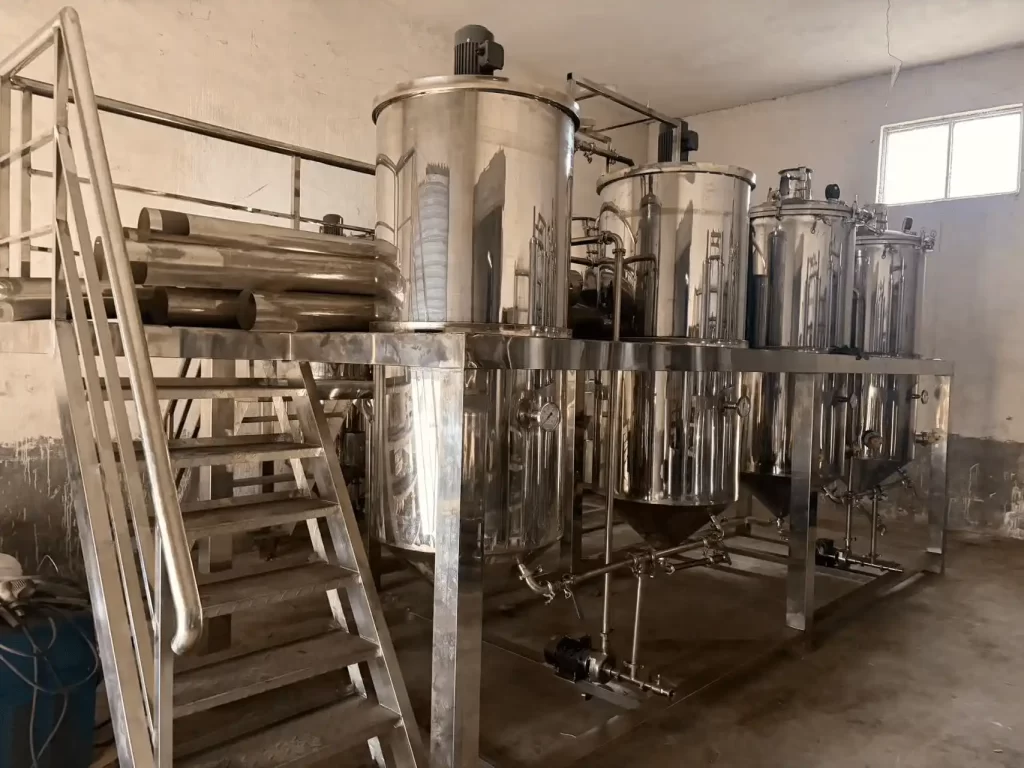
Installation and hygiene
Review the plant as vessels, utilities, controls, and clean product paths
- Process flow diagram, mass balance, piping and instrument diagram, equipment list, and plot plan
- Steam or thermal-oil duty, electricity, cooling water, process water, vacuum, compressed air, and nitrogen where required
- Contact-material grades, surface finish, insulation, drainability, cleaning method, and sampling points
- Pressure and vacuum protection, hot-oil containment, platforms, guarding, fire controls, and lockout
- Laboratory equipment, calibration, traceability, commissioning samples, and product-release responsibility
Connected palm oil projects
Define crude-oil production, refining, by-products, and filling as one site plan
Restored original media
Palm-oil refining equipment photographs
Original refining-unit photographs restored from the earlier process page.
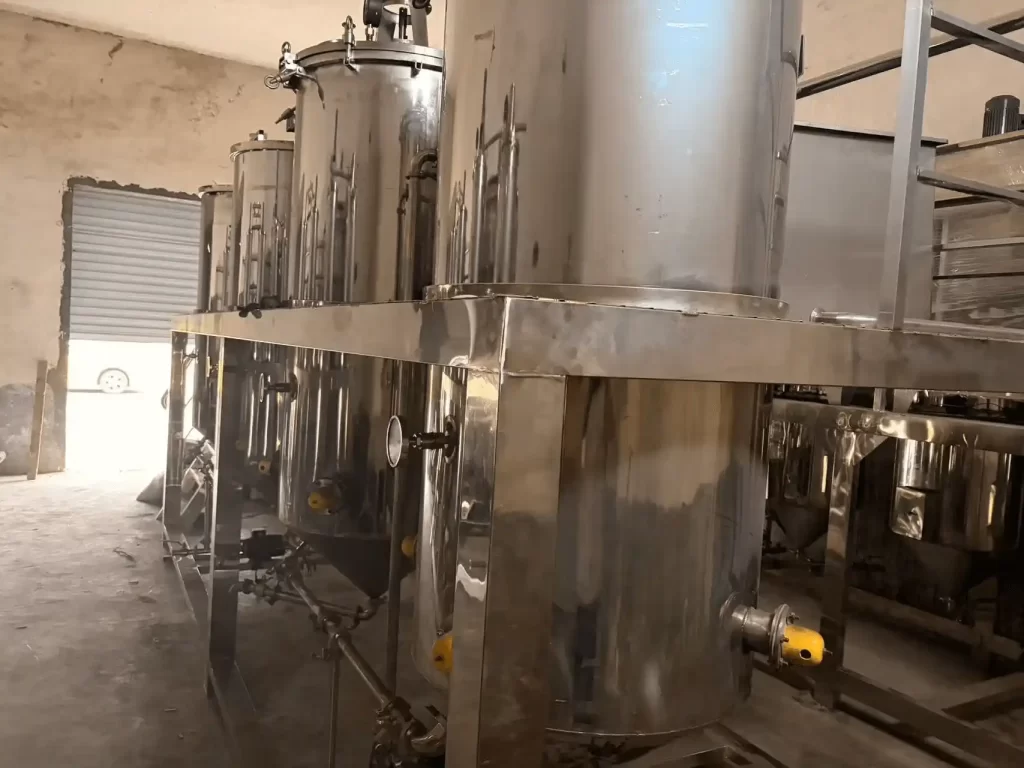
Edible oil refining machine1
Original photograph restored from the earlier page.
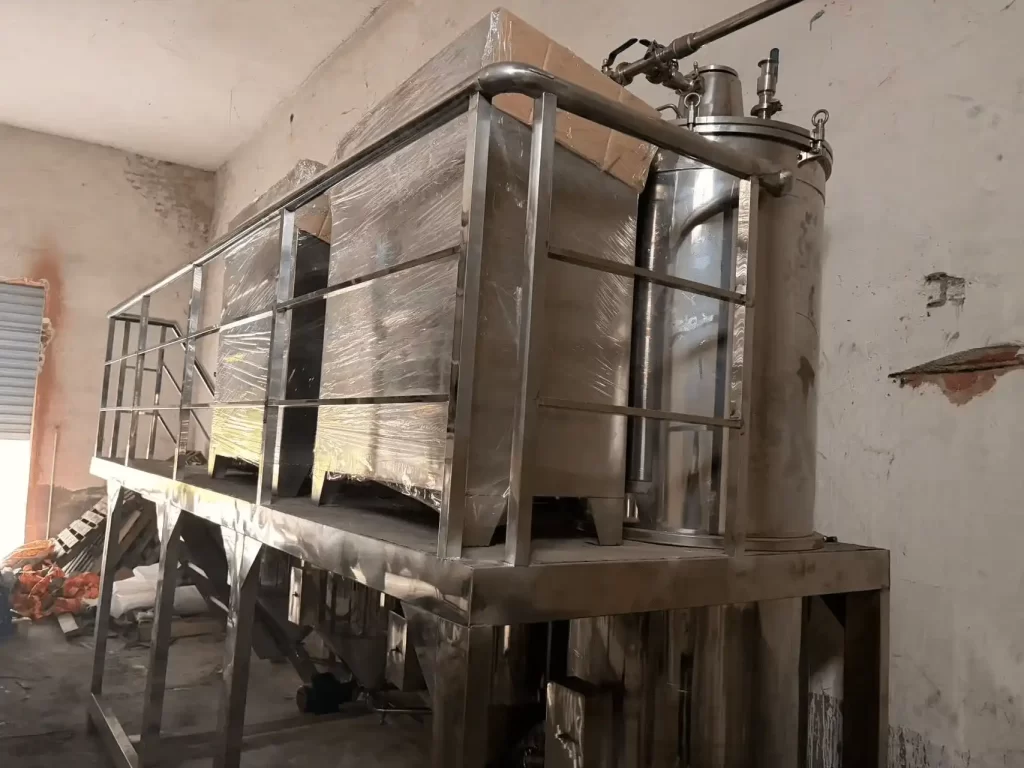
Edible oil refining machine1
Original photograph restored from the earlier page.
Turn the CPO assay and product standard into a controlled refinery scope
Send feed analyses, daily and seasonal quantity, finished-oil specification, preferred process route, utilities, by-product and wastewater plans, plot dimensions, destination, and required documentation.