
On this page
- Crushing Technology for Cold Press Oil Processing: Why Particle Size Matters
- Why Crushing Is Essential in Cold Press Oil Processing
- Particle Size Control: The Hidden Key to Oil Yield
- Crushing vs No Crushing: Real Industrial Difference
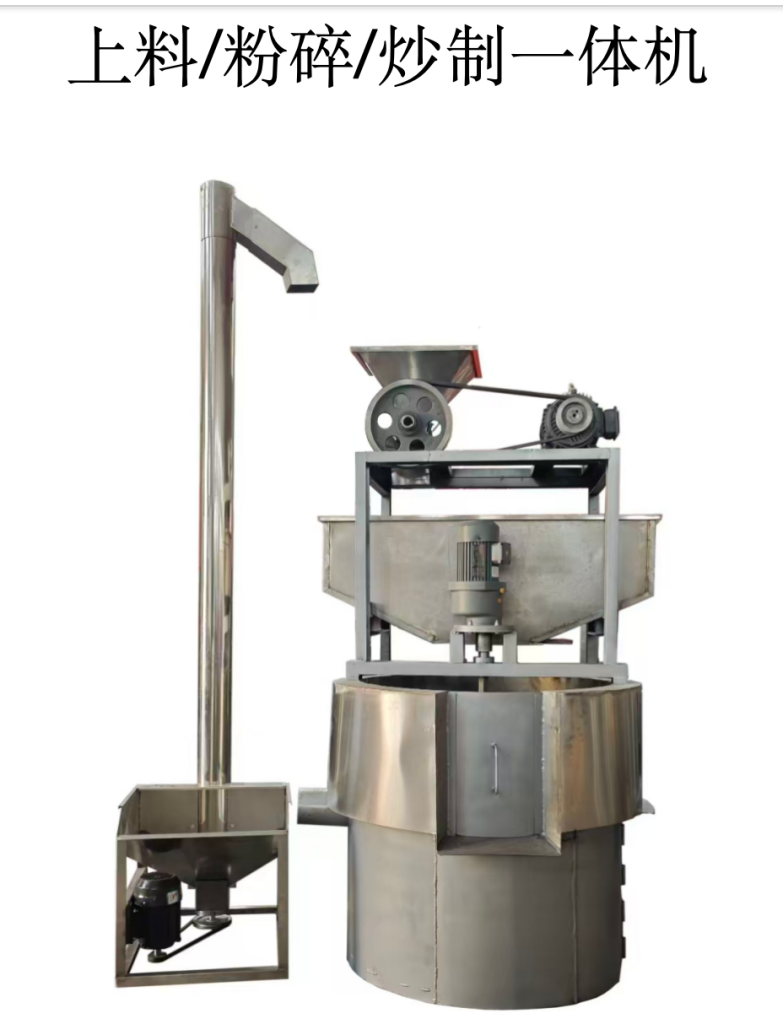
- Crushing Machine for Cold Press Systems
- Crushing + Pre-Pressing: The Professional Setup
- Relationship Between Crushing and Hydraulic Pressure
- Why High-Value Oils Require Better Crushing
- Conclusion: Crushing Is the True Starting Point of Cold Press
Crushing Technology for Cold Press Oil Processing: Why Particle Size Matters
In cold press oil processing, many producers focus mainly on the hydraulic oil press machine itself. However, in real industrial practice, crushing technology is the true first critical step that directly determines oil yield, pressing efficiency, and final oil quality.
Without proper crushing, even the highest-pressure hydraulic oil press cannot achieve optimal extraction results.
Cold press oil production follows a very simple but highly sensitive technical chain:
Raw material → Crushing → Pre-pressing → Hydraulic pressing → Oil collection
Among these steps, crushing is the foundation of the entire system.
Why Crushing Is Essential in Cold Press Oil Processing
Cold press oil extraction relies on mechanical pressure only, without heat cooking or solvent treatment. This means the oil must be physically released from the oil-bearing cells inside the seeds or nuts.
Crushing performs three critical functions:
1. Cell Wall Destruction
Oil is stored inside microscopic plant cells. Crushing breaks these cell walls, allowing oil to flow out under pressure.
Without crushing:
- Cell walls remain intact
- Pressure is wasted on solid structure
- Large amount of oil remains trapped inside the cake
2. Increased Contact Surface Area
Crushing transforms whole seeds into small particles, dramatically increasing surface area. More surface area means:
- Better oil flow paths
- Lower internal resistance
- Faster and more complete extraction
3. Uniform Pressure Distribution
Crushed material forms a dense and homogeneous cake inside the pressing chamber, ensuring:
- Even pressure transmission
- No pressure dead zones
- Stable batch pressing performance
Particle Size Control: The Hidden Key to Oil Yield
In cold press processing, particle size is more important than machine tonnage.
If particle size is too large:
- Cells remain partially intact
- Oil channels are blocked
- Residual oil rate increases
If particle size is too fine:
- Material becomes pasty
- Oil flow channels collapse
- Filtration becomes difficult
Ideal crushing result:
A uniform granular structure, typically:
- 20–60 mesh range for most oil seeds
- Free-flowing, non-sticky texture
- Good air permeability inside pressing chamber
This balance ensures maximum oil release while maintaining proper oil flow during pressing.
Crushing vs No Crushing: Real Industrial Difference
| Process | Oil Yield | Cake Density | Pressing Stability |
|---|---|---|---|
| Whole seeds | Low | Loose | Unstable |
| Crushed material | High | Dense | Stable |
| Crushed + pre-pressed | Highest | Very dense | Optimal |
In real factories, crushing alone can improve oil yield by 10%–25% compared to direct pressing of whole seeds.
Crushing Machine for Cold Press Systems
For industrial cold press production, a dedicated oilseed crushing machine is required. Typical functions include:
- Adjustable particle size control
- High hardness blade or hammer structure
- Continuous feeding system
- Stable output capacity
A specialized crushing system such as a
👉 Pre-Press Crushing Machine for Hydraulic Oil Press Systems
is designed specifically for cold press applications, ensuring:
- Consistent particle size
- High throughput
- Minimal oil loss during crushing
Crushing + Pre-Pressing: The Professional Setup
In high-efficiency cold press systems, crushing is often combined with pre-pressing before final hydraulic extraction.
Process flow:
Crushing → Pre-press shaping → Hydraulic pressing
Pre-pressing compresses crushed material into a dense cake block, allowing:
- Higher batch loading
- Better oil channel formation
- Lower residual oil in final cake
This setup is widely used in high-value oil processing lines, especially for:
- Walnut oil
- Perilla seed oil
- Flaxseed oil
- Tea seed oil
- Hemp seed oil
- Pumpkin seed oil
- Almond oil
- Pine nut oil
Relationship Between Crushing and Hydraulic Pressure
Crushing quality directly affects how effective hydraulic pressure becomes.
Even with ultra-high pressure systems such as:
👉 370–630 Ton Cold Press Hydraulic Oil Press Models
Poor crushing will still result in:
- High residual oil
- Low extraction efficiency
- Wasted machine capacity
In contrast, well-crushed material under high pressure achieves:
- Maximum oil yield
- Shorter pressing cycle
- Lower operating cost per ton
Why High-Value Oils Require Better Crushing
For low-value bulk oils, producers often tolerate:
- Higher residual oil
- Lower efficiency
- Simpler processes
But for high-value oils, crushing quality becomes a profit factor:
For these materials, every 1% improvement in oil yield can mean thousands of dollars per year in additional profit.
Conclusion: Crushing Is the True Starting Point of Cold Press
In cold press oil processing, the real logic is:
Crushing quality determines oil yield ceiling.
Hydraulic pressure only helps you approach that ceiling.
A professional cold press system is not simply a large hydraulic press, but a complete technical chain starting from crushing.
If crushing is done correctly:
- Oil yield increases
- Energy consumption decreases
- Equipment efficiency is fully released
- Final oil quality remains premium
This is why in industrial cold press production, crushing technology is not an accessory — it is the core foundation of the entire process.
Project planning
Configure the right oil press and production line
Send your oilseed, target output, bottle or packaging requirements, power supply, and destination country. We will match the machine, supporting equipment, and line layout.