
On this page
- Digestate Dewatering High-Pressure Hydraulic Pressing System
- 1. Project Overview
- 2. Project Advantages
- 3. Project Background
- 4. Design Principles
- 5. Final Design Capacity
- 6. Ultra-High-Pressure Intelligent Solid–Liquid Separation Technology
- 7. Process Description
- 8. Technical Characteristics
- 9. System Composition
- 10. Odor Control
- 11. Utilities (Water & Drainage)
- 12. Operating Cost Analysis (Per Ton of Sludge)
- 13. Equipment List (Single Line)
Digestate Dewatering High-Pressure Hydraulic Pressing System
1. Project Overview
1.1 Project Name
Guangdong Digestate Dewatering Solution
1.2 Project Capacity
- Daily treatment capacity: 30 tons/day
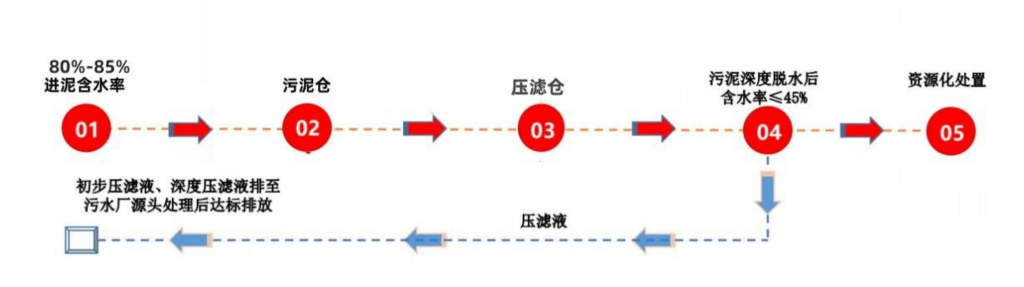
- Material: Digestate / sludge with approx. 80% moisture content
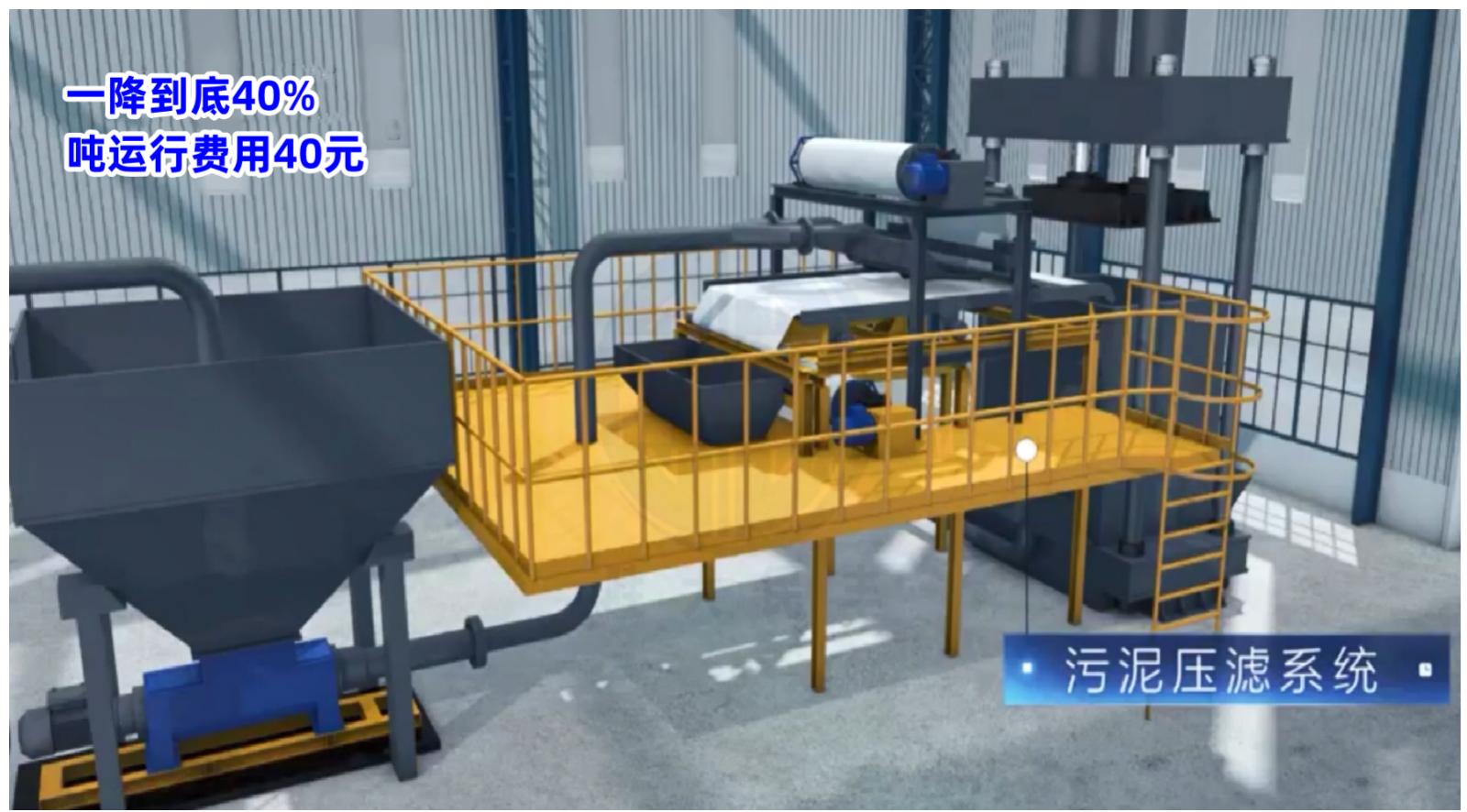
- Equipment configuration: One set of ultra-high-pressure intelligent solid–liquid separation system
1.3 Site Area
- Project location: Guangdong Province, China
- Total land occupation: approximately 200 m²
1.4 Treatment Technology
The hydraulic pressing process reduces moisture content:
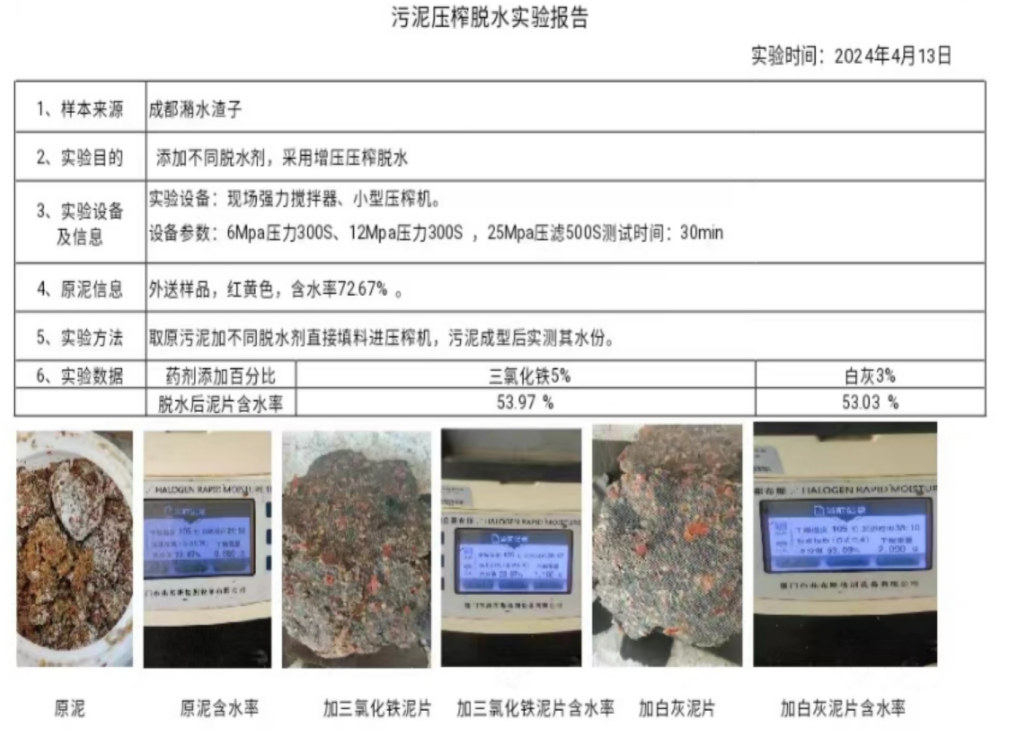
- From ~80% down to 40–50% in a single mechanical dewatering stage.
1.5 Main Technical & Economic Indicators
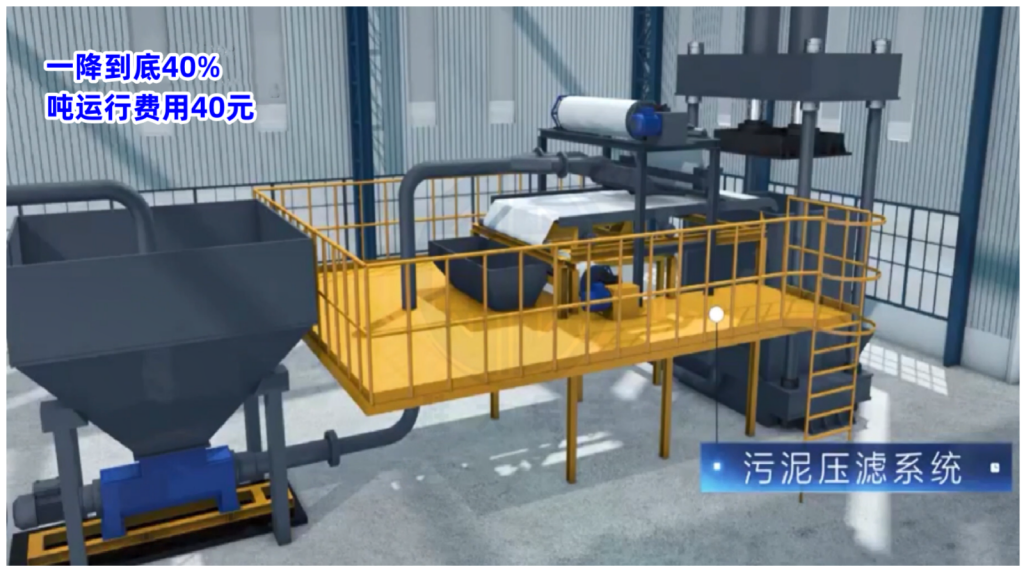
- Direct operating cost of dewatering stage: ≤ RMB 40 / ton (based on 80% moisture sludge)
2. Project Advantages
- The project adopts a new-generation ultra-high-pressure intelligent solid–liquid separation system, solving traditional digestate and sludge dewatering bottlenecks and achieving stable moisture content of 40–50%.
- The system features simple chemical conditioning, low chemical consumption, high efficiency, short process flow, compact footprint, and integrates the critical sludge dewatering stage into a single high-performance unit.
- No sludge volume increase, effectively reducing downstream disposal costs.
- Minimal odor generation; the entire process is enclosed and environmentally friendly.
- The system is a key enabling technology for downstream resource utilization, including land application, building materials, cement kiln co-processing, and other safe disposal routes.
- Proven technology with multiple similar projects already in stable operation.
- Low energy consumption, supporting carbon neutrality and carbon reduction goals, making this project a strong demonstration model.
3. Project Background
According to the Implementation Plan for Strengthening Urban Wastewater and Sludge Treatment Facilities issued by China’s National Development and Reform Commission and Ministry of Housing and Urban-Rural Development, accelerated sludge harmless treatment and resource utilization are strongly encouraged.
Under the dual goals of carbon peak and carbon neutrality, developing a green, low-carbon, and fully resource-oriented sludge treatment solution is critical. This project integrates advanced technologies with real operational experience to establish a modern, energy-efficient, and sustainable sludge utilization benchmark project.
4. Design Principles
- Strict compliance with the latest national environmental policies, regulations, and standards.
- Integrated planning with phased implementation.
- Selection of advanced, reliable, and cost-effective technology.
- Maximized green, low-carbon, and resource-oriented utilization.
- Compact layout, optimized logistics flow, minimal land use, and modern industrial aesthetics.
5. Final Design Capacity
- Input material: Digestate / organic sludge at ~80% moisture
- Treatment capacity: 30 tons/day
- Output moisture content after hydraulic pressing: 40–50%
6. Ultra-High-Pressure Intelligent Solid–Liquid Separation Technology
6.1 Technology Overview
The ultra-high-pressure intelligent solid–liquid separation system is independently developed with full intellectual property rights, covering the entire sludge dewatering process.
It is widely used for:
- Municipal sludge
- Livestock manure
- Digestate
- Other high-moisture organic solid waste
Key features include:
- ≥ 800 tons pressing force
- Variable-volume filter chambers (≈ 2 m³)
- Multi-layer ultra-thin filter cloth stacking technology
The system achieves stable outlet moisture of 45–50%, with superior land use, energy efficiency, and economic performance compared to belt presses, screw presses, and filter presses.
7. Process Description
- Sludge is unloaded into a sealed storage hopper equipped with negative-pressure deodorization.
- Material is fed via a metering system into the conditioning tank, where optional chemicals are added and mixed automatically.
- Conditioned sludge is transferred to the cloth-laying system.
- Sludge is evenly distributed onto filter cloth layers and fed into the pressing chamber.
- Ultra-high-pressure hydraulic pressing continuously separates free and bound water.
- After pressing, sludge cake is discharged automatically, filter cloths are cleaned and recycled.
- Dewatered sludge cakes are conveyed to storage or downstream processing.
8. Technical Characteristics
- Pure mechanical dewatering (no thermal drying)
- Stable, continuous high-pressure extrusion
- Fully automated PLC control (manual/auto modes)
- Reliable, durable structure with low maintenance requirements
- Modular design scalable for different capacities
9. System Composition
- Sludge receiving and storage system
- Chemical conditioning and mixing system
- Cloth laying and feeding system
- Hydraulic pressing system
- Cake discharge and cloth recovery system
- Conveying and storage system
- Central electrical control system
10. Odor Control
- Odor sources mainly from sludge storage and conditioning
- Fully enclosed process with centralized exhaust
- Air treated through deodorization and complies with:
- GB14554-93
- DB12/059-2018
11. Utilities (Water & Drainage)
- Process water, cleaning water, and domestic wastewater collected and returned to local wastewater treatment plants.
- Filter cloth cleaning water is recycled after sedimentation.
12. Operating Cost Analysis (Per Ton of Sludge)
| Item | Cost (RMB) |
|---|---|
| Electricity | 5 |
| Chemicals | 20 |
| Operators | 6.5 |
| Maintenance | 2.5 |
| Consumables | 1.5 |
| Total | ≈ 35.5 RMB / ton |
13. Equipment List (Single Line)
- Sludge conditioning system
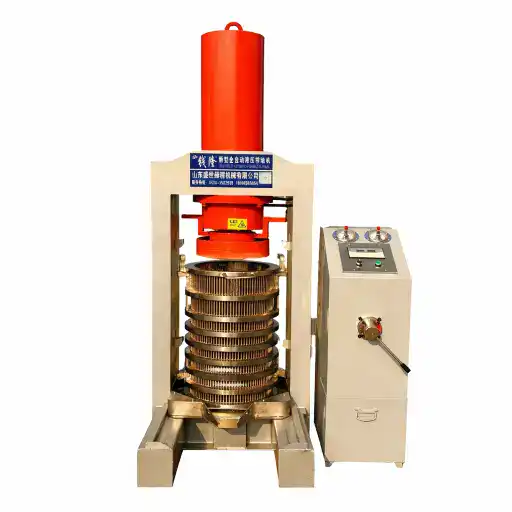
- Ultra-high-pressure hydraulic press (MF32-1200T)
- Hydraulic power unit
- Variable-volume press chamber (2 m³)
- Electrical & PLC control system
- Conveyors, platforms, installation & commissioning
Total project investment:
RMB 1.5 million (excluding tax and transportation)
14. Conclusion
This solution demonstrates a high-efficiency, low-energy, environmentally friendly hydraulic pressing system for digestate and sludge dewatering. It provides an ideal technical foundation for downstream resource utilization and long-term sustainable operation.
Project planning
Configure the right oil press and production line
Send your oilseed, target output, bottle or packaging requirements, power supply, and destination country. We will match the machine, supporting equipment, and line layout.