
On this page
- Quick answer: what route fits premium bottled sesame oil best?
- Why bottled sesame oil business changes the machine decision
- Why the 325 hydraulic route is often the stronger direct recommendation
- What process sections usually matter in bottled sesame oil production?
- What changes most when a project moves from fresh retail to bottled sesame oil sales?
- When a compact route still makes sense
- When NOT to choose a too-small sesame oil route
- What serious bottled sesame oil buyers often underestimate
- Three common planning mistakes in bottled sesame oil projects
- How should buyers plan budget by business stage?
- How should buyers compare two sesame oil machine quotations fairly?
- What information should buyers define before asking for a quote?
- Quick recommendation by business type
- FAQ about choosing a sesame oil machine for bottled oil business
How to choose a sesame oil machine for bottled oil business should be decided from the finished product standard, not from the simplest machine that can produce oil. This distinction matters because bottled sesame oil is usually judged as a commercial food product, not only as a pressing result. Once the product is bottled, buyers begin to care much more about clean presentation, premium positioning, process stability, and whether the route can be repeated with confidence. That is why a bottled sesame oil project often needs a stronger route than a simple fresh-oil retail setup.
Many buyers make the wrong comparison. They compare a machine suitable for a small fresh-oil shop with a route intended for premium packaged sesame oil, then ask why the recommendation feels different. The answer is simple: the business model is different. A buyer selling bottled sesame oil is not only pressing oil. That buyer is building a product route, a brand impression, and a repeatable production logic. The machine should therefore be selected as part of a commercial system.
Quick answer: what route fits premium bottled sesame oil best?
| Business stage | Recommended route | Why |
|---|---|---|
| Very early bottled-oil testing | Compact route + filter | Acceptable only when demand is still being validated and first-stage risk must stay low. |
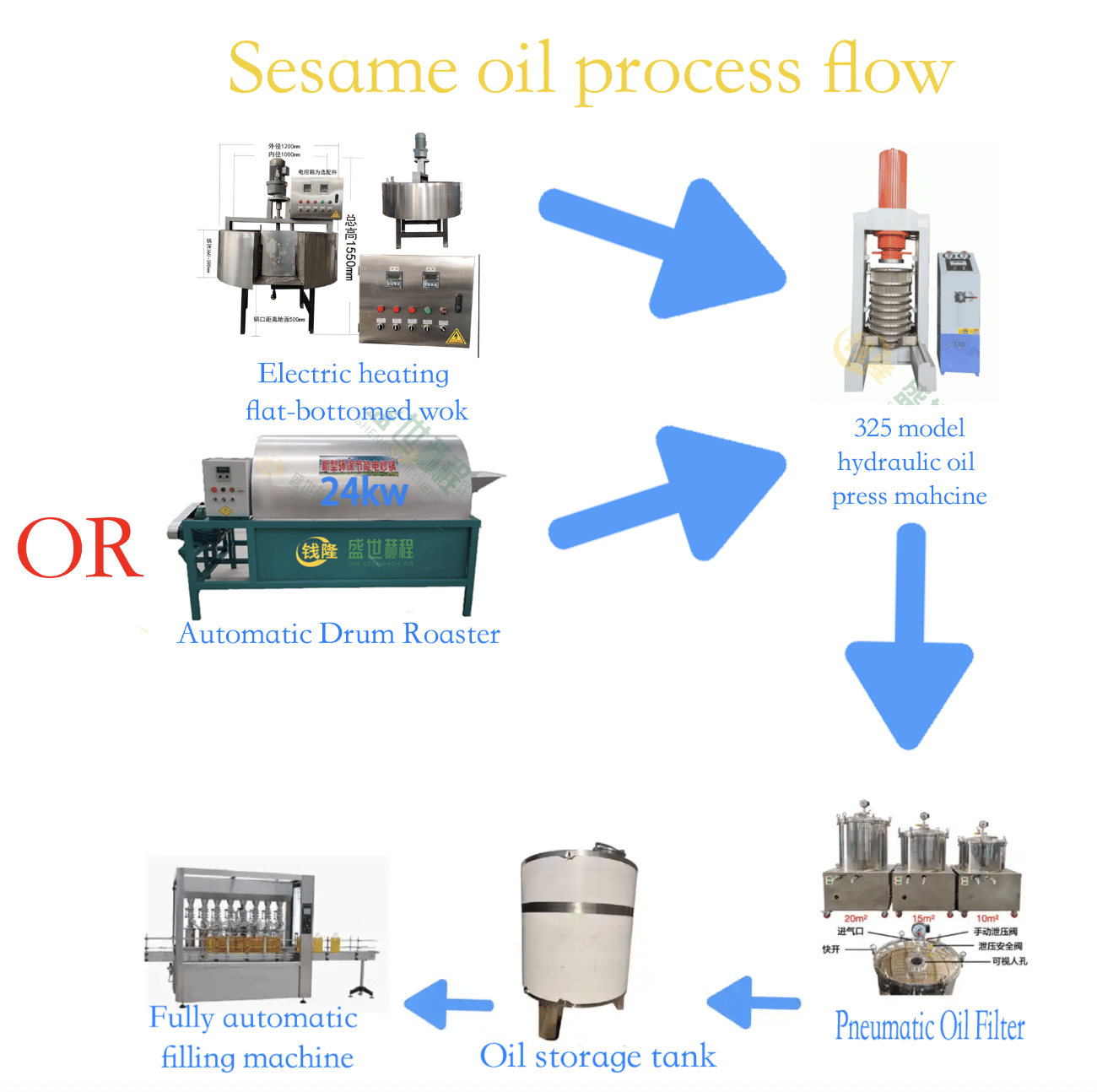
| Premium bottled sesame oil route | 325 hydraulic oil press machine + roasting + filtration | Usually the stronger route for commercial bottled sesame oil with better process logic and premium fit. |
| Growing packaged-oil business | 325 + filtration + filling route | Supports cleaner finished oil, better consistency, and more realistic packaged-oil scaling. |
Why bottled sesame oil business changes the machine decision
Fresh-oil retail and bottled-oil business may use related equipment, but they do not ask the same commercial question. Fresh-oil retail often focuses on immediate pressing, simple presentation, and a local selling scenario. Bottled-oil business usually needs more discipline. Customers expect a product that looks cleaner, feels more professional, and stays commercially consistent from batch to batch. The route therefore needs to support product credibility, not only oil extraction.
This is why bottled-oil buyers often outgrow small startup logic very quickly. A setup that works for a demonstration or local retail test can become limiting when the buyer wants to sell a premium packaged product through stores, resellers, gift channels, or other branded-food channels.
Why the 325 hydraulic route is often the stronger direct recommendation
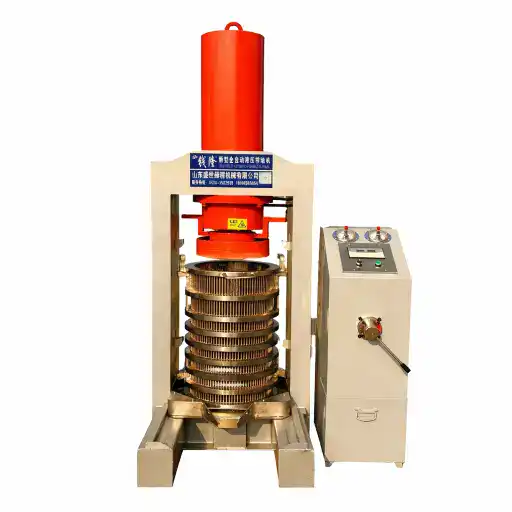
When the business is already aimed at premium bottled sesame oil, the 325 hydraulic oil press machine is often the more honest recommendation. It usually aligns better with a more serious batch route, stronger commercial positioning, and the expectation that the project is not just a small retail experiment. In other words, buyers choosing the 325 route are often not buying “more machine for no reason.” They are buying a route better matched to a more premium bottled-oil target.
The 325 route also fits better when the buyer expects cleaner process control, more confidence in commercial operation, and a path toward stronger packaged-oil production rather than only shop-style pressing.
What process sections usually matter in bottled sesame oil production?
- better seed preparation before pressing
- roasting or heat-related route decisions where the sesame process requires them
- filtration for cleaner finished-oil appearance
- filling or packaging logic when bottles are part of the first-stage business
- batch stability that makes repeat quality easier to achieve
These sections become important because bottled sesame oil is sold as a finished edible-oil product. The route must support the product standard, not just the act of pressing.
What changes most when a project moves from fresh retail to bottled sesame oil sales?
| Factor | Fresh-oil retail focus | Bottled-oil business focus |
|---|---|---|
| Customer expectation | Immediate pressing experience | Clean packaged product and stable quality |
| Machine logic | Simple startup route | More commercial production route |
| Filtration importance | Helpful | Usually much more important |
| Packaging importance | Can often wait | Often enters planning earlier |
| Recommendation tendency | Small route may work | 325 route often becomes the stronger answer |
When a compact route still makes sense
A compact route still has value when the buyer is testing whether bottled sesame oil has enough market response, when capital must stay light at the beginning, or when the route is intentionally staged. In these cases, a smaller route plus filtration may be a reasonable first commercial step. But it should be treated as a validation route, not automatically as the best long-term premium route.
This difference is important because some buyers try to use a stage-one validation setup as if it were already a stage-two premium production answer. That usually creates frustration later.
When NOT to choose a too-small sesame oil route
- when the product is intended to compete as premium bottled sesame oil
- when repeatable batch quality matters from the beginning
- when the buyer already knows packaging is part of the first-stage plan
- when the route is meant for serious commercial supply instead of a local experiment
- when the buyer would lose more by underbuying than by investing correctly at the start
In these situations, buying too small often looks economical only at the beginning. Later, the buyer discovers the route has to be rebuilt to match the real commercial standard.
What serious bottled sesame oil buyers often underestimate
They often underestimate how much product positioning changes equipment logic. A premium bottled oil project is not only about extraction. It is about the finished appearance, batch-to-batch consistency, and whether the route supports a stronger market story. This is why filtration becomes more important, packaging enters the discussion earlier, and the 325 route becomes more relevant.
Some buyers also underestimate the cost of choosing too small a route. The first quote may be lower, but if the project soon needs better support sections or a more capable machine route, the total cost of correction can exceed the cost of choosing correctly earlier.
Three common planning mistakes in bottled sesame oil projects
| Mistake | What happens | Better approach |
|---|---|---|
| Choosing as if it were still a fresh-oil shop | The route ends up too light for premium bottled sales | Select from the finished product standard backward |
| Ignoring filtration in the first-stage plan | The bottled product may look less commercially convincing | Treat filtration as part of product presentation |
| Postponing packaging logic too long | The business route becomes fragmented | At least define packaging timing clearly from the beginning |
How should buyers plan budget by business stage?
Stage 1: validate the bottled-oil concept with a smaller route only if the market is still unproven and risk control matters most.
Stage 2: move to a stronger sesame route with the 325 hydraulic oil press machine when the business is clearly premium positioned or commercially repeatable.
Stage 3: integrate more complete filling and packaging sections once packaged-sales demand is confirmed.
This staged logic helps buyers avoid two opposite mistakes: underbuying for a serious project, or buying a full packaging route too early before demand is clear.
How should buyers compare two sesame oil machine quotations fairly?
They should ask whether both quotations are solving the same commercial problem. If one quote is for a compact testing route and another is for a more serious 325 premium route with stronger process support, the lower price does not automatically mean better value. The cheaper quote may simply cover less of the actual commercial route. Fair comparison means comparing business stage, product target, filtration logic, packaging timing, and expansion intent together.
What information should buyers define before asking for a quote?
- target daily or batch output
- whether the product is premium or mass-market
- whether bottled sales begin immediately
- whether filtration and filling are included in the first stage
- country, voltage, and installation conditions
- whether the project is a shop, workshop, or more commercial packaged-oil route
- what sales channel is expected: local retail, resellers, supermarkets, premium gift market, or other channels
The more clearly these factors are defined, the more practical the recommendation becomes. Without them, suppliers can only send generic replies that do not really match the bottled-oil route.
Quick recommendation by business type
Testing bottled sesame oil in a new market: a compact route plus filtration may be acceptable for first-stage validation.
Launching a premium bottled sesame oil product: go directly toward the 325 hydraulic oil press machine route with stronger process support.
Scaling a packaged-oil business: combine the 325 route with filtration and filling logic instead of treating packaging as an afterthought.
Unsure whether the route is too small or too large: define the product positioning first. That single step often makes the correct route much clearer.
FAQ about choosing a sesame oil machine for bottled oil business
Is a small retail sesame oil machine enough for bottled oil business?
Sometimes for early testing, but usually not for a stronger premium bottled-oil route. Commercial packaged sesame oil often needs a more capable route.
When should I choose the 325 hydraulic route directly?
When the business is already positioned as premium bottled sesame oil rather than a small fresh-oil retail experiment.
Does bottled sesame oil business usually need filtration?
Yes. In most serious bottled-oil projects, filtration is important because clean presentation matters commercially.
Can I start small and upgrade later?
Yes, if the market is still being tested. But buyers should recognize that the smaller route may be a validation step, not the ideal long-term answer.
What is the biggest mistake in bottled sesame oil planning?
Planning the route as if the business were still a simple fresh-oil shop, even though the finished product is meant to compete as a bottled commercial oil.
What should I send for an accurate quote?
Send your target output, bottle format, product positioning, sales channel, and whether filtration and filling are required in the first stage.
Tell us your bottled sesame oil plan for a quote
Send your target output, bottle size, market positioning, sales channel, and whether filtration and filling are included. We can recommend a more suitable sesame oil machine route for bottled-oil business directly.
Project planning
Configure the right oil press and production line
Send your oilseed, target output, bottle or packaging requirements, power supply, and destination country. We will match the machine, supporting equipment, and line layout.