
On this page
- Quick answer: what reduces startup risk most?
- Why startup oil press projects become risky
- Step 1: define the first commercial stage before the machine
- Step 2: match the machine to the startup model
- Step 3: control expansion instead of delaying the whole project
- Questions every startup buyer should answer before requesting a quote
- How buyers can lower quote risk as well as machine risk
- Conclusion
How to reduce oil press machine startup risk is one of the most important questions a new buyer can ask. Most startup mistakes do not happen because the machine itself is bad. They happen because the buyer chooses the wrong route, invests too much too early, or tries to decide before defining the product and market. The lower-risk approach is to match the machine route to the real business stage, define the oil product clearly, and expand only after market demand becomes more certain.
How to reduce oil press machine startup risk starts with one principle: do not buy equipment before the business route is clear. Most failed projects do not fail because the press cannot work. They fail because the buyer mixes retail logic, workshop logic, and factory logic into one confused investment plan. The safer approach is to define the product, identify the first sales channel, and choose a machine route that fits the first stage instead of the final dream stage.
For most buyers, startup risk drops fastest when the first machine is commercially useful but not oversized. That keeps capital pressure under control, shortens the path to revenue, and leaves room to upgrade after the market proves itself.
Quick answer: what reduces startup risk most?
| Risk-control move | Why it works | Buyer benefit |
|---|---|---|
| Choose by business model first | A shop, workshop, and factory need different routes | Avoids buying the wrong machine class. |
| Invest in stages | Support equipment can be added later | Protects cash flow and reduces early mistakes. |
| Define the oil product clearly | Fresh oil, premium bottled oil, and bulk output require different planning | Improves machine selection and quote accuracy. |
| Ask suppliers better questions | Clear inputs produce better recommendations | Reduces generic quotations and mismatched proposals. |
Why startup oil press projects become risky
The common startup mistake is treating equipment selection as the first decision instead of the result of earlier commercial decisions. A buyer may ask for capacity, price, or model number before deciding whether the project is a customer-facing fresh-oil store, a premium cold-pressed oil business, or a small packaged-oil factory. That creates the illusion of progress, but the comparison is still incomplete.
Risk also rises when buyers try to solve every future need with the first purchase. A startup usually does not need the same route as a mature factory. If the first setup is too large, too costly, or too complex, the project carries unnecessary pressure before sales are validated.
Step 1: define the first commercial stage before the machine
Buyers can reduce risk quickly by deciding what the first stage of the business really is. There are usually three practical starting points:
- Fresh-oil retail route: visible pressing, compact layout, lower startup complexity, and faster store-level validation.
- Premium batch-production route: stronger product positioning, better suited to bottled sales, and often paired with filtration.
- Small-factory route: broader output planning, more support equipment, and higher operational demands.
Once the business stage is clear, the machine route becomes much easier to judge. Without that step, even a technically good machine can become a commercially bad purchase.
Step 2: match the machine to the startup model
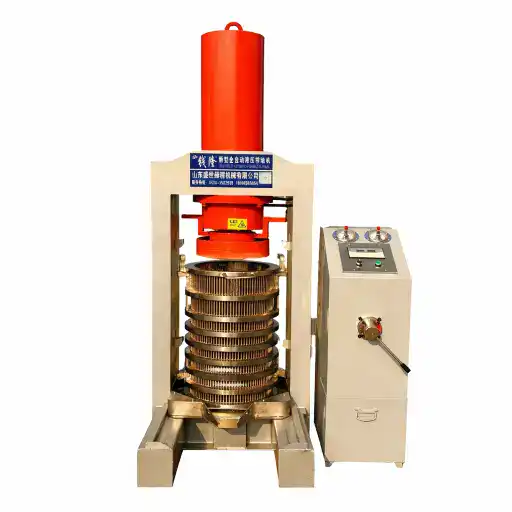
For many first-time buyers, the lowest-risk machine route is the Korean type small hydraulic oil press machine. It is compact, more suitable for visible operation, and easier to fit into a retail or test-market environment. It helps the buyer start revenue generation without building a full workshop immediately.
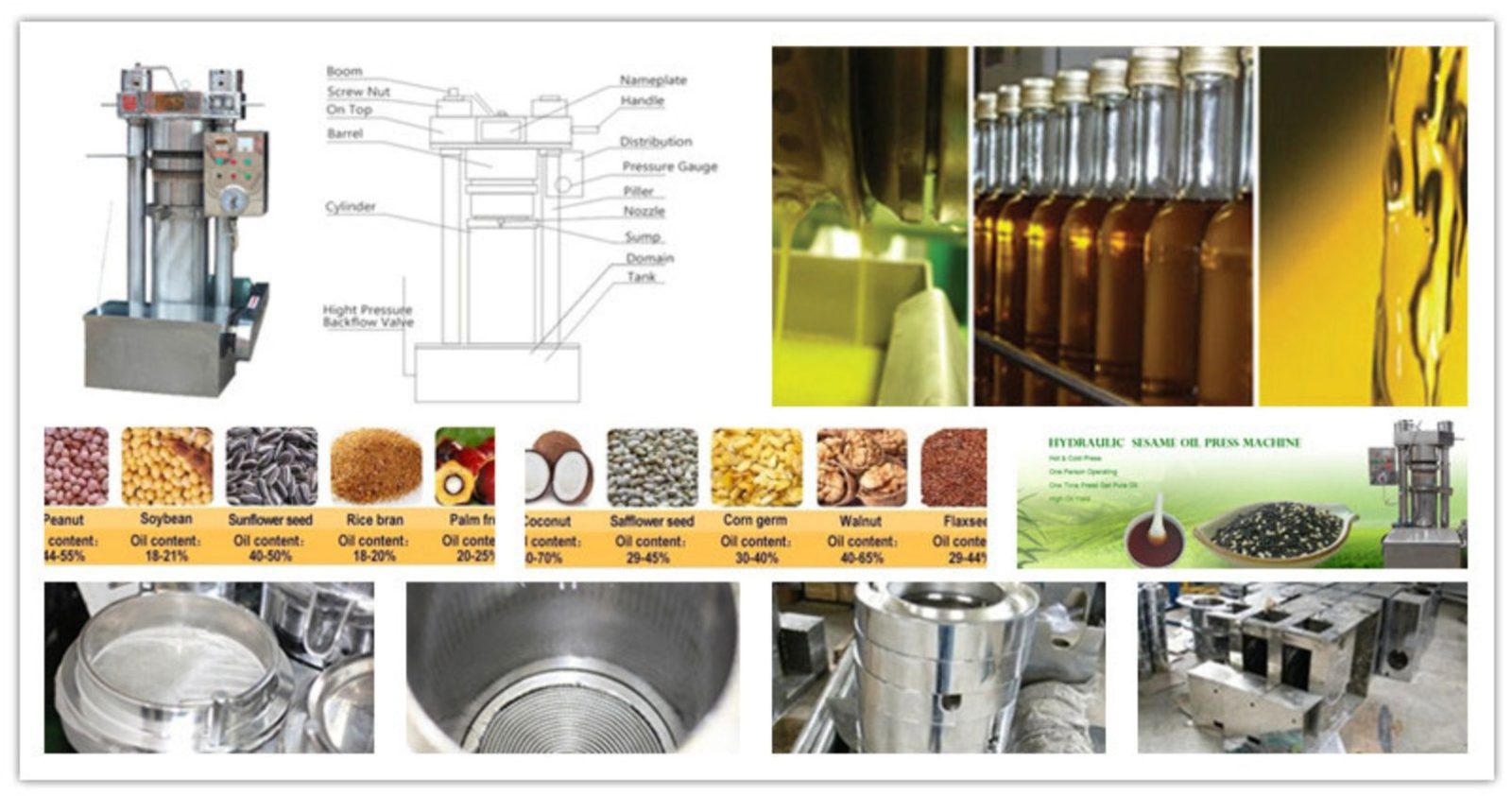
If the startup is already positioned as a premium bottled-oil business rather than a retail validation project, then a stronger route may be more appropriate. The 370T–630T cold press hydraulic route fits buyers who need a more premium production logic from day one, while the 325 hydraulic oil press machine is often the better answer for sesame-focused premium batch production.
Step 3: control expansion instead of delaying the whole project
Many buyers think risk falls if they wait until they can afford the biggest complete line. In practice, that often delays market learning. A better strategy is staged expansion. Start with the machine route that supports the first sellable product, then add filtration, roasting, or filling as order flow becomes clearer.
This approach protects cash flow and produces better operational decisions. Each expansion step is based on real customer response rather than assumption.
Questions every startup buyer should answer before requesting a quote
- Which oilseed will be processed first?
- Is the first target fresh oil, premium bottled oil, or broader factory supply?
- Will the machine operate in a shop, workshop, or factory environment?
- How important is visible operation in front of customers?
- What support equipment is needed now, and what can wait until later?
These answers help suppliers recommend a route based on business reality instead of broad assumptions.
How buyers can lower quote risk as well as machine risk
Startup risk is not only about equipment performance. It is also about decision quality. Generic quote requests usually produce generic recommendations. Better requests create better comparisons. When buyers share raw material, expected product, startup budget, sales channel, and expansion plan, they are more likely to receive practical advice rather than a simple model list.
That matters because the safest project is not always the smallest project. It is the project whose machine route, product route, and commercial stage are aligned from the start.
Conclusion
The most effective way to reduce oil press machine startup risk is to stop treating the machine as an isolated purchase. The machine should match the first real business stage, not an undefined future ambition. For many startups, a compact retail-oriented hydraulic route is the safest first move. For more developed premium projects, a stronger batch-production route may be justified. In every case, the winning logic is the same: define the business first, invest in stages, and let the equipment follow the market plan.
Contact us for model selection, capacity planning, and line configuration support.
If you want a model recommendation based on raw material, target capacity, and business stage, please contact us for a practical machine and line suggestion.
For shop-based, fresh-oil, and low-volume startup projects, the Korean type small hydraulic oil press machine is often the better first-stage route before moving to a larger setup.
Project planning
Configure the right oil press and production line
Send your oilseed, target output, bottle or packaging requirements, power supply, and destination country. We will match the machine, supporting equipment, and line layout.