
On this page
- Quick answer: what does capacity mean on a hydraulic oil press machine?
- Hydraulic oil press machine capacity chart
- Quick answer: how should buyers use a capacity chart?
- What a capacity number really means in practice
- Realistic capacity interpretation for actual buyers
- Why raw material changes how capacity should be read
- How route selection changes the meaning of capacity
- Shortlist logic: how to narrow the right capacity range
- Most common mistakes buyers make when reading capacity charts
- Why overbuying from the chart creates hidden cost
- FAQ
- Conclusion
- How buyers should use the chart
- What changes real output in the field?
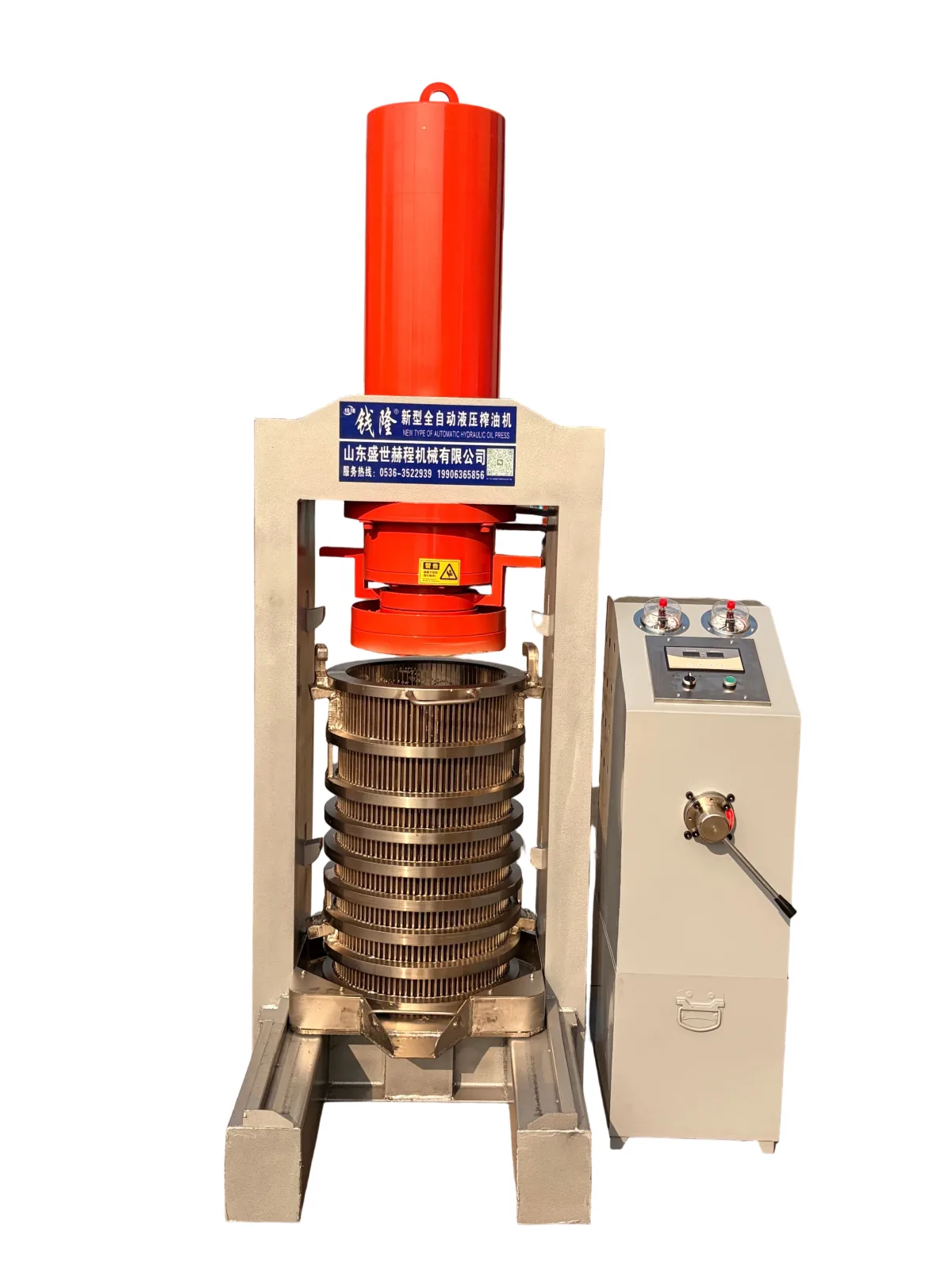
Most buyers do not need the biggest hydraulic oil press. They need the right batch size for the oilseed they already have, the daily output they want to hit, and the labor rhythm they can actually manage.
To make that decision faster, start with the working video below, then use the capacity chart to estimate real production instead of relying on a single “tonnage” number.
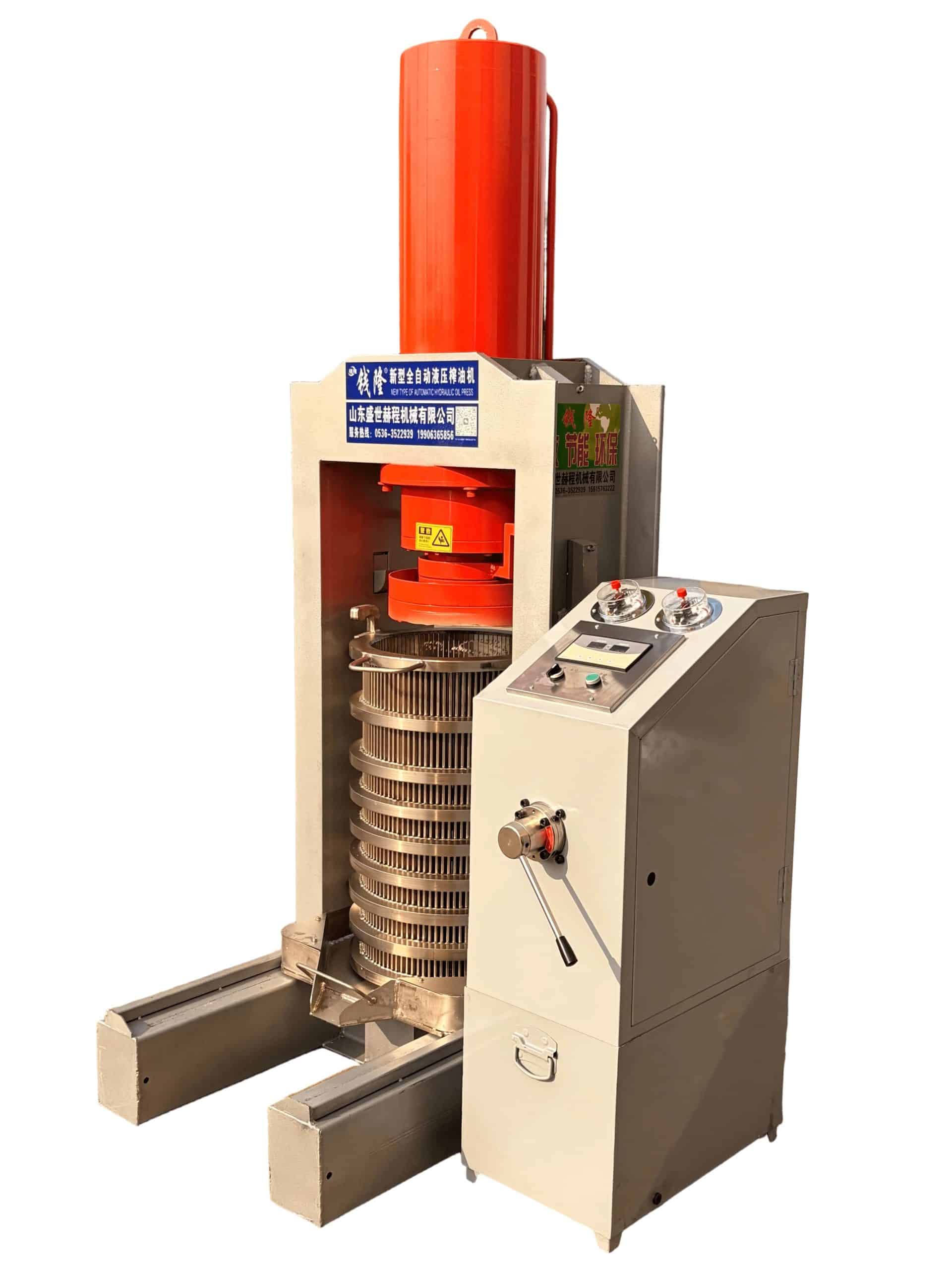
Quick answer: what does capacity mean on a hydraulic oil press machine?
For buyers, capacity is not just press force. The useful number is the amount of raw material loaded per batch, the cycle time per batch, and how many batches can be completed in one shift. A 370T or 500T machine may sound larger, but if your seed type, moisture, and operating rhythm are wrong, real output can still disappoint.
- Batch size tells you how many kilograms of prepared raw material go into one pressing cycle.
- Cycle time tells you how long loading, pressing, pressure holding, cake release, and reloading take.
- Daily output tells you whether the machine matches your production target and labor plan.
Hydraulic oil press machine capacity chart
| Buyer target | Typical batch size | Typical cycle time | Estimated batches/8h | Best-fit model logic |
|---|---|---|---|---|
| Test production, premium oil shop, startup | 5-8 kg | 18-25 min | 19-26 | Entry small hydraulic press |
| Small commercial output | 8-12 kg | 20-28 min | 17-24 | Compact shop-floor model |
| Steady boutique production | 12-20 kg | 22-30 min | 16-21 | Mid-range hydraulic model |
| Higher batch demand for sesame, cocoa, walnut | 20-30 kg | 25-35 min | 13-19 | Larger chamber / higher-force model |
| Factory support or multiple-shift planning | 30 kg+ | Depends on material and handling setup | Need line planning, not single-machine guess | Evaluate material prep, heating, filtration, and parallel units |
Hydraulic Oil Press Capacity Chart: How to Read It Correctly Before You Buy
Introduction: Why Capacity Charts Often Cause Wrong Buying Decisions
Hydraulic oil press machine capacity chart looks simple on paper, but it is one of the easiest decision tools to misuse. Buyers often see a bigger number and assume it means lower risk, higher profit, or a more professional project. In real projects, that is often the wrong conclusion.
Capacity only becomes meaningful when it is read together with the actual oilseed, the intended business stage, the support equipment around the machine, and the way the final oil will be sold. A startup retail shop, a premium sesame workshop, and a small factory should never read the same chart in the same way.
The chart should support a route decision, not make the decision by itself.
Quick answer: how should buyers use a capacity chart?
| Business stage | Correct reading of capacity | Main priority | Common mistake |
|---|---|---|---|
| Retail startup | Choose enough output for realistic store demand | Simple operation and visible production | Buying a route sized for factory ambition before sales are proven. |
| Premium batch workshop | Choose capacity that supports stable commercial batches | Consistent process and product positioning | Comparing only throughput while ignoring cycle time and finished-oil logic. |
| Small factory | Read capacity as one part of the whole line | Balance between press, roasting, filtration, filling, and labor | Assuming the press number alone defines plant output. |
What a capacity number really means in practice
A published capacity figure is usually only a reference condition. It does not automatically tell you the cycle time, operator rhythm, batch changeover loss, heating condition, filtration time, or the difference between shop demonstration output and repeatable commercial production.
In other words, the number is not fake, but it is incomplete. A useful interpretation asks:
- Is this a batch figure, an hourly figure, or a theoretical maximum?
- Which raw material was used to present the number?
- Was the route cold press or hot press?
- How much downtime exists between batches?
- What support equipment is assumed around the press?
Once buyers ask these questions, the chart becomes much more realistic.
Realistic capacity interpretation for actual buyers
Capacity should be translated into business language. A retail buyer should ask whether the machine can support normal daily sales without overcrowding the shop or creating too much labor pressure. A workshop buyer should ask whether the machine can maintain stable batch rhythm for premium packaged oil. A factory-stage buyer should ask whether the press output can be matched by roasting, filtration, settling, filling, and packaging.
This is why a smaller route can be the more profitable choice. If the machine fits the real sales volume and the real operating team, the project usually starts faster and scales with less waste.
Why raw material changes how capacity should be read
The same machine chart may look very different when applied to different materials. Sesame, peanut, soybean, and mixed oilseed plans should not be interpreted with one universal assumption. Material behavior influences cycle rhythm, preparation needs, and commercial product route.
That is also why buyers comparing capacity should read the chart together with raw material selection logic. Capacity by itself is only one layer of the decision.
How route selection changes the meaning of capacity
- Compact retail route: the Korean type small hydraulic oil press machine may offer the right practical capacity when visibility, compactness, and startup control matter most.
- Premium cold-press route: the 370T–630T cold press hydraulic route should be judged by premium product goals and operating stability, not simply by bigger numbers.
- Premium sesame route: the 325 hydraulic oil press machine is often the stronger practical reference when the project is already moving into more commercial sesame production.
Each route answers a different commercial need. That is why one chart cannot be read with one universal rule.
Shortlist logic: how to narrow the right capacity range
Instead of asking which machine has the biggest number, buyers should narrow a shortlist using four filters:
- Business stage: startup shop, premium workshop, or small-factory route.
- Main raw material: especially whether the first product is sesame-focused or broader multi-seed production.
- Final oil format: fresh oil, filtered oil, or premium bottled oil.
- Support-equipment readiness: whether roasting, filtration, settling, and filling are already planned.
If a machine fails one of these filters, it should usually be removed from the shortlist even if its capacity looks attractive on paper.
Most common mistakes buyers make when reading capacity charts
- Assuming the largest capacity is automatically the safest purchase.
- Treating one material-based number as universal for all oilseeds.
- Ignoring batch rhythm, labor availability, and shift reality.
- Reading press capacity without checking filtration and downstream bottlenecks.
- Buying for imagined future scale instead of current commercial proof.
- Comparing only machine size rather than complete route suitability.
These mistakes often create hidden cost, slower startup, and a route that looks strong in a quotation but weak in day-to-day operation.
Why overbuying from the chart creates hidden cost
Overbuying does not only increase machine budget. It can also increase space requirements, electrical planning, labor pressure, operator training needs, support-equipment investment, and startup complexity. A route that looks impressive on paper may actually delay project launch if the market and team are not ready for it.
That is why the best capacity is not the biggest one. It is the one that matches present business reality while leaving a logical path for the next stage.
FAQ
Does a higher capacity machine always make oil more cheaply?
No. If sales volume, labor, or downstream equipment are not ready, a bigger machine can raise total operating pressure instead of lowering cost.
Should startup buyers buy for future expansion immediately?
Usually no. Most startup buyers are safer choosing a route that matches the current market test, then expanding after sales and workflow are proven.
Is chart capacity the same as finished-oil output?
No. Finished commercial output depends on the full route, including material preparation, pressing cycle, settling or filtration, and packaging rhythm.
Can two buyers read the same chart and choose different machines correctly?
Yes. A retail startup and a premium workshop can both make the right decision from the same chart if they interpret it according to different business logic.
Conclusion
A hydraulic oil press machine capacity chart is useful only when it is read in context. Buyers should not ask which capacity is biggest; they should ask which capacity matches the current business stage, material plan, and commercial route. When capacity is connected to realistic operation, the chart becomes a practical planning tool. When it is used alone, it often leads to the wrong machine for the wrong project.
This chart is meant for buyer screening. Real capacity changes with raw material type, kernel size, pretreatment, temperature, and how long you hold pressure before unloading.
How buyers should use the chart
1. Start from daily raw material availability
If you only have 80-120 kg of sesame per day, buying a much larger machine often creates idle capacity. Your machine should fit supply, not just future ambition.
2. Convert daily target into batches
Suppose your target is 160 kg/day and your practical batch size is 10 kg. That means about 16 completed cycles per day. If each cycle takes around 25 minutes including loading and unloading, one machine can usually handle it in a normal shift.
3. Check operator workload
Hydraulic pressing is a batch process. If your team cannot sustain repeated loading and cake discharge, the advertised maximum capacity is less important than comfortable repeatability.
4. Compare oil quality goals
Many buyers choose hydraulic presses because they want high-value oils from sesame, walnut, almond, flaxseed, cocoa liquor, or medicinal seeds. In these cases, stable low-temperature or controlled-temperature pressing may matter more than absolute throughput.
What changes real output in the field?
- Raw material preparation: cleaning, shelling, roasting, or softening can shorten or lengthen each cycle.
- Oilseed type: sesame behaves differently from peanut, walnut, flaxseed, and coconut meat.
- Moisture content: too wet or too dry material reduces extraction stability.
- Operator method: experienced loading and cake discharge can save meaningful time every cycle.
- Downstream handling: filtration and oil collection can become the real bottleneck.
Capacity chart by buyer scenario
If you sell premium edible oil retail
Choose a model that gives manageable batch sizes, easy cleaning, and stable pressing quality. For this buyer type, a smaller machine with reliable repeatability is usually better than chasing a larger nameplate number.
If you press for custom orders
Flexibility matters more than maximum throughput. Buyers processing different seeds in short runs should prioritize changeover convenience, cleaning speed, and pressure stability.
If you want to grow into small factory production
Use the chart as a first filter, then check whether one larger machine or two smaller machines gives better uptime. Two units can reduce stoppage risk and allow separate seed processing.
Common mistakes when reading a hydraulic oil press machine capacity chart
- Confusing hydraulic tonnage with kilograms of raw material per batch.
- Ignoring cycle time and calculating output from chamber volume alone.
- Using sesame data to estimate walnut or cocoa performance.
- Choosing for “future scale” without current raw material supply.
- Forgetting filtration, cooling, and labor capacity.
How to shortlist the right model quickly
- List your main raw material and whether it needs roasting or heating.
- Set a real daily input target in kilograms, not just liters of oil.
- Pick an acceptable cycle time for your team.
- Use the chart to identify the right batch-size range.
- Then compare chamber size, pressure system, heating method, and after-sales support.
FAQ
Can I calculate oil output directly from machine tonnage?
No. Press force alone does not tell you oil output. You need raw material type, batch weight, cycle time, and oil content.
Is a larger hydraulic press always better for business?
No. Oversized equipment can increase investment and reduce utilization if your raw material supply is limited.
What is the best machine for sesame oil?
The best machine is the one whose batch size, temperature control, and cycle rhythm match your sesame supply and quality goal. The capacity chart helps narrow that range before detailed quotation.
If you send your raw material, daily target, and preferred oil quality, we can recommend a matching hydraulic oil press model range instead of a generic “largest machine” option.
For buyers who need a more stable commercial batch route, the 325 hydraulic oil press machine is often the practical next step.
If you want a practical equipment recommendation based on raw material, target output, and business stage, please contact us.
For shop-based retail, custom pressing, and low-volume startup routes, the Korean type small hydraulic oil press machine is often the better first-stage choice.
Project planning
Configure the right oil press and production line
Send your oilseed, target output, bottle or packaging requirements, power supply, and destination country. We will match the machine, supporting equipment, and line layout.