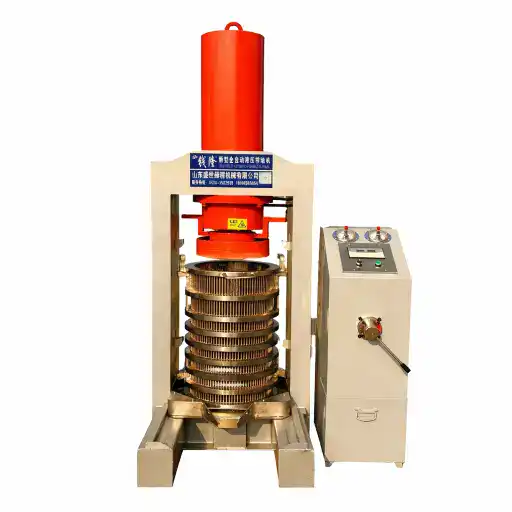
Efficient oil extraction
Control the feed, the press cycle, and the measurement method
A larger pressure number does not automatically create better recovery. Practical efficiency depends on oilseed condition, preparation, batch loading, temperature, moisture, pressure profile, cycle completion, cake handling, oil collection, and the way results are measured.
Observe the complete batch
Oil flow is one signal, not the final efficiency result
During a test, record the prepared feed mass, material condition, barrel and model, loading pattern, temperature, pressure and time sequence, collected crude oil, discharged cake, retained material, and any losses. A short visual clip cannot replace that batch record.
- Use a representative, identified oilseed lot.
- Weigh all input and output streams with the same calibrated basis.
- Keep settling and filtration conditions consistent when comparing tests.
- Repeat the run before treating one batch as a production standard.
Six control points
Build efficiency before the material reaches the barrel
Each stage can change oil recovery, oil quality, cycle stability, and cake condition. Record the settings so a good result can be repeated and a poor result can be diagnosed.
Measurement discipline
Do not confuse oil yield, recovery, and residual oil
Use one agreed definition for each project and state whether crude, settled, filtered, or saleable oil is being measured.
| Measure | Calculation basis | What must be stated |
|---|---|---|
| Crude oil yield | Collected crude oil mass divided by prepared feed mass | Feed basis, collection time, entrained solids, water, and whether retained oil is included. |
| Oil recovery | Collected oil mass divided by the oil originally present in the prepared feed | Laboratory oil-content method and whether collected oil is corrected for water and solids. |
| Residual oil in cake | Oil remaining in a representative cake sample on the stated analytical basis | Sampling location, sample preparation, moisture basis, and laboratory method. |
| Saleable oil yield | Finished oil available after settling, filtration, refining, and handling losses | Finished-oil specification and every downstream loss or retained inventory. |
| Throughput | Prepared feed processed over a defined operating period | Loading, pressing, unloading, cleaning, downtime, staffing, and number of barrels. |
Mass balance is the credibility check
Prepared feed should reconcile to collected oil, discharged cake, water or vapor change where relevant, retained material, sampling, spills, and measurement error. If the balance does not close within the agreed tolerance, investigate before comparing machines or settings.
Preparation variables
The press cannot correct an undefined feed
Raw-material condition
- Variety, maturity, storage history, and initial oil content
- Foreign material, damaged seed, shell, and fines
- Incoming moisture and temperature
- Lot-to-lot variation and sampling method
Process preparation
- Cleaning and shell or hull removal when required
- Particle-size distribution after crushing or pre-pressing
- Drying, conditioning, roasting, or cold-route temperature control
- Time between preparation and barrel loading
Press-cycle variables
Repeatability requires more than a maximum pressure setting
| Variable | What to record | Typical symptom when uncontrolled |
|---|---|---|
| Batch loading | Mass, fill height, distribution, packing method, and barrel configuration | Uneven cake, bypass channels, inconsistent cycle, or variable oil flow. |
| Pressure profile | Ramp sequence, hold points, actual gauge readings, and control events | Early channel closure, incomplete compression, or unexplained batch variation. |
| Temperature | Prepared feed, barrel or chamber, and collected oil where relevant | Changing viscosity, flavor, color, flow behavior, or cold-press compliance. |
| Cycle completion | Start, pressure stages, end point, oil-flow trend, unloading, and cleaning time | Throughput estimates that exclude non-pressing work or premature cycle termination. |
| Machine condition | Leaks, gauges, valves, seals, barrel channels, alignment, and hydraulic-fluid condition | Pressure loss, slow movement, contamination, or drift from earlier test results. |
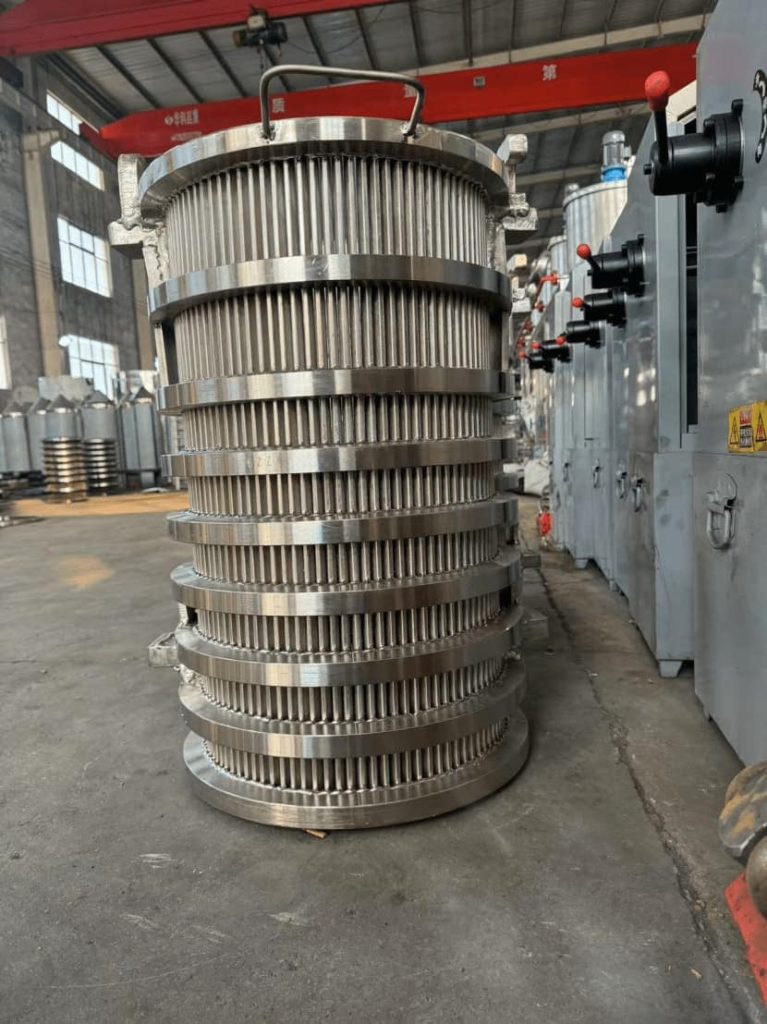
Mechanical condition
Keep the oil path and hydraulic system in the test record
The current full-size product pages describe key-bar barrels, hydraulic stations, gauges, valves, cylinders, seals, and control systems. Blocked oil channels, leakage, gauge error, valve behavior, seal wear, or hydraulic-fluid problems can change the observed result.
- Inspect and clean barrel oil channels using the model-specific procedure.
- Record leakage and pressure-hold behavior before changing process settings.
- Verify gauges and controls according to the supplier’s maintenance method.
- Keep spare seal and service-part identification tied to the machine model.
Diagnostic table
Investigate low or unstable recovery in a fixed order
| Observed change | Check first | Then verify |
|---|---|---|
| Less oil from the same feed mass | Raw-material lot, oil content, moisture, preparation, and weighing basis | Loading pattern, pressure profile, cycle end point, cake analysis, and collection losses. |
| Longer cycle or slower oil flow | Particle size, feed temperature, barrel channels, and loading density | Hydraulic-fluid condition, pump, valves, leakage, gauges, and control sequence. |
| Wet or inconsistent cake | Feed distribution, shell or hull content, moisture, and preparation consistency | Barrel selection, cycle profile, machine alignment, and representative cake sampling. |
| More sediment in crude oil | Fines generation, preparation method, barrel condition, and collection handling | Settling or filtration basis and whether yield was inflated by entrained solids. |
| Good test, poor production result | Differences in lot, scale, operator, preparation, cycle, and working hours | Cleaning, maintenance, downtime, and whether the original test excluded handling losses. |
Model selection
Match barrel and force to the material test
The 300/325 and 355-500 product pages publish different down-force and barrel references. They also disclose that cycle and extraction figures are source examples rather than guarantees. Use those pages to shortlist a configuration, then confirm it with the actual material and required process temperature.
No universal extraction percentage
The previous page stated maximum yield and broad efficiency advantages without an oilseed lot, preparation method, analytical basis, press model, barrel, cycle, or finished-oil definition. Those claims are not repeated. Request a documented test protocol and report results with their conditions.
Material-specific controls
Use the dedicated line to define preparation
Restored original media
Hydraulic press model-family photographs
Original hot-press and cold-press photographs restored to the extraction-process guide.
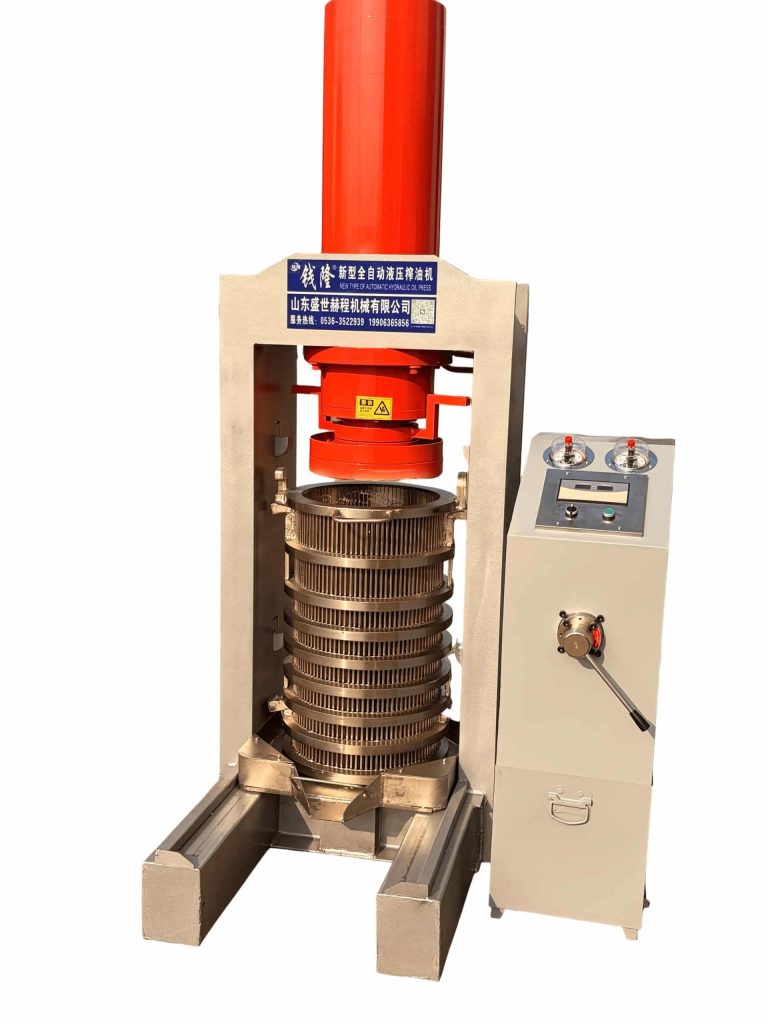
300-325 hydraulic oil press machine
Original photograph restored from the earlier page.
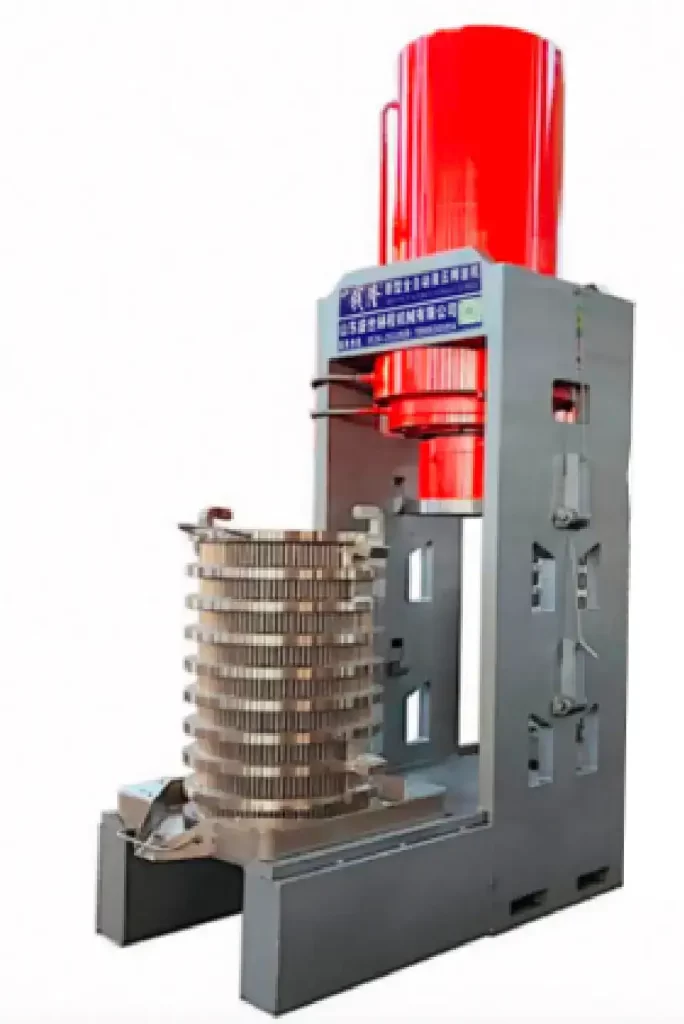
Restored machine detail
Original photograph restored from the earlier page.
Send the material and the measurement basis
Include oilseed data, preparation, batch target, temperature requirement, model or barrel preference, and the oil, cake, and throughput measures that matter to the project.