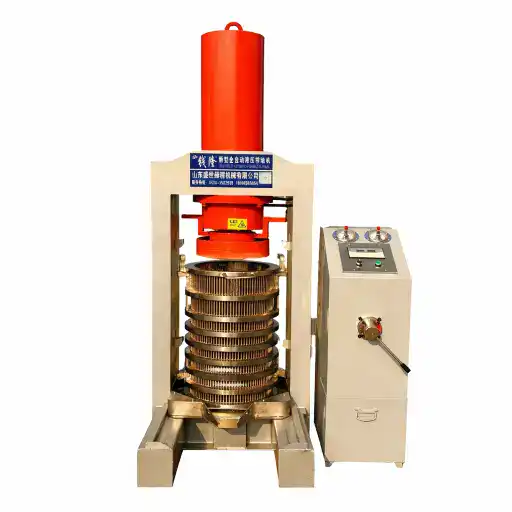
Oil press mechanism comparison
Choose between continuous screw extrusion and batch hydraulic pressing
A screw press and a hydraulic press do not differ only in shape. They organize material flow, heat, labor, cake discharge, maintenance, and capacity calculations in different ways. The right choice starts with the oilseed and finished-oil specification, then moves to a witnessed material test.

Working principle
The mechanism determines the production rhythm
Neither mechanism is universally better. Each needs the correct feed preparation, operating settings, filtration plan, and downstream handling.

Continuous extrusion
Screw oil press
A rotating screw advances prepared material through a restricted pressing chamber. Pressure develops along the chamber and oil drains while cake leaves continuously or near-continuously.
- Capacity is normally discussed as feed rate over time
- Feed consistency and stable conditioning affect operation
- Screw, rings, and press-bar components are wear items
- Friction, preheating, and settings influence product temperature
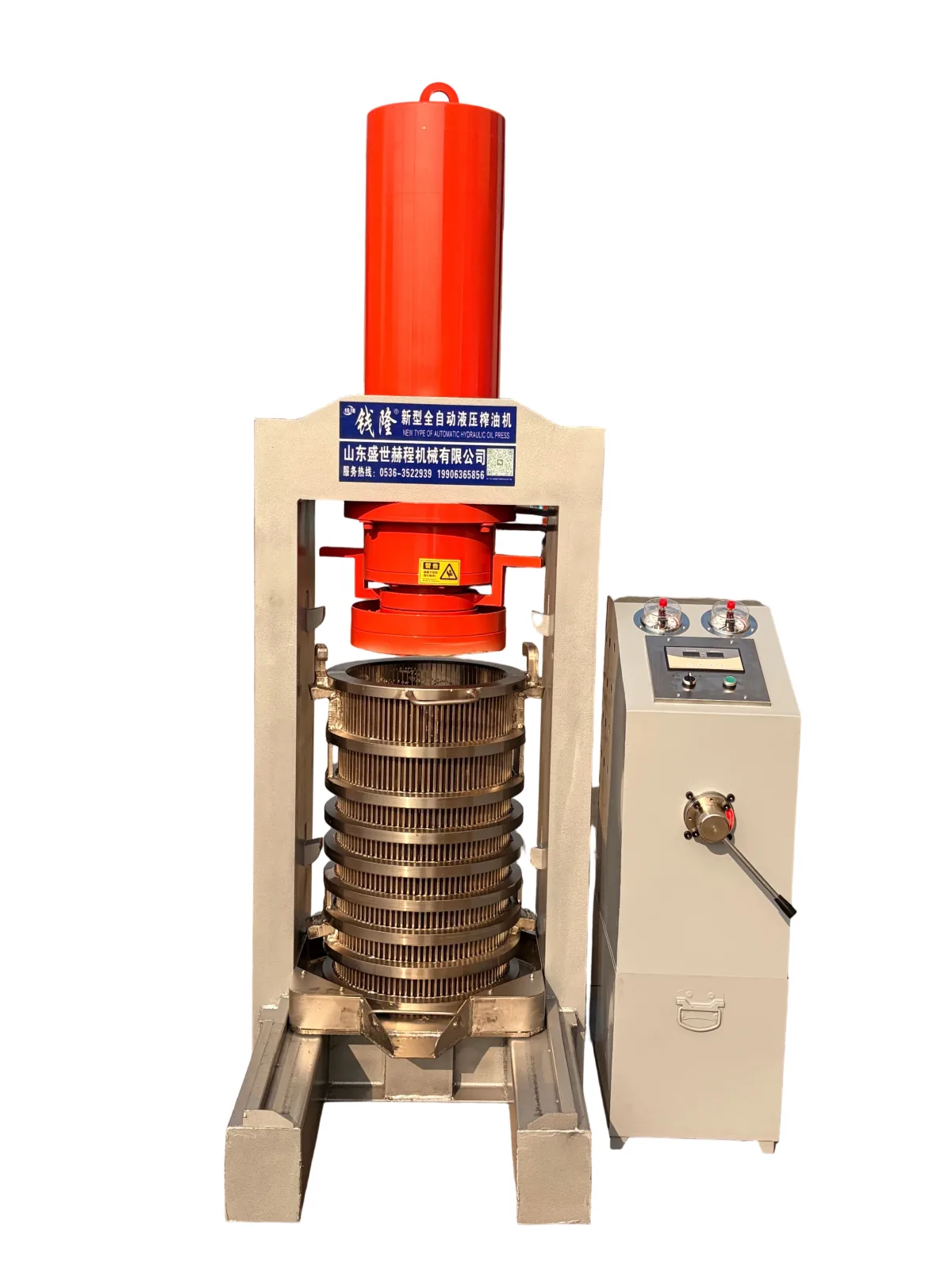
Batch compression
Hydraulic oil press
Prepared material is loaded into a barrel or chamber and compressed by a hydraulic cylinder. Oil drains during the pressure cycle, then the compact cake is removed before the next batch.
- Capacity is calculated from practical load and complete cycles
- Each batch can be identified and sampled separately
- Seals, guide bands, gauges, valves, and hydraulic oil require service
- Feed temperature and preparation still determine whether the process is cold or hot
Side-by-side decision table
Compare the production system, not one headline number
Supplier capacity, yield, temperature, and quality claims are meaningful only when the oilseed, preparation, test method, and operating boundary are stated.
| Decision point | Screw press route | Hydraulic press route | Evidence to request |
|---|---|---|---|
| Material flow | Continuous or near-continuous feed and cake discharge. | Load, press, drain, eject, and reload in discrete cycles. | Unedited operating video showing the full start-to-finish cycle. |
| Capacity basis | Stable kilograms of prepared feed per hour under stated conditions. | Practical kilograms per batch multiplied by completed cycles and machines. | Test material, moisture, feed form, operating hours, stops, and labor. |
| Temperature | Influenced by conditioning, chamber friction, restriction, and speed. | Influenced by incoming material, any roasting or steaming, pressure profile, and cycle time. | Measured material and oil temperatures at agreed sampling points. |
| Oil and cake | Oil and cake leave as a continuing stream when the machine is stable. | Oil drains during the cycle and a compact batch cake is unloaded afterward. | Input mass, collected oil, cake mass, losses, sampling method, and filtration boundary. |
| Changeover | Chamber clearing and stabilization must be planned between materials. | Batch separation can simplify lot control, but barrel and contact surfaces still require cleaning. | Cleaning procedure, cross-contact plan, downtime, and acceptable carryover. |
| Maintenance focus | Screw shaft, cage, rings, bearings, gearbox, drive, and clearances. | Hydraulic oil, cylinder seals, guide bands, valves, gauges, hoses, and electrical controls. | Wear-parts list, service intervals, drawings, part numbers, and replacement procedure. |
| Line integration | Needs continuous feed control and downstream capacity that accepts steady output. | Needs batch staging, barrel handling, cake discharge, and filtration sized to cycle peaks. | Material-flow drawing showing buffers, operators, utilities, and all included modules. |
Product specification
“Cold press” is not guaranteed by the machine name
Either mechanism can be advertised with cold-press language. A buyer should define the accepted raw-material treatment, maximum process or oil temperature, sampling location, test instrument, and recordkeeping method.
Do not infer oil quality from mechanism alone
Clarity, aroma, color, filtration behavior, oxidation condition, and residual oil depend on the raw material and complete process. Compare representative samples made to the same written test plan.
Material test record
Measure both routes on the same basis
- Oilseed variety, lot, oil content, moisture, shell, and foreign material
- Cleaning, crushing, flaking, roasting, steaming, or other conditioning
- Prepared-feed weight and any material remaining in the machine
- Press settings, elapsed operating time, labor, and utility conditions
- Crude oil collected before and after the agreed filtration boundary
- Cake weight, residual-oil test method, and intended cake use
- Oil temperature and any laboratory quality tests required by the buyer
Practical fit
Use business needs to narrow the route before testing
Steady high-volume feed
A screw route may be the stronger starting point when the upstream and downstream line are designed for continuous flow. Confirm realistic uptime and wear cost.
Batch traceability
A hydraulic route may suit small lots, separate recipes, and customer-visible batches. Include loading, pressing, ejection, and cleaning in the cycle.
Premium product specification
Select the route that repeatedly meets the written oil specification in a controlled trial. The words premium and cold pressed are not acceptance tests.
Multi-machine production
Several hydraulic units can stagger batches, while screw presses can be installed in parallel. Balance the whole line before comparing machine counts.
Common comparison errors
Reject shortcuts that hide the test boundary
- Comparing screw feed rate with hydraulic barrel volume
- Calling every hydraulic cycle cold pressing without temperature records
- Comparing crude oil from one machine with filtered oil from another
- Using theoretical seed oil content as machine extraction efficiency
- Ignoring cake handling, cleaning, filtration, and operator time
- Assuming one machine handles every oilseed with the same preparation
Decision sequence
Move from product target to witnessed result
Continue the selection
Open the page that answers the next decision
Compare with your own oilseed and finished-product target
Send the material specification, intended hot or cold process, daily feed target, oil and cake requirements, utilities, operating hours, and destination. The comparison can then use one written basis.