Special-material application review
Qualify separated millet germ before selecting a cold press
Millet germ is not the same feed as whole millet grain. The current page does not provide a documented material trial proving batch load, cycle, oil recovery, cake result, or filtration behavior. Treat the 355-500 cold-press family as a candidate for testing, not a guaranteed standard configuration.
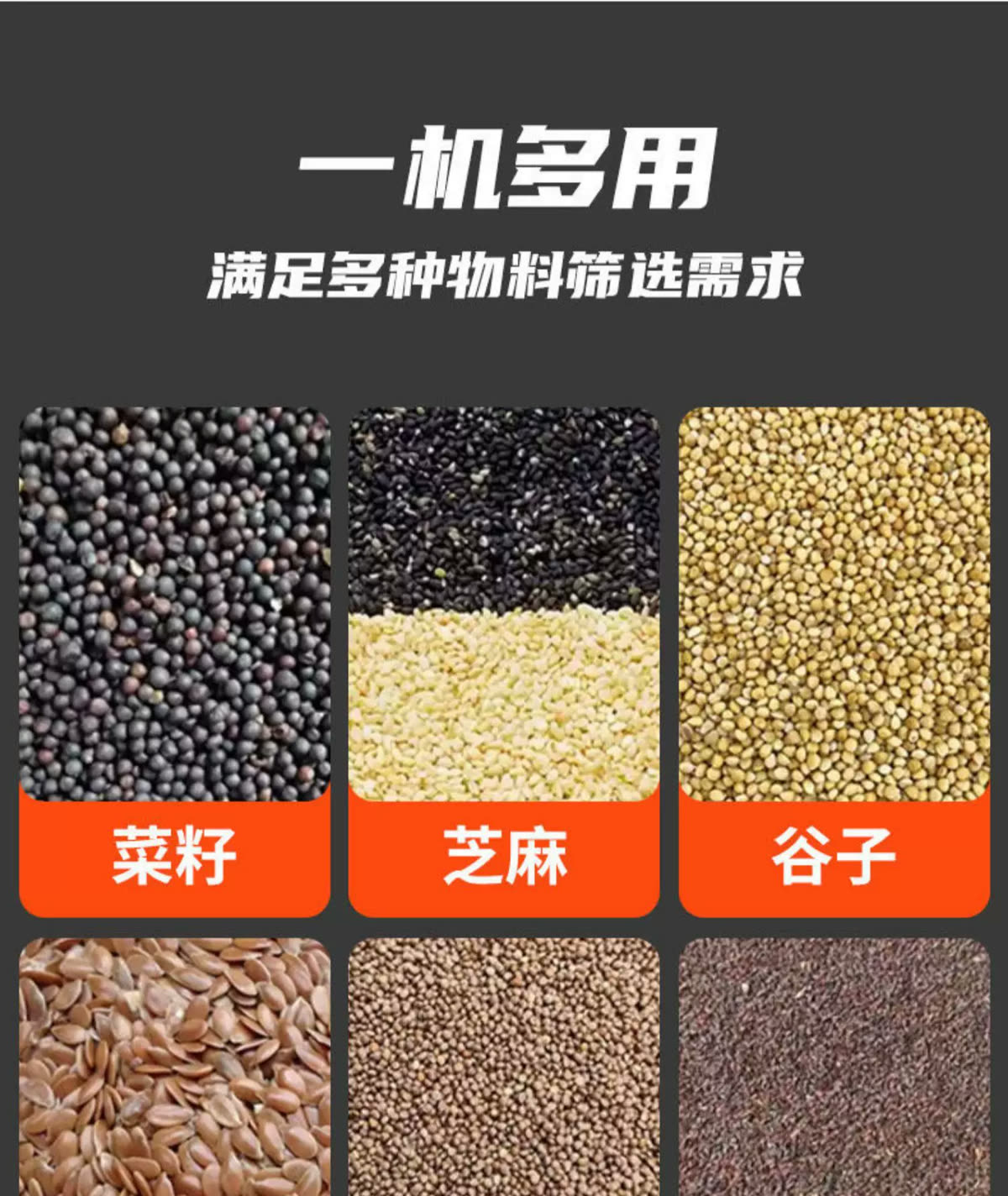
The material image is not separated millet germ
The first-party image shows small grains including millet among screening materials. A project inquiry must provide the actual separated germ or a representative sample, together with the separation method and composition. Whole millet, bran-rich fractions, and isolated germ can behave differently in crushing and pressing.
Qualification sequence
Prove the feed and press behavior before designing a line
The first project stage should answer whether the supplied material can be handled consistently and whether the pressed outputs meet the buyer’s acceptance criteria.
Source gaps
The existing page does not support a millet-specific performance guarantee
| Existing claim or assumption | Missing evidence | Required action |
|---|---|---|
| Separated germ feed | No germ-separation specification, purity, bran content, particle distribution, or representative material photo. | Provide the real germ fraction and separation report or supplier specification. |
| Oil content and composition | The original page gives percentages and nutritional statements without a cited test report. | Use the buyer’s laboratory or an agreed third party to characterize the lot. |
| Cold-press suitability | No millet-specific trial record, temperature trace, oil sample, or cake analysis is published. | Run a controlled press trial before selecting the model or barrel. |
| Batch and cycle | The listed 100 kg and two-to-three-hour figures are generic model references, not documented millet germ results. | Record safe feed weight, pressure sequence, pressing time, and total operator cycle. |
| Finished-oil result | No validated clarity, stability, sensory, food-safety, or refining requirement is stated. | Define acceptance methods before the test and retain representative samples. |
| Cake use | Feed and starch applications are mentioned without composition or regulatory evidence. | Test the cake for the intended use and local requirements. |
Candidate machine family
Use the 355-500 series as a trial platform
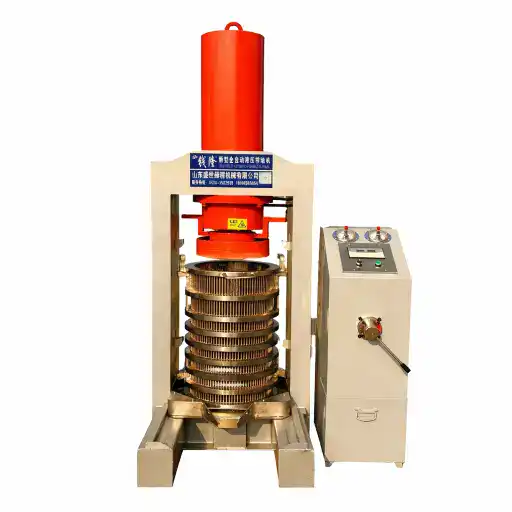
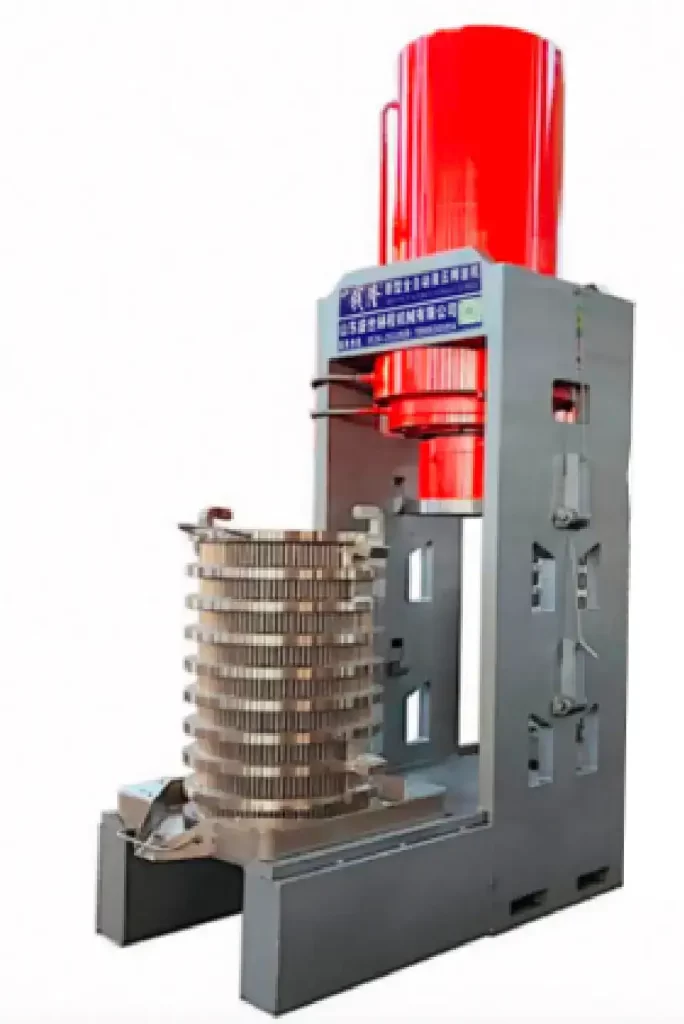
The existing page points to the hydraulic cold-press family. That family offers 300 mm and 390 mm barrel references with different listed press-volume ranges, but the correct barrel and model cannot be selected until the millet germ compaction and oil-flow behavior are observed.
- Do not assume whole-grain feeding or a generic 100 kg load
- Confirm whether crushing improves or damages practical handling
- Record oil and material temperature throughout the trial
- Inspect oil channels, cloth or partition needs, and cake release
- Choose model and barrel only after the acceptance result is agreed
Trial record
Capture enough data to repeat the accepted batch
Material and machine inputs
- Millet species, source, germ-separation method, lot, and sample mass
- Moisture, oil content, impurities, bran content, and particle condition
- Cleaning, drying, crushing, or other preparation applied
- Press model, barrel, liner or cloth, feed weight, and pressure sequence
- Material and oil temperature, pressing time, and total cycle
Outputs and acceptance
- Gross oil, settled solids, filter residue, and clean-oil sample
- Cake weight, shape, release, and agreed residual-oil test
- Required laboratory, sensory, or food-safety analysis
- Filter paper, pressure, cycle, and final clarity observation
- Repeatability over more than one representative batch
General hydraulic operation reference
This video is not a millet germ performance test
The original page includes a general 300 / 325 hydraulic press demonstration. It can help review loading and press movement, but it does not validate millet germ suitability or the proposed cold-press model.
Line scope after approval
Only size downstream equipment from the accepted trial
- Germ separation or purchased separated-germ specification
- Screening and conditioning required by the tested feed
- Crusher or pulverizer only if the trial supports it
- Selected hydraulic press, barrel, liner, and batch method
- Pneumatic filtration sized from actual crude-oil flow and solids
- Clean storage and filling selected from the finished-oil plan
- Cake collection and handling based on the approved use
Alternative process may be the correct result
A trial can show that the supplied fraction needs a different preparation step, another barrel arrangement, or a process other than direct hydraulic cold pressing. The purpose of qualification is to reach the correct process decision, not to force the sample into a predetermined machine.
Restored original media
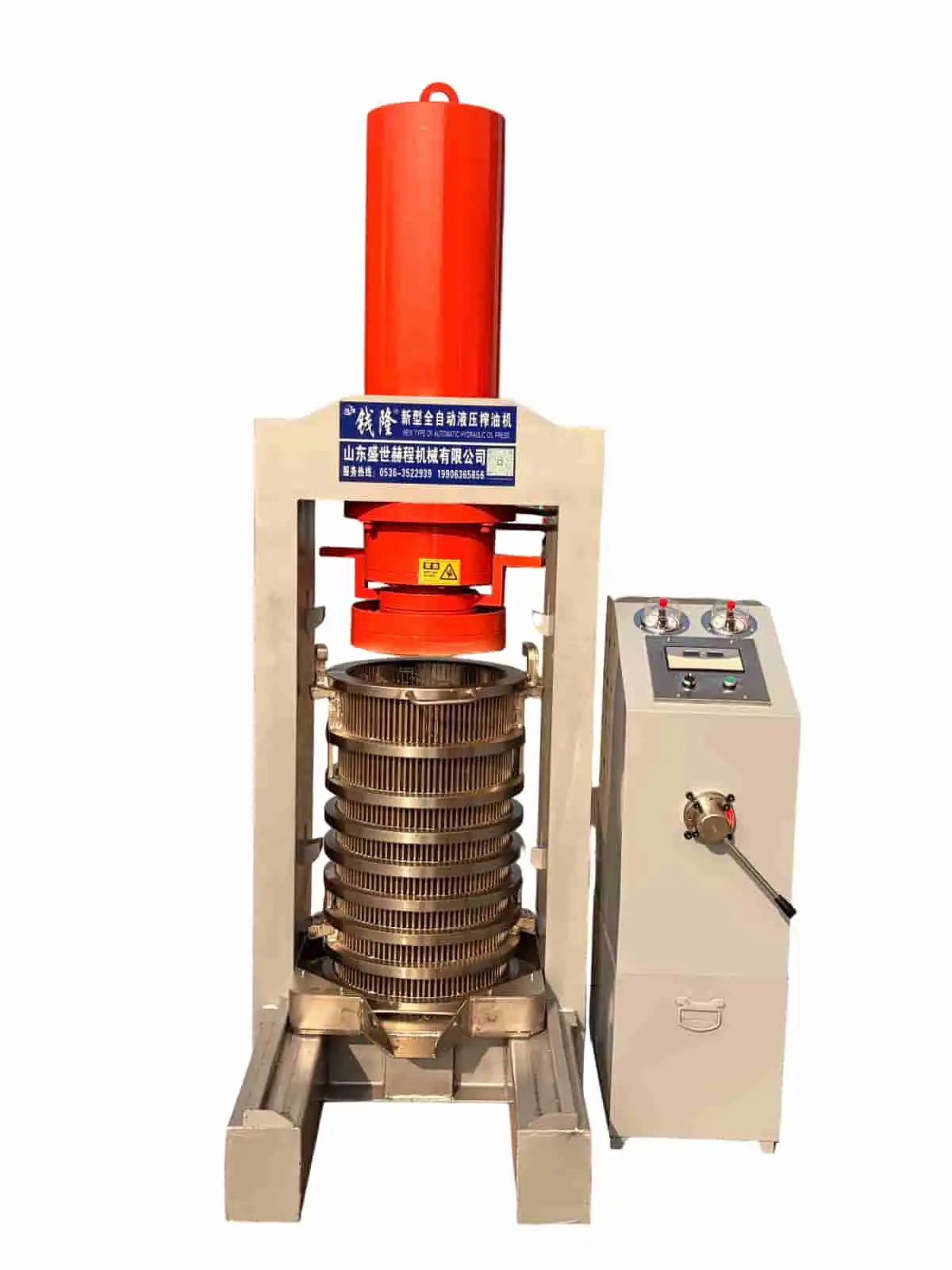
Model 325 hydraulic press photograph
Original machine photograph restored to the millet-germ feasibility page.
hydraulic oil press machine for millet germ oil
Original photograph restored from the earlier page.
Start the millet germ project with a representative sample
Send the millet species, actual germ fraction, separation method, sample quantity, moisture and composition data, required oil and cake tests, target input, operating hours, process-temperature limit, utilities, site details, and destination.