
On this page
- Why small-factory buyers often choose the wrong machine
- What should a small factory define before choosing the machine?
- When should a small factory choose the cold-press 370T–630T route?
- When should a small factory choose the 325 route directly?
- What support sections matter most for small factories?
- How should a small factory balance current needs and future growth?
- What tells a buyer that the route is finally ready for a stronger upgrade?
- FAQ about oil press machines for small factories
- Quick answer: what machine route is most practical for a small factory?
- How to Start a Small Cold Pressed Oil Business: Equipment, Costs, Buyer Comparison and Setup Checklist
- What a Small Cold Pressed Oil Factory Usually Includes
- Who This Type of Project Fits Best
- Buyer Comparison: Which Setup Fits Which Buyer?
- Main Budget Drivers in a Small Factory Project
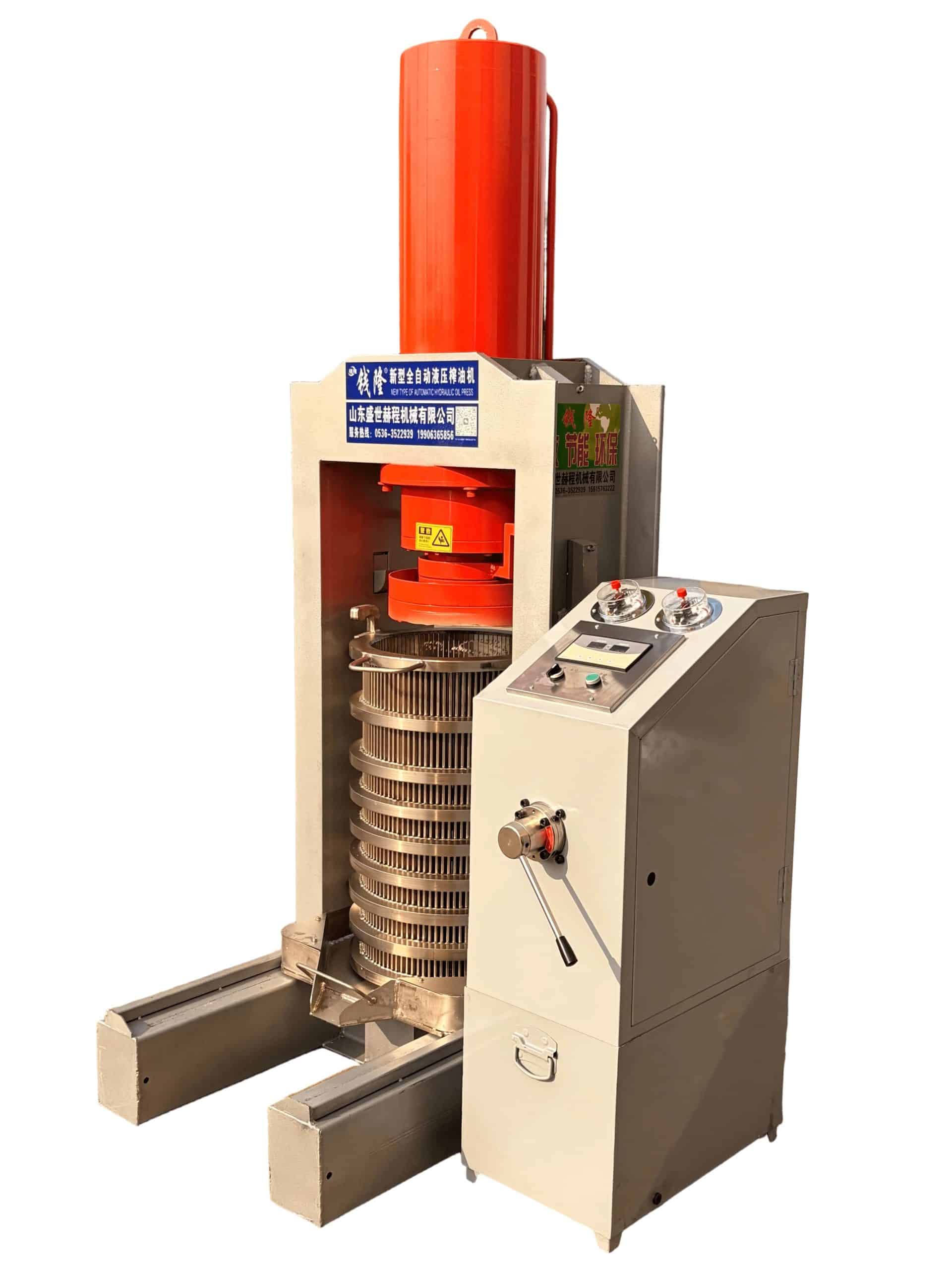
Oil press machine for small factory should be chosen for commercial practicality, not for showroom effect. A small factory does not need the same route as a startup shop, but it also does not always need a large factory line from day one. The strongest small-factory route is usually the one that supports stable batch production, cleaner product output, and the possibility of scale—without forcing the buyer into unnecessary investment before demand is fully confirmed.
Why small-factory buyers often choose the wrong machine
Many buyers get trapped between two bad choices: a shop-level route that is too weak for factory use, or a larger factory route that is too aggressive for the current business stage. The right answer is usually in the middle—a route that fits the current product and output target while still allowing controlled upgrades later.
What should a small factory define before choosing the machine?
- Oil product route: fresh local oil, filtered oil, or bottled premium oil
- Raw material: sesame, peanut, soybean, and so on
- Daily output target: current realistic target, not future dream target
- Whether support equipment is already necessary: filtration, packaging, pretreatment
- Growth expectation: whether the business expects stable scaling within the near term
Without these decisions, machine comparison becomes too generic.
When should a small factory choose the cold-press 370T–630T route?
The 370T–630T cold press hydraulic route is usually more suitable when the business is already beyond startup validation and needs a stronger premium commercial route. This often applies to small factories selling higher-value oils where consistency and product positioning matter.
When should a small factory choose the 325 route directly?
For premium batch sesame projects, the 325 hydraulic oil press machine is often the clearest direct recommendation. It creates a stronger commercial route than smaller startup machines without forcing a much larger system too early.
What support sections matter most for small factories?
- filtration for cleaner finished oil
- pretreatment where required by the material
- filling or packaging if bottled sales are part of the route
These sections often matter more than simply choosing a larger press route.
How should a small factory balance current needs and future growth?
By separating current commercial route from future expansion route. That way the buyer avoids paying for unused capacity now while still choosing a machine path compatible with later growth. Small factories usually scale best when the first machine route is commercially right-sized rather than oversized from the beginning.
What tells a buyer that the route is finally ready for a stronger upgrade?
- the current route has become a bottleneck
- the product route is no longer only local fresh oil
- filtration and packaging are clearly improving sales
- the business can justify more stable commercial output
If those signs are not present, a larger upgrade may still be too early.
FAQ about oil press machines for small factories
Can a small factory use the same route as a startup shop?
Usually not for long-term operation. A small factory usually needs a stronger and more stable commercial route.
When is the 370T–630T route the stronger answer?
When the project is a premium batch-production route with stronger commercial expectations.
When is the 325 route the clearest recommendation?
When the factory is focused on premium sesame batch production.
What is the biggest small-factory buying mistake?
Choosing either too small a retail route or too large a future-factory route without matching the real current business stage.
Should a small factory plan packaging immediately?
Only if packaged sales are already part of the business model. Otherwise, staged packaging can often be safer.
That is why a small-factory machine decision should always be tied to the product route, not only to the machine itself. The right route is the one that fits the current business stage and still leaves room for practical expansion.
Quick answer: what machine route is most practical for a small factory?
| Factory route | Recommended machine path | Why it works |
|---|---|---|
| Compact small-factory route | Stronger small hydraulic route + filtration | Useful when the factory needs commercial output but must still control early-stage cost. |
| Premium batch-production factory | 370T–630T cold press hydraulic route | Better for premium commercial batch production. |
| Premium sesame factory route | 325 hydraulic oil press machine | Usually the clearest route for premium sesame batch output. |
How to Start a Small Cold Pressed Oil Business: Equipment, Costs, Buyer Comparison and Setup Checklist
Starting a small cold pressed oil business can be a smart entry point for entrepreneurs, farm processors, retail oil shops, and specialty food brands that want higher-value edible oil products without building a large industrial refinery. The biggest advantage is flexibility: a compact line can start with seed cleaning, roasting or conditioning where needed, pressing, filtration, and simple filling, then expand once demand is stable.
But not every buyer should choose a cold-pressed small factory setup. Capacity, seed type, labor, hygiene standards, power supply, packaging goals, and working capital all affect the right decision. This guide summarizes what serious buyers should compare before requesting a quotation, how budgets are usually distributed, and which situations are a poor fit for a small cold press line.
What a Small Cold Pressed Oil Factory Usually Includes
A practical small edible oil factory is usually built in modules so buyers can match budget to production stage. The most common configuration includes:
- Raw material cleaning and grading equipment
- Roasting, drying, or conditioning equipment when the seed requires pretreatment
- Cold press or hydraulic oil press machine
- Oil settling and filtration equipment
- Storage tanks and transfer pumps
- Simple filling, capping, labeling, or date coding equipment if the buyer sells packaged oil
For sesame, flaxseed, walnut, peanut, moringa, black seed, and similar higher-value oils, buyers often prefer smaller batch-oriented systems because they allow flexible processing and product differentiation. For bulk commodity oils where throughput matters more than premium positioning, a larger screw-press or continuous line may be more suitable.
Who This Type of Project Fits Best
- Farm cooperatives adding value to harvested oilseeds
- Retail oil shops offering fresh pressing in front of customers
- Health-food brands selling premium cold pressed oils
- Local processors validating demand before scaling up
- Importers who need compact equipment for regional distribution
Buyer Comparison: Which Setup Fits Which Buyer?
| Buyer type | Main goal | Recommended setup | Priority concern |
|---|---|---|---|
| Retail oil shop | Fresh oil and visible pressing process | Compact press + filter + small filling tools | Appearance, low footprint, easy cleaning |
| Startup brand | Launch packaged premium oil with limited capital | Pretreatment + small press + filtration + semi-auto filling | Budget control and packaging consistency |
| Farm cooperative | Add value to local seed harvest | Cleaning + conditioning + press + filtration + storage | Seed variability and seasonal utilization |
| Contract processor | Process multiple seed types for clients | Modular line with changeover flexibility | Cleaning time, cross-contamination control |
| Growing regional producer | Prepare for scale-up | Expandable line with space for future automation | Upgrade path and utility planning |
This comparison matters because many quotation requests are too general. A buyer asking only for “small factory price” may receive a low number that excludes pretreatment, filtration quality, packaging tools, or electrical adaptations that are actually required.
Main Budget Drivers in a Small Factory Project
The total investment is not just the oil press machine price. In most real projects, cost changes come from the following drivers:
- Seed type and pretreatment needs: sesame, peanut, sunflower seed, flaxseed, walnut, and coconut all behave differently. Some materials need roasting, shelling, crushing, drying, or temperature control before pressing.
- Target capacity: a line sized for pilot retail output is very different from a setup intended for daily commercial production.
- Oil quality target: if the buyer needs clearer bottled oil, better filtration and settling capacity become necessary.
- Packaging scope: bulk discharge into drums costs less than retail bottle filling, capping, labeling, coding, and carton packing.
- Automation level: manual feeding and semi-automatic packaging reduce upfront cost but increase labor demand.
- Power standard and installation region: voltage, frequency, local safety compliance, and available utilities affect equipment selection.
- Material of construction: food-contact stainless steel options add cost but may be necessary for hygiene and brand positioning.
- Spare parts and service package: startup buyers often underestimate tooling, wear parts, and commissioning support.
Simple Budget Split Buyers Can Use
For budgeting purposes, many small projects can be estimated in percentage blocks before a final supplier quotation:
- 30%–45% pressing equipment and core process machines
- 10%–20% pretreatment or roasting/conditioning equipment
- 10%–15% filtration, pumps, tanks, and piping
- 10%–20% filling and packaging tools
- 5%–15% electrical adaptation, freight, installation, and commissioning
- 3%–8% startup spares, training, and contingency
The exact split depends on whether the project sells bulk oil, premium bottled oil, or both. If bottling is part of the business model, packaging can be a larger share than many first-time buyers expect.
When Not to Choose a Small Cold Pressed Oil Factory
A small cold-pressed setup is attractive, but it is not always the best investment. Buyers should reconsider if any of the following are true:
- You need high-throughput commodity oil production at the lowest unit cost.
- Your seed type requires heavy continuous pretreatment that is inefficient at small batch scale.
- You do not yet have reliable raw material supply and quality consistency.
- You lack a route to market for premium oil pricing and therefore cannot recover the smaller-scale margin structure.
- Your facility has very limited sanitation control, unstable electricity, or no trained operators.
- You expect fully refined supermarket-grade oil from a minimal cold press setup without adding downstream refining stages.
In those cases, it may be better to begin with a simpler pressing and filtration operation, outsource filling, or consider a different process line matched to volume rather than premium retail positioning.
Practical Selection Questions Before You Request a Quote
- Which oilseed or nuts will be processed most often?
- How many hours per day will the line run?
- Do you sell bulk oil, bottled oil, or both?
- Do you need cold press only, or optional hot press capability too?
- How much floor space and electrical capacity are available?
- Will operators change products frequently?
- What level of oil clarity is acceptable before bottling?
- Do you need local installation guidance or only remote support?
Request for Quotation Checklist
To receive a more accurate and faster quotation, buyers should send the following information together:
- Raw material name, moisture condition, and whether shelling/crushing is needed
- Expected daily or hourly capacity
- Cold press only or flexible hot/cold process requirement
- Final product format: bulk tank, drums, or retail bottles
- Bottle sizes and cap types if packaging is included
- Voltage, frequency, and country of installation
- Available workshop size and ceiling height
- Target delivery time
- Need for spare parts, technician training, or commissioning support
- Photos or layout of the planned production room if available
A quote request with these details reduces misunderstanding and prevents a cheap-looking offer from becoming expensive after revisions.
Common Mistakes First-Time Buyers Make
- Comparing only the press price instead of the complete line cost
- Ignoring filtration and packaging requirements
- Choosing capacity based on ambition rather than verified market demand
- Underestimating cleaning time when multiple seeds are processed
- Failing to reserve working capital for raw materials, bottles, labels, and logistics
Scale-Up Path: Start Small Without Getting Stuck
The best small factory plans leave room for expansion. Buyers should consider a layout that allows future addition of larger filters, more storage, better filling equipment, or extra presses. Even if the initial order is compact, planning utility routes, floor drainage, work tables, and bottle flow in advance prevents expensive rework later.
FAQ
1. What is the biggest cost driver in a small cold pressed oil project?
Usually not the press alone. Capacity target, seed pretreatment requirements, filtration quality, and packaging scope often change the final budget more than the base machine model.
2. Can I start with only one press machine?
Yes, if you are validating demand or running a shop-scale operation. But most commercial buyers still need at least basic filtration, transfer, and storage equipment to produce sellable oil efficiently.
3. Is cold pressed oil always more profitable?
No. It can achieve higher selling prices, but only if your market values premium positioning, freshness, or specialty seed oils. For bulk commodity markets, small cold press economics may be weaker.
4. Do I need refining equipment for a small factory?
Not always. Many small businesses sell filtered cold pressed oil without full refining. However, if the target market expects standardized color, odor, and shelf stability, downstream refining steps may be needed.
5. What should I compare between suppliers?
Compare not only price, but also process scope, food-contact materials, electrical standard, spare parts package, lead time, service support, and whether the quote clearly states what is excluded.
6. What is the safest way to buy as a beginner?
Start with a clear seed type, realistic capacity, and a complete quote checklist. Ask for a process flow, machine list, utility requirement list, and packaging assumptions before paying a deposit.
A small cold pressed oil factory works best when the business model is clear: premium product, realistic throughput, stable raw material supply, and a phased expansion plan. Buyers who match equipment scope to actual market demand usually achieve better payback than those who overspend on unnecessary automation in the first stage.
Tell us your small-factory oil project for a quote
Send your raw material, daily output target, and whether the product is fresh oil, filtered oil, or bottled oil. We can recommend the right small-factory machine route directly.
Project planning
Configure the right oil press and production line
Send your oilseed, target output, bottle or packaging requirements, power supply, and destination country. We will match the machine, supporting equipment, and line layout.