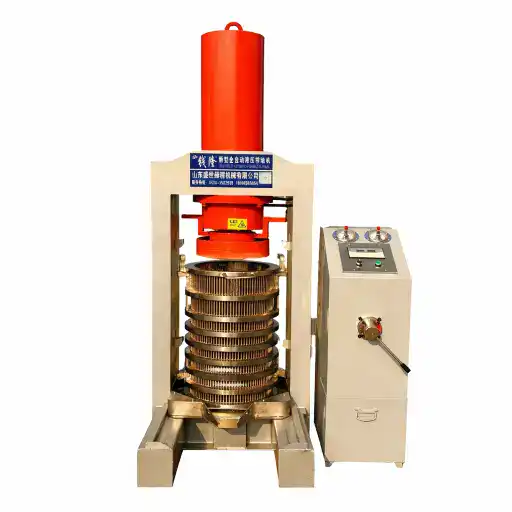
Model 300 / 325 engineering guide
Compare force and barrel configuration on one technical basis
Model 300 and Model 325 share the source-listed 60 MPa hydraulic system, barrel choices, press-volume ranges, and installed envelope. The 325 adds listed down pressure, cake surface pressure, and approximately 0.1 ton of machine weight in either barrel configuration.
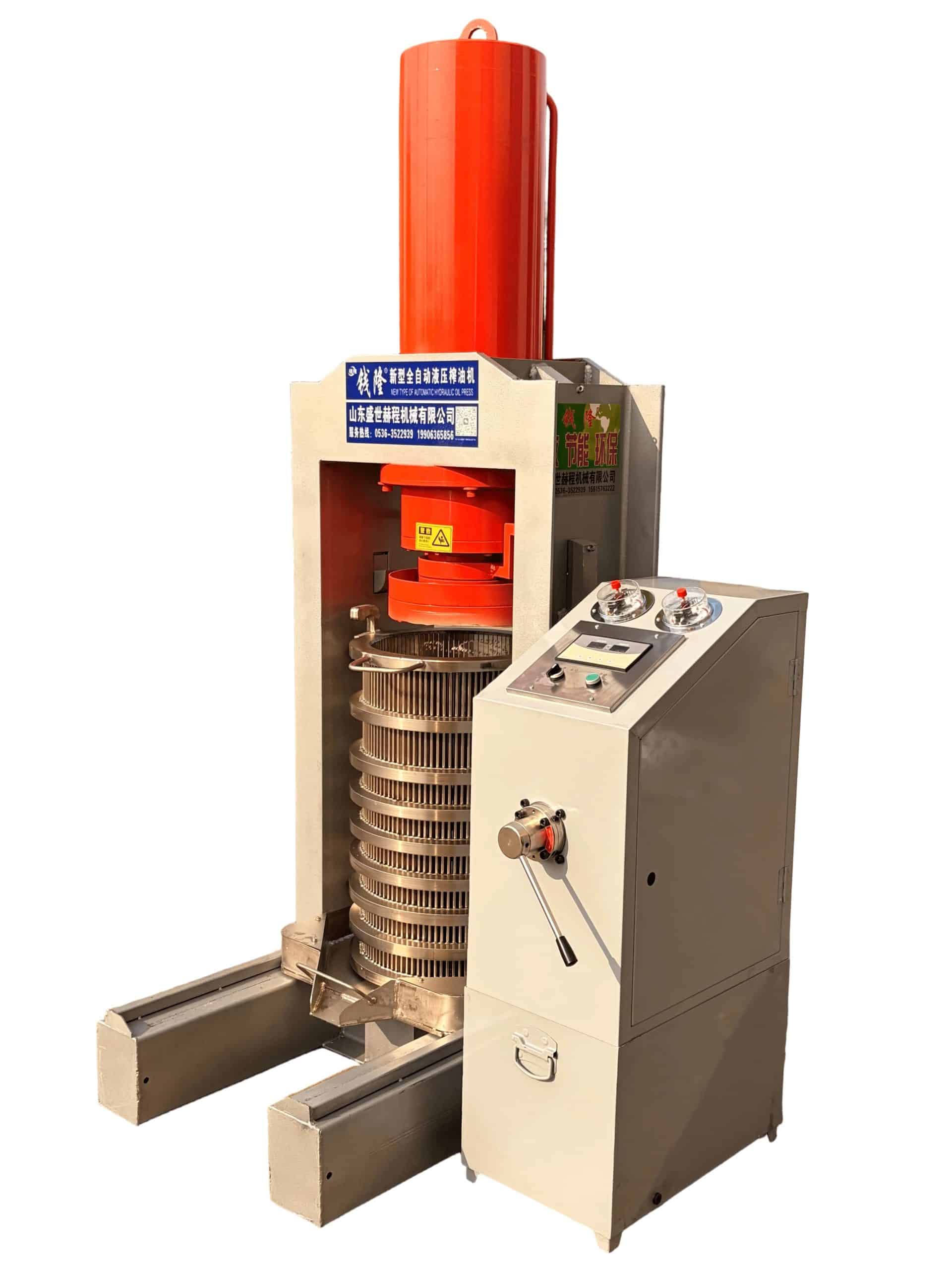
Read the name correctly
For these two models, the code also matches the listed tonnage
Model 300 is listed with 300 tons of down pressure and Model 325 with 325 tons. That convenient match does not continue across the larger cold-press family, where model codes and actual tonnage differ.
- Model 300: source-listed 300-ton down pressure
- Model 325: source-listed 325-ton down pressure
- Both: source-listed 60 MPa hydraulic system pressure
- Both: 390 mm or 300 mm barrel route, each 800 mm high
System pressure and pressing force are different quantities
MPa describes hydraulic pressure in the circuit. Tons describe the resulting down force stated for the press. A technical quotation should show the cylinder basis, allowable settings, gauges, relief protection, and calculation rather than presenting the two numbers as interchangeable.
Four source-listed combinations
The barrel changes batch range, envelope, weight, and listed cake surface pressure
Values below reproduce the current 300 / 325 product-family tables. Approximate dimensions and weights include the control box as described by the source.
| Configuration | Down pressure | System pressure | Barrel | Press volume | Approx. size | Approx. weight | Source-listed cake surface pressure |
|---|---|---|---|---|---|---|---|
| Model 300, standard barrel | 300 tons | 60 MPa | 390 mm diameter x 800 mm high | 5-100 kg | 1100 x 800 x 2450 mm | 1.3 ton | 25 MPa/cm2 |
| Model 325, standard barrel | 325 tons | 60 MPa | 390 mm diameter x 800 mm high | 5-100 kg | 1100 x 800 x 2450 mm | 1.4 ton | 27 MPa/cm2 |
| Model 300, narrow barrel | 300 tons | 60 MPa | 300 mm diameter x 800 mm high | 5-60 kg | 1050 x 720 x 2450 mm | 1.2 ton | 42 MPa/cm2 |
| Model 325, narrow barrel | 325 tons | 60 MPa | 300 mm diameter x 800 mm high | 5-60 kg | 1050 x 720 x 2450 mm | 1.3 ton | 46 MPa/cm2 |
Confirm the cake-pressure unit and calculation
The source labels cake surface pressure as MPa/cm2. This guide preserves the published entries for traceability but does not treat that unit as independently verified. Request the formula, effective cake area, engineering unit, and approved drawing before using the values in a supplier comparison.
Barrel route
Choose the chamber around material and process trials
The parent product page positions the 390 mm chamber as the standard hot-press configuration and the narrower 300 mm chamber as a higher-pressure cold-press option. The final choice still requires the actual feed, temperature limit, cake target, and test result.
390 mm diameter
Standard 5-100 kg source range
This route keeps the larger listed press-volume range and the 1100 x 800 mm approximate machine footprint.
- Source-positioned for the standard hot-press application
- Practical load must be verified with crushed or prepared material
- Confirm layer arrangement, separators, drainage, and cake discharge
- Do not equate 100 kg barrel loading with finished-oil output
300 mm diameter
Narrow 5-60 kg source range
This route uses the same listed 800 mm height but a narrower chamber, smaller approximate footprint, lower listed machine weight, and higher source-listed cake surface-pressure value.
- Source-positioned as an alternate cold-press configuration
- Confirm whether the target oilseed and feed form suit the chamber
- Validate temperature, oil recovery, cake condition, and cycle
- Confirm all tooling and accessories supplied for the narrower barrel
Published planning reference
Use the hot-press timing only as an initial example
The current family page lists up to 100 kg per barrel for oilseed in crushed powder form, 30-40 minutes of pressing excluding feeding and cake unloading, and two barrels in 1.5 hours including feeding and unloading.
The test basis is incomplete
The source does not identify one universal seed, moisture, particle size, loading density, heating condition, pressure profile, drainage endpoint, operator method, or downtime basis for those values. Time a complete trial with the buyer’s material before sizing daily output.
Capacity calculation
Build from practical cycles
- Verified prepared-material load per batch
- Loading and separator placement time
- Pressure build, hold, and drainage time
- Pressure release, ejection, cake removal, and cleaning
- Available hours, operator breaks, maintenance, and changeovers
- Number of barrels or machines and the actual staggered workflow
300 or 325
Select the extra force only when the process needs it
Within the same barrel route, the published difference is 25 tons of down pressure, the corresponding cake surface-pressure entry, and approximately 0.1 ton of machine weight. The listed system pressure, barrel, press-volume range, and envelope remain the same.
Start with the material
Use a representative lot and the intended cleaning, crushing, roasting, steaming, or cold-process preparation.
Define the endpoint
State the oil specification, filtration boundary, cake condition, residual-oil test method, and complete cycle target.
Run the same protocol
Compare Model 300 and 325 only when both tests use the same material basis, barrel, settings boundary, and measurements.
Approve the configuration
Freeze model, barrel, ejection arrangement, hydraulic station, electrical package, accessories, spares, and drawings in writing.
Real operating reference
Review the full batch sequence, not only the pressure stroke
The hosted video is a visual reference for the 300 / 325 machine family. During a project review, ask for equivalent footage of the proposed barrel and actual material from loading through oil drainage, pressure release, cake ejection, cleaning, and reload.
- Check operator access and safe body position
- Observe pressure gauges, controls, leakage, and oil flow
- Time the complete cycle independently
- Inspect the cake and all material retained after unloading
Workshop planning
Plan around height, load, and operating access
- 2450 mm source-listed machine height plus maintenance clearance
- 1.2-1.4 ton approximate machine weight depending on configuration
- Floor capacity, leveling, anchoring, lifting, and delivery-door route
- Safe loading and cake-ejection access around the selected frame
- Oil collection, filtration, drainage, housekeeping, and slip control
Utilities and controls
Confirm the final electrical and hydraulic package
- The product family lists a 2.2 kW motor; confirm every connected load
- State destination voltage, phase, frequency, plug or termination, and earthing
- Confirm gauge ranges, relief valves, pressure controls, and safety functions
- Request hydraulic oil grade, fill quantity, filtration, and startup procedure
- Identify seal, guide-band, gauge, valve, sensor, and hose spare parts
Complete the project
Connect the 300 / 325 choice to process and supporting equipment
Specify Model 300 or 325 with the barrel and process
Send the oilseed, prepared feed form, hot or cold route, target batch and daily input, cake requirement, workshop data, electrical supply, destination, and required test evidence.