Rendered lard, tallow, and poultry-fat residue
Press identified rendering solids after free fat has been removed
This application is for warm, oil-bearing solid residue from a controlled animal-fat rendering process. The hydraulic press does not replace slaughter hygiene, cooking or rendering, pathogen control, water separation, or regulatory release, and it is not approved here for raw carcass material or unknown animal by-products.
Pressing duty
Separate remaining liquid fat from pressable rendering solids
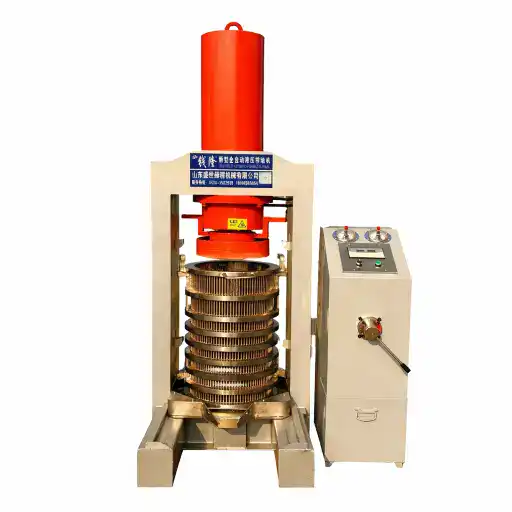
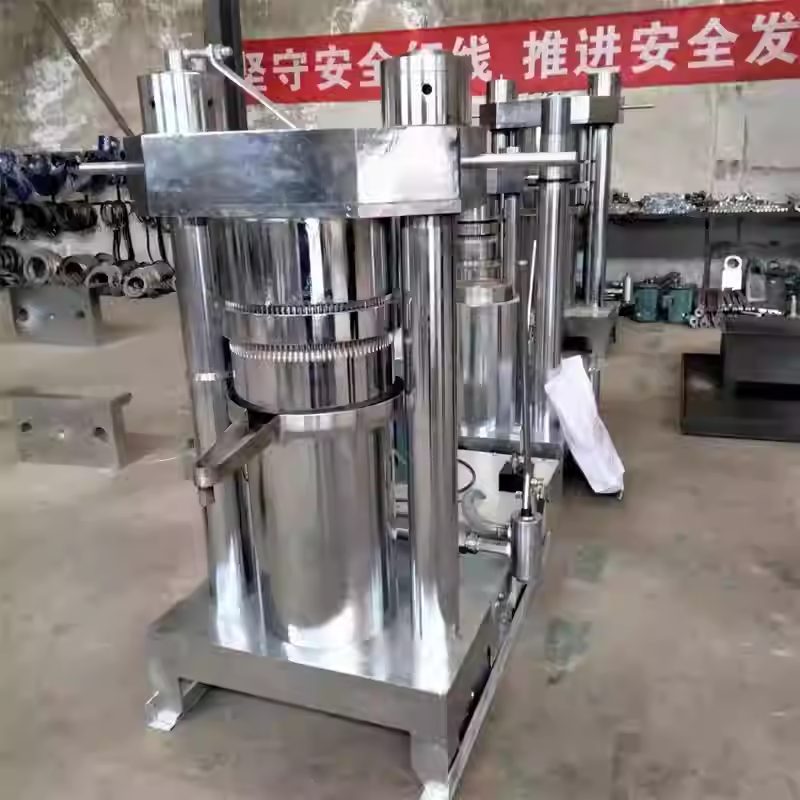
After the upstream rendering step removes free liquid fat and water, selected warm solids may be loaded into a batch press. Static pressure expresses additional liquid while a compact cake remains for controlled handling.
- Input: traceable rendered cracklings or comparable solid residue from an approved process
- Liquid outlet: recovered fat requiring testing and a permitted destination
- Solid outlet: pressed animal by-product still subject to veterinary, feed, waste, and transport rules
- Acceptance: representative trial, mass balance, complete cycle, hygiene, and outlet classification
Material acceptance
Define species, source category, rendering history, and legal status
Possible trial candidate
Known post-rendering solid residue
- Single or declared species stream with traceable slaughter or processing source
- Documented cooking or rendering history and separated free-liquid stage
- Known fat, water, protein, ash, particle size, bone, salt, and foreign material
- Approved destination for liquid fat, pressed solids, condensate, and wash water
Not accepted by assumption
Raw, prohibited, diseased, or mixed unknown by-products
- Raw carcass material, whole bones, organs, wastewater sludge, or unscreened offal
- Specified-risk material, prohibited species mixing, or material under disease control
- Cleaning chemicals, packaging, sharps, metal, glass, or unknown industrial contamination
- Any stream lacking veterinary, environmental, transport, and end-use approval
Reference process boundary
Render first, then press only the qualified warm solids
Current-page Model 325 references
Press specifications do not establish rendering performance
The table preserves the source-listed equipment values. Actual loading, drainage, liquid recovery, cake condition, and cleaning depend on species, rendering method, water, temperature, particle size, and composition.
| Reference point | Published value | Qualification required |
|---|---|---|
| Model | 325 batch hydraulic press | Barrel, plates or cloth, contained drainage, loading, cake ejection, guards, and cleanability. |
| Pressing force | 325 tons | Calculation basis, hydraulic protection, inspection, controls, and acceptance records. |
| System pressure | 60 MPa | Pressure profile, hold period, allowable range, relief devices, and maintenance. |
| Motor and supply | 2.2 kW; 380 V / 50 Hz / 3-phase | Destination supply, enclosure, controls, auxiliaries, and electrical compliance. |
| Barrel reference | 390 × 800 mm | Which dimension is diameter, usable volume, safe loading, drainage path, and cleaning access. |
| Maximum batch reference | 100 kg | Bulk density, free liquid, water, temperature, bone content, and stable cake formation. |
| Cylinder material | 27SiMn steel | Component covered by the statement; product-contact grades and surface finish are not published. |
Source-data limits
Temperature and recovery examples need validated rendering conditions
The original page publishes ranges without a test protocol
It lists 100–120°C for initial rendering, 50–80°C for warm press loading, 30–40 minutes for pressing, and 10–40% remaining oil across several residues. It does not provide species, particle size, water, rendering equipment, thermal validation, pressure profile, sampling, mass balance, or laboratory methods. These figures are process examples, not guaranteed settings or recovery.
Thermal process
Rendering remains an upstream engineered stage
- Define cooking method, time, temperature measurement, load, agitation, and water removal
- Validate any pathogen or regulatory treatment independently of the press
- Control hot-fat transfer, burn risk, ventilation, odor, condensate, and fire protection
- Prevent cooling that blocks transfer while avoiding uncontrolled overheating
Press trial
Measure both liquid and solids
- Incoming mass and composition by representative sample
- Condition at loading, pressure profile, drainage, and complete cycle
- Expressed liquid, cake, retained material, spills, and wash loss
- Repeatability, operator exposure, cleaning, and outlet test results
Hygiene and segregation
Do not alternate waste residues and edible oilseeds on one press by assumption
The original page says the same machine can process animal-fat residue and vegetable oilseeds across shifts. That statement does not establish hygienic design, validated cleaning, species segregation, allergen control, odor removal, microbiological release, or legal permission.
| Intended outlet | Minimum project controls | What the press does not prove |
|---|---|---|
| Food use | Approved edible source category, dedicated hygienic path, validated rendering, HACCP or equivalent controls, legal testing, and release authority. | Food-grade status, pathogen control, shelf life, species identity, or legal saleability. |
| Animal feed | Species restrictions, prohibited-material controls, thermal treatment, composition and contaminant tests, traceability, and local feed approval. | Feed suitability, protein value, absence of prohibited tissue, or cross-species permission. |
| Biodiesel or oleochemical use | FFA, water, impurities, sulfur, phosphorus, metals, storage, transport, and buyer feedstock specification. | Transesterification readiness, fuel compliance, or product value. |
| Waste treatment | Waste classification, licensed storage and transport, odor and pest control, wastewater treatment, and approved disposal. | Non-hazardous status or permission to burn, landfill, or discharge. |
Existing application footage
Use the video as an equipment sequence reference only
This first-party video shows a hydraulic press handling animal-fat residue. It does not establish the feed category, cooking validation, recovery, cycle, product grade, or permitted use for a new project.
- Compare feed consistency, loading, liquid drainage, and cake formation
- Review hot-material handling, spills, guarding, and operator access
- Require a representative sample trial and written material acceptance
Related residue projects
Keep rendering solids separate from restaurant grease and tank-bottom sludge
Start with the rendering record, residue analysis, and legal outlet
Send species and source category, rendering process, composition, daily quantity, sample, intended liquid and solid outlets, hygiene standard, utilities, permits, layout, and destination.