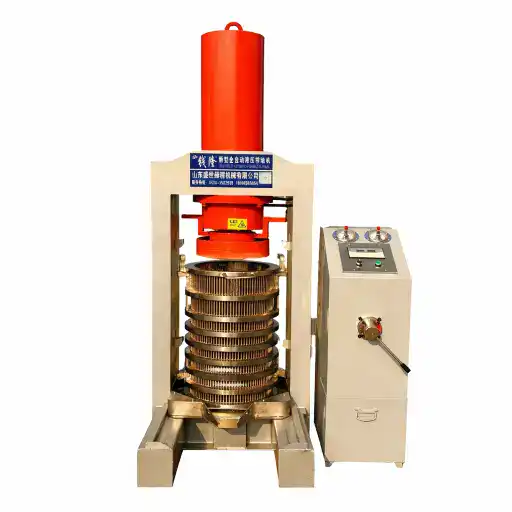
Commercial food-grease residue separation
Qualify the semi-solid residue before selecting a used cooking oil press
A batch hydraulic press can separate liquid from certain identified, oil-bearing fryer or food-processing residues after suitable conditioning. It is not normally required for clean, free-flowing used cooking oil, and it must not be presented as a universal treatment for grease-trap pump-outs, sewage-contaminated material, petroleum sludge, or unknown chemical waste.
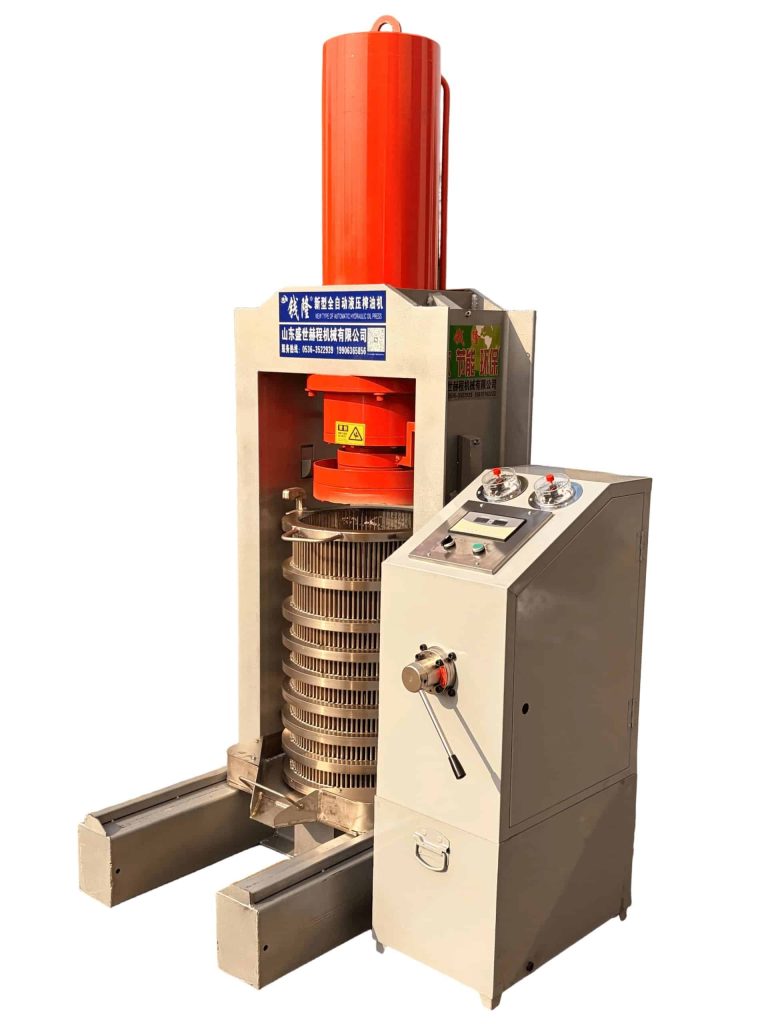
Core equipment
Use static pressure only when the feed can form a draining cake
The candidate material is a semi-solid food-process residue containing separable oil and solids. It must be sampled and tested to confirm that conditioning, loading, drainage, cake formation, unloading, and cleaning are practical.
- Candidate feed: known fryer-filter solids or food-processing grease residue from a traceable source
- Not the same duty: pumping or filtering free liquid used cooking oil
- Not assumed suitable: sewage, petroleum, solvent-bearing, reactive, or unknown mixed waste
- Acceptance: trial-based liquid separation, cake handling, complete cycle, and outlet classification
Feedstock boundary
Separate an identified food-process residue from liquid UCO and regulated grease waste
Possible trial candidate
Traceable oil-bearing food solids
- Fryer crumb, filter residue, or settled food solids with known operating history
- No cleaning chemicals, drain water, sharp objects, or unknown contamination
- Known oil, water, solids, salt, ash, and foreign-material profile
- Defined licensed outlet for expressed liquid, solids, and wash water
Separate treatment decision
Liquid UCO, grease-trap waste, or unknown mixtures
- Free-flowing used frying oil may need screening, settling, heating, centrifugation, or filtration rather than pressing
- Grease-trap pump-outs may contain wastewater, detergents, pathogens, and sewer solids
- Petroleum and chemical sludge are excluded from this food-grease process basis
- Local waste, transport, emissions, fire, and discharge rules control the permitted route
Trial-based process flow
Receive, condition, press, and classify every outlet
Heating may improve flow for some residues, but no universal temperature should be used without checking water content, fire risk, odor, degradation, and material behavior.
Current-page Model 325 references
Machine data does not predict oil recovery from a new residue
The source values below describe the listed press. Practical load, cycle, liquid recovery, cake condition, and cleaning time require a representative test.
| Reference point | Published value | Qualification required |
|---|---|---|
| Model | 325 batch hydraulic press | Barrel, plates or cloth, liquid collection, loading tools, discharge tools, and guards. |
| Pressing force | 325 tons | Calculation basis, hydraulic controls, relief devices, inspection, and acceptance records. |
| System pressure | 60 MPa | Operating sequence, hold point, allowable range, relief setting, and maintenance. |
| Motor and supply | 2.2 kW; 380 V / 50 Hz / 3-phase | Destination voltage, enclosure, controls, connected auxiliaries, and electrical compliance. |
| Barrel reference | 390 × 800 mm | Which dimension is diameter, usable volume, safe fill level, drainage, and cleaning access. |
| Maximum batch reference | 100 kg | Bulk density, water, free liquid, temperature, safe loading, and stable cake formation. |
| Cylinder material | 27SiMn steel | Pressure-cylinder component covered by the statement; product-contact materials remain unspecified. |
Unverified source claims
Do not use recovery percentages or reorder stories as acceptance data
The current page does not publish the supporting test records
It cites 15–35% recovered oil, 3–8% residual oil, a 60–80°C conditioning example, a 30–40 minute press cycle, and a 20-unit customer reorder. No feed analysis, sampling method, mass balance, customer authorization, order record, trial conditions, or laboratory report is provided. These figures and the payback implication are not presented here as performance promises.
What the trial should record
One complete mass balance
- Incoming mass, oil, water, solids, salt, ash, and contaminants
- Conditioning temperature, time, added water or steam, and energy
- Liquid, cake, retained material, spills, and cleaning losses
- Complete cycle, labor, odors, emissions, and repeatability
What the proposal should guarantee
Only agreed equipment and tested conditions
- Accepted material envelope and prohibited contaminants
- Machine configuration, utilities, guards, controls, and documents
- Trial method, sample responsibility, and acceptance criteria
- Explicit exclusions for treatment, permits, and outlet saleability
Outlet control
Mechanical separation does not certify recovered oil for food, feed, fuel, or sale
| Outlet | Likely condition | Required decision |
|---|---|---|
| Expressed liquid | Used oil containing water, fines, salt, degradation products, odor, or contaminants. | Laboratory testing, licensed storage, traceability, and approved biodiesel, oleochemical, energy, treatment, or disposal route. Do not return it to food use. |
| Pressed solids | Food particles and other solids with remaining oil and moisture. | Waste classification, cooling, pest and odor control, fire risk, licensed reuse, treatment, or disposal. Animal-feed use requires specific legal approval and test evidence. |
| Separated water and wash liquid | Oily water containing detergents, suspended solids, and organic load. | Contained collection, oil capture, treatment, discharge consent, records, and spill response. |
Equipment demonstration
Use the press video to review motion and access, not residue performance
This hosted Model 300/325 demonstration shows the hydraulic press family. It does not prove suitability, recovery, cycle time, emissions, or outlet quality for restaurant residue.
- Review loading height and operator reach
- Identify moving, pressure, hot-product, and spill hazards
- Confirm drainage, collection, unloading, and cleaning provisions
Related residue projects
Use the page matched to the incoming material
Start with a representative residue sample and an approved outlet plan
Send the exact generator process, analyses, photos, daily quantity, storage condition, prohibited contaminants, required outlets, utilities, permits, layout, and destination.