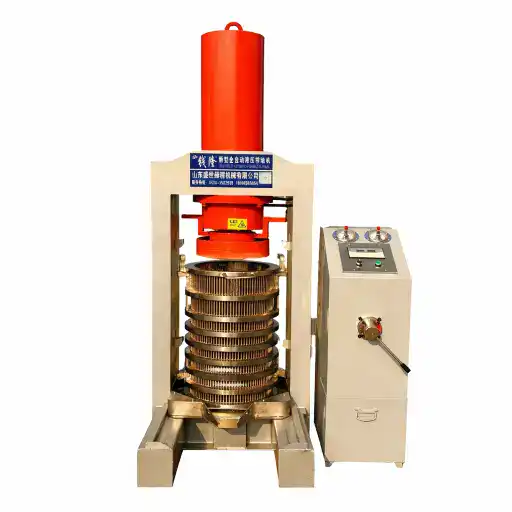
Hydraulic press cake discharge
Choose top or bottom ejection around the frame, operator, and workshop
After a batch is pressed, the compact cake must leave the barrel before cleaning and reload. Top and bottom ejection describe discharge direction; they do not by themselves define pressing force, oil recovery, cycle time, safety, or cleanliness.
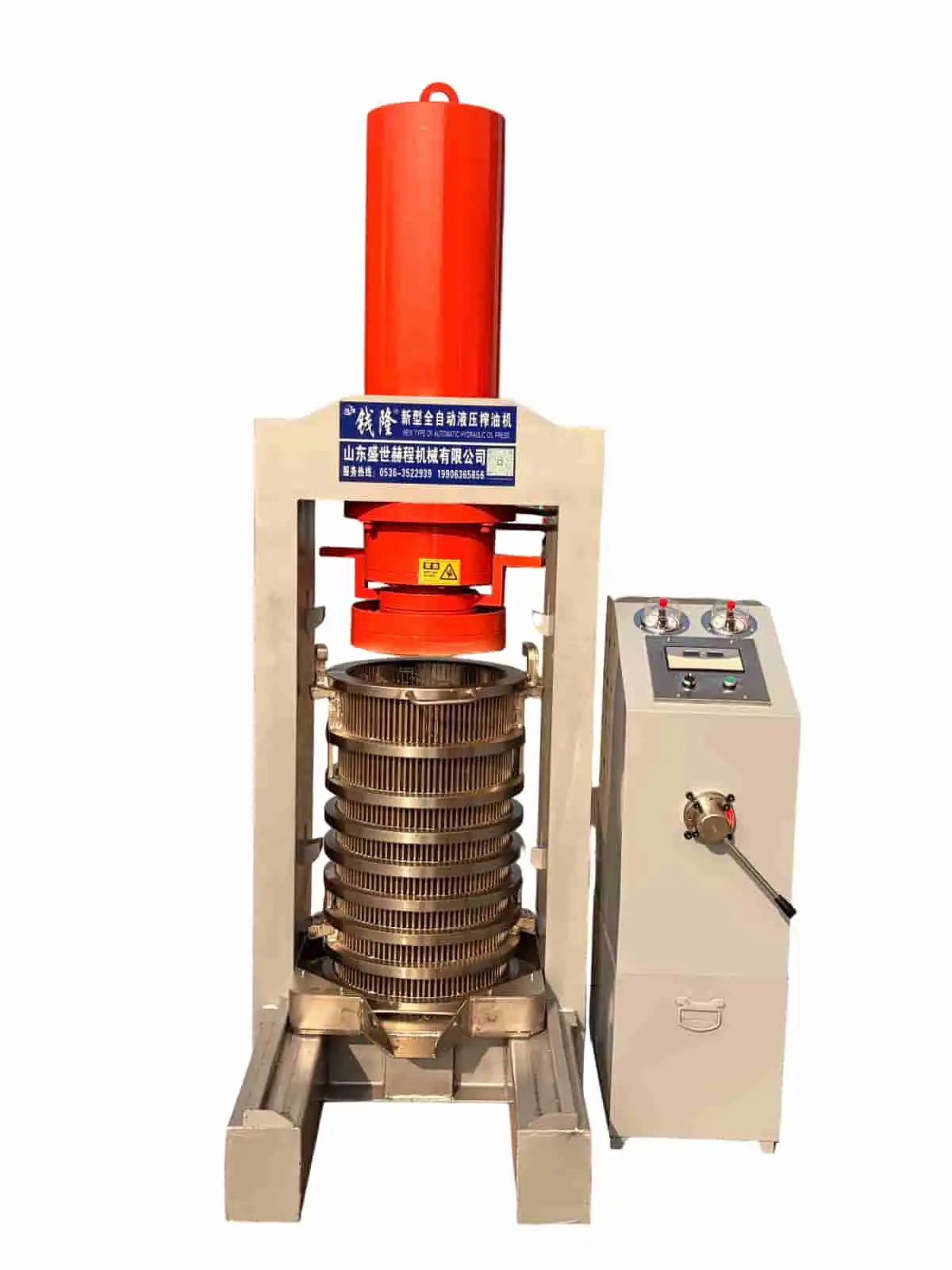
Position in the batch cycle
Ejection begins only after pressure is safely released
The exact sequence depends on the machine design and controls. The operating manual and factory test must show each permitted motion, interlock, and operator position.
Two frame layouts
Define where the cake travels and where the operator stands
Upward discharge
Top ejection
The cake is pushed toward the upper side of the barrel and removed from the upper working zone. The quotation should show the ram or ejector motion, opening sequence, cake support, and required headroom.
- Confirm cake exit height and operator platform or reach
- Provide overhead clearance for cake and machine service
- Define the receiving tray, table, trolley, or transfer device
- Keep hands and tools outside the moving load path
Downward discharge
Bottom ejection
The cake leaves toward the lower side of the barrel. The layout must show bottom opening, catch space, floor or frame clearance, oil tray relationship, and safe access for cake removal.
- Confirm clear space below the barrel and any removable support
- Define how the cake is caught without uncontrolled falling
- Separate cake handling from oil collection and spills
- Check bending, lifting, trolley, or conveyor requirements
Layout comparison
Compare drawings and a complete operating trial
Do not assume that one direction is always faster, cleaner, or more ergonomic. Those outcomes depend on discharge height, cake size, guarding, trays, platforms, operator method, and line layout.
| Decision point | Top-ejection questions | Bottom-ejection questions | Evidence |
|---|---|---|---|
| Cake path | How far and through which opening does the cake move upward? | How is the lower support opened and the cake controlled downward? | Section drawing and unedited full-cycle video. |
| Operator position | Is the removal height suitable, and is a platform or handling aid required? | Is low-level access suitable, and how are bending and lifting controlled? | Ergonomic review using actual cake mass and dimensions. |
| Clearance | What headroom is needed for discharge and maintenance? | What frame, floor, pit, tray, or trolley clearance is needed below? | Approved general-arrangement drawing in the buyer’s workshop. |
| Oil and cake separation | Where does any oil or loose material drain during upper removal? | How is the lower cake path separated from the oil tray and spill zone? | Product-flow and housekeeping plan. |
| Cycle time | Time pressure release, opening, ejection, removal, cleaning, and reset. | Time the same complete sequence and any tray or support handling. | Repeated trials with the same prepared material and operator basis. |
| Safety | Which guards, interlocks, supports, and exclusion zones control upward motion? | Which controls prevent dropping, crushing, and access under a suspended or moving cake? | Risk assessment, function test, manual, and training. |
Hosted operating footage
Use the video to identify motions, then confirm the ordered frame
The retained first-party video shows real top and bottom cake-ejection context. It is a visual guide, not a dimensional drawing or a performance guarantee for every model.
- Pause at pressure release and identify every manual action
- Observe where the operator stands during discharge
- Identify cake supports, openings, trays, and handling tools
- Request equivalent footage of the exact quoted machine and barrel
Pressing result
Ejection direction does not prove oil yield
Top or bottom discharge is primarily a frame and handling choice. Oil recovery and cake condition depend on the oilseed, preparation, barrel geometry, loading, pressure profile, time, temperature, drainage, and test method.
Compare on the same configuration
If a supplier claims one ejection direction changes performance, request the engineering reason and a controlled comparison using the same machine force, barrel, material, preparation, batch, settings, and measurements.
Cake after discharge
Plan the solid-output route
- Cake diameter, thickness, layer count, temperature, and breakability
- Manual removal, trolley, table, chute, conveyor, or lifting aid
- Cooling, stacking, lot identification, storage, or immediate crushing
- Intended reprocessing, sale, disposal, or approved feed use
- Dust, loose particles, residual oil, cleaning, and cross-contact control
Operating safety
Treat ejection as a powered crush and stored-pressure operation
Pressure state
Define the indication and sequence that prove pressing pressure has been released before the discharge path is opened.
Exclusion zone
Keep personnel outside the ram, barrel, cake, support, and falling-object paths during powered movement.
Interlocks and supports
Verify guards, position sensing, mechanical supports where required, emergency stop, permitted modes, and restart behavior.
Maintenance isolation
Use the approved lockout and stored-energy release procedure before entering, cleaning, adjusting, or servicing the ejection mechanism.
Information for the quotation
Specify the workshop before confirming discharge direction
| Buyer input | Why it matters | Supplier return |
|---|---|---|
| Selected model and barrel | Defines frame, cake geometry, travel, and approximate load. | Exact ejection arrangement and section drawing for that configuration. |
| Workshop dimensions | Determines headroom, floor space, doors, access, and service clearance. | General arrangement placed in the buyer’s layout. |
| Operator and handling plan | Determines working height, reach, lifting, trolley, and staffing needs. | Recommended platforms, trays, aids, and exclusion zones. |
| Cake route | Cooling, crushing, storage, or transfer changes the receiving arrangement. | Interface dimensions and included or excluded cake-handling equipment. |
| Oil collection route | Oil trays, filters, drains, and spills must not conflict with cake discharge. | Product-flow drawing and cleanability plan. |
| Safety and compliance | Destination rules and company risk controls affect guards and controls. | Risk assessment, safety-function list, manual, labels, and test protocol. |
Related operation pages
Plan the press, installation, and cake route together
Confirm ejection direction on the final frame drawing
Send the press model, barrel, oilseed, practical cake size, workshop layout, ceiling and floor constraints, operator plan, oil route, cake route, and destination safety requirements.