

On this page
- Introduction
- 1. Common Oil Press Machines in India
- 2. Key Differences Between Machine Types
- 3. Hydraulic Oil Press Models (Our Recommendation)
- 4. Important Difference vs Indian Local Machines
- 5. Which Machine is Best in India?
- 6. Price Range in India (2026)
- 7. Business Opportunity in India
- 8. Recommended Setup for India Market
- FAQ
- Final Thoughts
- Get a Free Recommendation
- FAQ
- Related Markets in South & Southeast Asia
Introduction
India is one of the largest edible oil markets in the world, with strong demand for oils such as:
With the growing trend of cold-pressed and natural oils, more small businesses and investors are entering the oil processing industry.
However, choosing the right oil press machine in India can be challenging due to the wide range of options available.
In this guide, we compare:
- Common oil press machines in India
- Key differences in technology
- Which machine is best for your business
1. Common Oil Press Machines in India
In the Indian market, there are mainly two types of machines:
1️⃣ Traditional / Local Oil Press (Ghani Type)
Widely used in rural areas.
Features:
- Wooden or metal ghani system
- Very slow production
- Low oil yield
👉 Suitable for:
- Traditional small shops
- Cultural or organic branding
2️⃣ Screw Oil Press Machine (Most Common)
This is the most widely used type in India.
Features:
- Continuous operation
- High output
- Lower initial cost
👉 Suitable for:
- Medium-scale production
- Bulk oil supply
3️⃣ Hydraulic Oil Press Machine (Premium Segment)
Growing in popularity for high-quality oil production.

Features:
- High pressure extraction
- Low temperature (ideal for cold press)
- Higher oil quality
👉 Suitable for:
- Premium oil brands
- Small to medium businesses
2. Key Differences Between Machine Types
| Feature | Ghani | Screw Press | Hydraulic Press |
|---|---|---|---|
| Oil Quality | High | Medium | ⭐⭐⭐⭐⭐ |
| Oil Yield | Low | Medium | High |
| Production Speed | Very slow | Fast | Medium |
| Investment | Low | Medium | Medium |
| Maintenance | Low | High | Low |
3. Hydraulic Oil Press Models (Our Recommendation)
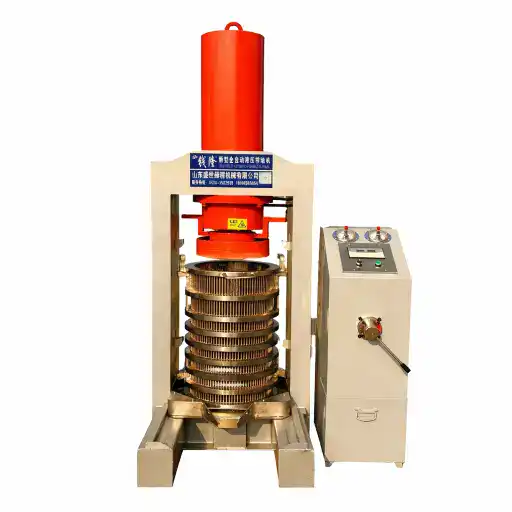
Hydraulic oil press machines are defined by cylinder diameter and pressing force.
Small Models (Entry Level)
👉 Best for:
- Mustard oil (hot press)
- Groundnut oil
- Budget startups
Medium Model (Most Popular)
- 355 Model (~370 tons)
👉 Best for:
- Cold-pressed oils
- Multi-seed processing
- Small business expansion
Large Models (Commercial Use)
👉 Best for:
- Industrial production
- Long working cycles
- Premium oil brands
4. Important Difference vs Indian Local Machines
1️⃣ Structure Strength
- Many local machines → lighter structure
- Hydraulic machines → heavy-duty frame
👉 More stable pressure, longer lifespan
2️⃣ Oil Quality
- Screw press → higher temperature
- Hydraulic press → low temperature
👉 Better for cold-pressed oil market
3️⃣ Maintenance
- Screw press → more wearing parts
- Hydraulic press → fewer moving parts
👉 Lower maintenance cost
4️⃣ Production Strategy
👉 India market trend:
- Mass oil → screw press
- Premium oil → hydraulic press
5. Which Machine is Best in India?
Choose Screw Press If:
- You focus on large volume
- You sell low-cost cooking oil
Choose Hydraulic Press If:
- You want to build a premium brand
- You focus on cold-pressed oil
- You want higher profit margin
6. Price Range in India (2026)
- Screw press: $1,500 – $6,000
- Hydraulic press: $2,000 – $15,000+
👉 Final price depends on:
- Model
- Configuration
- Import cost
7. Business Opportunity in India
The demand for:
- Cold-pressed oil
- Organic oil
- Healthy cooking oil
is growing rapidly.
👉 This creates strong opportunities for:
- Small oil mills
- Local brands
- Direct-to-consumer businesses
8. Recommended Setup for India Market
For Beginners:
👉 325 model (hot press mustard oil)
For Premium Business:
👉 355 model (cold press oil)
For Scaling:
👉 400+ models
FAQ
Which oil is most popular in India?
Mustard oil, groundnut oil, and coconut oil are widely used.
Is cold-pressed oil profitable in India?
Yes. It sells at a higher price and has growing demand.
Can one machine handle multiple seeds?
Yes, hydraulic oil press machines support different materials.
Final Thoughts
India offers a strong and growing market for oil processing.
👉 Choosing the right machine depends on your business model:
- Volume → screw press
- Profit → hydraulic press
Get a Free Recommendation
Want to start an oil business in India?
👉 Tell us:
- Your raw material
- Target production
- Budget
We will recommend the best machine for your market.
Related resources
- Hydraulic Oil Press Machine Price by Model
- How to Start a Small Oil Press Business
- Hydraulic vs Screw Press for Sesame Oil
FAQ
What is the best oil press machine in India (2026 Market Guide & Model Comparison) for fresh-oil retail?
Korean type small hydraulic oil press machine or KHOP 10KG/15KG/20KG models are usually the better recommendation.
What is the best oil press machine in India (2026 Market Guide & Model Comparison) for premium batch production?
325 hydraulic oil press machine is usually the stronger recommendation.
Should I choose screw expeller for continuous output?
Yes. If your target is continuous larger-volume production, screw expeller is usually more suitable than a batch hydraulic route.
What details should I send to get a quote in India (2026 Market Guide & Model Comparison)?
Send your raw material, daily capacity target, voltage, workshop size, and project type so we can recommend the right machine route.
Related Markets in South & Southeast Asia
Buyers in nearby markets often face similar oilseed, voltage, and shipping considerations. See our other South & Southeast Asia guides, or browse all markets on the oil press machine by country hub.
Project planning
Configure the right oil press and production line
Send your oilseed, target output, bottle or packaging requirements, power supply, and destination country. We will match the machine, supporting equipment, and line layout.