
On this page
Starting a small oil press business means making seven decisions in the right order. Buyers who pick the machine first and the seed and market later end up with the wrong press. This is the order we walk new hydraulic oil press customers through.
1. Pick the seed
Choose the seed you can buy locally all year. Sesame and peanut are the usual starting points. See the oil content and equipment for each seed in oil seeds for a hydraulic press.
2. Decide hot or cold pressing
Hot pressing (roasted seed, about 30–40 minutes a batch) gives the flavor most local markets expect and more output per hour. Cold pressing (about 2 hours a batch) is for customers who pay for raw oil, and for nuts.
3. Choose how you will sell
A walk-in fresh oil shop, toll pressing for farmers, bottled oil for retailers, or bulk supply. A shop and toll pressing need the least equipment; bottled oil needs a filter, tanks and a filling machine.
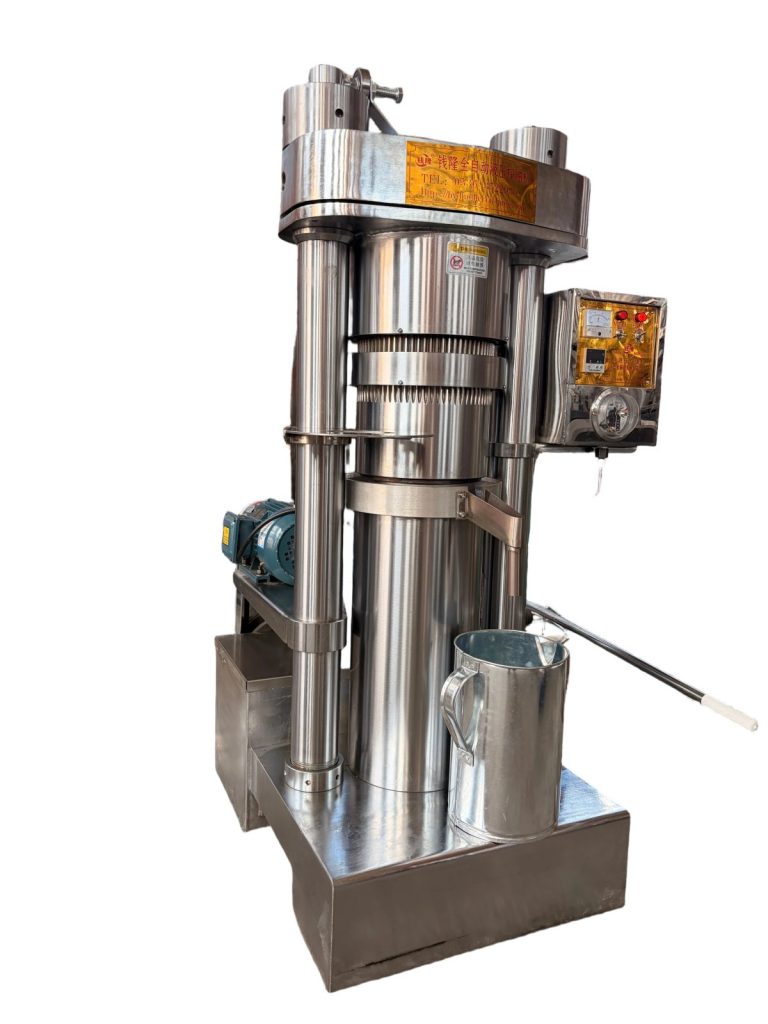
4. Size the press to your daily seed
| Hot press (300 / 325) | Cold press (355–500) | |
|---|---|---|
| Material | Roasted or steamed seed | Clean, crushed seed or kernels |
| Load per barrel (390 mm) | 60–80 kg; up to about 100 kg after pre-pressing | 60–80 kg |
| Pressing time | About 30–40 min | About 2 h |
| Loads in an 8-hour shift | About 10 (roughly 1.3 per hour) | About 4 |
Under about 1–2 tons of sesame a day for retail, a Korean-type KHOP press fits a shop counter. Above that, a 325 for hot pressing or a 355–500 for cold pressing.
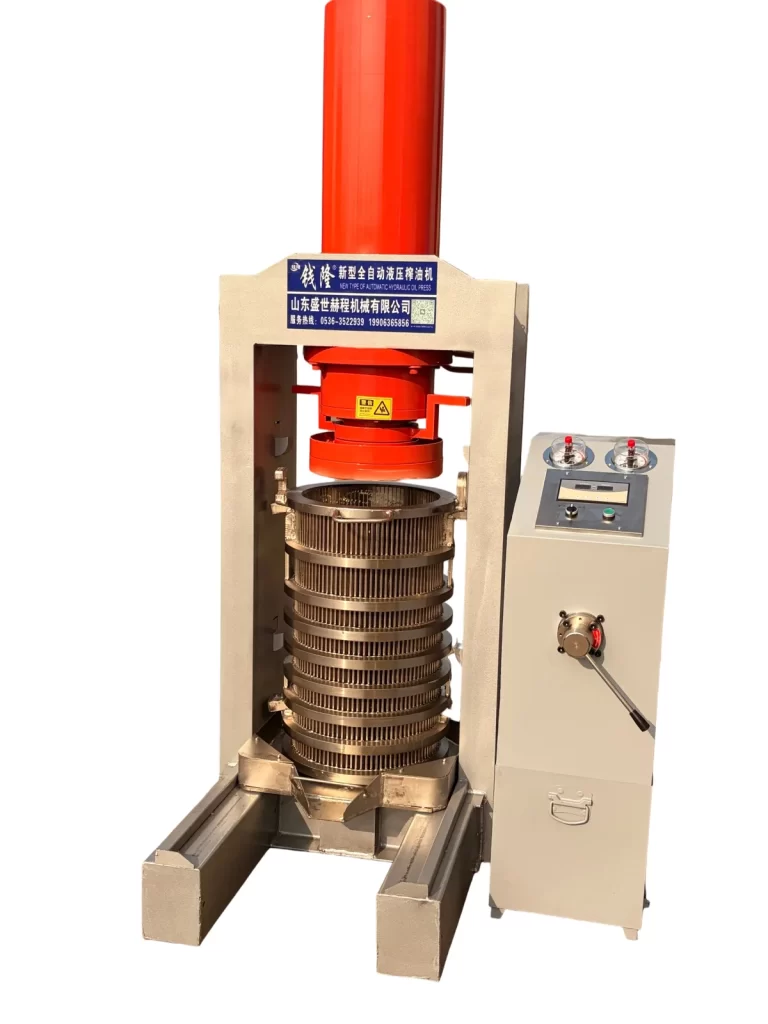
5. Add the equipment around the press
- Hot press: roaster (or steamer for some seeds), plus a pre-press machine for peanut and sunflower. Sesame is not pre-pressed.
- Cold press: crusher for nuts.
- Bottled oil: paper-leaf filter, tanks, filling machine.
6. Prepare the room
About 20–50 m², a three-phase supply for the press and roaster, ventilation for roasting, and a dry seed store. Lay it out in the order the seed moves.
7. Check the numbers
Calculate the margin per 100 kg of seed with your local seed, oil and cake prices before ordering. The cost breakdown shows how.
Related Reads
- Small-Scale Oil Production Business Plan
- Hydraulic vs Screw Press: Real Production Compared
- Oil Press Machine for a Small Business
- How to Use a Hydraulic Oil Press
FAQ
What is the best oil press for a beginner?
For hot-pressed sesame or peanut oil, the 325. For a small retail counter, a Korean-type KHOP press. For cold-pressed nuts, the 355 series.
How much space do I need?
About 20–50 m² for one press with a roaster and filter.
Hydraulic or screw press?
Hydraulic for batch production, clean oil and a hard cake; screw for continuous bulk output. Most small shops selling fresh oil choose hydraulic.
Get a setup for your seed and output
Tell us your seed, market and daily output. We will recommend a machine set and send a quote.
Project planning
Configure the right oil press and production line
Send your oilseed, target output, bottle or packaging requirements, power supply, and destination country. We will match the machine, supporting equipment, and line layout.