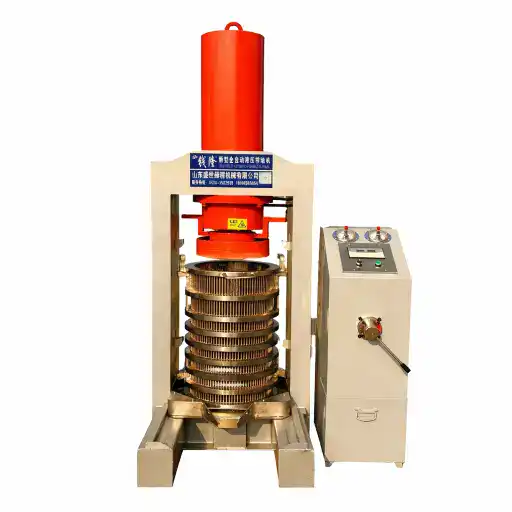
Fresh avocado preparation equipment
Remove avocado stones and refine the pulp in two controlled stages
This stainless-steel processing system combines pit separation and double-stage pulping in one compact machine. It is intended for prepared avocado fruit before malaxation, heating, centrifugal separation, or another validated downstream process.
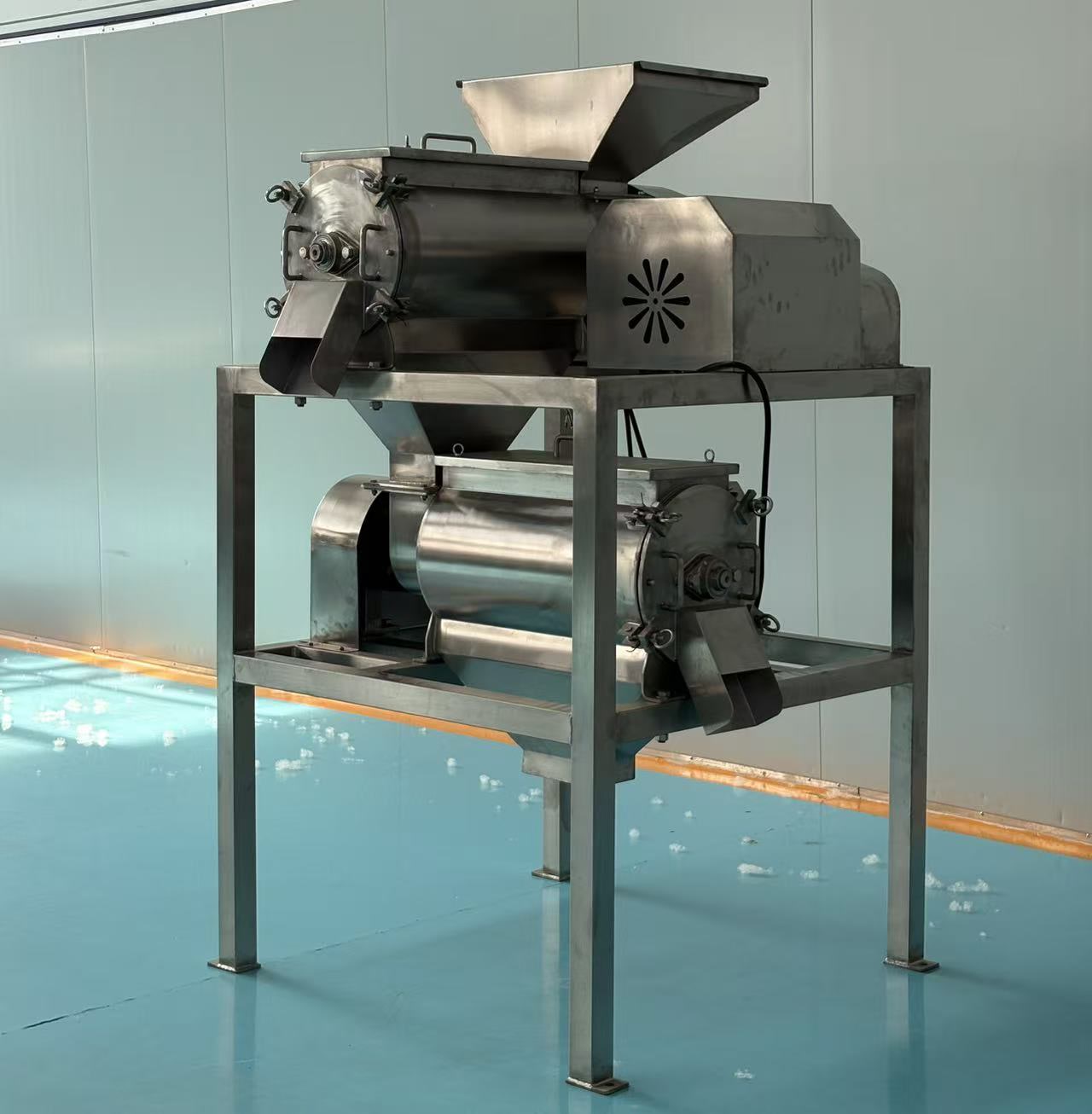
Published reference configuration
A two-stage 304 stainless steel machine for avocado pulp preparation
The values below come from the supplied equipment document. Final throughput, screen aperture, separation result, and pulp texture must be confirmed with the actual fruit variety and maturity.
Two processing stages
The upper and lower processing sections support stone separation, coarse pulping, and secondary pulp refinement.
26 kW total power
Reference drive configuration: 15 kW for one stage and 11 kW for the second stage.
SUS304 product-contact build
The published machine body and processing sections use food-processing stainless steel.
2200 × 2000 × 2650 mm
Published overall machine dimensions for workshop and line-layout planning.
Recommended process position
Place destoning and pulping between fruit preparation and downstream separation
Washing, sorting, peeling policy, fruit ripeness, screen selection, heating, and separation equipment should be specified as one connected process.
System components
Configure feeding, pulping, and thermal conditioning around the required process
The source proposal combines a cleated belt elevator, the double-stage destoning and pulping machine, and a tilting steam-jacketed kettle. Each item can be matched to the actual factory layout.
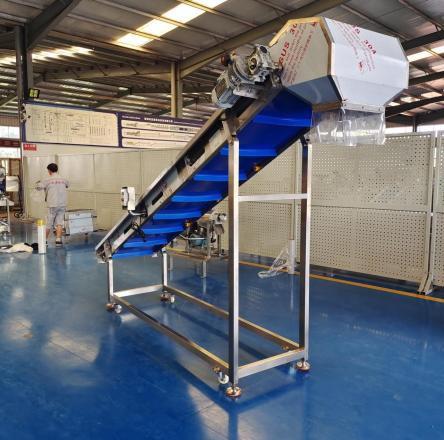
Controlled feeding
Cleated belt elevator
A 600 mm PVC belt, feed hopper, side guards, and approximately 36-degree incline provide controlled transfer to the processing machine.
- Reference power: 1.1 kW
- Straight belt length: 4 m
- Cleat height / spacing: 50 / 300 mm
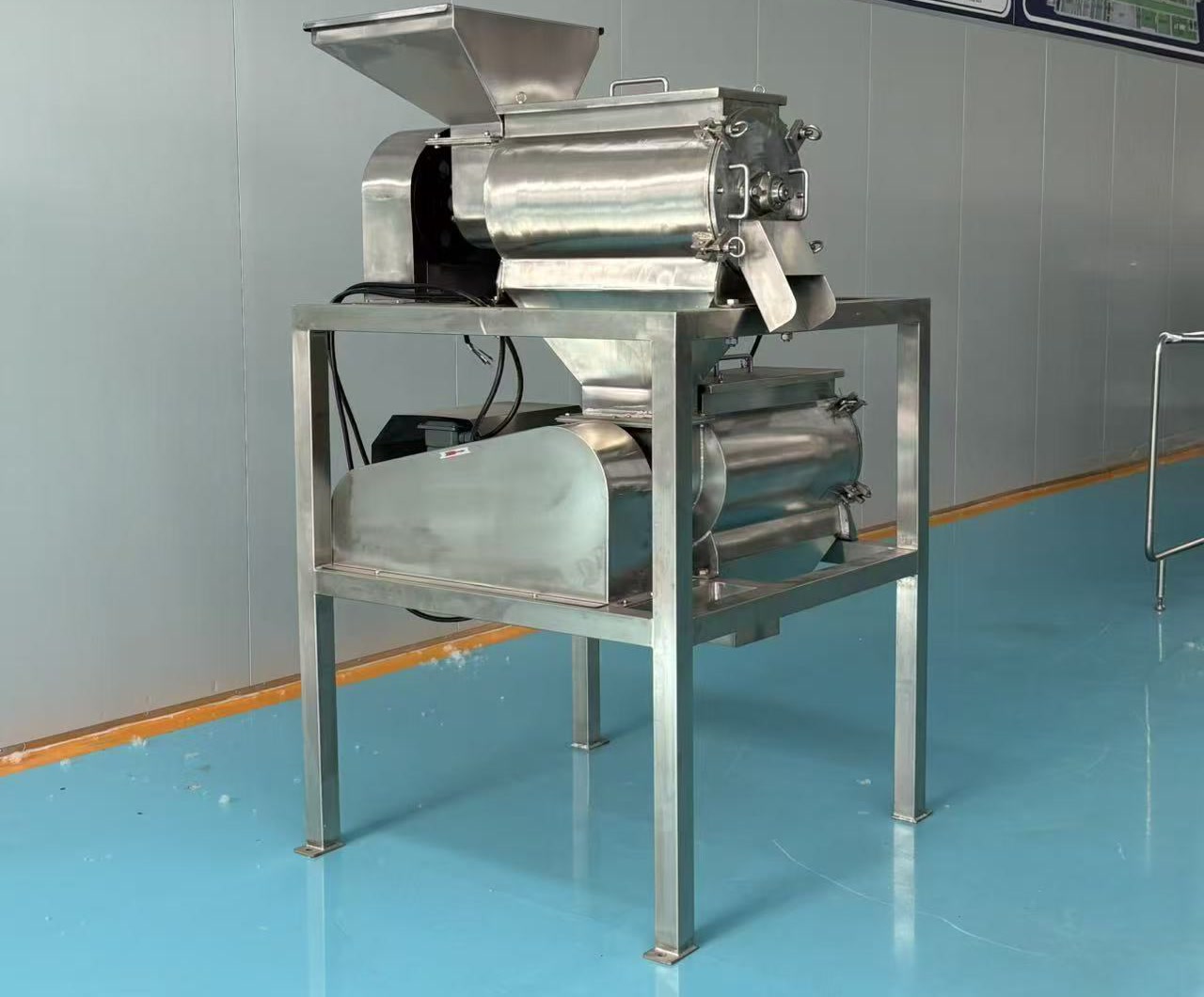
Core processing machine
Double-stage destoning and pulping
Two independently driven processing stages prepare avocado pulp while allowing the screen specification to be selected for the required separation and texture.
- Reference supply: 230 V, 50 Hz
- Motor power: 15 + 11 kW
- Screen aperture: project-specific
Pulp conditioning
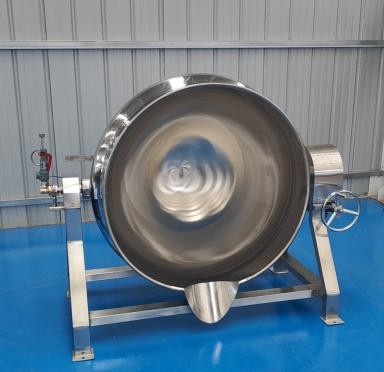
Tilting steam-jacketed kettle
A nominal 600 L kettle provides batch heating or conditioning before the next process step. Final heating duty and utility connections require project confirmation.
- Inner bowl diameter: 1200 mm
- Bowl depth: 750 mm
- Manual worm-gear tilting mechanism
Double-stage machine photos
Inspect the two processing stages and service layout
These two factory photos show the proposed double-stage arrangement from opposite sides, including the upper feed hopper, inter-stage transfer, motor guards, discharge chutes, and stainless steel support frame.
Front and discharge side
Separate outlets for each processing stage
The front view shows the upper and lower processing drums, two discharge chutes, motor protection, and access around the frame.
Rear and drive side
Feed hopper and inter-stage transfer arrangement
The opposite view makes the feed hopper, drive covers, transfer path, and service clearance around both stages easier to review.
Working principle
Use each stage for a defined separation task
Avocado enters through the controlled feed point. The first processing stage handles pit separation and coarse pulp release. The second stage refines the pulp through the selected screen before discharge to the next vessel or machine.
Fruit condition controls the result
Firmness, maturity, temperature, skin policy, feed rate, rotor condition, and screen aperture all affect stone carryover, pulp loss, texture, and cleaning time. A material trial is required before the final screen and operating settings are fixed.
- Metered feeding: maintain a stable incoming fruit layer rather than overloading the first stage.
- Primary separation: release pulp and remove the avocado stone through the designed discharge path.
- Secondary refinement: pass the pulp through the confirmed screen aperture for the target texture.
- Separate outlets: route first-stage and second-stage discharge points to the correct downstream equipment.
- Cleaning access: plan washdown, screen inspection, and residue removal into the operating schedule.
Single-stage reference videos
Review machine structure and avocado pulp discharge behavior
These clips show single-stage reference equipment rather than the exact double-stage configuration pictured above. They are included to demonstrate the processing drum, screen area, machine access, and the consistency of avocado pulp leaving a comparable stage.
Single-stage equipment reference
Processing drum and screen demonstration
Use this clip to review the general stainless steel structure, screen section, feed arrangement, and service access of a single processing stage.
Avocado material test
Observe pulp leaving the discharge chute
The material test shows processed avocado pulp at the outlet. Final texture and recovery still depend on fruit maturity, feed preparation, screen aperture, and operating settings.
Video scope
The videos demonstrate a single-stage reference machine. The proposed double-stage system uses two processing sections and must be configured from the actual avocado material and target pulp specification.
Equipment data
Published reference specifications
These values are suitable for preliminary layout and utility review. Final drawings, interfaces, throughput, and operating performance should be confirmed before manufacture.
| Equipment | Specification | Published value |
|---|---|---|
| Belt elevator | Overall dimensions | 4000 × 960 × 2850 mm |
| Belt elevator | Power supply / motor | 230 V, 50 Hz / 1.1 kW |
| Belt elevator | Belt | 600 mm wide PVC belt; approximately 8000 mm circumference |
| Belt elevator | Feed and guarding | 840 mm hopper width; 275 mm depth; 15 mm white PP side guards |
| Belt elevator | Structure | 40 × 60 × 1.5 mm frame tube; 2.0 mm 304 stainless sheet |
| Destoning pulper | Overall dimensions | 2200 × 2000 × 2650 mm |
| Destoning pulper | Power supply / total power | 230 V, 50 Hz / 26 kW |
| Destoning pulper | Stage drives | 15 kW + 11 kW |
| Destoning pulper | Material | SUS304 stainless steel |
| Destoning pulper | Screen aperture | To be confirmed from avocado testing and target pulp texture |
| Destoning pulper | Discharge heights | First stage: 1550 mm; second stage: 630 mm |
| Destoning pulper | Frame and outlet | 80 × 80 × 3 mm frame tube; 89 mm outlet diameter |
| Jacketed kettle | Nominal volume | 600 L |
| Jacketed kettle | Inner / outer bowl | 1200 mm diameter × 4 mm / 1300 mm diameter × 3 mm |
| Jacketed kettle | Bowl depth / rim | 750 mm / 150 mm high × 3 mm |
| Jacketed kettle | Heating and discharge | Steam heating; manual worm-gear tilt |
Material trial inputs
Information needed before the machine is configured
- Avocado variety, average fruit size, maturity, firmness, and incoming temperature
- Whether the skin remains, is partly removed, or must be fully separated
- Required fruit input per hour and daily operating schedule
- Acceptable stone carryover and allowable pulp loss with the pit discharge
- Target pulp particle size, texture, and downstream transfer method
- Available voltage, frequency, steam supply, water, drainage, and workshop space
- Required cleaning method and food-contact compliance for the destination market
Scope boundary
Do not select the machine from dimensions and power alone
The supplied document does not publish a guaranteed hourly throughput or separation efficiency. Those values depend on the material and must be established through a test or a confirmed reference application.
Confirm the complete line interface
Feed height, pit discharge, first-stage pulp outlet, second-stage pulp outlet, transfer pumps, kettle loading, downstream separation, cleaning access, and service clearance should appear on the final layout drawing.
Operation and hygiene
Plan access, cleaning, and utilities as part of the equipment selection
Stable feed rate
Match the elevator speed and hopper loading to the pulper so fruit does not bridge, surge, or overload the first stage.
Screen inspection
Check the selected screen for wear, blockage, and damage because screen condition directly affects pulp texture and losses.
Washdown planning
Provide water, drainage, safe isolation, and access around product-contact surfaces for cleaning after production.
Hot utility safety
Steam piping, valves, pressure protection, insulation, and operator procedures for the jacketed kettle must follow local requirements.
Related process pages
Continue planning the avocado processing line
Confirm the machine with the actual avocado material
Send the fruit variety, maturity, input target, skin policy, required pulp texture, downstream process, power standard, steam conditions, and line layout so the screen, feed system, outlets, and utilities can be reviewed together.