Oil sludge and residue recovery
Press oil-bearing sludge back into a usable liquid before disposal
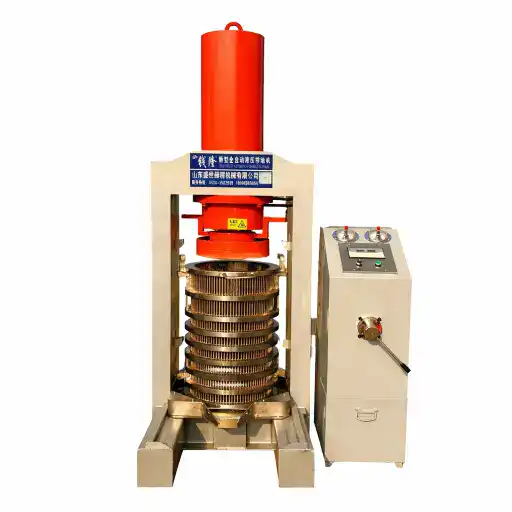
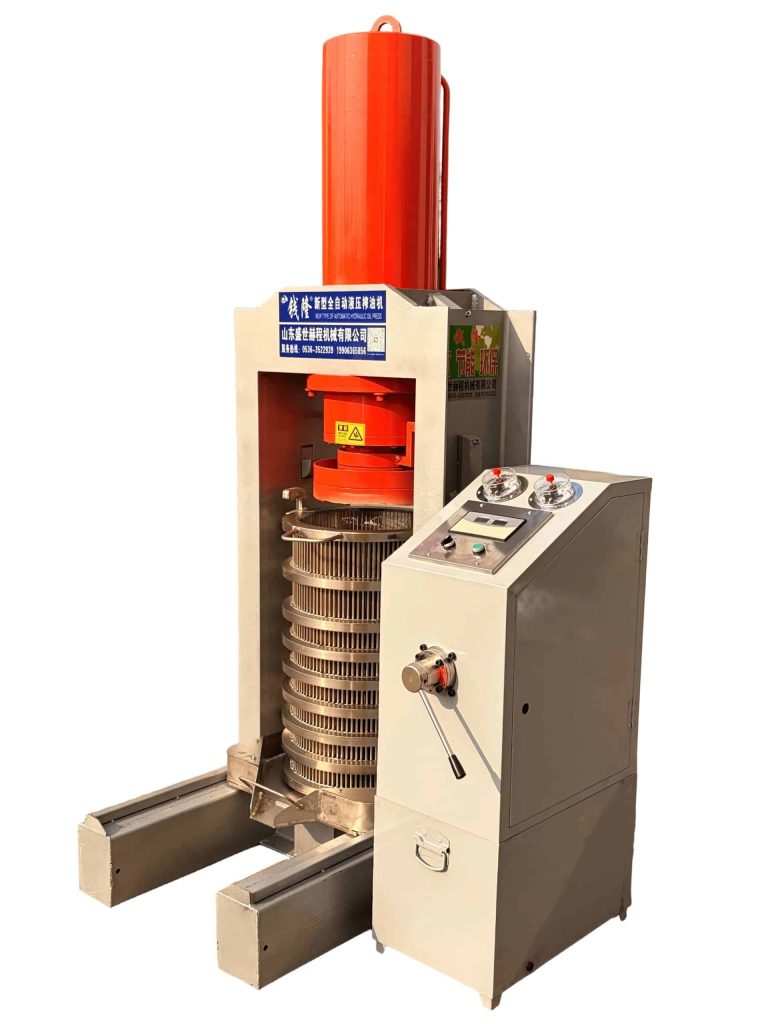
An oil sludge press machine separates residual oil from semi-solid residues generated during edible-oil processing: tank bottoms, filter cake, pressing residue, and refinery waste. The core unit is a batch hydraulic press preceded by a conditioning step that makes the material loadable and improves drainage.
What it handles
Four common sludge types in an oil-processing plant
Each material has a different moisture, solids load, and oil retention. The conditioning step and pressing parameters change accordingly.
- Tank-bottom residue: settled oil, water, and fine solids from storage or transport tanks. Typically 30–60% oil by weight.
- Filter cake: pressed solids from a pneumatic or plate-and-frame filter. Oil content varies by upstream process.
- Pressing cake (secondary): oilseed meal that still retains extractable oil after the primary press. Solvent extraction may be more economical above 8% residual oil.
- Refinery residue: spent bleaching earth, degumming phospholipid cake, or caustic soap stock from refining. Each needs a different conditioning approach.
Feedstock boundary
The press machine is for oil-processing residue, not for every material called sludge
The food- and fat-residue process is the assumed basis. Petroleum sludge, solvent-bearing waste, sewage, or unknown chemical mixtures require a separate engineered review and are outside this equipment scope.
Suitable feed
Traceable oil-processing residue
- Vegetable-oil or animal-fat origin with known production history
- No cleaning chemicals, drain water, or unknown contamination
- Known oil, water, solids, and ash profile
- Defined licensed outlet for recovered liquid and pressed solids
Separate treatment decision
Petroleum, chemical, or unknown sludge
- Provide SDS and a representative laboratory analysis
- Identify flash point, volatile compounds, and regulated substances
- Confirm transport, hazardous-area, and waste-treatment requirements
- Obtain a separate engineered process decision before sending material
Reference process flow
Condition, press, collect, and classify every outlet
The exact conditioning method, loading amount, cycle time, and filtration route depend on the actual sludge sample. The following is the standard six-step sequence.
Typical line configuration
Three modules make a complete oil sludge recovery line
The press is the core, but a production line needs conditioning and liquid handling around it.
Conditioning unit
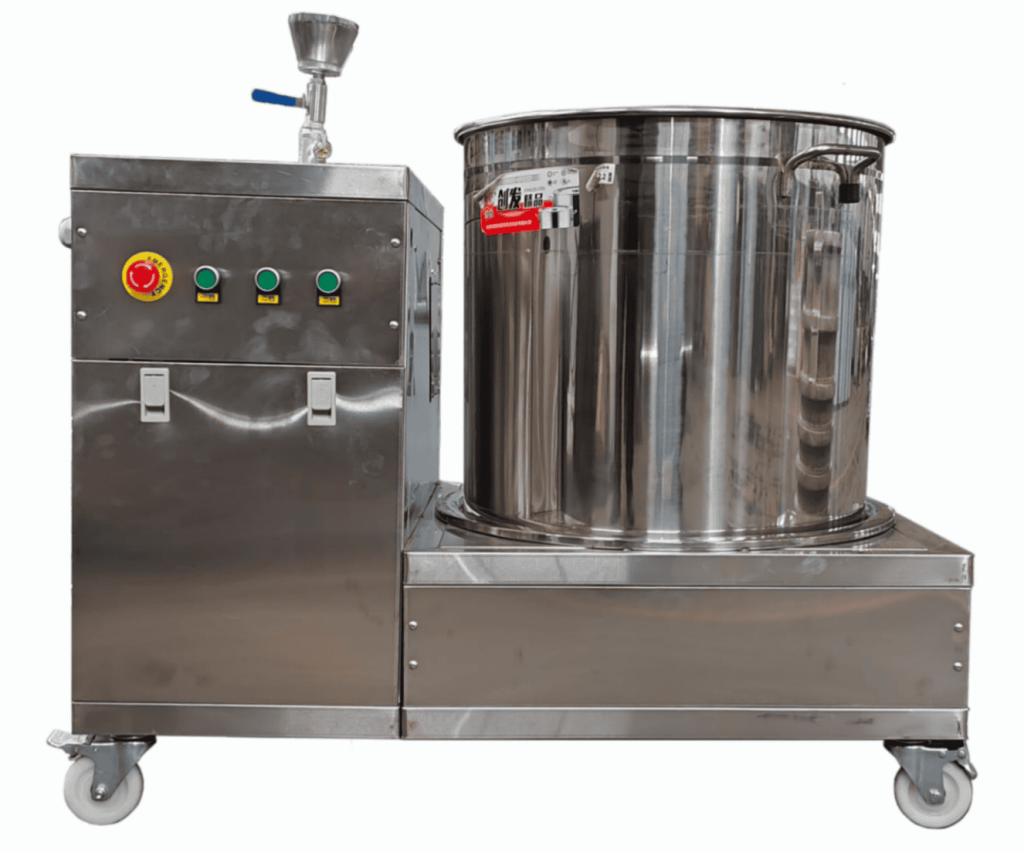
A 27 kW electric steamer or equivalent heating vessel raises the sludge temperature to improve oil mobility and reduce viscosity before pressing.
Review the electric steamer →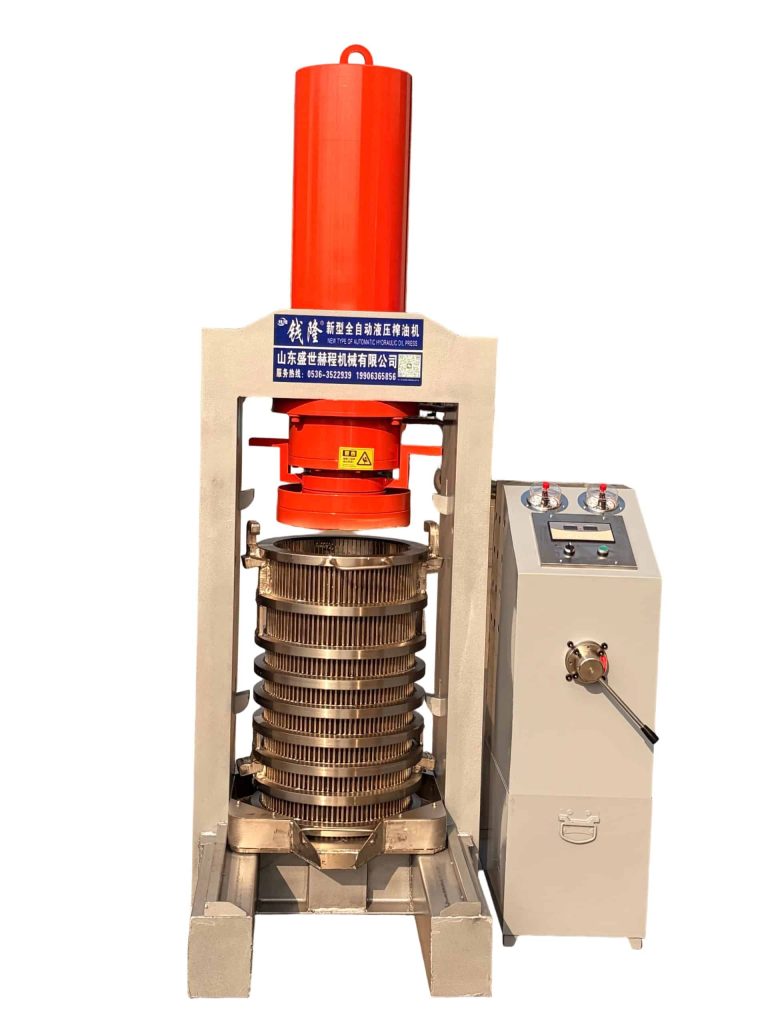
Batch hydraulic press
Model 300 or 325 press with 60 MPa hydraulic system. 100 kg batch capacity, 1–2 hour pressing cycle. Stainless-steel plates and food-grade cloth.
Review the 300/325 press family →
Collection and filtration
Expressed liquid settles in a receiving tank, then passes through a pneumatic or plate-and-frame filter to remove residual solids and moisture.
Review pneumatic filtration →Published specification reference
Model 325 line: key parameters to confirm on your sample
These are source-page references, not a universal bill of equipment. Final parameters require a representative sample trial.
| Parameter | Reference value | What determines the actual value |
|---|---|---|
| Batch capacity | 100 kg per cycle | Material density, loading method, and press dimensions |
| Pressing cycle | 1–2 hours | Oil content, moisture, temperature, and drainage behavior |
| Hydraulic pressure | 60 MPa (Model 325) | Material compressibility and desired cake oil content |
| Conditioning temperature | 60–90 °C (steam) | Oil viscosity, moisture, and degradation threshold |
| Recovering capacity | 500–800 kg sludge/day | Number of batches per shift, changeover time, and staffing |
| Footprint | Approx. 4 × 3 m (press + steamer) | Layout, access route, and material flow |
Outputs and responsibility
What leaves the recovery section and what you must define
| Outlet | What the line produces | What you must confirm |
|---|---|---|
| Recovered liquid | Oil-rich liquid that may contain moisture, fines, and pigments from the original sludge. | Settling or filtration to specification, laboratory testing, storage, and permitted use or further refining. Not automatically food-grade. |
| Pressed cake | Lower-moisture solid with residual oil that depends on the feed and pressing parameters. | Cooling, enclosed storage, fire controls, transport, reuse (e.g. animal feed, boiler fuel) or disposal under local rules. |
| Condensate and wash water | Water from steaming, drainage, and equipment cleaning. | Collection, analysis, treatment, and discharge permission. |
No fixed recovery rate is stated here
Oil retention varies widely with sludge source, storage duration, and conditioning method. A representative sample trial is the appropriate basis for discussing recoverable liquid, cake condition, batch loading, and cycle time.
Connected recovery routes
Where the oil sludge press fits in the plant
Send a sludge sample and get a trial-based quotation
Include the sludge source, estimated monthly volume, oil and moisture content (if known), storage conditions, and the required outlet specification for recovered liquid and pressed cake.