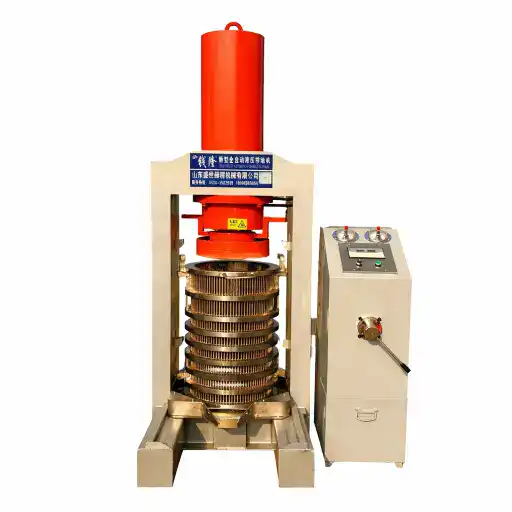
Used cooking oil and food-grease recovery
Turn collected used cooking oil into a clean, sellable feedstock
Waste cooking oil recovery equipment separates, filters, heats, presses, and refines used cooking oil (UCO) and food-grease residue into a consistent liquid suitable for biodiesel, industrial lubricant, or further edible-oil refining depending on source and contamination level.
Three UCO streams
Restaurant, industrial, and mixed-grease streams need different entry points
The recovery line is the same hardware, but the pre-treatment and post-treatment change based on what the material actually contains.
- Restaurant / food-court UCO: primarily triglycerides with food solids, salt, and trace water. Cleanest stream, often suitable for direct biodiesel feedstock after filtration and settling.
- Industrial frying / processing grease: higher water content, possible cleaning-chemical traces, and larger food-solid loads. Requires screening, heating, and pressing before filtration.
- Mixed grease-trap or collection-septic material: wastewater, detergents, and sewage solids may be present. Must be sampled, tested, and legally classified before any equipment is specified. This stream often needs a dedicated treatment route.
Full recovery process
Seven stages from raw UCO to a storable liquid
Not every job needs all seven stages. A clean restaurant stream may skip pressing. A high-solid industrial grease may need additional screening and a second filtration pass.
Line configuration
Four modules cover most UCO recovery jobs
Scale the modules to your daily volume. A small restaurant cluster may run a single press with manual screening. A regional collection point adds automated filtration and a settling tank.
Screening and settling
Rotary or basket screen removes gross solids. A heated settling tank (200–1,000 L) lets free water and fine particles separate by gravity. Optional: centrifugal separator for high-water streams.
Heating and conditioning
Steam or electric heating raises the material to 60–80 °C to reduce viscosity, mobilize bound oil, and improve drainage through the press. Temperature is set by the material’s degradation threshold and fire-safety margin.
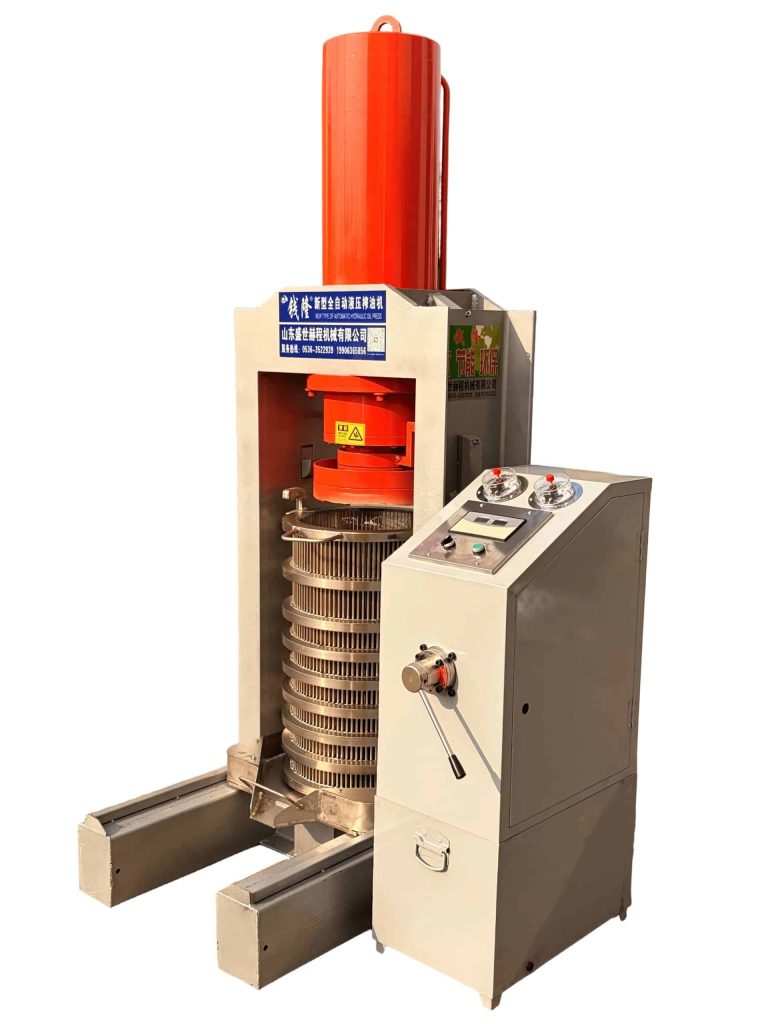
Batch hydraulic press
Model 300 or 325 press. 100 kg batch, 1–2 hour cycle, 60 MPa hydraulic system. Recover oil from semi-solid residue that a filter alone cannot separate. Stainless-steel plates, food-grade cloth.
Review the 300/325 press family →Filtration and storage
Pneumatic oil filter or plate-and-frame filter removes residual solids and moisture. A 1,000–5,000 L food-grade storage tank with level and temperature monitoring holds the recovered oil before dispatch.
Review pneumatic filtration →Reference specifications
Published parameters for a Model 325 UCO recovery line
These values are source-page references. Final sizing requires a representative sample from your actual UCO stream.
| Parameter | Reference value | What to confirm |
|---|---|---|
| Daily throughput | 300–800 kg raw UCO / day | Collection frequency, peak vs. average load, storage buffer |
| Press batch capacity | 100 kg / cycle | Material density and loading method |
| Pressing cycle | 1–2 hours | Oil content, moisture, and drainage behavior |
| Heating range | 60–80 °C | Material degradation threshold and fire-safety margin |
| Filtration accuracy | 5–20 µm | Downstream use (biodiesel, industrial, or edible) |
| Storage capacity | 1,000–5,000 L | Collection schedule and dispatch frequency |
| Footprint | Approx. 6 × 4 m | Layout, ventilation, fire separation, and access route |
Compliance and documentation
What the recovered oil must meet before it leaves your site
Biodiesel feedstock
ASTM D6751 / EN 14214 criteria
- Acid value, free glycerol, moisture, and trace metals within spec
- Source documentation and traceability from collection to dispatch
- Local waste-transfer license and transporter certification
- Batch lab report with every shipment
Industrial or non-edible use
Internal quality gate
- Define the acceptable free-fatty-acid, moisture, and solids limits
- Label the storage tank with source, date, and batch ID
- Record every batch: weight, temperature, filter change, and disposal
- Separate from any edible-oil stream in the plant
Connected equipment
Other recovery and waste routes on this site
Describe your UCO stream and get a matched line configuration
Send the source (restaurant, industrial, mixed), estimated daily volume, water and solids content (if known), storage conditions, and the target outlet (biodiesel, industrial, or further refining). We will match the modules and provide a trial-based quotation.