Water washing before sesame roasting
A complete sesame washing system from floor-level feeding to draining
The sesame washing machine combines pneumatic feeding, water washing, spiral agitation, heavy-impurity discharge, draining, dust collection, and electric control. It is used where incoming sesame carries surface dust, soil, sand, stones, or small heavy metal pieces that should be removed before roasting and hydraulic pressing.
Technical parameters
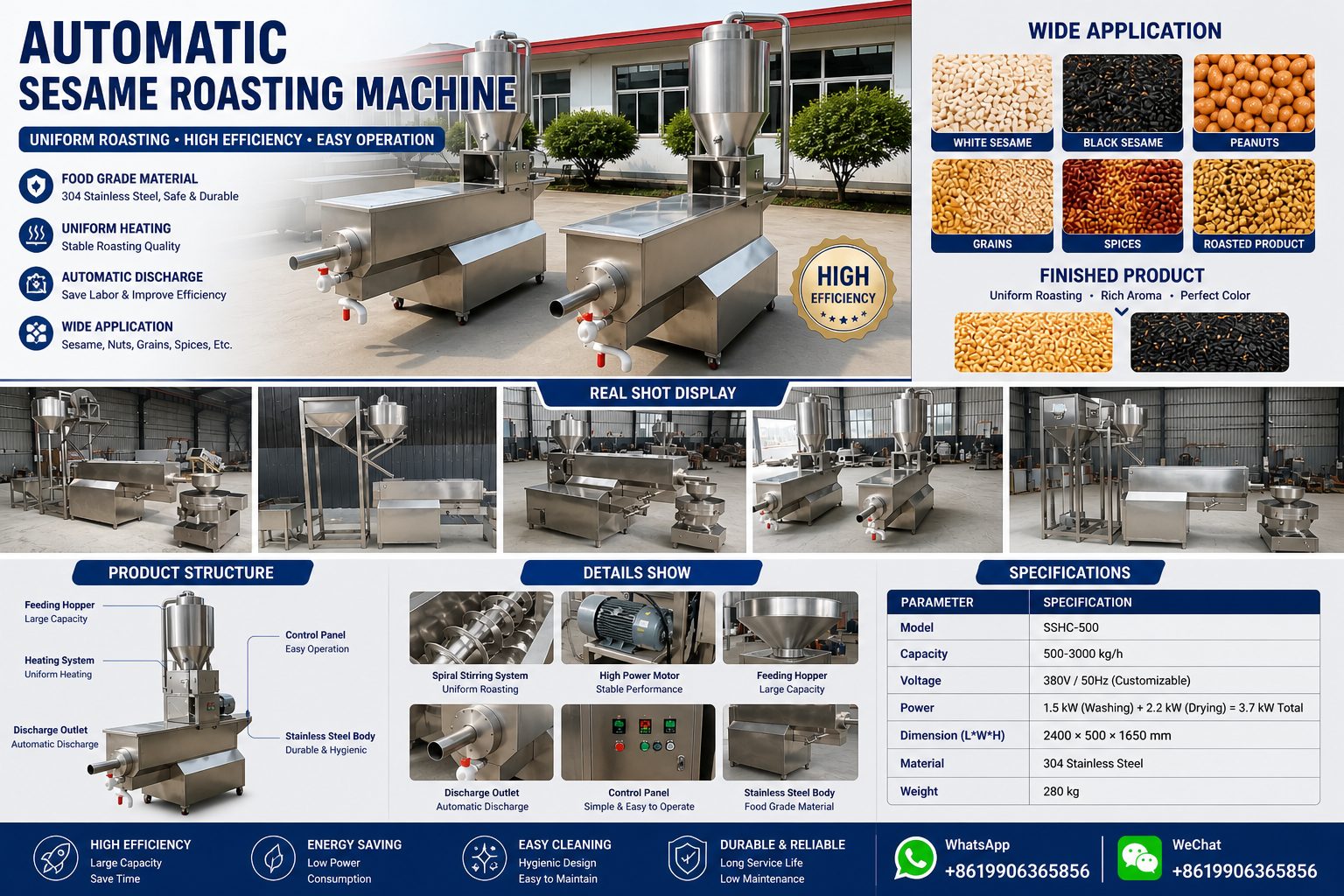
Sesame washing machine specifications
These are the standard figures for the washing machine itself. Throughput moves up or down with the material being washed, so treat the capacity as a working figure rather than a fixed guarantee.
| Parameter | Washing machine | What it means for your workshop |
|---|---|---|
| Power supply | 380 V | Three-phase supply. Confirm your local voltage and frequency before shipment. |
| Motor power | 0.75 kW | Low draw — the spiral agitation does not need a large motor. Budget separately for the water pump and the rest of the set. |
| Capacity | Approx. 500 kg/h | Varies with the material and its impurity load. Sized to feed a small to mid-size roasting and pressing line. |
| Dimensions | 1980 × 500 × 1180 mm | Narrow footprint. Allow clearance at both ends for the suction connection and the discharge trolley. |
Optional draining trolley
Draining trolley — matched freely, sized to your space
The draining trolley is an optional companion unit rather than a fixed part of the washer. It can be paired with the washing machine as required, and the dimensions can be customised for the workshop.
| Parameter | Draining trolley |
|---|---|
| Standard dimensions | 1270 × 800 × 520 mm (excluding handle height; the handle is removable) |
| Sizing | Customisable to suit the available floor area and the downstream route |
| Pairing | Optional — matched freely with the washing machine |
Two ways the set is supplied
The washing machine can be quoted on its own, or together with the draining trolley so washed sesame goes straight from the washer outlet into a unit that removes surface water. Which one you need depends on whether you already have a draining or drying arrangement waiting at the discharge point.
Complete machine set
Specify the washer as a connected system, not only a washing tank
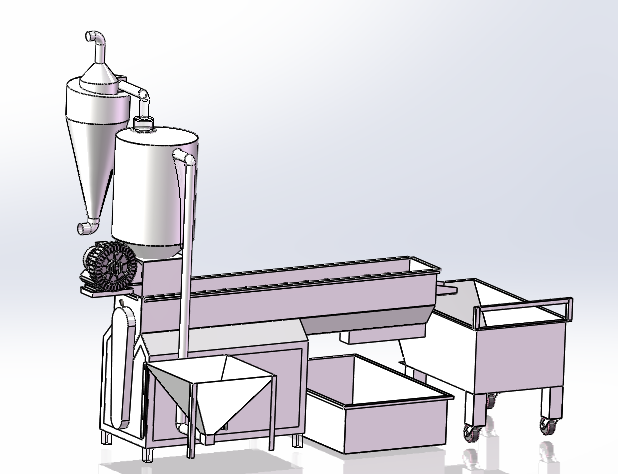
The current machine manual lists the following sections. Their relative positions can be adapted to the workshop while keeping a clear material route from feeding to washing and draining.
| System section | Role in the process | Installation point to confirm |
|---|---|---|
| Ground feeding hopper | Receives raw sesame at floor level for pneumatic transfer. | Leave practical access for bag unloading and routine cleaning. |
| Suction pipe and material suction tank | Moves sesame from the hopper into the washing section by airflow. | Keep the pipe route clear and match the connections shown in the supplied layout. |
| Dust collection tank | Collects dust released during pneumatic feeding. | Provide access for regular emptying and cleaning. |
| Water tank and water pump | Supply washing water to the main machine. | The pump is placed horizontally in the water tank and connected correctly before operation. |
| Main washing machine | Uses spiral blades to agitate and advance sesame through the water. | Provide stable positioning, drainage access, and safe clearance around moving parts. |
| Large bottom valve | Discharges settled sand, mud, stones, and other heavy material after washing. | Leave a practical route for sediment removal and washdown. |
| Small drain valve | Drains dirty washing water from the tank. | Connect to an appropriate wastewater route for the installation site. |
| Draining trolley or trough | Receives washed sesame and removes surface water before the next stage. | Position it directly at the washer discharge and close to the planned downstream route. |
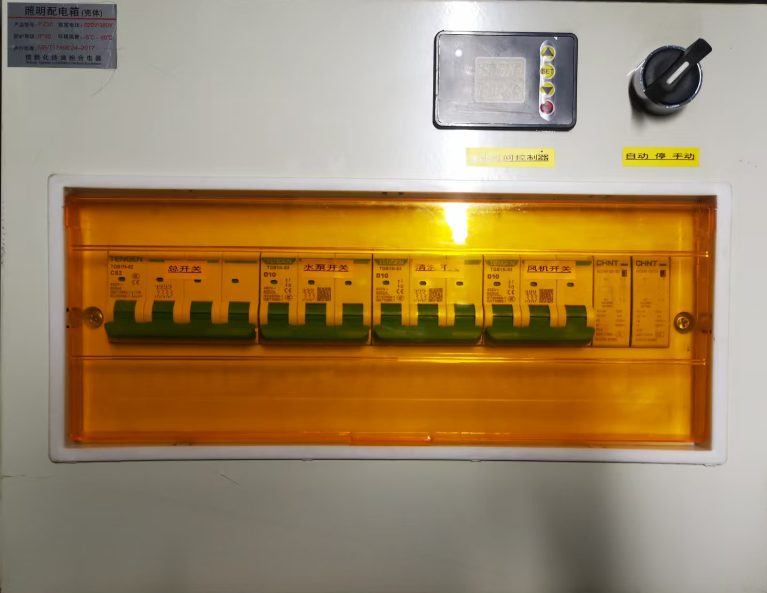
| Electric control cabinet | Provides the operating controls for the complete set. | Match the local electrical supply and keep the cabinet in an accessible, suitable position. |
Working sequence
Air transfer, water agitation, settling, and draining work as one route
Light surface contamination separates in the washing water, while heavier material settles toward the bottom discharge. The washed sesame then leaves through the draining section.
Workshop footage
See the washing set assembled and running
This clip walks along a complete washing set in our workshop. It shows the parts that are hard to judge from a specification sheet: the cyclone dust collection tanks and the pneumatic suction blower at the feed end, the washing trough with its drain valve along the side, and the stainless discharge hopper where washed sesame leaves the machine.
- Cyclone dust tanks and the suction blower that moves seed from the ground hopper.
- The washing trough, its side drain valve, and the sediment discharge point.
- The discharge hopper and where a draining trolley would sit beneath it.
- Realistic clearance around the machine for operation and cleaning.
Workshop layout
Keep the material flow short and the cleaning points accessible
The supplied layout shows the ground hopper, suction section, washing tank, and draining trolley as a continuous route. The arrangement may change with the building, but operators still need safe access to the valves, dust tank, pump, control cabinet, and discharge point.
- Confirm where raw sesame bags will be opened and emptied.
- Keep suction piping supported and away from routine traffic.
- Place the draining trolley at the washer outlet before starting.
- Plan clean-water supply and dirty-water discharge before installation.
- Reserve a practical route from draining to drying or roasting.
Installation and start-up
Prepare water, drainage, power, and the discharge trolley before feeding seed
- Close the tank outlet valve before filling with clean water.
- Submerge the water pump horizontally in the water tank and connect it correctly.
- Move the draining trolley or trough into position at the discharge outlet.
- Confirm the power supply against the equipment documents before energizing the controls.
- Start the system in the documented sequence, then feed sesame through the ground hopper.
- Never place hands in the washing tank while the machine is running.
Routine care
Clean sediment and dust before they affect the next batch
- Use the large valve to remove accumulated sand, mud, and heavy debris.
- Use the small valve to discharge dirty water and replace it as required.
- Clean the dust collection tank after operation.
- Inspect motors, sprockets, bearings, suction connections, and valves regularly.
- Stop the machine immediately if abnormal noise appears and inspect before restarting.
Water washing does not replace every cleaning method
Dry screening is useful for straw, shells, oversize pieces, fines, and loose dust. Water washing addresses attached surface contamination and allows heavy material to settle. The incoming sesame condition determines whether the project needs screening, washing, drying, or a combination.
Position in the production line
Place washing before drying or roasting, not directly before pressing wet seed
The complete upstream route depends on the raw sesame and the chosen pressing method. Surface water must be handled by the selected draining and drying preparation before the material enters the downstream thermal or pressing equipment.
Choose washing when
The incoming sesame carries attached dirt or heavy field impurities
Send representative raw-seed photos or a sample so the front-end cleaning route can be matched to the actual dust, soil, sand, stone, and moisture condition.
Confirm downstream handling
The washed seed has a defined draining and drying route
Provide the planned roasting or pressing method, operating schedule, workshop space, and available utilities so the washing section connects to a workable full line.
Related sesame equipment
Continue the front-end and pressing-line review
Define the washing system around the real sesame and workshop
Send raw-seed photos, the impurity condition, required operating schedule, washing and drying scope, workshop dimensions, water and drainage arrangement, electrical supply, and destination country.