
On this page
The best seed for an oil press business is the one you can buy all year and sell oil from at a good price. Oil content comes next. Then comes how much equipment it needs before the hydraulic oil press. The table below uses the oil contents and process routes from our own process sheet.
Oil content and equipment by seed
| Material | Oil content | Usual process | Equipment before the press |
|---|---|---|---|
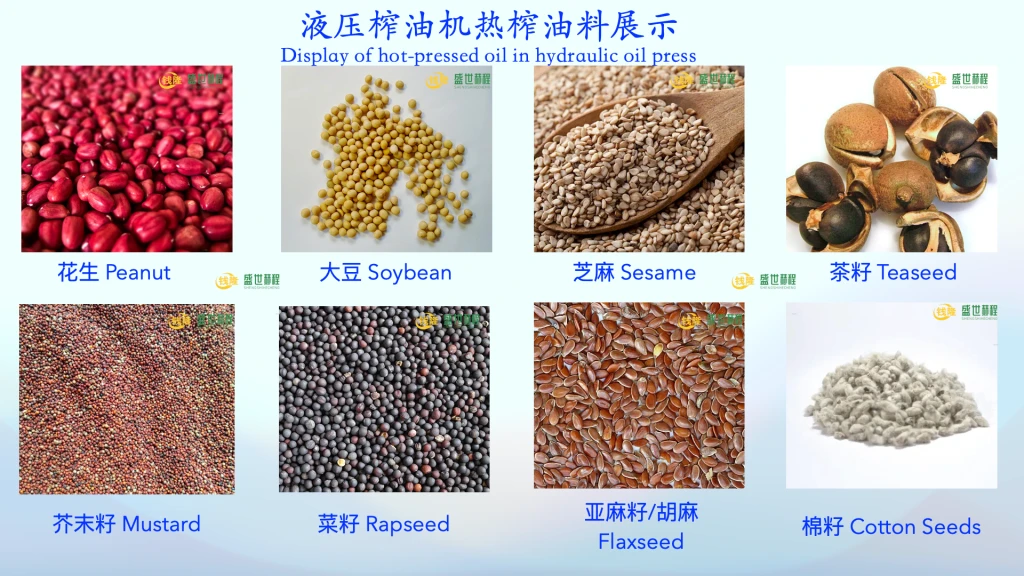
| Sesame | 42–52% | Hot | Roaster only; pressed in the 300 mm barrel, no pre-pressing |
| Peanut kernel | 42–52% | Hot | Pre-press machine, flat-bottom roaster |
| Sunflower kernel | About 43% | Hot | Pre-press machine, flat-bottom roaster |
| Rapeseed | About 42% | Hot or cold | Drum roaster, pre-press, steamer (hot) |
| Flaxseed | About 45% | Hot or cold | Roaster and grinding-mixing unit (hot); crusher (cold) |
| Walnut kernel | About 62% | Cold | High-speed crusher |
| Almond | About 53% | Cold | Pre-press machine or crusher |
| Desiccated coconut | About 62% | Cold | Mixer |
| Camellia (tea) seed | 15–35% | Hot | Drum roaster, crusher, steamer |
| Soybean | About 19% | Hot or cold | Pre-press and steamer (hot); crusher (cold) |
Sesame
Sesame holds 42–52% oil and roasted sesame oil sells at a premium, which is why most first-time buyers start with it. The seed costs more than peanut or sunflower and must be cleaned well; sand wears the barrel.
Peanut
Peanut kernels are widely grown, hold 42–52% oil and give the roasted oil many markets cook with. The line needs a sheller, a pre-press machine and a roaster in front of the press; see the peanut oil press page.
Walnut, almond and other nuts
Walnut (about 62% oil), almond (about 53%) and hazelnut (about 58%) are cold pressed after crushing, with very little other equipment. The oil sells at a high price, but kernels are expensive and buyers are fewer. These suit a premium or export business.
Coconut
Desiccated coconut holds about 62% oil and is cold pressed after mixing. Fresh coconut must be dried first, which adds a dryer to the line.
Sunflower, rapeseed and flax
Sunflower kernels (about 43%), rapeseed (about 42%) and flaxseed (about 45%) are mainstream cooking oils with lower prices per kilogram. They work well where the seed is cheap and local.
Soybean
Soybean holds only about 19% oil. A hydraulic press can press it, but most of the value is in the meal, and large soybean volumes are normally solvent-extracted. Press soybean only if you have a local market for the cake.
How to choose
- Year-round local supply at a stable price.
- A buyer for the oil at a price that covers the seed. Remember it takes about two kilograms of 50% seed to make one kilogram of oil.
- A buyer for the cake.
- Equipment you can afford in front of the press.
Related Reads
- How to Choose a Hydraulic Oil Press Machine
- Cold Pressed Oil vs Hot Pressed Oil
- Walnut Oil Press Machine Buying Guide
- Hydraulic Oil Press for Sesame Oil
FAQ
Which seed is best for a beginner?
Usually sesame or peanut, hot pressed on a 325. Both are widely available and the roasted oil has a ready market.
Which seeds are cold pressed?
Walnut, almond, hazelnut, cashew kernel, pumpkin seed and desiccated coconut, after crushing or mixing. Flax, rapeseed and soybean can be pressed either way.
Why is my yield lower than the oil content?
Oil content is what the seed holds. Some oil always stays in the cake, and preparation (roasting, moisture, particle size) decides how much.
Get a setup for your seed and output
Tell us which seeds you can buy locally. We will tell you which process and equipment each one needs.
Project planning
Configure the right oil press and production line
Send your oilseed, target output, bottle or packaging requirements, power supply, and destination country. We will match the machine, supporting equipment, and line layout.