
On this page
- What stays the same across all five models
- The one number that separates the models: pressing force
- Match the model to your oilseed
- Size for the cake, not just the bottle
- A higher-pressure option for the same machine
- Don’t forget the rest of the line
- Common selection mistakes
- FAQ
- Tell us your material and we’ll size the model
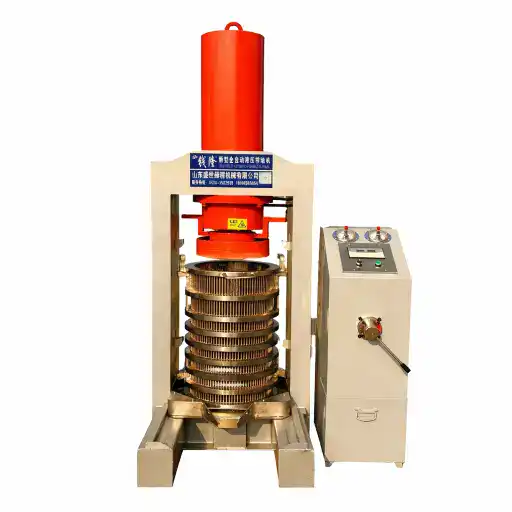
Once you have decided a hydraulic press is right for your premium cold-pressed oil, the next question is which one. Our cold-press range is five models — 355, 400, 426, 480 and 500 — spanning 370 to 630 tons of pressing force. They look similar and share the same barrel, so it is easy to assume the choice does not matter much. It does. The model you pick decides how hard a material you can press cold, how much oil you leave in the cake, and whether the machine still fits when your order book grows. This guide walks through how to choose, using the numbers that actually separate the models.
What stays the same across all five models
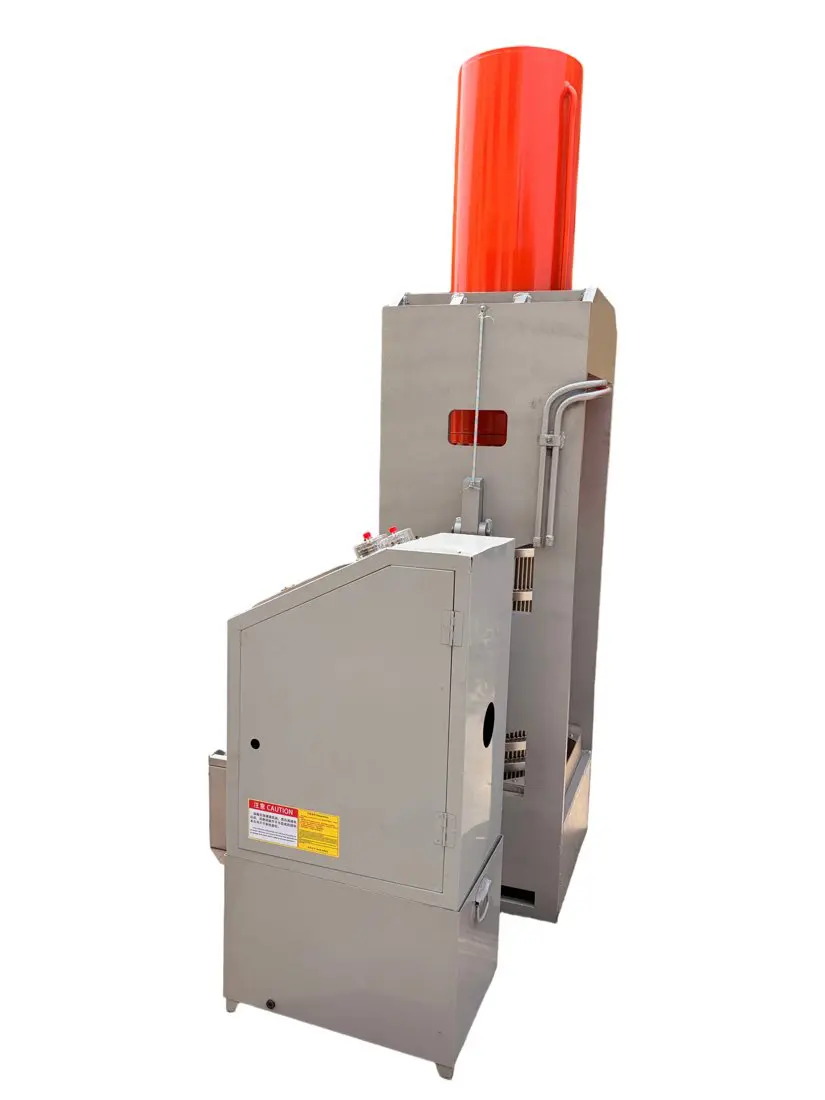
Before the differences, it helps to know what does not change. All five cold-press models use the same 100 kg barrel — 390 mm in diameter, 800 mm tall — and run at the same 60 MPa system pressure. They press the same way: load crushed material, apply steady batch pressure, hold, release. That means the press cycle and the batch size are the same whatever model you choose. One 100 kg barrel takes about 2 hours of pressing time, and a realistic working rhythm is around 4.5 hours for 2 barrels once feeding and cake unloading are included.
So you are not choosing capacity in the usual sense — every model presses the same 100 kg barrel. You are choosing how much force gets applied to that barrel, and that is what the rest of this guide is about.
The one number that separates the models: pressing force
The five models differ in pressing force, which in turn sets the cake surface pressure — the actual pressure pushing oil out of the material. Here is the full range:
| Model | Pressing force | Cake surface pressure | Machine weight |
|---|---|---|---|
| 355 | 370 tons | 31 MPa/cm² | ~1.9 t |
| 400 | 410 tons | 34 MPa/cm² | ~2.0 t |
| 426 | 500 tons | 42 MPa/cm² | ~2.2 t |
| 480 | 600 tons | 50 MPa/cm² | ~3.1 t |
| 500 | 630 tons | 53 MPa/cm² | ~3.3 t |
Higher pressing force does two things. It lets you press harder, oilier kernels without resorting to heat, and it drives residual oil in the cake down — across the range these models bring cake residual oil to about 5%, roughly 95% recovery, while staying cold. The question is how much force your material actually needs.
Match the model to your oilseed
Cold-press materials are not equally demanding. Soft, high-oil seeds give up their oil at lower pressure; hard kernels and shells need more force to press cold without heat doing the work.
Easier to press (355–400 is usually enough): sea buckthorn, perilla seed, flaxseed, hemp seed, pumpkin seed and similar softer or higher-oil materials. If this is your core product and your volumes are modest, the 355 or 400 gives you cold oil and good yield without paying for force you will not use.
Harder kernels (size up to 426–500): walnut, almond, pine nut and tea seed are dense, and shell or hard tissue resists pressure. These are exactly the materials where too little force leaves oil in the cake and tempts an operator to add heat — defeating the point of cold pressing. For a product built around these kernels, the 426, 480 or 500 buys the headroom to press them properly cold.
Mixed or future materials: if you expect to run several oilseeds, or are not sure yet what the product line will become, choose for the hardest material you might press, not the easiest. Pressing force is the one thing you cannot add later.
Size for the cake, not just the bottle
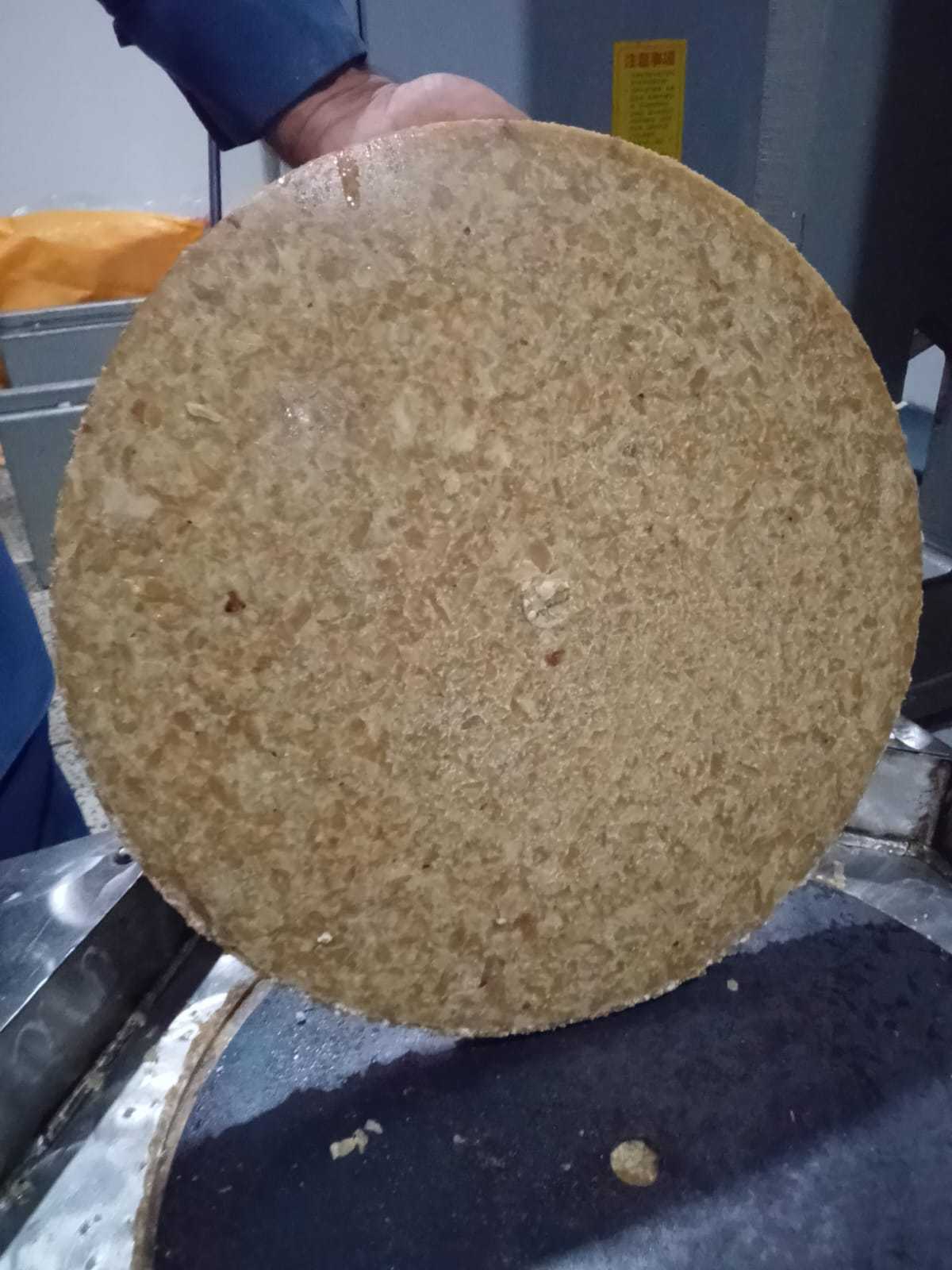
A common mistake is choosing a model purely on the oil you want today. The better signal is the cake. A cold-pressed cake should come out solid and dry, similar to a hot-press cake — that is the visual proof the pressure did the extraction, not heat. If your cake is greasy or soft, the press is under-powered for that material, and you are both losing yield and risking the temptation to warm the seed.
So when you weigh models, ask: will this force leave a dry cake on my hardest material? If you are pressing walnut or almond and looking at a 355 because it is the entry model, that is usually the wrong economy. The oil left in an under-pressed cake costs more over a year than the gap between two models.
A higher-pressure option for the same machine
If you need still more cake surface pressure than the standard configuration gives, these models can be run with a smaller 60 kg barrel charge, which raises cake surface pressure substantially for the toughest materials. It is a useful option when you are pressing a particularly hard or low-yield kernel and want to push recovery as far as cold pressing allows. If that is your situation, tell us the material and we will advise whether the standard 100 kg configuration or the higher-pressure setup fits better.
Don’t forget the rest of the line
The press is the core of a cold-press operation, but it is not the whole line. Cleaning, crushing and filtering all affect final quality and yield as much as the press model does. After pressing and filtration, oil typically moves to a filter and storage; ahead of the press, clean and correctly crushed material is what lets the press do its job. Choosing a bigger press while skimping on cleaning or filtering is a common way to undercut an otherwise good machine. Our cold-pressed oil processing equipment guide covers what the supporting line needs.
Common selection mistakes
Buying the entry model for hard kernels. The 355 is capable, but walnut, almond, pine nut and tea seed reward the higher force of the 426–500. Under-sizing force is the most expensive saving here.
Sizing only for today’s order. Pick a model with headroom in pressing force so a harder oilseed or a larger order does not outgrow the press in a year.
Confusing batch size with model. All five press the same 100 kg barrel — a bigger model number is more force, not more capacity per cycle. If you need more throughput, you add barrels and time or machines, not a higher force rating.
Treating the press as the whole line. Cleaning, crushing and filtering decide final quality alongside the press.
FAQ
What is the difference between the 355 and the 500?
Both press the same 100 kg barrel at 60 MPa system pressure. The difference is pressing force — 370 tons on the 355 versus 630 tons on the 500 — which sets cake surface pressure (31 vs 53 MPa/cm²) and therefore how hard a material you can press cold and how dry the cake comes out.
Which model do I need for walnut or almond?
These are hard kernels that benefit from higher pressing force. The 426, 480 or 500 is the usual choice; the 355–400 can struggle to leave a dry cake on the hardest kernels.
Do bigger models press more oil per batch?
No — every model presses the same 100 kg barrel per cycle. A higher model number means more pressing force, which improves recovery and lets you press harder materials, not a larger batch.
How much oil stays in the cake?
Across the cold-press range, residual oil in the cake is around 5% — roughly 95% recovery — when the model is correctly matched to the material.
Can one machine handle several oilseeds?
Yes. If you plan to run more than one material, size for the hardest one you will press, since pressing force is the property you cannot add later.
Tell us your material and we’ll size the model
Shengshi Hecheng builds hydraulic cold-press lines for premium, heat-sensitive oils, from small workshops to industrial plants. Send us your oilseed, your target daily output, and whether you are starting fresh or upgrading, and we will recommend a cold-press model from the 355–500 range and size the cleaning, crushing and filtering around it. If you are still deciding between a screw and a hydraulic press in the first place, our screw vs hydraulic comparison covers that choice in depth.
Project planning
Configure the right oil press and production line
Send your oilseed, target output, bottle or packaging requirements, power supply, and destination country. We will match the machine, supporting equipment, and line layout.