
On this page
- Hydraulic Oil Press vs Screw Press: Capacity, Efficiency and Real Production Comparison
- Introduction: Why This Comparison Matters
- What Is a Hydraulic Oil Press?
- What Is a Screw Oil Press?
- Core Difference: Batch vs Continuous Production
- Capacity Comparison (Real Production Logic)
- Capacity Comparison Table
- Oil Yield Comparison
- Oil Quality Comparison
- Labor and Operation
- Investment and Cost
- Application Scenarios
- Common Misunderstanding
- Final Conclusion
Hydraulic Oil Press vs Screw Press: Capacity, Efficiency and Real Production Comparison
Introduction: Why This Comparison Matters
When choosing an oil extraction machine, one of the most common questions buyers ask is:
Capacity comparisons between hydraulic and screw presses are often misleading because the two machines work in completely different ways. A screw press is designed for continuous material flow, while a hydraulic oil press is a batch system built for pressure control and premium output. That means buyers should not compare them using one simple kg/hour claim. This guide explains how to compare real production fit, labor rhythm, oil quality, operating logic and project suitability so you can choose the right route for a shop, workshop or factory.
👉 Should I choose a hydraulic oil press or a screw press machine?
Both technologies are widely used in the oil processing industry, but they are designed for completely different production goals.
Many buyers focus only on “capacity”, but in reality, capacity alone does not reflect true performance.
This article provides a real industrial comparison based on:
- Capacity
- Working method
- Efficiency
- Application scenarios
What Is a Hydraulic Oil Press?
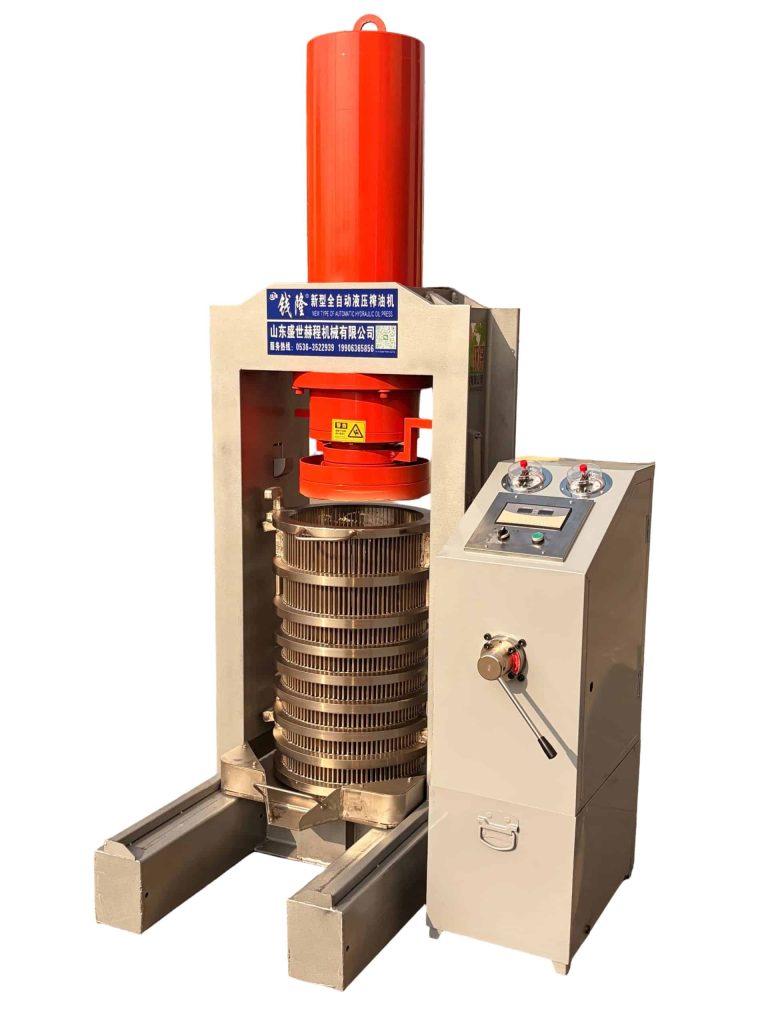
A hydraulic oil press uses high-pressure hydraulic force to compress oil-bearing materials in a closed chamber.
Key Features:
- Batch operation
- High pressure (up to 60MPa)
- Precise control
- Suitable for high-value oils
Typical materials:
What Is a Screw Oil Press?
A screw oil press (especially double screw type) uses continuous mechanical extrusion to extract oil.
Key Features:
- Continuous operation
- Large throughput
- Industrial-scale production
- Lower pressure, but constant compression
Typical materials:
- Palm fruit
- Soybean
- Sunflower
- Rapeseed
Core Difference: Batch vs Continuous Production
This is the most important difference.
| Type | Working Mode |
|---|---|
| Hydraulic press | Batch (one cycle at a time) |
| Screw press | Continuous (non-stop production) |
👉 Hydraulic = precision pressing
👉 Screw press = mass production
Capacity Comparison (Real Production Logic)
Hydraulic Oil Press
- ~60kg per batch (standard barrel)
- ~30kg for sesame
- 30–120 minutes per cycle
👉 Hourly output is limited by cycle time
Screw Oil Press
- 1–20 tons per hour
- Continuous feeding and discharge
👉 Designed for high throughput production
Capacity Comparison Table
| Machine Type | Working Mode | Typical Output |
|---|---|---|
| Hydraulic press | Batch | ~60kg per batch |
| Screw press | Continuous | 1–20 T/H |
Oil Yield Comparison
Hydraulic Press
- Very high oil extraction rate
- Residual oil very low
- Suitable for premium oils
Screw Press
- Slightly higher residual oil
- But much higher total output
👉 Hydraulic = maximize extraction per batch
👉 Screw = maximize total production
Oil Quality Comparison
Hydraulic Press
- Low temperature control
- Minimal damage to nutrients
- Ideal for cold pressing
Screw Press
- Higher friction and temperature
- Suitable for industrial oils
👉 Hydraulic is often used for high-end edible oils
Labor and Operation
Hydraulic Press
- Requires manual or semi-automatic operation
- Loading and unloading needed
Screw Press
- Fully continuous
- Lower labor requirement
Investment and Cost
| Factor | Hydraulic Press | Screw Press |
|---|---|---|
| Initial investment | Lower | Higher |
| Operating cost | Medium | Lower per ton |
| Labor cost | Higher | Lower |
Application Scenarios
Choose Hydraulic Oil Press If:
- You produce high-value oils
- You need cold pressing
- Your production scale is small to medium
Choose Screw Oil Press If:
- You run an industrial plant
- You need continuous production
- You process large volumes (palm, soybean, etc.)
Common Misunderstanding
“Hydraulic Press Has Lower Capacity” ❌
This is misleading.
Hydraulic presses have lower hourly throughput, but:
- Higher extraction precision
- Better oil quality
👉 It is not “worse”, it is designed differently
Final Conclusion
Hydraulic oil press and screw press machines are not competitors — they serve different purposes.
- Hydraulic press = precision, quality, high-value oils
- Screw press = efficiency, scale, industrial production
👉 The right choice depends on your material, production scale, and business model.
If you are not sure which machine is suitable for your project, we can help you choose based on your raw materials, capacity requirements, and budget.
👉 Contact us now to get:
- Machine comparison advice
- Capacity calculation
- Customized solution
The Hybrid Approach
Some operations use both: a screw press for the first pass (pre-press to ~12-15% residual oil in cake), then feed that pre-pressed cake into a hydraulic press for a second cold extraction. This maximizes yield while keeping reasonable throughput. Common in walnut oil and high-end peanut oil production.
Why More Oil Businesses Are Switching to Hydraulic Oil Press
In recent years, global oil consumers are shifting toward:
- Healthy food
- Cold pressed oil
- Organic oil
- Natural nutrition
This market trend strongly favors hydraulic oil press technology.
That’s why more oil mill owners, especially in Europe, Southeast Asia, Middle East, and Africa, are upgrading from screw presses to hydraulic systems.
FAQ
Which is better for real batch production?
For premium batch production, 325 hydraulic oil press is usually the more practical answer.
Which is better for continuous capacity?
Screw press is usually more suitable when the real target is continuous output rather than batch quality.
Which model is best for a small business?
For a small fresh-oil or shop business, Korean type or KHOP small hydraulic models are usually the better starting point.
Get a real production recommendation
If you send your raw material, daily capacity target, and whether you want shop retail, premium batch production, or continuous larger output, we can recommend the right machine and quotation direction. You can also review our Korean type small hydraulic oil press machine, 325 hydraulic oil press machine, or go to Contact Us to request a quote.
Related resources
- Hydraulic Oil Press Machine Price by Model
- Sesame Oil Production Guide
- Hydraulic vs Screw Press for Sesame Oil
Korean-Type Hydraulic Press in Operation
This original factory video shows a stainless-steel Korean-type hydraulic press during batch operation. Use it as a visual reference; confirm the quoted model, material, batch load, and output separately.
FAQ
How should buyers compare hydraulic press capacity with screw press capacity?
Do not compare only headline kg/hour numbers. For hydraulic presses, calculate batch load, cycle time, loading labor and shift hours. For screw presses, compare continuous feed rate, pretreatment requirements and downstream filtration load. A fair comparison must include the full production rhythm.
Which press is more efficient in real factory use?
A screw press is usually more efficient for continuous high-volume production. A hydraulic press can be more efficient for premium batch processing where oil quality, lower heat damage and cleaner output are more important than continuous throughput.
Which type is better for sesame, walnut or other premium oils?
Hydraulic pressing is often preferred for premium oils such as sesame and certain nut oils because buyers value aroma, color and cleaner output. Screw pressing is typically stronger for projects where the main goal is larger continuous capacity.
What is the biggest mistake buyers make in this comparison?
The biggest mistake is choosing by machine type before defining the business model. Buyers should first decide whether the project is premium bottled oil, shop retail, pilot production or continuous factory processing. The best machine route becomes much clearer after that.
Recommended Related Pages
- Screw vs Hydraulic Oil Press: Yield vs Quality Explained
- How to Choose Oil Press Capacity (Batch Size & Model Selection Guide)
- Hydraulic vs Screw Oil Press: Which Is Better for Your Oil Business?
- Screw Oil Press vs Hydraulic Oil Press: What’s the Difference?
Want a side-by-side recommendation for your raw material and output target?
Share your seed type, daily processing goal, labor plan and product positioning. We can tell you whether hydraulic pressing or screw pressing is the better production route for your project.
Project planning
Configure the right oil press and production line
Send your oilseed, target output, bottle or packaging requirements, power supply, and destination country. We will match the machine, supporting equipment, and line layout.