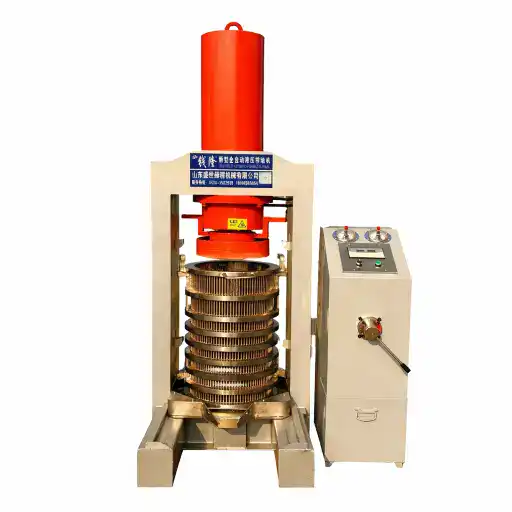
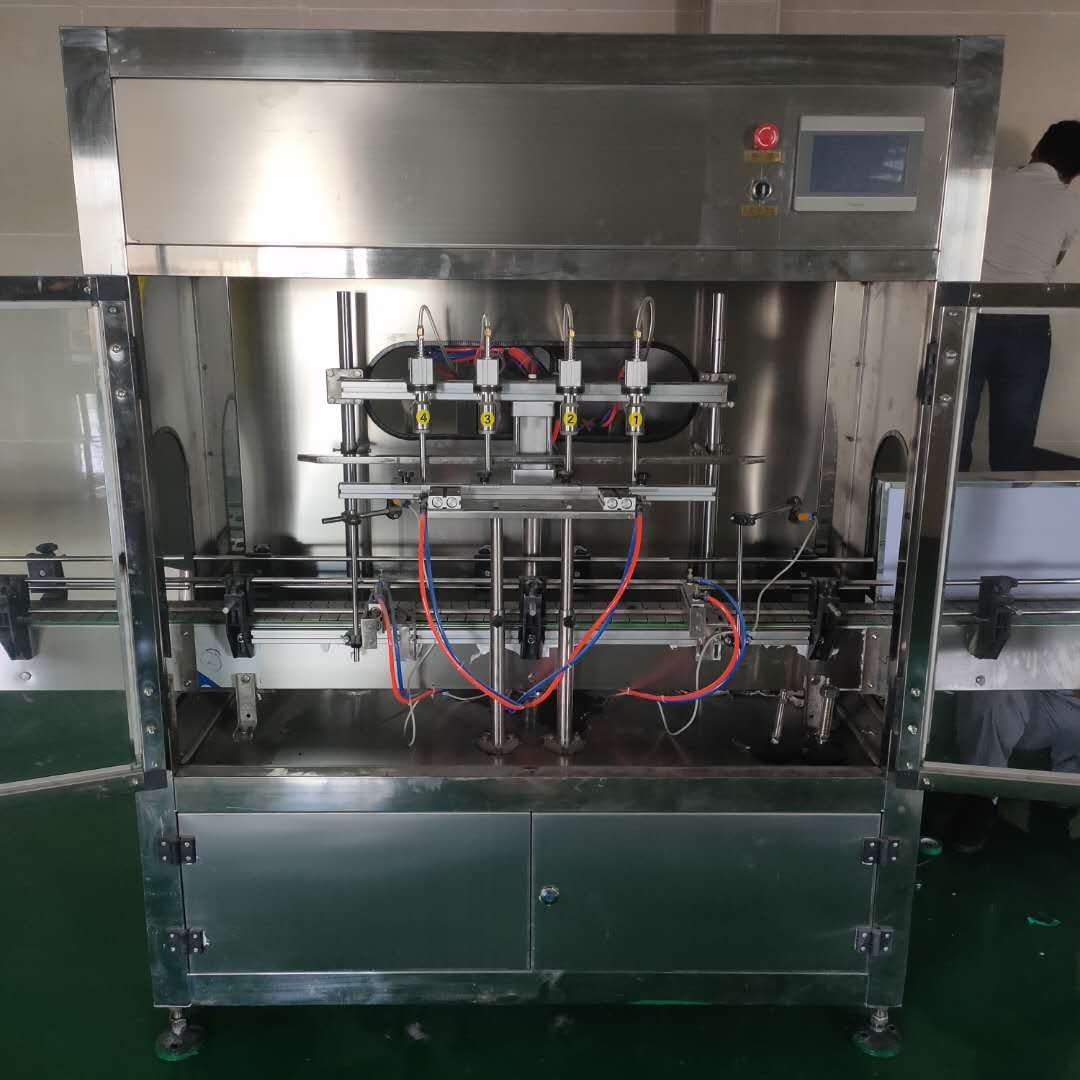
Automatic multi-head flow-meter filling
Measure edible oil flow as bottles move through an automatic line
This automatic filler uses flow measurement, PLC control, and staged fast/slow filling, with bottle positioning included when specified in the line configuration. The current page lists a typical 0.1–20 L range and configurations from 2 to 12 heads, but final performance depends on the liquid, meter, product feed, container, temperature, calibration method, and selected head count.
Measuring principle
Each filling circuit meters liquid flow and closes at its recipe target
Flow-meter filling is different from placing a container on a scale or opening a gravity valve for a fixed time. The source page describes independent heads, real-time flow measurement, dual-speed filling, anti-drip nozzles, and automatic temperature and density compensation.
The meter technology and compensation method are not published
The live page does not identify the flow-meter type, temperature sensor, density input, algorithm, calibration basis, or whether the target is uncompensated volume, corrected volume, or another quantity. Request these details in the technical proposal.
Application boundary
Match the meter and product path to the actual oil condition
The source lists soybean, peanut, sunflower, palm, cooking, lubricating, and industrial oils. These products can differ substantially in viscosity, temperature behavior, cleanliness, material compatibility, and sanitation requirements.
Edible oil bottling
Define oil type, filtration, fill temperature, food-contact requirements, cleaning method, bottle volume, and required headspace.
Temperature-sensitive oils
Palm oil and other products that thicken or solidify require a confirmed operating-temperature and product-conditioning plan.
Lubricating and industrial oils
Approve chemical compatibility, cleaning, contamination control, area classification, and the complete wetted-material schedule.
Bottles and drums
The source mentions both package classes but gives no neck, height, stability, or handling envelope. Each container needs a line trial and approved drawing.
Published technical data
Treat the current values as a configuration starting point
The source labels these parameters as typical and gives no numerical line-speed specification. It also omits the test liquid, fill target, temperature, pressure, meter model, calibration reference, bottle, head count, and sample basis behind the accuracy statement.
| Parameter | Source-listed value | Buyer confirmation |
|---|---|---|
| Measuring principle | Flow-meter filling | Identify meter type, model, useful flow range, pressure drop, liquid compatibility, and calibration method. |
| Typical filling range | 0.1–20 L | Confirm every required fill volume with the selected meter, nozzle, bottle, and product condition. |
| Published filling accuracy | ±0.2% | Define the denominator, target, reference instrument, test liquid, temperature, pressure, head count, sample count, and whether this is accuracy or repeatability. |
| Filling-head configuration | 2–12 heads, customizable | Select head count from the tested fill cycle, bottle flow, maintenance access, and downstream line balance. |
| Filling speed | Customizable; no numeric rate published | Request bottles/hour for each target volume and product, including infeed, positioning, discharge, and changeover time. |
| Power supply | 220 / 380 V | Specify one final voltage, frequency, phase, connected load, breaker, and local electrical standard. |
| Controls | PLC with touch screen | Confirm hardware brand, recipes, calibration access, alarms, data functions, language, and integration signals. |
| Source-listed material | Food-grade stainless steel | Request the exact grade and surface finish for every wetted component; the source does not define the scope. |
| Compensation | Automatic temperature and density compensation | Confirm sensors, input method, correction basis, limits, calibration, and included software functions. |
The ±0.2% claim requires an agreed factory acceptance test
Do not apply the published value to every fill size and oil without evidence. Define the normal and boundary products, target volumes, product temperature, reference measure, fill count per head, startup state, allowable error calculation, and treatment of residual nozzle drips.
Existing operating video
Review the four-container automatic filling sequence
The source video shows an existing multi-head flow-meter filling machine in operation. Use it to discuss bottle positioning, nozzle movement, simultaneous filling, conveyor spacing, control placement, and the interfaces required before and after the filler.
- Compare the shown containers with the proposed bottle dimensions and neck openings.
- Confirm whether the video configuration matches the quoted head count and nozzle arrangement.
- Request a separate trial using the actual product and target fill volume.
- Use the final general-arrangement drawing for dimensions and service clearance.
Container compatibility
Approve every package at automatic line speed
- Bottle or drum material, volume, height, width, neck opening, rigidity, and dimensional tolerance
- Required net quantity, headspace, fill level, closure, and legal declaration basis
- Infeed orientation, pitch, guide-rail contact, positioning method, and container change parts
- Nozzle clearance, diving or fixed position if proposed, splash, foam, and drip behavior
- Changeover frequency and the tools, recipes, mechanical adjustments, and verification fills required
Liquid and product path
Define the stable condition entering each meter
- Oil name, density, viscosity curve, normal and boundary filling temperatures, and safety data
- Filtration level, entrained air, particles, crystallization, foaming, and product degradation limits
- Buffer tank, pump, inlet pressure, recirculation, heating or insulation, and low-level response
- Meter, valve, nozzle, pipe, hose, seal, gasket, and tank-contact materials
- Cleaning method, drainage, product recovery, cross-contamination control, and changeover validation
Controls and calibration
Make every head traceable to a defined recipe
- Record meter identity, calibration factor, target, fast/slow transition, cutoff correction, and nozzle assignment.
- Verify each head separately at startup, after cleaning, after maintenance, and after product or temperature changes.
- Define bottle-missing response, low-product alarm, meter fault, overfill handling, and line-stop signals.
- Confirm user access levels, recipe backup, language, calibration protection, and required production records.
- Request an electrical and I/O schedule for connection to bottle feed, capper, labeler, and upstream storage.
Independent heads still share process conditions
Separate meters and valves allow individual control, but all heads can be affected by common product temperature, supply pressure, entrained air, tank level, cleaning state, and conveyor behavior. The acceptance test should review both head-to-head balance and the complete line.
Line integration
Connect liquid dosing to closure, labeling, and final packing
The source lists conveyor transfer, automatic bottle positioning, capping and sealing, labeling, and packing as configurable modules. Their inclusion, speed, controls, and change parts must be itemized in the proposal.
Before and immediately after filling
- Filtered or refined oil buffer and controlled product feed
- Empty-bottle unscrambling or manual feeding
- Container detection, positioning, filling, and reject logic
- Optional liquid-nitrogen dosing only for a validated bottle and closure process
- Cap feeding, application, sealing, and closure inspection
Downstream packaging
- Label application, batch or date coding, and inspection
- Bottle accumulation and grouping for the shipping case
- Carton erection and bottle packing as separately defined functions
- Top-and-bottom carton sealing after the bottles are packed
- Case coding, weighing, palletizing, and dispatch as required
Maintenance and sanitation
Keep meters and nozzles clean, calibrated, and accessible
- Follow a product-approved cleaning and draining method for the complete wetted path.
- Inspect meter condition, valves, nozzles, seals, clamps, hoses, sensors, and moving assemblies.
- Verify calibration after meter, valve, controller, or product-path service.
- Protect clean components during disassembly and control recovered product and wastewater.
- Stock recommended meter, valve, seal, nozzle, sensor, belt, and controller service parts.
Safety and access
Review the complete automatic cell
- Confirm guarding, emergency stops, interlocks, electrical protection, alarms, and lockout points.
- Assess hot product, slippery oil, pressure, moving conveyor, nozzle, and pinch-point hazards.
- Provide safe access for cleaning, calibration, bottle changeover, reject removal, and maintenance.
- Specify area classification and chemical controls where non-food industrial liquids are filled.
- Use the delivered manuals and site risk assessment rather than webpage descriptions as operating instructions.
Buyer configuration checklist
Send the complete product, package, and line-speed matrix
- Every oil or liquid, density, viscosity and temperature range, hazard data, and cleaning method
- Every fill volume, container drawing or sample, neck, cap, label, and required headspace
- Required bottles/hour for each product-volume pair and planned operating schedule
- Accuracy definition, reference instrument, fill count per head, and acceptance protocol
- Upstream tank, pump, filtration, temperature control, pipework, and available pressure
- Required head count, bottle feeding, capping, labeling, coding, nitrogen dosing, and carton scope
- Voltage, frequency, phase, compressed air if required, layout, destination, and documentation
Ask for a line-balance table, not only a head count
A 12-head configuration is not automatically the right answer. The proposal should show the measured filling cycle, container handling, capper and labeler rates, accumulation, changeover time, and expected output for each product and package.
Related packaging equipment
Complete the automatic bottle route
Define the automatic filler from real product and package trials
Send the oil data, temperature range, bottle matrix, target output, acceptance method, upstream product supply, downstream equipment, utilities, layout, and destination country.