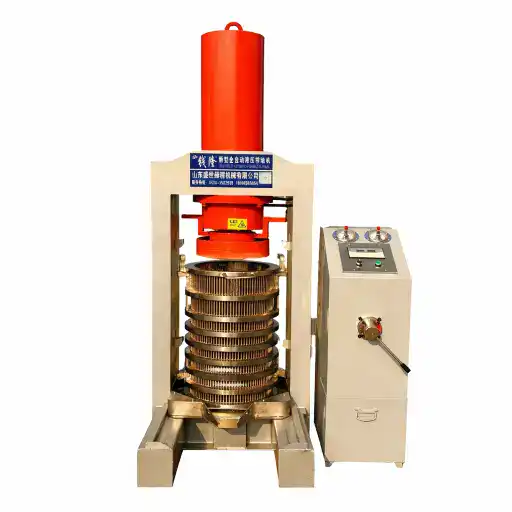
Modular sesame pre-cleaning line
Assign each impurity to the separation method that can remove it
A commercial front end may combine receiving inspection, size screening, air dust removal, gravity separation, optional washing, grading, and magnetic protection. The correct line is built from the incoming sesame sample; it is not automatically a fixed six-machine package.
Six decision stages
Use the six-stage architecture as a planning sequence
Some machines combine two functions and some stages are optional. The final equipment count should follow the impurity profile, required product, and workshop constraints.
The sample decides which stages remain
A dry, pre-cleaned supply may need screening and dust removal only. Sesame containing same-size stones needs gravity separation. Surface contamination may justify washing, which then adds water, drainage, sanitation, and drying or roasting requirements.
Impurity-to-machine matching
Do not ask one separator to solve every contamination type
Each method has a physical basis and a corresponding limitation. A useful proposal should state what every outlet collects and what the stage cannot reliably remove.
| Incoming issue | Typical separation method | Useful role | Important limitation |
|---|---|---|---|
| Stalks, leaves, shells, and oversized debris | Rough or upper-deck screen | Removes material clearly larger than the sesame. | Does not separate same-size stones by density. |
| Fine particles and undersize material | Lower screen deck | Separates fines below the selected mesh aperture. | Mesh must be chosen against the actual seed size. |
| Loose dust and light chaff | Aspiration or screening-machine fan | Uses airflow to remove lighter material. | Air setting must avoid carrying good sesame into the waste stream. |
| Stones and sand close to sesame size | Gravity destoner or density separator | Separates material using density and controlled airflow. | A normal size screen alone is not sufficient. |
| Broken or lightweight seed | Optional grading or density separation | Creates a more uniform feed where the finished product requires it. | Acceptable loss and grading target must be agreed from a sample. |
| Attached dust, soil, and surface contamination | Optional water washing | Cleans the seed surface after dry separation. | Adds water, wastewater, surface-water removal, and sanitation duties. |
| Ferrous fragments | Magnetic trap before the next machine | Provides a final ferrous-metal capture point. | Does not replace upstream inspection or non-ferrous separation. |
Dry front-end anchor
Start with screening and controlled air removal
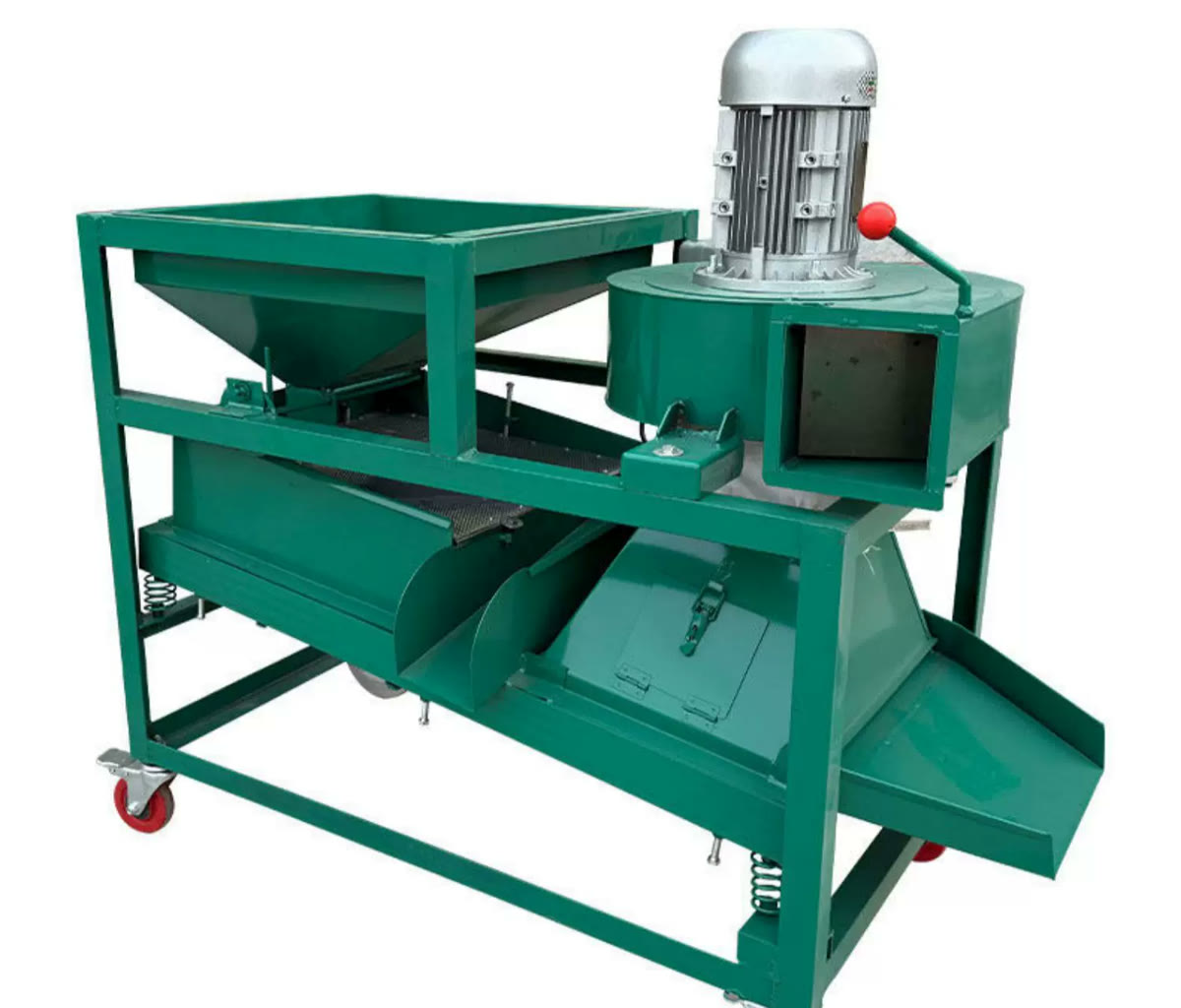
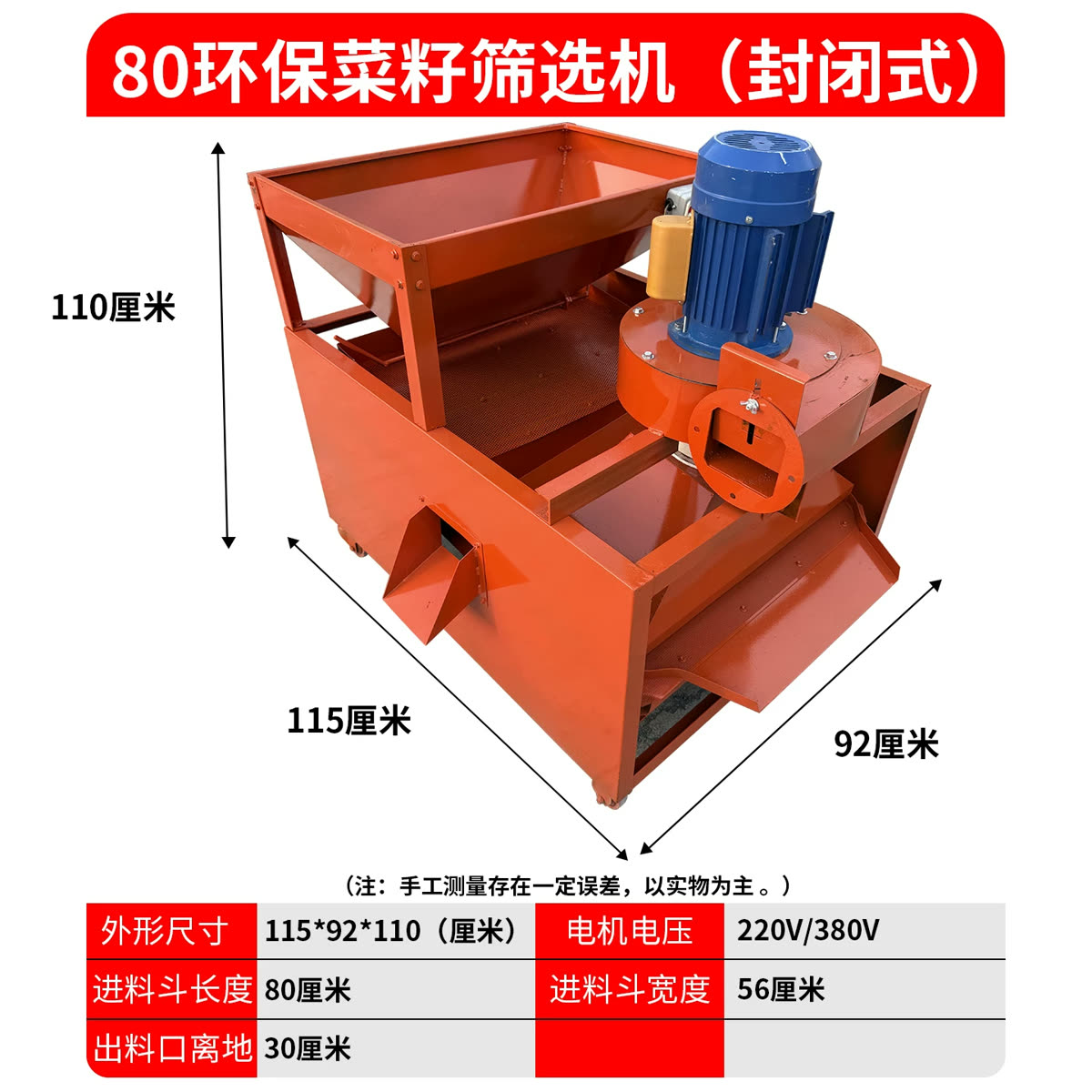
The site’s current oilseed screening machine combines a double-layer screen with a centrifugal fan. It separates oversized debris, qualified seed, fine material, and light dust through different paths.
- Closed type for greater enclosure around the screen deck
- Open fixed-screen type for one stable material and mesh
- Open removable-screen type for easier mesh changes
- Model 80 source-listed at up to approximately 1000 kg/h under suitable conditions
- 220V or 380V options on selected Model 60 and Model 80 configurations
Confirmed screening references
Use a known module as the starting point for line balance
These values come from the current screening-machine page. They describe the dry-screening module only, not the throughput of a complete pre-cleaning line.
| Configuration | Published maximum | Overall dimensions | Voltage | Screen arrangement |
|---|---|---|---|---|
| Model 60 closed | Confirm for material | 1150 x 700 x 1100 mm | 220V / 380V | Double layer |
| Model 80 closed | Up to 1000 kg/h | 1150 x 920 x 1100 mm | 220V / 380V | Double layer |
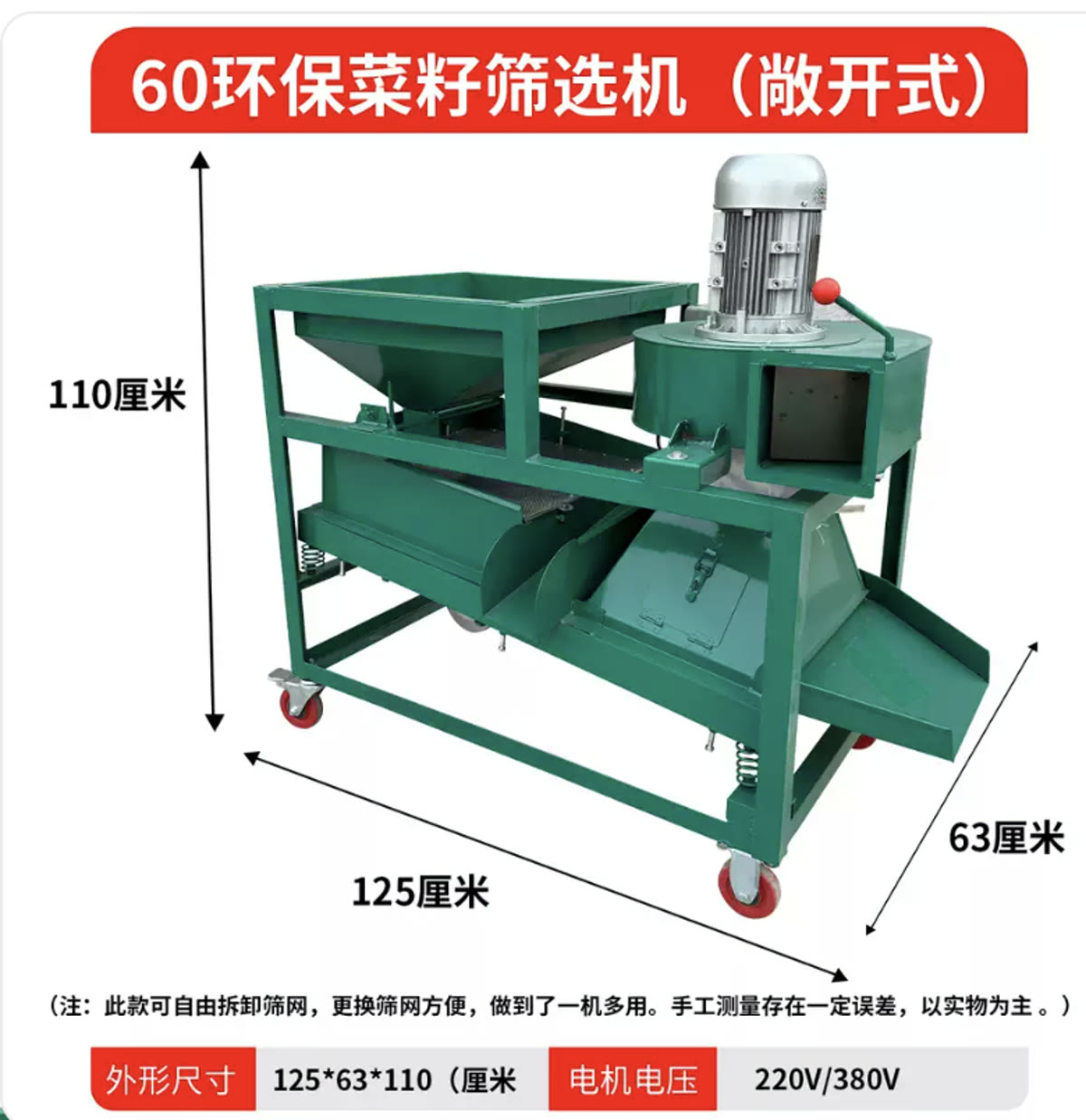
| Model 60 open removable | Confirm for material | 1250 x 630 x 1100 mm | 220V / 380V | Double layer, removable mesh |
| Model 80 open removable | Up to 1000 kg/h | 1420 x 830 x 1120 mm | 220V / 380V | Double layer, removable mesh |
Model number is a width class, not an hourly-capacity code
Model 80 does not mean 80 kg/h. The open removable-screen machine is approximately 83 cm wide, while the closed version is approximately 92 cm wide. Use the full dimensions when planning the workshop.
Optional wet branch
Add washing only after the dry line removes bulk debris
The documented sesame washer uses pneumatic feeding, spiral agitation in a water tank, bottom sediment discharge, and a draining trolley or trough. A separately powered dewatering module must be explicitly included if required.
- Define the contamination that water washing must remove
- Confirm washer contact materials and cleaning access
- Plan clean-water supply and dirty-water discharge
- Select passive draining or powered dewatering
- Match the washed-seed outlet to roasting or further drying
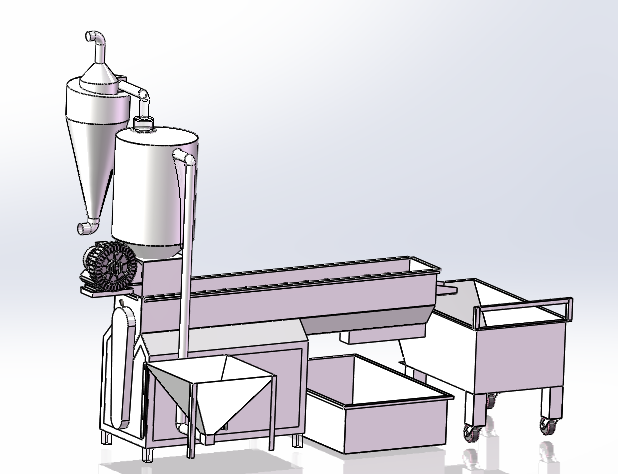
Line balancing
Size every stage from the same hourly schedule
The slowest effective stage sets the line output. Nominal nameplate capacity should be checked against impurity loading, moisture, screen aperture, product loss, cleaning stops, and material transfer.
Raw-material basis
Record clean-seed percentage, oversize, fines, dust, stones, metal, moisture, and variability between suppliers.
Stage-by-stage throughput
Ask for practical output on the sample, not only a maximum value measured on a different material.
Buffers and transfer
Use hoppers or controlled transfer where batch roasting and pressing do not run continuously at the same rate.
Cleaning downtime
Allow for screen changes, dust removal, sediment discharge, tank cleaning, magnet cleaning, and material changeover.
Equipment and material references
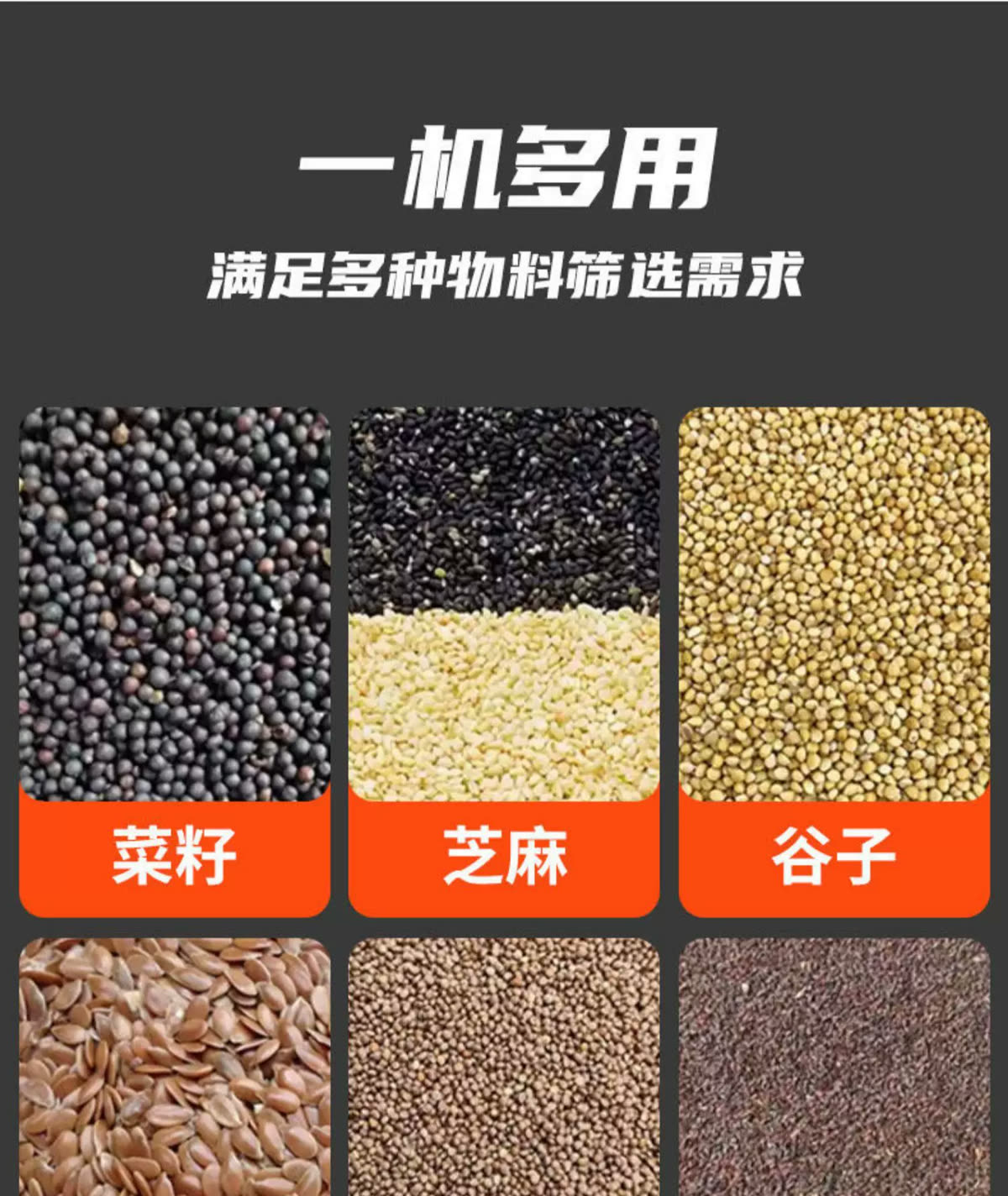
Plan the line with real machine envelopes and sample material
Workshop and utilities
Separate dry dust control from the wet sanitation area
- Receiving and raw-seed storage with sampling access
- Dust collection, bag cleaning, and safe waste removal
- Machine access for screen changes and gravity-table adjustment
- Drainage, sediment collection, and washable surfaces where water is used
- Clean transfer route from prepared sesame to the roaster or press section
- Electrical supply, earthing, isolation, and local environmental controls
Buyer configuration checklist
Send enough evidence to remove unnecessary stages
- Representative sesame sample and close photos of each impurity
- Supplier variation, incoming moisture, and current cleaning method
- Hourly input, daily operating hours, and future expansion plan
- Required clean-seed quality and acceptable good-seed loss
- Dry-only or wet-cleaning route and wastewater constraints
- Roaster or next-machine model, workshop dimensions, voltage, and destination
Related sesame equipment
Review each module before fixing the full line
Restored original media
Sesame pre-cleaning line video and original poster
The earlier line video and poster image are restored for quick process review.
Sesame pre-cleaning line video
Original operating reference restored from the earlier page.
Restored photographs
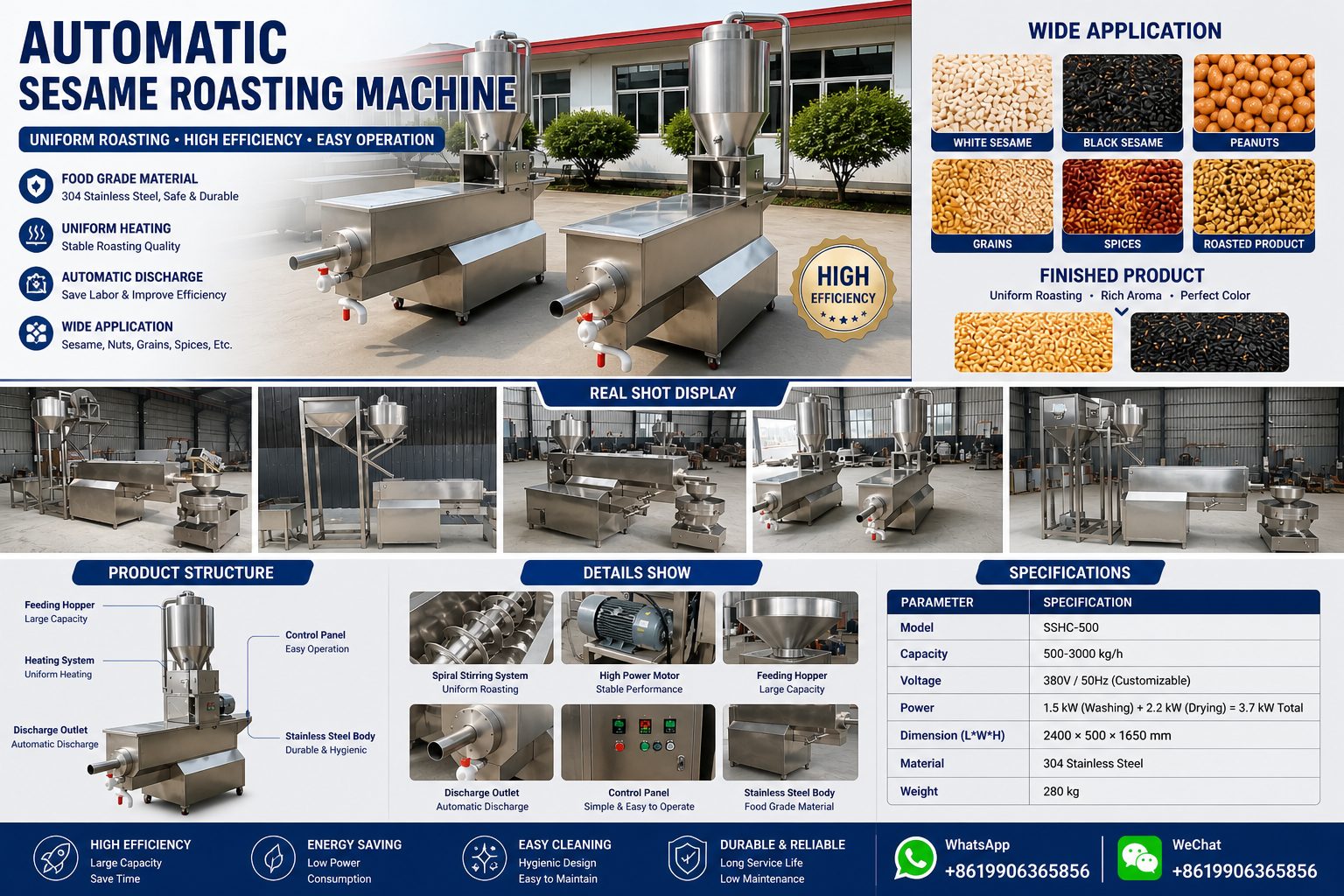
Sesame pre-cleaning line for sesame oil production — multi-stage front-end layout
Original photograph restored from the earlier page.
Turn the raw sesame sample into a stage-by-stage layout
Send the material sample, impurity profile, target hourly input, required clean-seed condition, dry or wet route, next process, workshop dimensions, utilities, and destination.