JML vertical wet colloid mill
Use a compact vertical drive where top feeding and service height fit the line
The JML arrangement uses a vertically mounted long-shaft motor to drive the rotor-stator grinding head. It is intended for wet grinding, emulsification, homogenization, and mixing of prepared liquid or semi-liquid material.
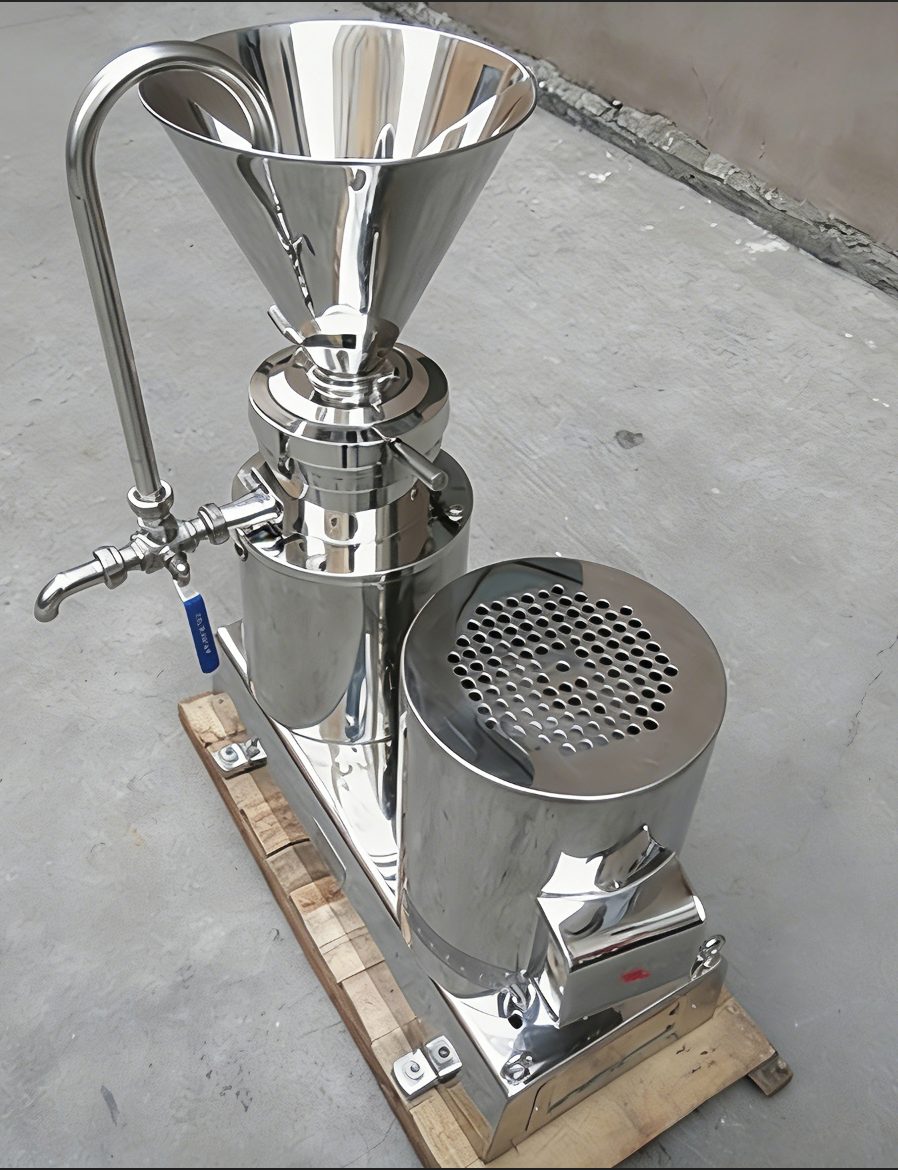
Confirm the ordered JML from current production evidence
The genuine site photograph above shows the stainless colloid-mill family, not the final JML vertical model. Ask for current factory photos, nameplate data, a general-arrangement drawing, port positions, disassembly clearance, and the exact motor-to-head construction before approval.
Application boundary
Match the vertical feed path to the prepared product
The current page lists peanut butter, sesame paste, chili sauce, fruit jam, cosmetic cream, and chemical slurry. A product name alone is not enough: flow behavior, particle size, hardness, temperature, and cleaning requirements determine whether the machine can feed and discharge reliably.
Appropriate process
Wet or semi-fluid rotor-stator milling
- Prepared feed that can move through the inlet under the planned conditions
- Controlled single pass or return-loop circulation
- Gap and pass count established through product trials
- Cooling and temperature control specified for the formulation
Outside the default scope
Dry cake, whole hard feed, and uncontrolled debris
- Dry cocoa press cake requires a powder grinder and screen
- Glass, quartz sand, metal, and stones can damage the rotor and stator
- High-viscosity or fibrous products require a feeding and circulation trial
- Do not assume one gap setting covers changing recipes or temperatures
Source-described arrangement
Direct long-shaft drive beneath a top-fed grinding head
- The current page describes a vertical motor driving the rotor teeth through a long shaft.
- The source states that the rotor weight limits axial movement and no additional axial positioning is required; confirm the actual bearing and shaft design in the drawing.
- Rotor, stator, and mechanical seal are identified as the critical working parts.
- Material-contact parts are described as stainless steel, while the exact grade and finish are not listed.
Installation decisions
Trade floor footprint for vertical loading and service clearance
- Confirm hopper height, safe loading method, outlet elevation, and receiving-vessel position.
- Allow sufficient height and lifting access for grinding-head, shaft, seal, and motor service.
- Define whether product discharges directly or returns through a circulation line.
- Verify mounting holes, floor load, drain path, guarding, and operator access on the final GA drawing.
Operating sequence
Protect the direct-drive head through controlled wet startup
Source-listed JML references
Use these rows for preliminary connection and motor planning
The figures reproduce the current vertical-colloid-mill page. Capacity depends on feed preparation, viscosity, temperature, gap, pass count, and the agreed finished-product test.
| Model | Source-listed capacity | Power | Speed | Disc diameter |
|---|---|---|---|---|
| JML/B-50 | 0.01–0.2 t/h | 1.1 kW | 2825 r/min | Φ50 mm |
| JML/B-80 | 0.3–1 t/h | 3 kW | 2880 r/min | Φ80 mm |
| JML/B-100 | 0.5–2 t/h | 5.5 kW | 2900 r/min | Φ100 mm |
| JML/B-120 | 0.7–3 t/h | 7.5 kW | 2900 r/min | Φ120 mm |
| JML/B-140 | 1–4 t/h | 11 kW | 2930 r/min | Φ140 mm |
The source fineness labels are not an acceptance specification
The table lists “≥2 µm” and an adjustment range of 1–0.01 without defining the measurement method or the adjustment unit. Establish the required particle-size, texture, viscosity, or dispersion test from the actual formulation.
Published ports
Confirm inlet, outlet, and cooling connections on the order drawing
| Model | Source-listed inlet | Source-listed outlet | Source-listed cooling pipe |
|---|---|---|---|
| JML/B-50 | 1.25 in | 5/8 in | 1/8 in |
| JML/B-80 | 2 in | 1 in | 1/8 in |
| JML/B-100 | 2.5 in | 1 in | 1/4 in |
| JML/B-120 | 2.5 in | 1 in | 1/4 in |
| JML/B-140 | 2.5 in | 1.5 in | 1/4 in |
Specify thread or flange standard, mating fittings, valve locations, hose rating, cooling direction, and cleaning connections. Nominal port size alone does not prove that a viscous product will feed or discharge.
Published dimensions
Check footprint, height, and service space together
The current page lists the values below. Confirm dimension order, hopper inclusion, motor configuration, shipping condition, and lifting points from the final GA drawing.
| Model | Length | Width | Height | Source-listed weight |
|---|---|---|---|---|
| JML/B-50 | 270 mm | 270 mm | 650 mm | 50 kg |
| JML/B-80 | 360 mm | 360 mm | 820 mm | 100 kg |
| JML/B-100 | 410 mm | 410 mm | 960 mm | 150 kg |
| JML/B-120 | 410 mm | 410 mm | 960 mm | 160 kg |
| JML/B-140 | 500 mm | 500 mm | 1160 mm | 230 kg |
Flow and circulation
Confirm that gravity and the return path can handle the product
- Provide viscosity or flow behavior at the planned inlet temperature.
- State solids, largest particle, hardness, fibers, skins, and expected recipe changes.
- Confirm whether gravity feed is sufficient or a pump, agitator, heated vessel, or direct discharge is needed.
- Define pass count, return-line length, line diameter, valves, and sampling point through a product trial.
Cooling and controls
Control product temperature as part of the quality target
- Specify cooling-water quality, inlet temperature, pressure, flow, connection standard, and drainage.
- Record product temperature before and after each pass during testing.
- Confirm voltage, phase, frequency, motor protection, starter or panel, overload protection, and emergency stop.
- Define any tank, agitator, feed pump, transfer pump, temperature sensor, and interlock included in the scope.
Materials and cleaning
Choose full- or semi-stainless from a component schedule
- The source offers full-stainless and semi-stainless configurations.
- For semi-stainless models, it describes painted carbon steel in the frame and motor housing and stainless steel in material-contact parts.
- Confirm alloy grade, surface finish, weld treatment, seal materials, certificates, drainability, and cleaning chemicals.
- Document head disassembly, retained product, rinse verification, and changeover time during the sample trial.
Maintenance and safety
Protect the long shaft, seal, and grinding surfaces
- The source prohibits empty running and reverse rotation.
- Exclude glass, quartz sand, metal debris, and other hard particles.
- Use lockout before opening the head, motor, guard, piping, or electrical enclosure.
- Request spare rotor-stator parts, seal kit, gaskets, bearings, tools, and the approved dismantling procedure.
Quotation checklist
Information needed for a JML selection
- Product formulation, use, sample, and required finished result
- Feed size, solids, viscosity, temperature, and contaminant controls
- Required flow, hours, passes, circulation, and downstream transfer
- Loading height, service height, cleaning method, and contact materials
- Utilities, controls, workshop drawing, destination, and documentation
Ask for a controlled sample-trial report
Record the sample, preparation, model, gap-setting method, pass count, inlet and outlet temperatures, time or flow basis, finished-product test, and cleaning observations.
Related equipment
Compare arrangements before fixing the layout
Restored original media
Vertical colloid mill factory photograph
Original product photograph restored from the earlier page.
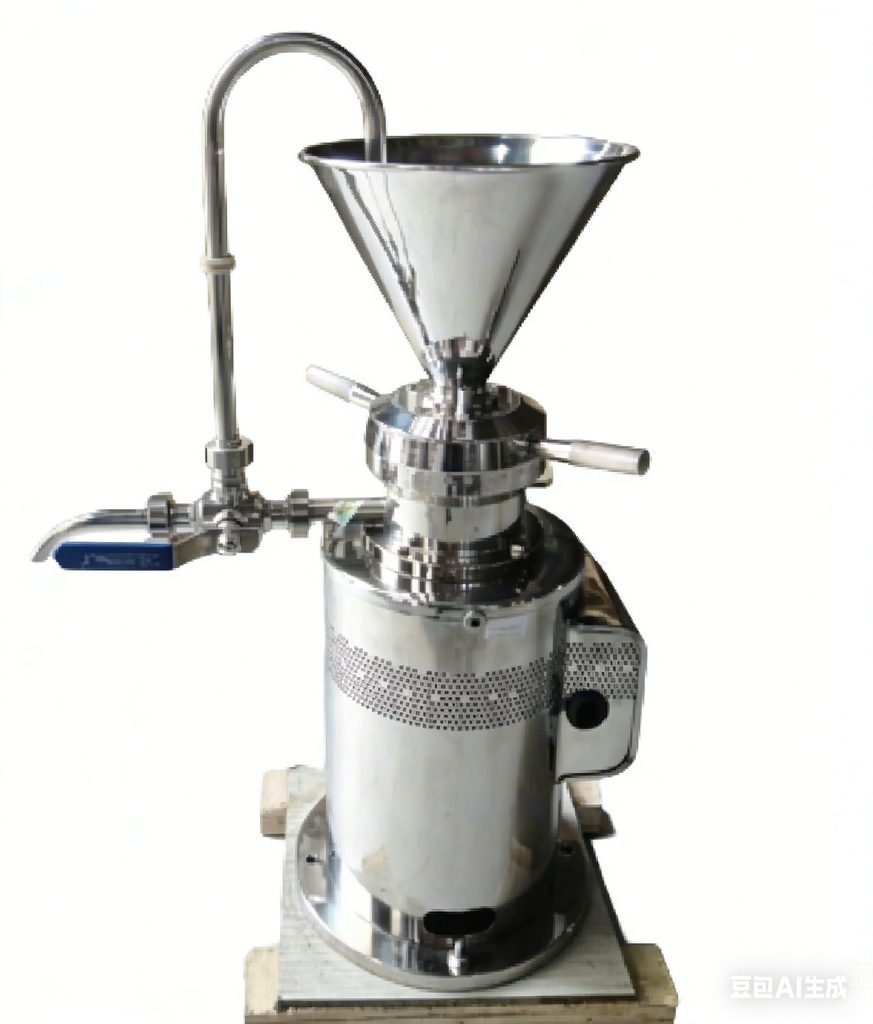
Vertical Colloid Mill
Original photograph restored from the earlier page.
Fit the vertical colloid mill to the feed, ceiling height, and cleaning method
Send the material, required result, flow basis, pass strategy, temperature limit, loading method, service clearance, utilities, cleaning standard, and destination.