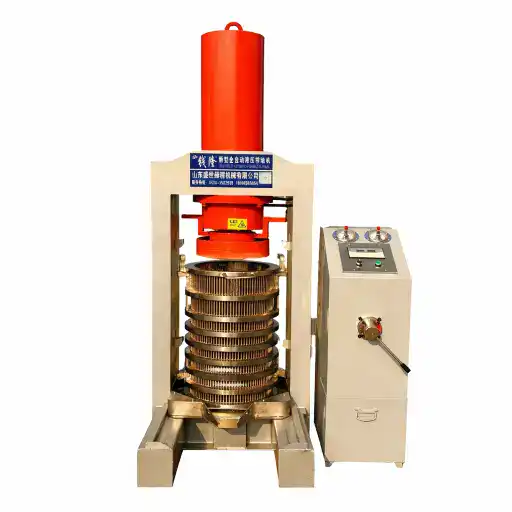
Hydraulic oil press model architecture
Read model code, actual force, barrel, and business scale as separate fields
The current catalog has two industrial families plus a separate small-shop range. A model number alone does not define press tonnage, practical batch, process route, dimensions, electrical package, supporting machines, or finished-oil output.
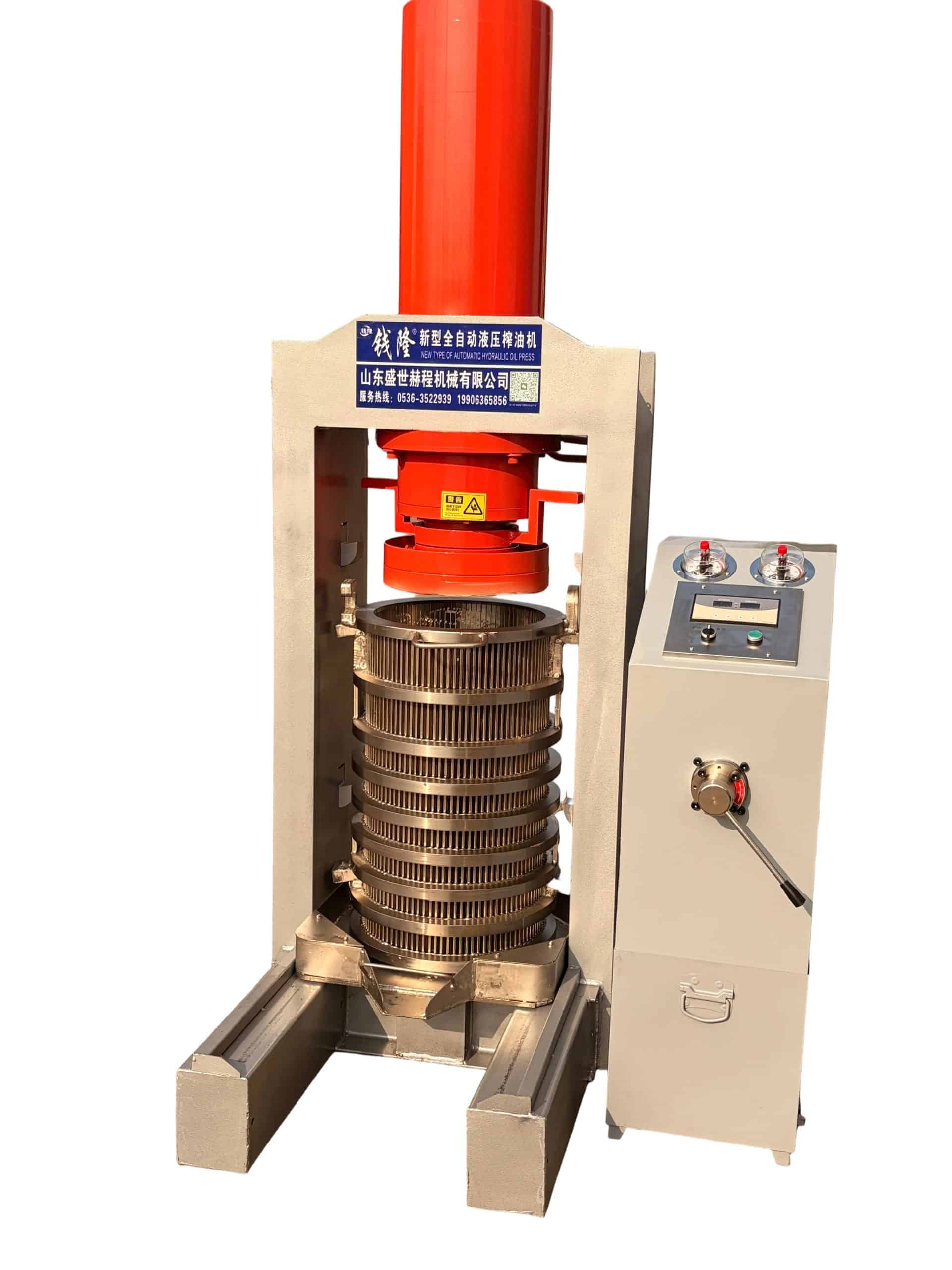
Canonical industrial model map
Seven model codes correspond to seven source-listed force values
The published product-family pages list one 60 MPa system pressure across the industrial range. Model code and down pressure match only for Models 300 and 325.
| Model code | Source-listed down pressure | System pressure | Current family | Published barrel routes | Published press-volume ranges |
|---|---|---|---|---|---|
| 300 | 300 tons | 60 MPa | 300 / 325 hot-press family | 390 x 800 mm or 300 x 800 mm | 5-100 kg or 5-60 kg |
| 325 | 325 tons | 60 MPa | 300 / 325 hot-press family | 390 x 800 mm or 300 x 800 mm | 5-100 kg or 5-60 kg |
| 355 | 370 tons | 60 MPa | 370-630 ton cold-press family | 390 x 800 mm or 300 x 800 mm | 5-100 kg or 5-60 kg |
| 400 | 410 tons | 60 MPa | 370-630 ton cold-press family | 390 x 800 mm or 300 x 800 mm | 5-100 kg or 5-60 kg |
| 426 | 500 tons | 60 MPa | 370-630 ton cold-press family | 390 x 800 mm or 300 x 800 mm | 5-100 kg or 5-60 kg |
| 480 | 600 tons | 60 MPa | 370-630 ton cold-press family | 390 x 800 mm or 300 x 800 mm | 5-100 kg or 5-60 kg |
| 500 | 630 tons | 60 MPa | 370-630 ton cold-press family | 390 x 800 mm or 300 x 800 mm | 5-100 kg or 5-60 kg |
The current family does not list a Model 380
The published cold-press codes are 355, 400, 426, 480, and 500. If a quotation or third-party listing uses another code, request the manufacturer’s drawing, actual force, cylinder basis, barrel, nameplate, and relationship to the current range.
Three product scales
Do not mix industrial models with shop-scale batch classes
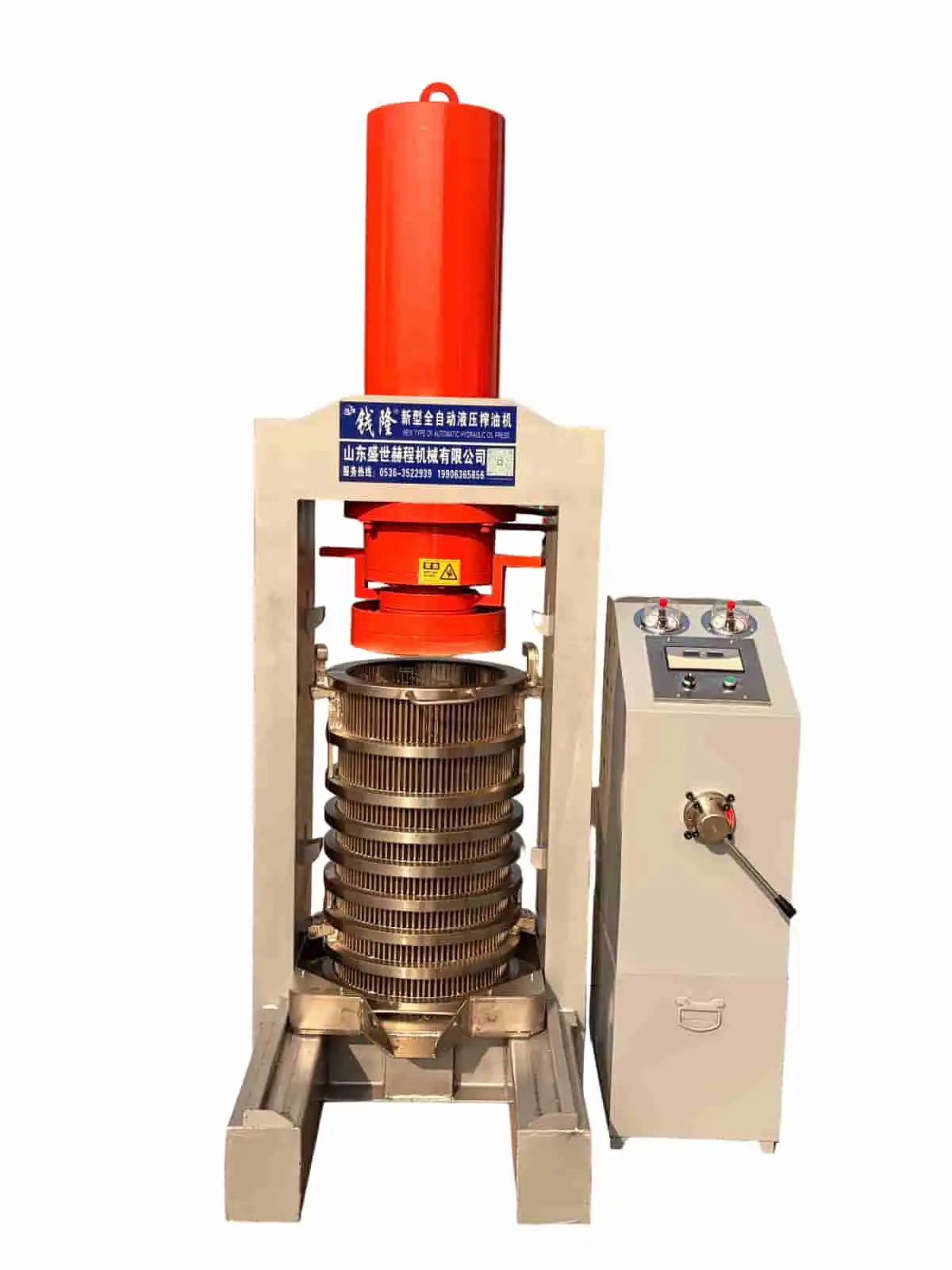
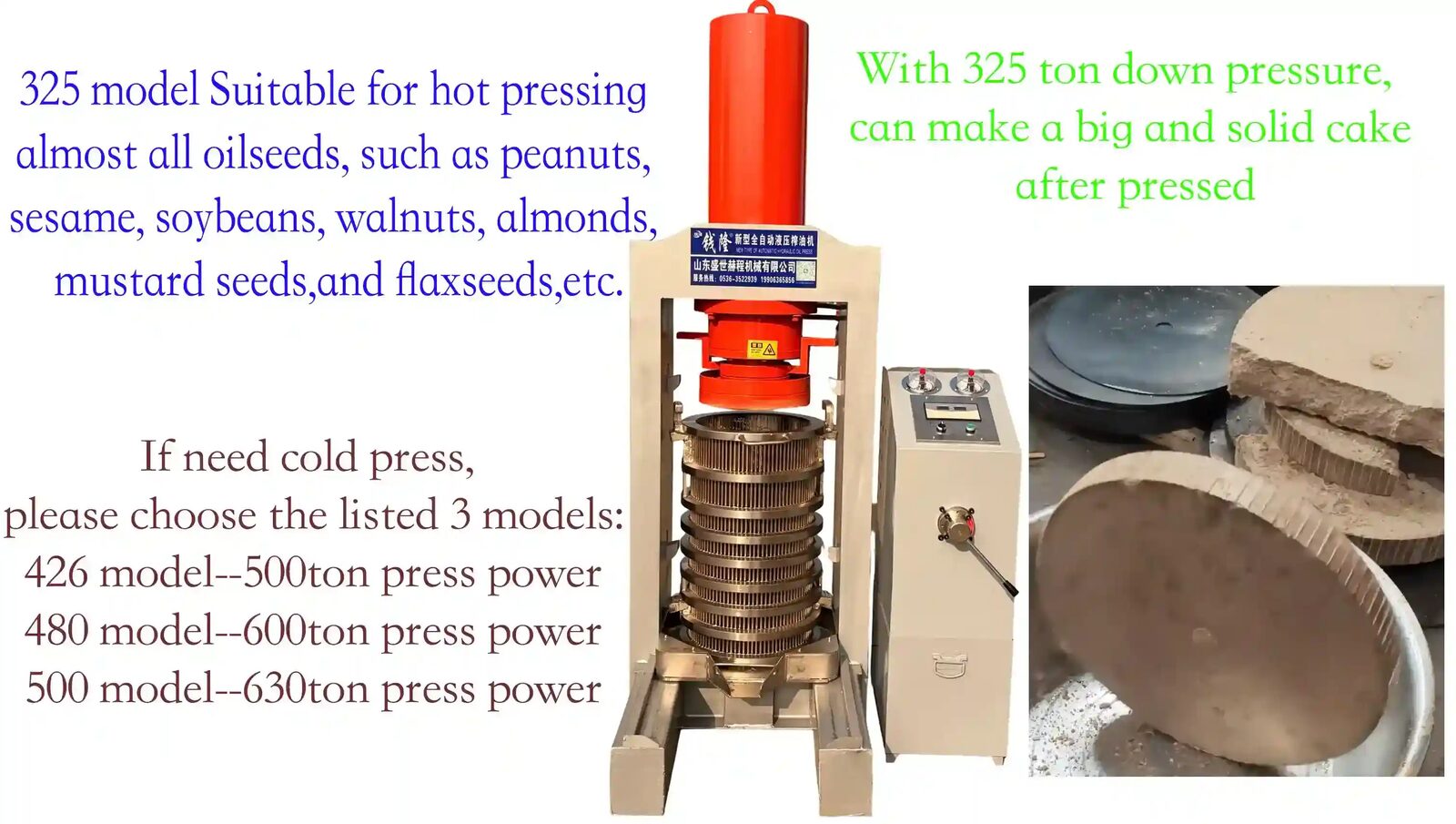
Models 300 and 325
The family is positioned around hot-press production with standard 390 mm and alternate 300 mm barrel options. The two model codes match their listed down pressure.
Open the 300 / 325 family →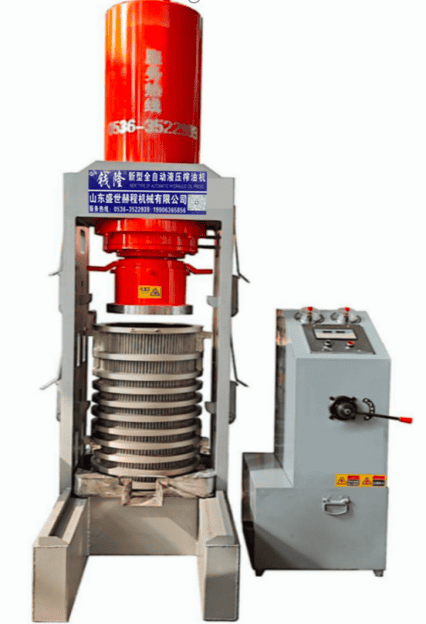
Models 355 through 500
The five codes cover source-listed 370-630 ton force. They retain the same two barrel-range choices while machine weight and listed cake surface pressure increase by model.
Open the cold-press family →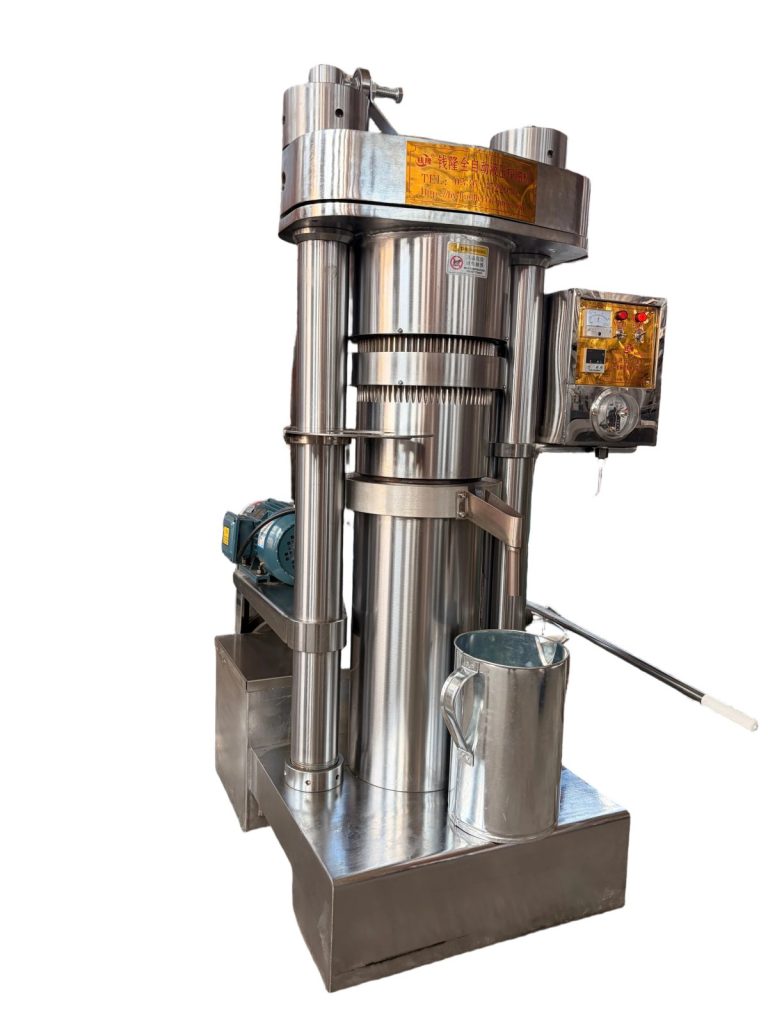
Small-shop and KHOP systems
The separate shop range is positioned around nominal 5-20 kg batches, including KHOP-10KG, KHOP-15KG, and KHOP-20KG pages. It is not a smaller row in the industrial tonnage table.
Open the small-shop family →Barrel architecture
The same model can appear with two different chamber routes
The product pages describe capacity as press volume for oilseed in crushed powder form. Whole-seed loading, different bulk density, or another material cannot be inferred from the maximum number.
390 mm diameter x 800 mm high
5-100 kg published press-volume range
This is the standard larger-barrel route on both industrial families. On the 300 / 325 page it is positioned as the standard hot-press configuration.
- Confirm usable volume and practical load with the actual prepared material
- Confirm cake layers, separator plates, drainage, cloth or wrapping method
- Confirm loading, pressure cycle, ejection, cleaning, and reload
- Use the model-specific size and weight row for site planning
300 mm diameter x 800 mm high
5-60 kg published press-volume range
This narrower route has higher source-listed cake surface-pressure entries and lower approximate machine weight. It is positioned as a cold-press option on the product pages.
- Verify whether the target material and temperature limit suit the chamber
- Request the cake-pressure calculation basis and correct engineering unit
- Confirm every supplied barrel accessory and cake-discharge arrangement
- Run a representative material test before selecting by pressure alone
What the table can answer
Use the model map to identify a test candidate
- Which current product family contains the model
- The source-listed down pressure and system pressure
- Which barrel ranges are published
- Which detailed product page contains dimensions and weights
- Whether a quoted code belongs to the current catalog
What the table cannot answer
Do not derive production performance from the code
- Practical loading density for a particular oilseed
- Oil recovery, quality, clarity, color, aroma, or residual oil
- Complete cycle time, daily output, labor, or utility consumption
- Whether the process meets a cold-press temperature specification
- Which preparation, filtration, cake, or packaging modules are required
Architecture-first selection logic
Move from process family to exact configuration
Oilseed is the starting point
Use a material route, not a universal model assignment
The same oilseed can be processed differently by market and product target. Open the dedicated guidance, define the feed and finished product, then confirm a material test with the candidate model and barrel.
System architecture
The press model is one node in the production line
Model selection must be balanced with raw-material preparation, batch staging, oil collection and filtration, cake removal, storage, and any refining or filling scope. A larger force code does not correct an undersized crusher, heater, filter, or operator workflow.
Configuration freeze
Put more than the model code on the order
| Order field | Required definition | Verification |
|---|---|---|
| Identity | Model code, actual force, serial-number method, and nameplate language. | Approved drawing, calculation basis, and pre-shipment nameplate photo. |
| Pressing chamber | Diameter, usable height, construction, separators, drainage, loading, and ejection. | Barrel drawing, accessory list, measurement, and representative test. |
| Hydraulics | System pressure, pump, motor, reservoir, oil, filtration, valves, gauges, hoses, and settings. | Schematic, component list, pressure and leakage test, and maintenance plan. |
| Electrical | Voltage, phase, frequency, connected load, controls, protection, language, and interfaces. | Electrical drawing, bill of materials, function test, and destination review. |
| Site | Dimensions, weights, center of gravity, lifting, floor, service clearance, and operator access. | General arrangement, packing drawing, and installation plan. |
| Performance basis | Material, preparation, batch, complete cycle, oil and cake tests, and acceptance criteria. | Signed material-test and factory-acceptance report. |
Detailed guides
Move from architecture to the exact decision
Restored original media
Hydraulic press-cake operating reference
The short cake-result video from the earlier model guide is restored below.
Hydraulic oil press machine video
Watch the Equipment in Operation
Request the model, force, barrel, and process as one configuration
Send the material, hot or cold route, target batch and daily input, oil and cake specifications, site data, destination, and required acceptance test.