
On this page
A hydraulic oil press is a simple, robust machine, but it is not maintenance-free. The frame and cylinder last for years; a handful of small parts wear out on a predictable schedule, and the operators who stock those parts ahead of time are the ones who never lose a production day. This guide lists the parts that actually wear, how often each one needs attention, and what to keep on the shelf so a worn seal never turns into a week of downtime.
Which parts actually wear out
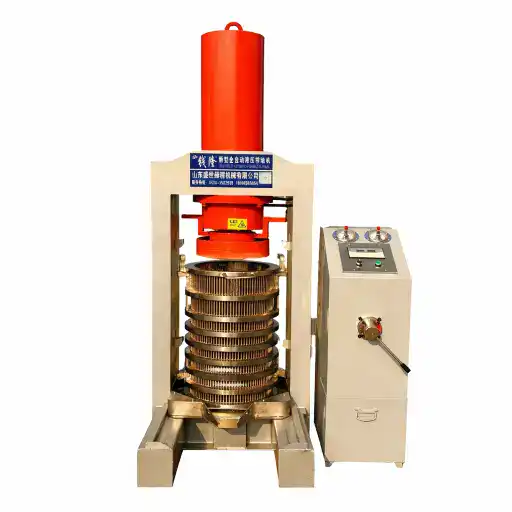
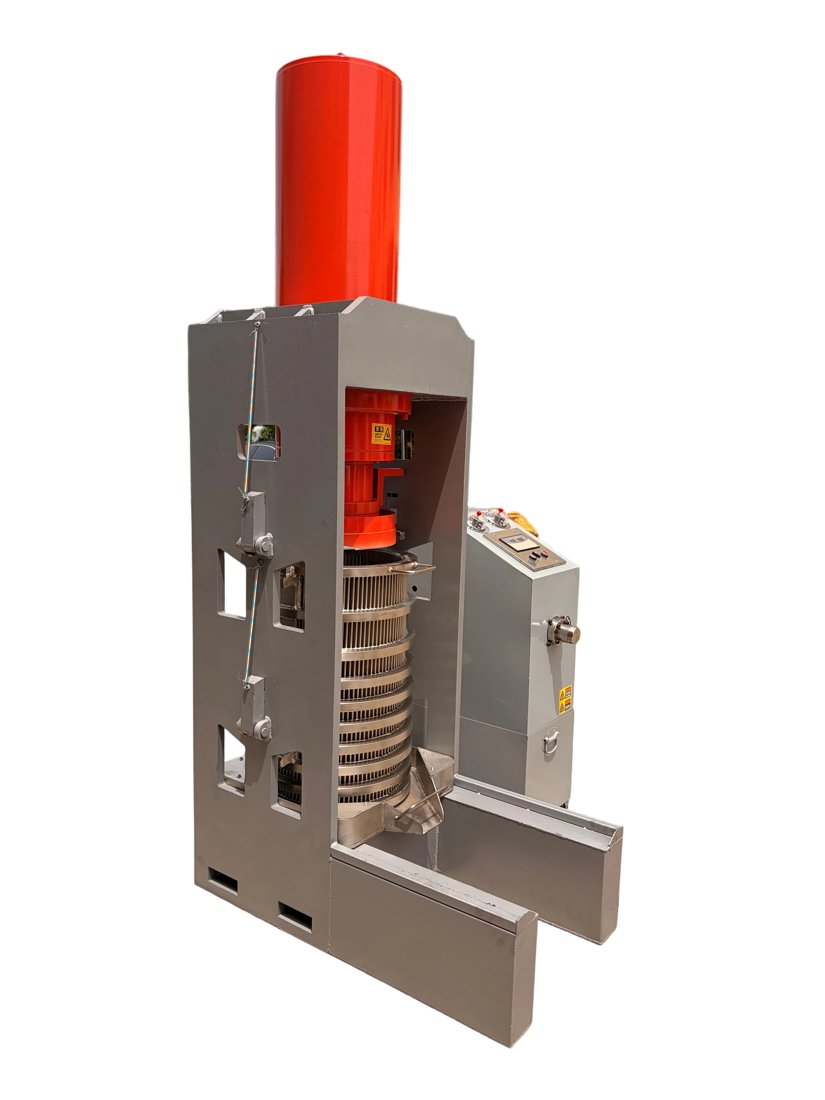
On a hydraulic batch press, the structural parts — frame, hydraulic cylinder, material barrel — are built to outlast the business. What wears is the small set of parts that move, seal, or take direct contact under pressure. Knowing this list is the whole game: it tells you exactly what to inspect and what to buy in pairs.
- Hydraulic cylinder seals — the single most important wear part. Worn seals are the usual cause of pressure loss and oil weeping around the ram.
- Hydraulic oil — a consumable, not a permanent fill. It degrades with heat and contamination and must be changed on schedule.
- Oil filter and suction strainer — protect the pump from grit; cheap to replace, expensive to ignore.
- Pressure gauges — drift or stick over time, which is exactly why our presses carry two.
- High/low-pressure relief valve — a mechanical (non-electric) valve that governs the pressing and return strokes; worth checking that it relieves at the right pressure.
- Steel separator plates — the carbon-steel plates between cake layers in the barrel. They are reusable, not a cloth consumable; inspect them for wear, scoring and flatness.
- Barrel cage bars and drainage slots — not a frequent replacement, but worth inspecting for scoring and blockage.
The maintenance schedule at a glance
Maintenance falls into four buckets by frequency. The daily and weekly items take minutes and prevent almost every avoidable failure; the longer-interval items are the ones worth putting on a calendar so they do not get forgotten.
| Interval | Task | Why it matters |
|---|---|---|
| Every batch / daily | Wipe the ram and barrel; clear cake residue; check oil level and for leaks; confirm both pressure gauges read the same | Catches seal and gauge problems early; keeps oil out of the product |
| Weekly | Clean the steel separator plates and barrel; check fittings for weeping; inspect the suction strainer | Protects oil clarity and keeps the pump fed with clean oil |
| Every 3–6 months | Change the oil filter element; inspect cylinder seals and the high/low-pressure relief valve; cross-check the two gauges against each other | Seal and filter wear shows here before it becomes a failure |
| Every 12–24 months | Change the hydraulic oil; replace the cylinder seal kit if pressure has drifted; service or replace gauges | Restores full working pressure and protects the pump and cylinder |
Hydraulic oil: the most over-looked consumable
Operators often treat the hydraulic oil as a permanent fill. It is not. Heat from continuous pressing, plus fine contamination, breaks the oil down over time — and tired oil quietly costs you working pressure and pump life. Change it roughly every 12 to 24 months under normal shop use, sooner if the press runs hard all day. Change the filter element at the same time, and top up only with clean oil of the same grade. A clean oil system is the cheapest insurance you can buy for the cylinder and pump.
Cylinder seals: where pressure goes to die
If a press slowly stops reaching full pressure, or you see oil weeping around the ram, the cylinder seals are the first suspect — long before anything more serious. Seals are inexpensive and are meant to be replaced; the smart move is to keep one full seal kit on the shelf so a worn seal is a planned half-day job, not an emergency. Inspect them at the 3–6 month check and replace the kit when pressure starts to drift below where it used to sit.
Why two pressure gauges help you maintain the machine
Our presses carry two pressure gauges, not one. One reads the high/low combined pump; the other reads the cylinder directly. In normal operation their needles move together — so the moment they disagree, you know something needs attention: a sticking gauge, a valve issue, or a seal starting to pass. A single gauge gives you no reference point and no warning when it fails. Treat the two-gauge cross-check as a free daily diagnostic: equal needles mean a healthy system, a gap means inspect before the next batch.
What to keep on the shelf
Stocking a small spares kit is the difference between a planned half-day of maintenance and a week of lost production waiting on parts. None of these are expensive; all of them are things that eventually wear.
- One full cylinder seal kit for your model
- A spare oil filter element and suction strainer
- Enough hydraulic oil for one full change of the same grade
- A spare pressure gauge matched to your system range
- Spare O-rings and hydraulic fittings/hose seals
Tell us your model and we will send the matching spare-parts list and seal-kit specification, so what you stock fits your press exactly.
Related Reads
- Filtering Pressed Oil: How to Choose Oil Filtration Equipment for Your Press
- How to Read Oil Press Pressure Specs: MPa, Tonnage & Cake Surface Pressure
- Hydraulic Oil Press Machine 300 & 325: The Hot-Press Workhorse Models Explained
- How to Choose a Cold-Press Hydraulic Oil Press: Models 355 to 500
FAQ
How often should I change the hydraulic oil?
Roughly every 12 to 24 months for normal workshop use, sooner if the press runs hard all day or in a hot, dusty environment. Always change the filter element at the same time and refill with the same grade of clean oil.
My press no longer reaches full pressure. What is the first thing to check?
Worn cylinder seals are the usual cause, especially if you also see oil weeping around the ram. Check the two gauges agree, then inspect and replace the seal kit. Tired hydraulic oil and a clogged filter can also drop pressure, so rule those out too.
Why does the machine have two pressure gauges?
One gauge reads the combined pump and the other reads the cylinder. Their needles should always match; when they do not, you have an early warning of a gauge, valve, or seal problem. The second gauge is also a built-in backup if one fails.
Which spare parts should I buy with the machine?
A cylinder seal kit, a spare oil filter element, one full change of hydraulic oil, a matching pressure gauge, and a set of O-rings and fitting seals. These cover almost every wear item and keep a small fault from becoming downtime. The carbon-steel separator plates are reusable, so they are inspected rather than stocked as a consumable.
Do hydraulic presses overheat during long runs?
Normally no — they are built for continuous work. A short rest after several batches is preventive good practice rather than a requirement. If a press does run hot, check the oil level, oil condition, and the filter first.
Additional Machine Reference
Project planning
Configure the right oil press and production line
Send your oilseed, target output, bottle or packaging requirements, power supply, and destination country. We will match the machine, supporting equipment, and line layout.