
On this page
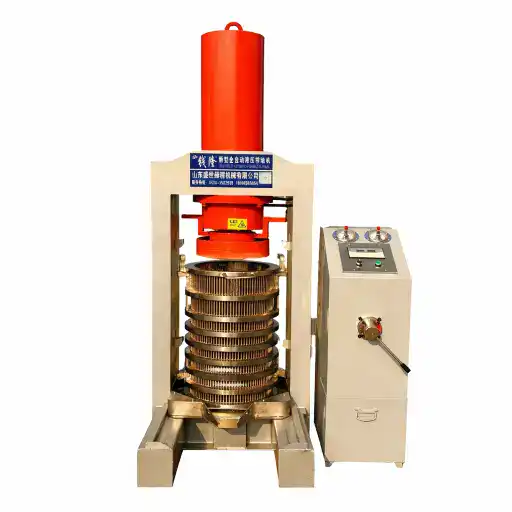
Most edible oils — sesame, peanut, soybean, rapeseed, sunflower — are pressed hot, not cold. Heating the seed before pressing raises yield, deepens flavor and color, and is exactly what buyers of traditional fragrant sesame or peanut oil expect. For hot pressing at a workshop or small-factory scale, our two workhorse models are the 300 and 325. This guide explains what these models are, how they differ, what they press, and which operation each one fits.
For the full model range, specs and selection logic, see our main hydraulic oil press machine guide.
What a hot-press hydraulic machine actually does
Hot pressing means the oilseed is heated — usually cooked or roasted in a steamer/wok stage — before it goes into the press. Heat breaks down the cell walls and lowers the oil’s viscosity, so more of it flows out under pressure. The trade-off is the opposite of cold pressing: you gain yield and aromatic, deep-colored oil, but you do not preserve the raw, unheated character that premium cold-pressed buyers pay for. For sesame paste oil, fragrant peanut oil and most commodity edible oils, hot pressing is the right and traditional choice.
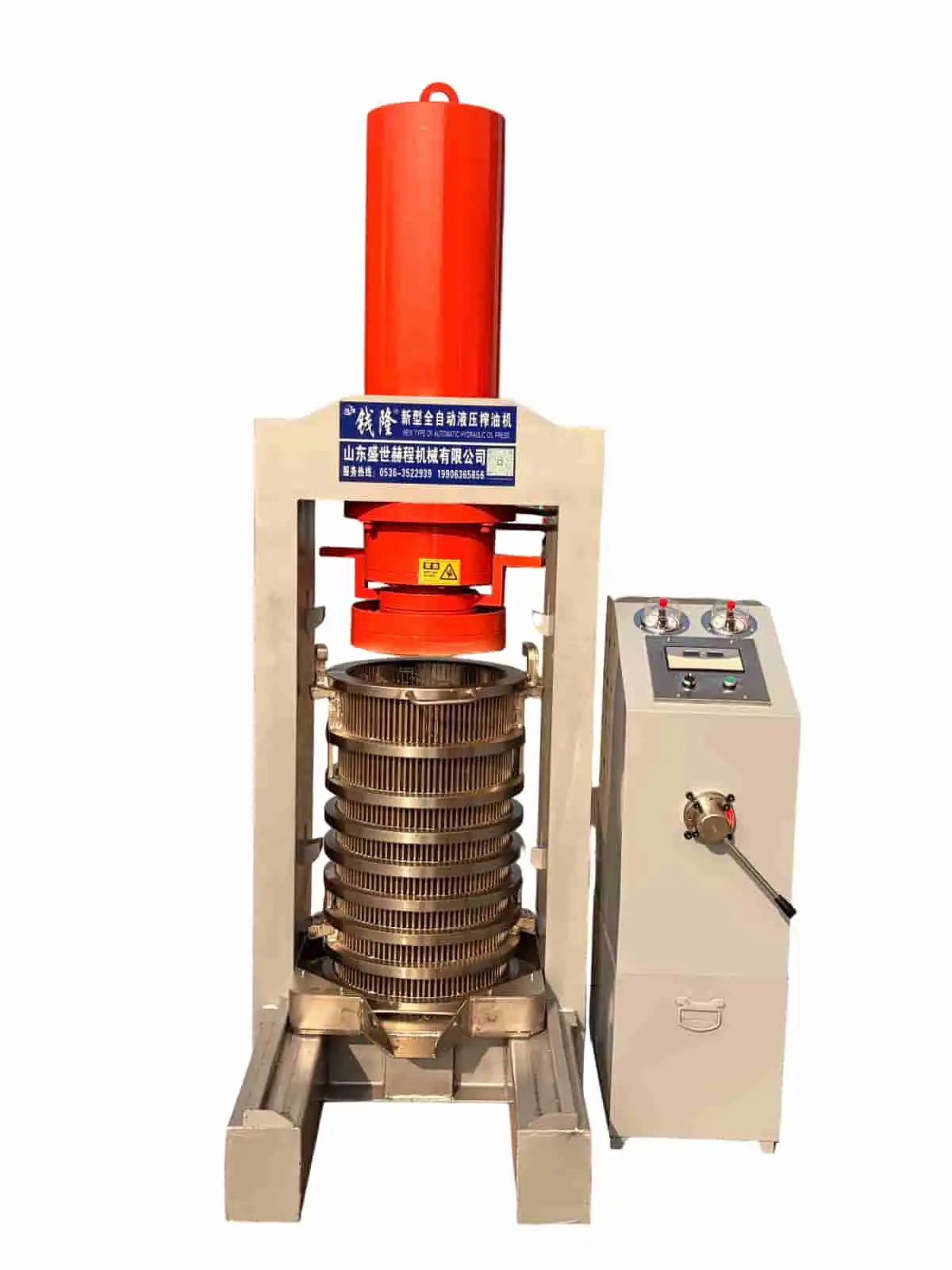
The 300 and 325 are hydraulic batch presses: crushed, heated material is loaded into a barrel, steady pressure is applied and held, then released. Because the press itself does not rely on continuous friction, it runs quietly on a small motor while still reaching high pressure.
300 vs 325: what is the difference?
The two models are nearly identical machines — same 390 mm × 800 mm barrel, same 60 MPa system pressure, same 5–100 kg barrel charge, same tiny 2.2 kW motor. The difference is pressing force: 300 tons on the 300, 325 tons on the 325, which gives the 325 a slightly higher cake surface pressure (27 vs 25 MPa/cm²) and a little more weight. In practice the 325 is the more popular choice because the extra force costs little and gives more headroom on tougher or higher-yield materials.
| Model | Pressing force | Barrel (dia × height) | Barrel charge | Cake surface pressure | Machine weight |
|---|---|---|---|---|---|
| 300 | 300 tons | 390 × 800 mm | 5–100 kg | 25 MPa/cm² | ~1.3 t |
| 325 | 325 tons | 390 × 800 mm | 5–100 kg | 27 MPa/cm² | ~1.4 t |
What the 300/325 can press
These models handle most common oilseeds: sesame, tea seed, walnut, peanut, soybean, flax, rapeseed, mustard and sunflower seed. Beyond edible oil, the same press is used for dewatering and oil recovery from oil sludge, oil residue, meal, spent bleaching earth, animal-fat residue and medicinal residue. On a typical oilseed like peanut or sesame the cake comes out solid and dry, and oil output efficiency reaches about 95%.
Throughput: fast batch rhythm
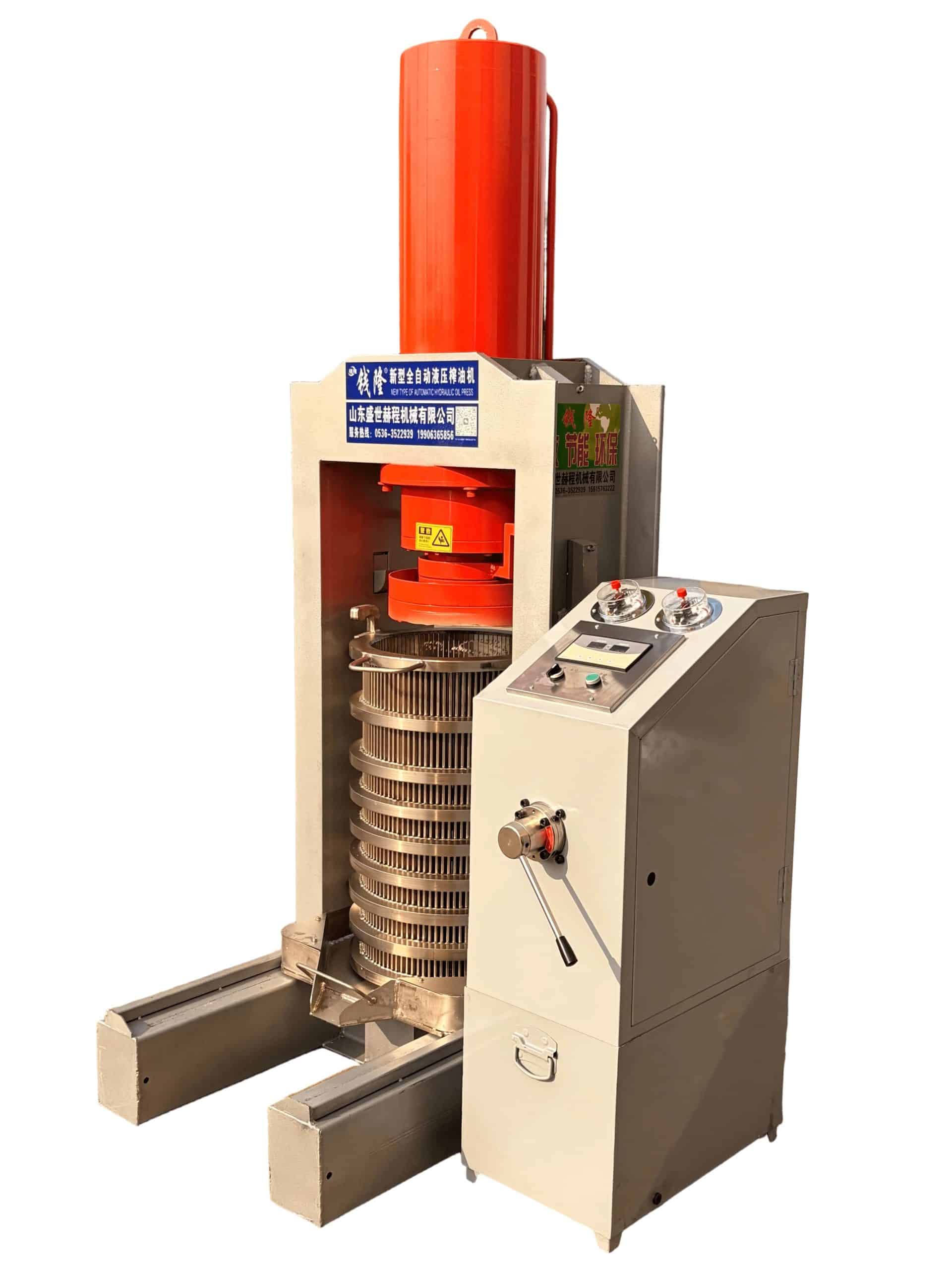
Hot pressing is quick. One 100 kg barrel presses in about 30–40 minutes of pressing time, and a realistic working cycle is roughly 1.5 hours for 2 barrels once feeding and cake unloading are included. That is markedly faster than a cold-press cycle, because heated material releases its oil far more readily. For a sesame or peanut workshop running steady daily batches, that rhythm is what makes the 300/325 a practical commercial press rather than a sample machine.
The machine draws only 2.2 kW, so it runs on ordinary single workshop power without a heavy electrical install — one reason these models suit small shops and startups.
Can the 300/325 also cold press?
Yes, with a change of barrel. Fit the smaller 300 mm barrel (60 kg charge) and cake surface pressure rises to around 46 MPa/cm², enough for light cold-press work on suitable materials. It is a useful flexibility if you mainly hot press but want occasional cold-press capability without buying a second machine. That said, if cold pressing premium, heat-sensitive oils is your core business, a purpose-built cold-press model in the 355–500 range is the better tool — see our cold-press model selection guide.
The steamer is part of the setup
Because hot pressing depends on cooking the seed first, the press is normally paired with a heating stage. The machine is commonly supplied alongside a 27 kW electric steamer (upgraded model) that prepares and conditions the seed before pressing. When you plan a hot-press line, budget for this heating step plus cleaning and filtering — the press is the core, but the cook and the clean decide final flavor and yield.
Who should choose the 300/325
Sesame and peanut oil shops — the classic use: fast batches, fragrant hot-pressed oil, low power draw, modest footprint.
Startups and small factories — an affordable, commercial-grade press that runs on light power and scales by adding barrels, time or machines.
Multi-oilseed operations — one machine that presses sesame today and soybean or sunflower tomorrow, with the option to cold press via a barrel swap.
If your product is specifically a premium, raw, cold-pressed oil, look at the cold-press range instead. If you are still deciding between hot and cold pressing in principle, our overview of cold-pressed vs hot-pressed oil lays out the trade-offs.
FAQ
What is the difference between the 300 and 325 models?
They are the same machine apart from pressing force — 300 tons versus 325 tons — giving the 325 slightly higher cake surface pressure (27 vs 25 MPa/cm²). Both share the 390 × 800 mm barrel, 60 MPa system pressure and 2.2 kW motor. The 325 is the more common pick for a little extra headroom.
How much oil does it leave in the cake?
On common oilseeds like peanut and sesame, oil output efficiency is around 95%, and the cake comes out solid and dry.
How fast is it?
About 30–40 minutes of pressing per 100 kg barrel, or roughly 1.5 hours for 2 barrels including feeding and cake unloading.
Can I use it for cold pressing?
Yes, with the 300 mm barrel option (60 kg charge), which raises cake surface pressure to about 46 MPa/cm². For dedicated premium cold pressing, a 355–500 cold-press model is the better fit.
What power supply does it need?
The press motor is just 2.2 kW. Plan separately for the heating stage (a 27 kW electric steamer is the usual pairing) and any cleaning or filtering equipment.
Tell us your oilseed and we’ll size the press
Shengshi Hecheng builds hydraulic hot-press machines and complete edible oil lines, from small sesame and peanut shops to multi-oilseed factories. Send us your oilseed, your target daily output and whether you are hot pressing, cold pressing or both, and we will recommend a 300 or 325 model and size the steamer, cleaning and filtering around it. For a peanut-focused build with real output and FOB pricing, see our Model 325 peanut oil guide.
Related Reads
Peanut Oil Hydraulic Press Machine: Model 325, Real Output & FOB Prices
How to Choose a Cold-Press Hydraulic Oil Press: Models 355 to 500
Project planning
Configure the right oil press and production line
Send your oilseed, target output, bottle or packaging requirements, power supply, and destination country. We will match the machine, supporting equipment, and line layout.