
On this page
The press is only half the job. Oil leaving a hydraulic press carries fine cake particles and sediment, and how you filter that oil decides whether the bottle on your shelf looks clean and clear or cloudy and short-lived. Filtering is not an optional upgrade — it is the step between pressing and selling. This guide explains why you have to filter, how the common methods differ, and how to pick filtration that matches what you are selling.
Why pressed oil has to be filtered
Fresh-pressed oil is never clean on its own. As the cake is squeezed, fine solids and “foots” (sediment) carry into the oil. Left in, those particles make the oil look cloudy, settle as a layer at the bottom of the bottle, and — because they hold moisture and enzyme activity — shorten shelf life and turn the oil rancid faster. Filtering removes that suspended material so the oil is clear, stable and ready to bottle or sell. The only question is how clean you need it, and that depends on your market.
The common filtration methods
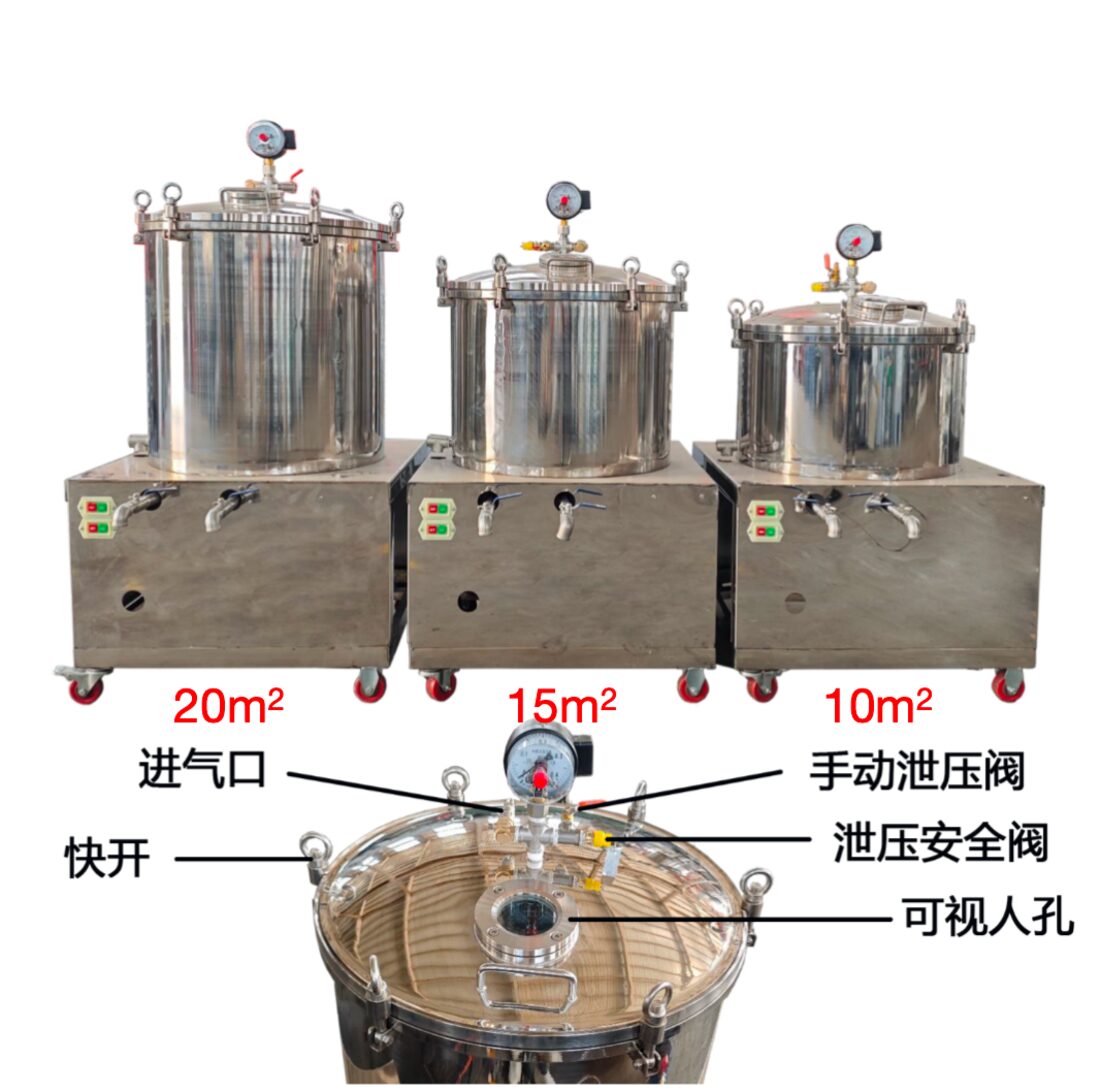
Plate-and-frame / paper-leaf filters. The workhorse for shops and small-to-mid lines. Oil is pumped through a stack of plates lined with filter paper or cloth; the solids stay on the paper and clear oil passes through. A pneumatic paper-leaf filter with SUS304 (stainless) multi-layer plates and around 10 m² of filter area suits a busy shop or small workshop. The filter paper is a regular consumable — you replace it as it loads up.
Sedimentation (settling tanks). The simplest method: let pressed oil stand in a tank so heavier solids drop to the bottom, then draw clear oil off the top through a sediment drain valve. Cheap and gentle, but slow and never as clear as a proper filter. Most shops use settling as a first stage before the paper-leaf filter, not instead of it.
Bag / cartridge polishing filters. A fine final stage for operations that need extra clarity — bottled retail, supermarket or export brands. They polish out the last fine haze after the main filter. Optional for a walk-in fresh-pressed shop; usually required once you sell a packaged, branded product.
Temperature is the variable that trips people up
Filtration speed depends heavily on oil temperature, and this is where shops lose throughput without realising it. Run the oil through the filter while it is still warm from pressing — 60–70°C is the working range. Below 60°C the oil thickens and the filtration rate drops by about half, so a cold batch can double your filtering time and back up the whole day’s production. If you hot-press, filter straight off the press; if oil has been sitting, it is worth gently warming it back into range before filtering.
How clean do you actually need it?
This is the real decision, and over-buying filtration is as common as under-buying. Match the equipment to what you sell:
| What you sell | Clarity needed | Typical filtration |
|---|---|---|
| Walk-in fresh-pressed shop | Crude is the selling point | Settling tank + paper-leaf filter |
| Small workshop / local supply | Clean, clear, stable | Paper-leaf filter (10 m² class) |
| Bottled retail / supermarket | Bright, haze-free | Paper-leaf + bag/cartridge polish |
| Export / registered brand | Highest, spec-driven | Polishing filter + refining path |
For a walk-in fresh-pressed format, slightly crude oil is exactly what customers are paying for — the pressed-today experience, not laboratory clarity. Once you add bottled retail through supermarkets, online or export under a registered brand, the regulatory and shelf-life path pushes you toward finer filtration and, eventually, a refining stage.
Running costs and upkeep
A paper-leaf filter’s main running cost is the filter paper, which you replace as a regular consumable — budget for it the way you budget for seed. The stainless plates and pump last for years with basic care: keep the plates clean, check seals, and don’t let solids cake and dry on the mesh. Settling tanks need a SUS304 build with a sealed cover and a sediment drain valve so you can pull clear oil off the top and flush the foots from the bottom.
Tell us what you press and sell
Shengshi Hecheng builds the filtration to match your press and your market — from a shop paper-leaf filter to polishing and refining for bottled and export brands. Tell us your oilseed, your daily output and whether you sell fresh in-store or bottle a brand, and we’ll spec the right filter size, the supporting tanks and the realistic running cost — and tell you plainly when settling is enough and when you genuinely need a finer stage.
Related Reads
- How to Read Oil Press Pressure Specs: MPa, Tonnage & Cake Surface Pressure
- Hydraulic Oil Press Machine 300 & 325: The Hot-Press Workhorse Models Explained
- Korean-Type Small Hydraulic Oil Press Machine: KHOP 10, 15 & 20 KG for Shops
- How to Open a Fresh-Pressed Peanut Oil Shop: the Binzhou Model
FAQ
Do I really need a filter, or can I just let the oil settle?
Settling alone leaves oil cloudy and shortens shelf life. Most shops settle first to drop the heavy solids, then run the oil through a paper-leaf filter for clear, stable, sellable oil. Settling is a first stage, not a replacement.
What temperature should I filter at?
Around 60–70°C. Below 60°C the oil thickens and filtration speed roughly halves, so filter while the oil is still warm from pressing, or gently warm it back into range first.
What is the main running cost of a paper-leaf filter?
The filter paper, which is a regular consumable you replace as it loads up. The stainless plates and pump last for years with basic cleaning and seal checks.
How big a filter do I need?
A 10 m² SUS304 paper-leaf filter suits a busy shop or small workshop. Larger lines scale up the filter area; bottled and export brands add a finer bag or cartridge polishing stage.
Is filtered oil the same as refined oil?
No. Filtering removes suspended solids and sediment for clear, stable oil. Refining is a further chemical/physical process for export-grade product. Many shops sell well-filtered oil without refining.
Project planning
Configure the right oil press and production line
Send your oilseed, target output, bottle or packaging requirements, power supply, and destination country. We will match the machine, supporting equipment, and line layout.