
On this page
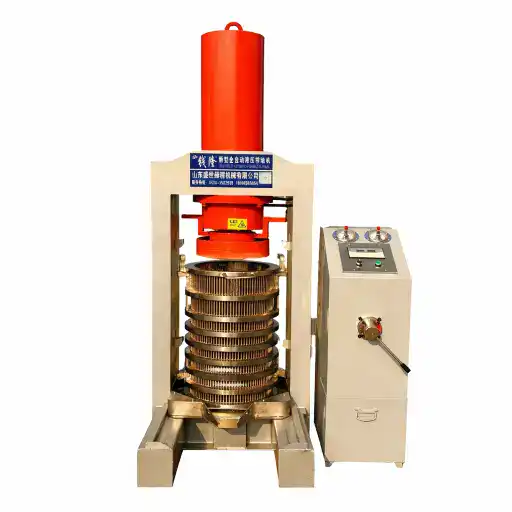
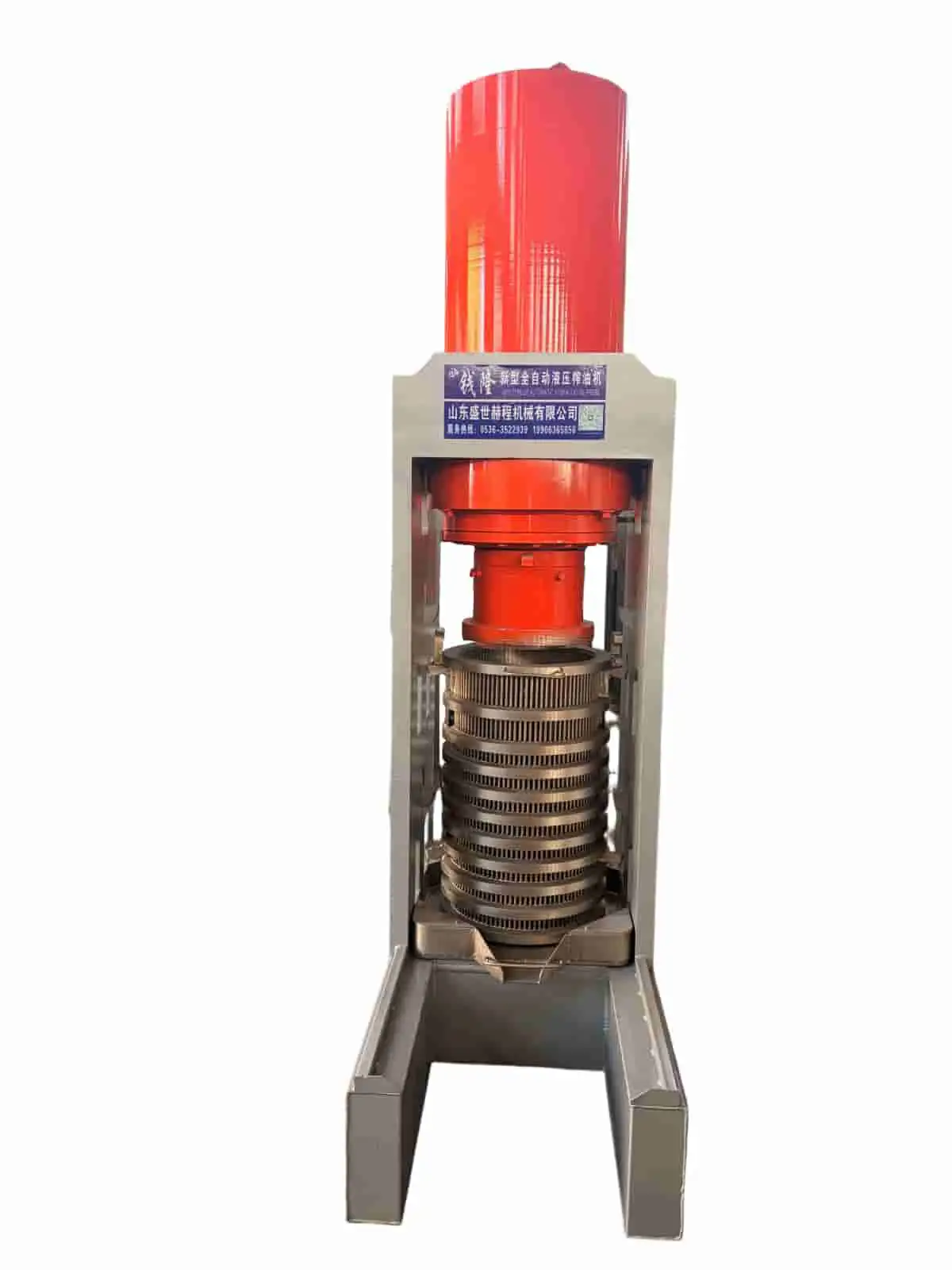
When buyers outgrow a single press, the instinct is to jump to a higher-tonnage machine. Often the better move is sideways: the same press with a second barrel. On our larger cold-press models — the 426, 480 and 500 — you can choose a single-barrel (AC) or dual-barrel (BC) build. The dual-barrel version is not a stronger machine; it is the same frame, cylinder and force with two material barrels on sliding tracks. This guide explains exactly what that buys you, the throughput math behind it, and when a single barrel is still the smarter spend.
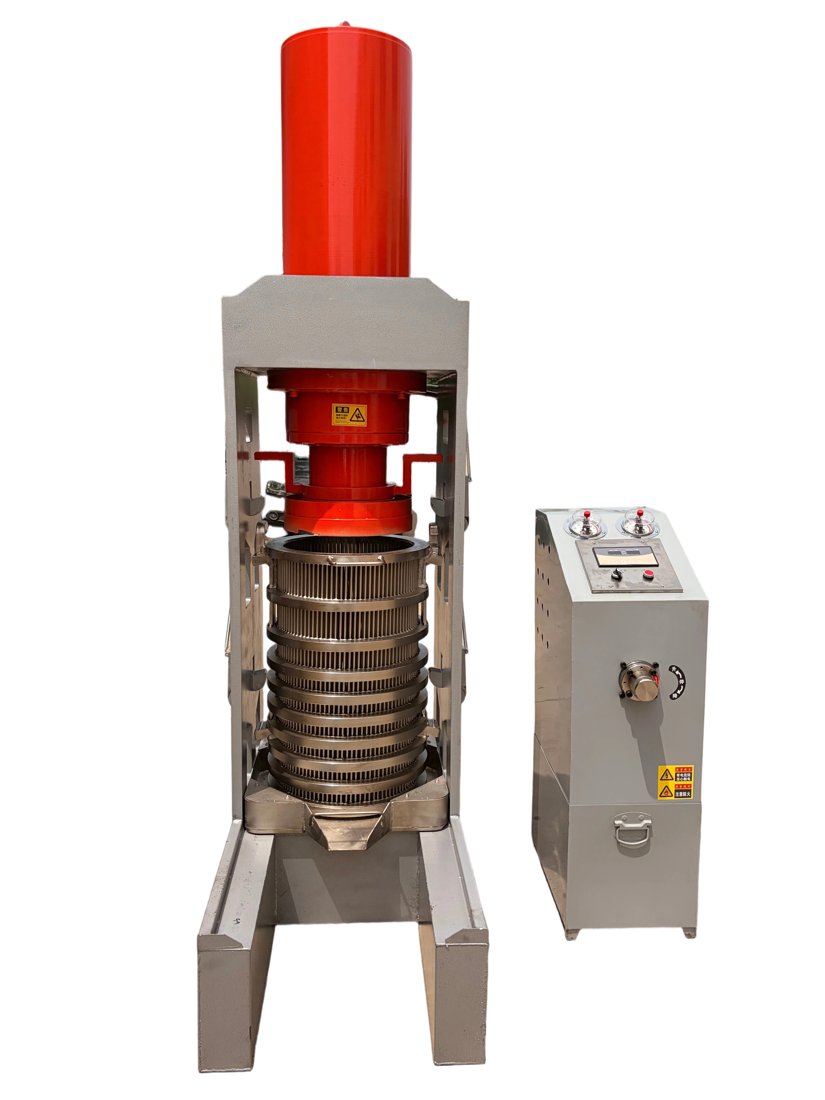
What the dual-barrel (BC) design actually is
A hydraulic press works in a cycle: load the barrel, apply and hold pressure, release, then unload the cake and reload. On a single-barrel press, the cylinder sits idle during loading and unloading — and on these big cold-press machines, the hold and the handling each take real time. The dual-barrel build puts two barrels on a sliding track in front of one cylinder. While one barrel is under pressure, the operator loads and unloads the other. When the press finishes, the track slides the fresh barrel into place and pressing resumes almost immediately.
The key point for buyers: the 426, 480 and 500 keep the same total force whether you choose AC or BC. The 426 presses at 500 tons, the 480 at 600 tons and the 500 at 630 tons, all on a 60 MPa system, in both builds. You are not buying more pressure with a second barrel — you are buying back the idle time.
The throughput math
Think of one full cycle as two parts: the press time (pressure applied and held by the cylinder) and the handling time (unload the cake, reload fresh material). On a single barrel these happen one after the other, so the cylinder is idle for the whole handling window. On a dual barrel, handling on the second barrel is hidden inside the press time of the first.
| Single barrel (AC) | Dual barrel (BC) | |
|---|---|---|
| Cycle structure | Press, then unload, then reload — in sequence | Press one barrel while loading/unloading the other |
| Cylinder idle time | Idle through the whole handling window | Near-zero between batches |
| Effective output | Limited by press time + handling time | Limited mainly by press time — handling is hidden |
| Best when | Press time dominates; lower daily volume; tighter budget | Handling time is a big share of the cycle; steady high volume |
The honest version of the headline: a dual-barrel press does not magically double the physics. It roughly doubles throughput only when handling time is close to press time — because that is the idle time it removes. When the press hold is very long relative to handling, the gain is smaller. So the real question is not “is two barrels faster” (it always is) but “how much of my cycle is handling I can hide?”
Barrel size still matters — pick it with the diameter table
Whether you go single or dual barrel, you still choose a barrel diameter, and that choice sets two things at once: how much you press per batch (volume) and how hard you press the cake (cake surface pressure). A wider barrel holds more but spreads the same force over more area, so the surface pressure drops. The table below is the 426 series at its 500-ton force — the same barrel grid applies to the 480 and 500, only the surface pressure rises with their higher force.
| Barrel Ø (mm) | Volume (L) | Dimensions W×L×H (mm) | Cake surface (MPa/cm²) |
|---|---|---|---|
| 300 | 57 | 720×1050×2450 | 71 |
| 390 | 96 | 800×1100×2450 | 42 |
| 480 | 145 | 900×1300×2450 | 28 |
| 560 | 197 | 1000×1400×2450 | 20 |
| 630 | 249 | 1100×1600×2450 | 16 |
Two stroke options sit on top of this: an 850 mm stroke drops the minimum single charge to about 5 kg (good for small premium batches), while a 700 mm stroke suits a minimum of about 40 kg per press. Equipment weight runs roughly 2.1–2.3 t on the 426, and 3.2–3.4 t on the 480 and 500.
When dual barrel pays for itself
A second barrel is worth it when you are running steady, high-volume production and your operators spend a real share of each cycle loading and unloading. In that case the recovered idle time turns directly into more batches per shift on a machine you already own the footprint for. Cold-press lines for walnut, tea seed, flax, perilla and similar high-value seeds are classic cases: long steady runs where keeping the cylinder working is the whole point.
- Choose dual barrel (BC) when: output is steady and high, handling is a big share of the cycle, and you want maximum batches per shift without a bigger-tonnage machine.
- Choose single barrel (AC) when: daily volume is moderate, the press hold dominates the cycle, or budget and simplicity matter more than squeezing out every batch.
Tell us your seed, your target daily output and your batch size, and we will tell you whether a single or dual barrel — and which diameter and stroke — actually fits your run, instead of selling you tonnage you do not need.
Related Reads
- How to Choose a Cold-Press Hydraulic Oil Press: Models 355 to 500
- How to Read Oil Press Pressure Specs: MPa, Tonnage & Cake Surface Pressure
- Hydraulic Oil Press Machine 300 & 325: The Hot-Press Workhorse Models Explained
- Filtering Pressed Oil: How to Choose Oil Filtration Equipment for Your Press
FAQ
Does a dual-barrel press apply more pressure than a single barrel?
No. On the 426, 480 and 500, both builds use the same cylinder and total force — 500, 600 and 630 tons respectively, all at 60 MPa. The second barrel adds throughput by removing idle time, not pressure.
Does dual barrel really double output?
It roughly doubles output when handling time (loading and unloading) is close to the press time, because that is the idle window it hides. If the press hold is very long relative to handling, the gain is smaller. Match the choice to your real cycle.
Which barrel diameter should I choose?
A wider barrel holds more per batch but spreads the force over more area, so cake surface pressure falls — from about 71 MPa/cm² at 300 mm down to 16 MPa/cm² at 630 mm on the 426. Pick the diameter that balances the batch size you want against the surface pressure your seed needs.
Can I add a second barrel later?
It is far simpler to specify single (AC) or dual (BC) when you order, since the dual build uses a sliding-track frame designed for two barrels. Tell us your expected growth and we will advise whether to build for dual barrel from the start.
Which models offer the dual-barrel option?
The larger cold-press series — 426, 480 and 500 — offer both single-barrel (AC) and dual-barrel (BC) builds on the same frame and cylinder.
Project planning
Configure the right oil press and production line
Send your oilseed, target output, bottle or packaging requirements, power supply, and destination country. We will match the machine, supporting equipment, and line layout.