
On this page
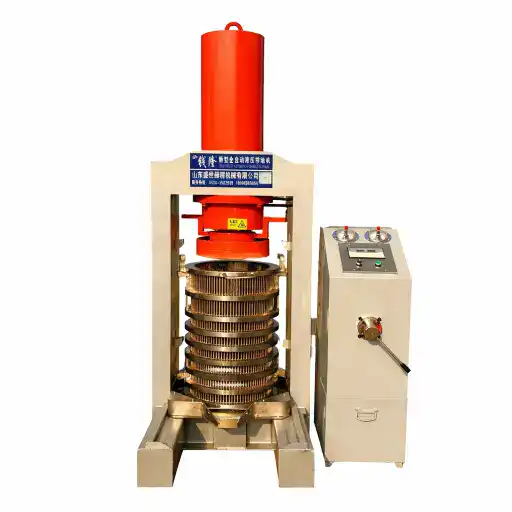
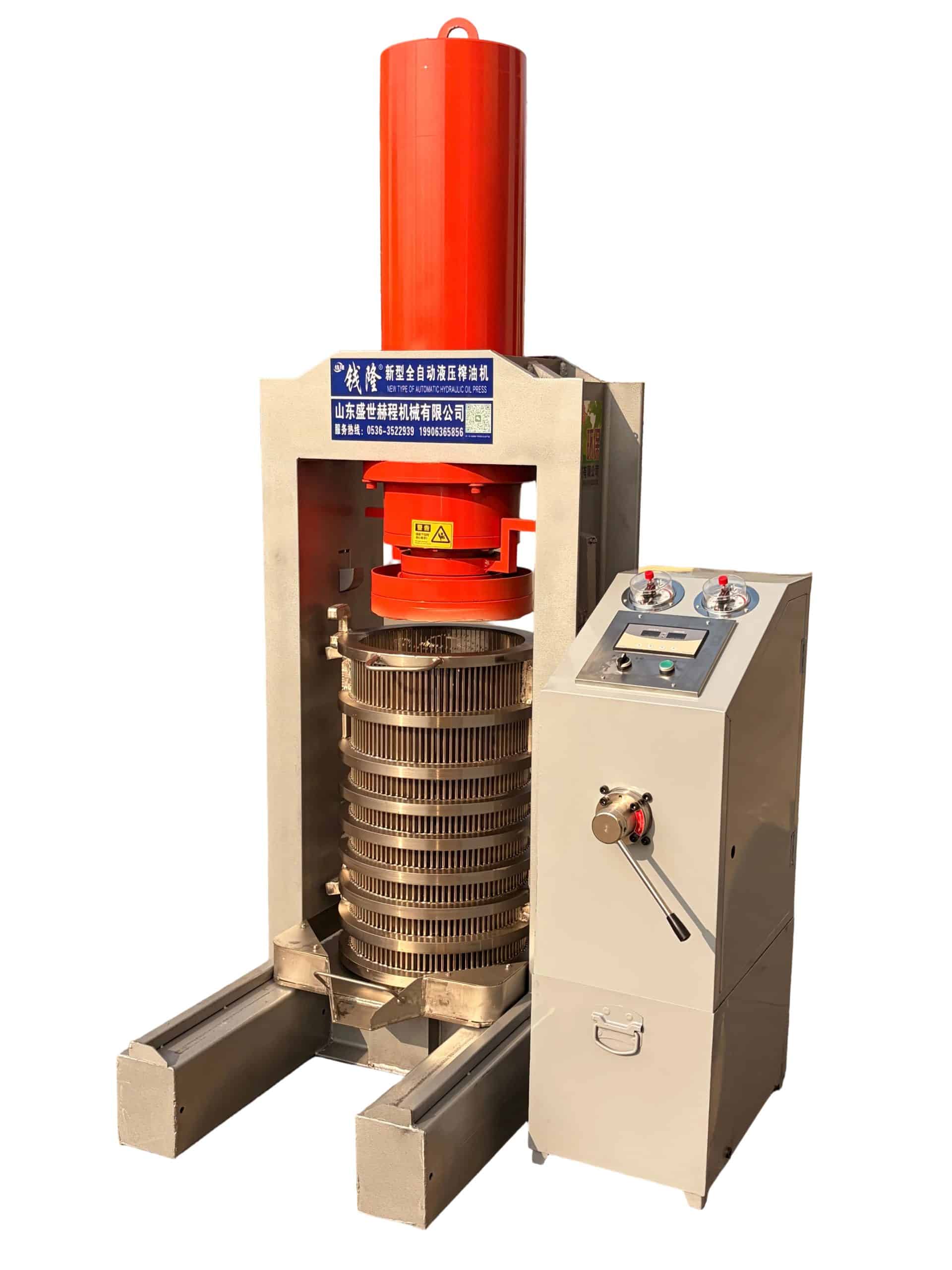
A small oil mill built around one hydraulic oil press needs four things: a way to prepare the seed, the press, a filter, and somewhere clean to store and pack the oil. This page lists the equipment for each step and how to lay it out in a 30–50 m² workshop.
The equipment list
| Step | Equipment | When you need it |
|---|---|---|
| Seed preparation | Pre-press machine; flat-bottom thermal-oil roaster or drum roaster; steamer | Hot pressing peanut, sunflower, rapeseed (sesame needs only the roaster) |
| Seed preparation | High-speed crusher | Cold pressing walnut, almond, hazelnut, pumpkin seed |
| Pressing | Hydraulic oil press, 325 (hot) or 355–500 (cold) | Always |
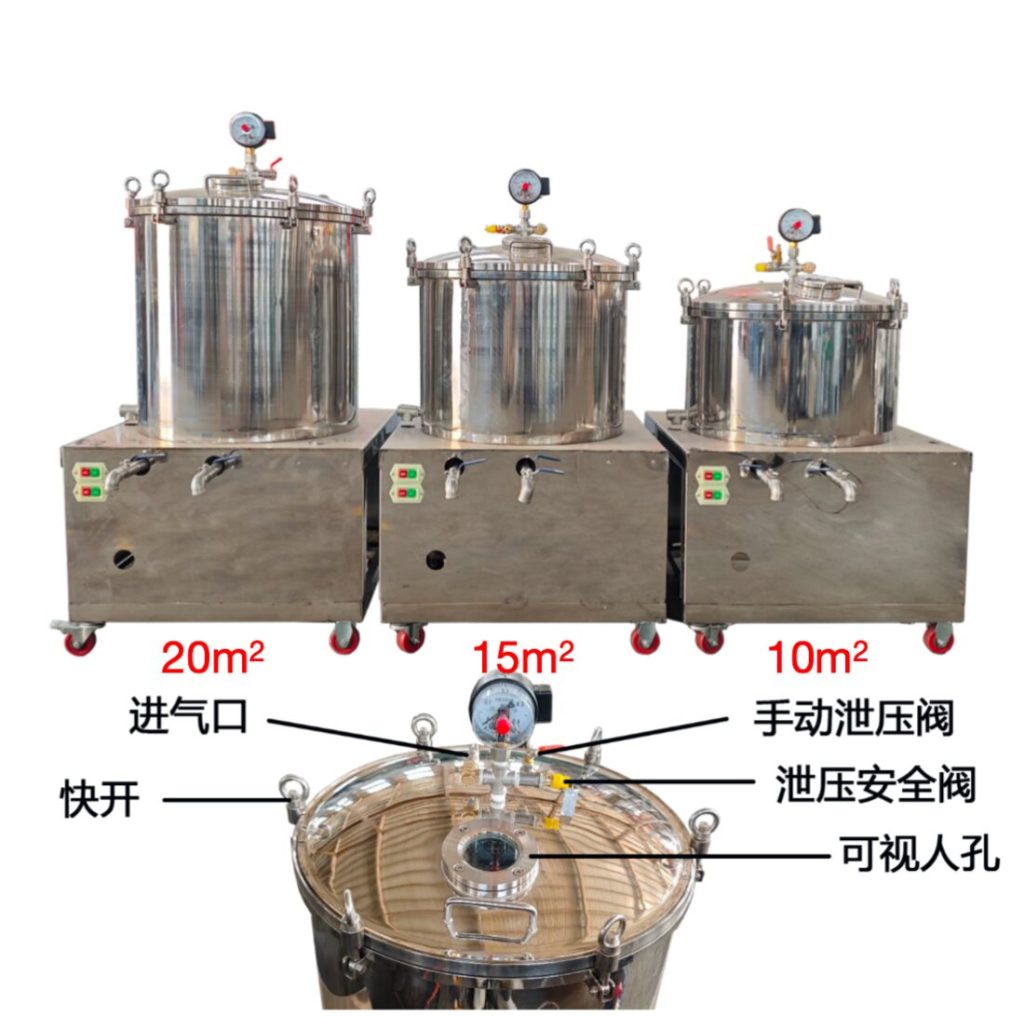
| Filtering | Pneumatic paper-leaf filter (10 m²) or plate filter | Anyone selling bottled oil |
| Storage and packing | Stainless tanks, filling machine | Depends on how you sell |
Choosing the press
| Model | Press force | Typical use |
|---|---|---|
| 300 | About 300 t | Hot press; sesame in the 300 mm barrel |
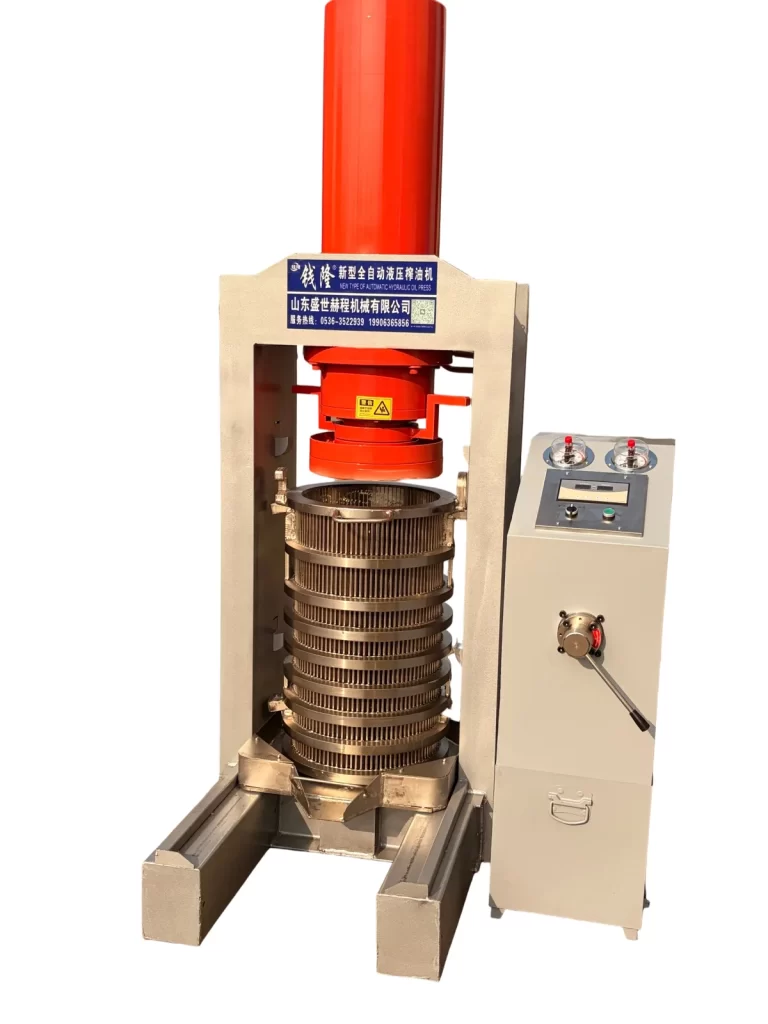
| 325 | About 325 t | Hot press; our most-sold model |
| 355 | About 370 t | Cold press |
| 400 | About 410 t | Cold press |
| 426 | About 500 t | Cold press, hard kernels |
| 480 / 500 | About 600 / 630 t | Cold press, highest cake pressure |
Most first mills buy one 325 for hot pressing. A 355 or larger is chosen when the main product is cold-pressed oil. Buy for the seed you will press most often, not for the largest model you can afford: a 500-series press does not hold more seed per load than a 325. It presses the same barrel harder.
Daily output
| Hot press (300 / 325) | Cold press (355–500) | |
|---|---|---|
| Material | Roasted or steamed seed | Clean, crushed seed or kernels |
| Load per barrel (390 mm) | 60–80 kg; up to about 100 kg after pre-pressing | 60–80 kg |
| Pressing time | About 30–40 min | About 2 h |
| Loads in an 8-hour shift | About 10 (roughly 1.3 per hour) | About 4 |
On hot-pressed peanut that is 600–800 kg of seed a day from one press. Sesame goes in the smaller 300 mm barrel at about 30 kg a load. Oil output depends on the seed’s oil content and how well it is prepared; see the oil-content table in our guide to oil seeds.
Workshop layout
Lay the room out in the order the seed moves, so raw seed never crosses the path of finished oil:
- Seed store by the door, dry and off the floor.
- Preparation: pre-press machine and roaster. The roaster needs a three-phase supply and ventilation.
- Press with room to walk all the way round it and a clear spot to stack cakes.
- Filter and tanks next to the press oil outlet. Filter while the oil is still at 60–70°C.
- Packing and shop counter at the clean end of the room.
Growing from one press
Add a second press before adding automation. Two presses can share one roaster and one filter, so the second press costs much less than the first. Our 10 t/day peanut oil plan shows how the same equipment scales to 18 presses.
Related Reads
- Small Edible Oil Plant Layout for a Startup Factory
- What Support Equipment to Buy First in an Oil Mill
- How to Choose Oil Filtration Equipment
- Hydraulic Oil Press Capacity Chart
FAQ
How much space does a small oil mill need?
About 30–50 m² for one press with a roaster, filter and storage tanks. Allow more if you also bottle and label on site.
Hot press or cold press for a first mill?
Hot pressing gives more oil per hour and the roasted flavor most local markets expect. Cold pressing is slower and suits buyers who pay more for raw, unroasted oil.
Do I need a filter?
If customers bring their own containers and want crude oil, not always. For bottled oil, yes.
Get a setup for your seed and output
Send us your seed, target output and the size of your room. We will send a machine list and a layout sketch.
Project planning
Configure the right oil press and production line
Send your oilseed, target output, bottle or packaging requirements, power supply, and destination country. We will match the machine, supporting equipment, and line layout.