
On this page
A business plan for a small oil mill comes down to four answers: what seed you can buy all year, how you will sell the oil, how much you need to press a day to cover costs, and which equipment does that. This page works through each in order, using one hydraulic oil press as the example.
1. The seed
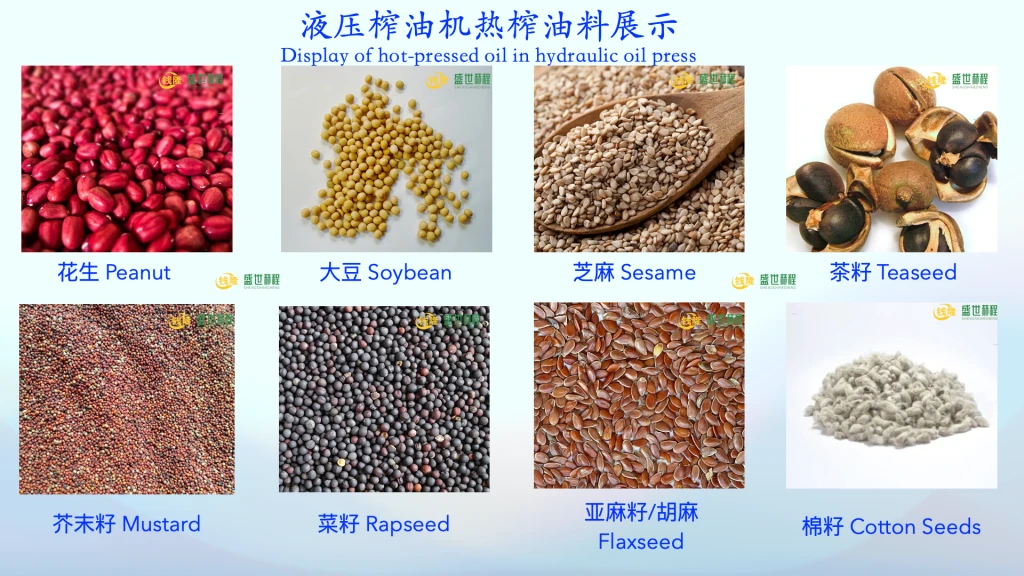
Pick the seed you can buy locally in every season at a stable price. Oil content matters, but supply matters more: a press standing idle for two months costs more than a lower-yield seed.
2. How you will sell
| Sales model | What it needs | Notes |
|---|---|---|
| Walk-in fresh oil shop | Press, roaster, filter, counter | Customers watch the oil being pressed; crude oil is often the selling point |
| Toll pressing | Press and roaster | Customers bring seed and pay a processing fee; low working capital |
| Bottled oil to shops | Add filter, tanks, filling and labeling | Needs clear oil, labels and steady supply |
| Bulk supply | Several presses | Lowest margin per kg |
3. How much to press
| Hot press (300 / 325) | Cold press (355–500) | |
|---|---|---|
| Material | Roasted or steamed seed | Clean, crushed seed or kernels |
| Load per barrel (390 mm) | 60–80 kg; up to about 100 kg after pre-pressing | 60–80 kg |
| Pressing time | About 30–40 min | About 2 h |
| Loads in an 8-hour shift | About 10 (roughly 1.3 per hour) | About 4 |
Work out the margin per 100 kg of seed (oil sold, plus cake sold, minus seed and processing cost), then the number of batches a day that covers rent and wages. If that number is more than one press can do in a shift, plan for two presses from the start.
4. The equipment
| Model | Press force | Typical use |
|---|---|---|
| 300 | About 300 t | Hot press; sesame in the 300 mm barrel |
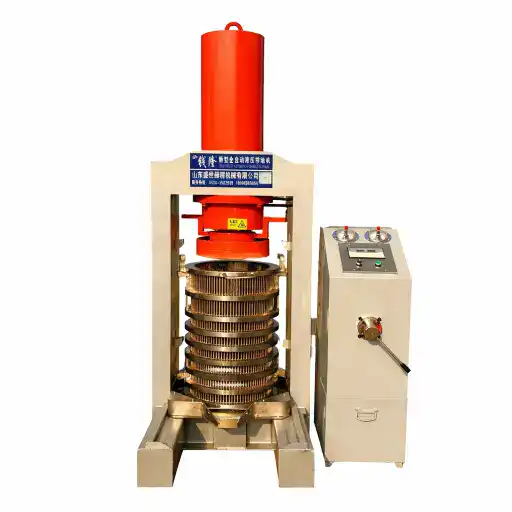
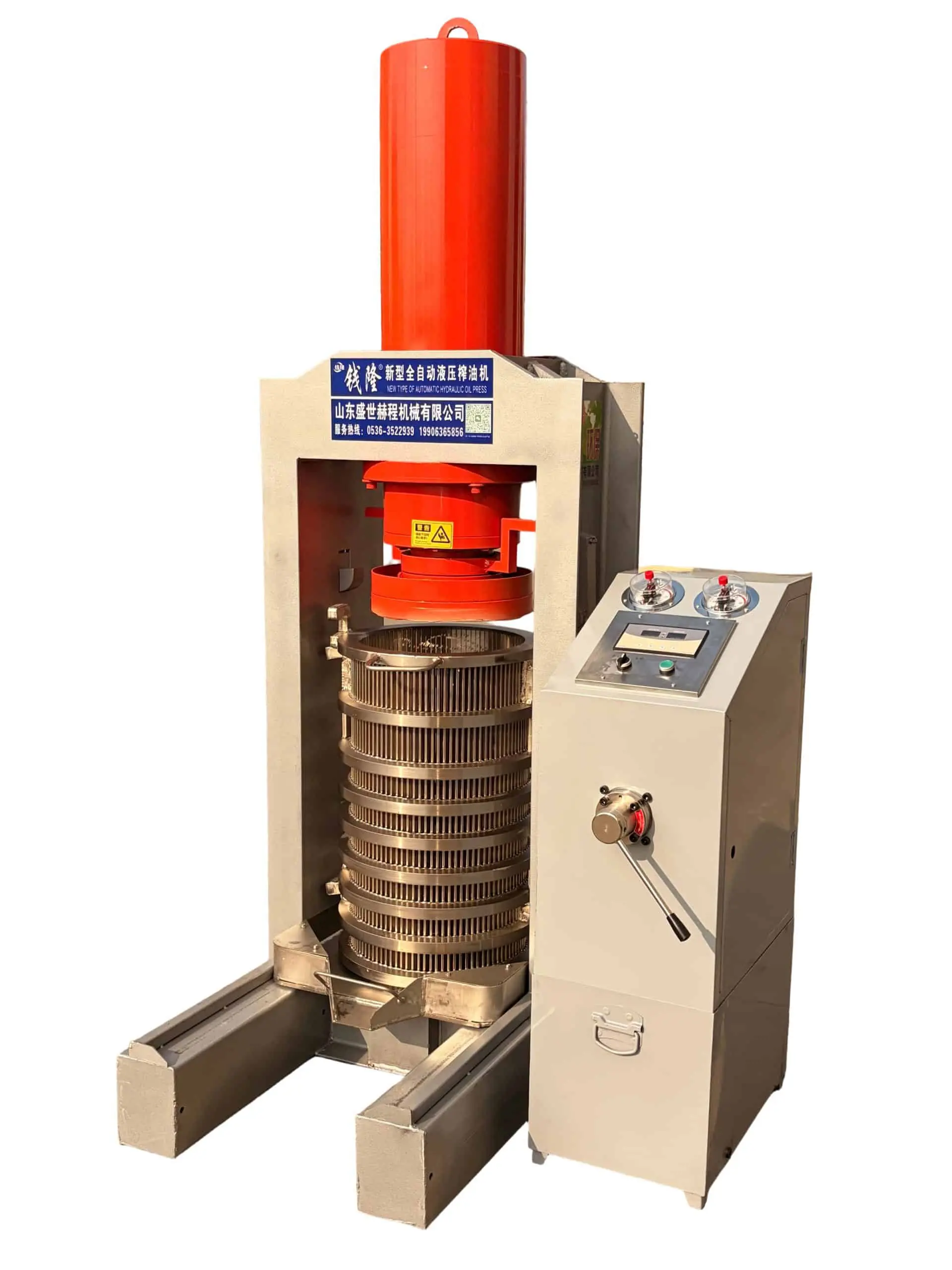
| 325 | About 325 t | Hot press; our most-sold model |
| 355 | About 370 t | Cold press |
| 400 | About 410 t | Cold press |
| 426 | About 500 t | Cold press, hard kernels |
| 480 / 500 | About 600 / 630 t | Cold press, highest cake pressure |
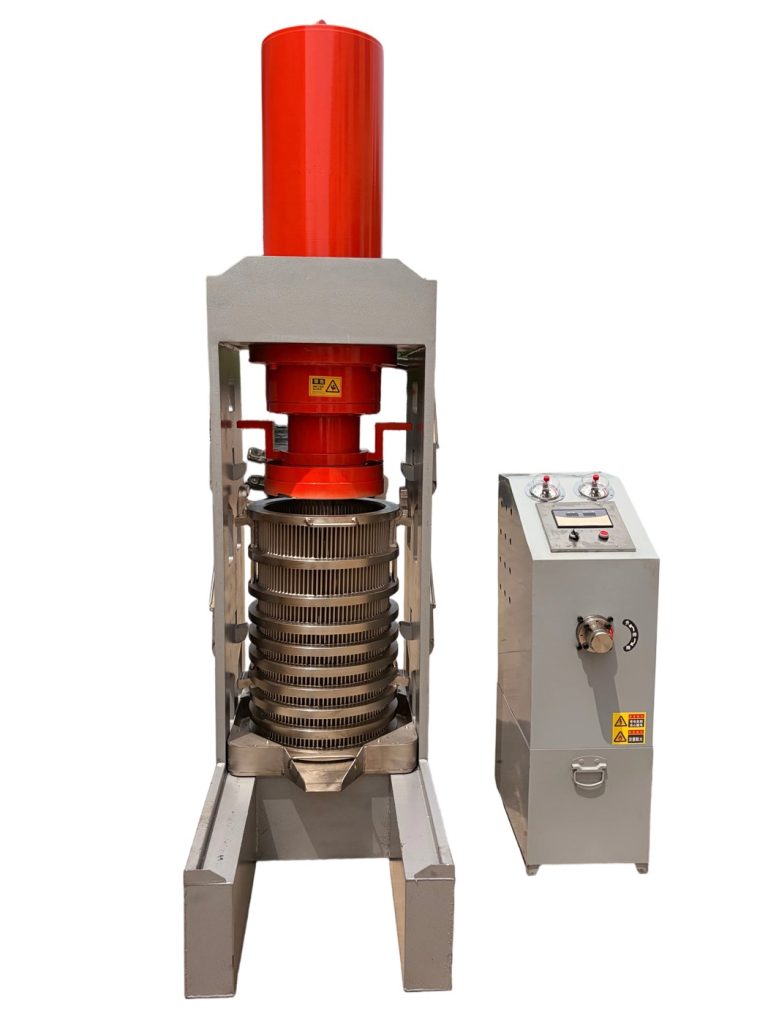
For hot-pressed peanut, sesame or sunflower, start with one 325, a roaster and a filter. For cold-pressed nuts, a 355-series press and a crusher. Add tanks and filling equipment only once you sell bottled oil.
5. Start, then expand
- Start with one press and sell everything you make before buying a second.
- Add the second press next to the first; it shares the roaster and filter.
- Move to bottled oil once local demand is steady.
Related Reads
- How to Start a Small Oil Press Business
- Oil Press Business Cost Breakdown
- Peanut Oil Shop Business: the Binzhou Model
- Oil Press Machine for a Small Business
FAQ
How long does it take to recover the investment?
It depends on local seed and oil prices and how many days a month you press. Calculate the margin per 100 kg of seed with your own prices before you buy.
Can one press handle several seeds?
Yes. Change the preparation (roaster, steamer or crusher) to suit the seed; the press stays the same.
What is the cheapest way to start?
Toll pressing: customers bring their own seed, so you do not have to buy seed stock.
Get a setup for your seed and output
Tell us your country, the seed you can buy and how you plan to sell. We will suggest a machine set and a starting output.
Project planning
Configure the right oil press and production line
Send your oilseed, target output, bottle or packaging requirements, power supply, and destination country. We will match the machine, supporting equipment, and line layout.