Small edible-oil business selection guide
The best oil press is the one that fits the product and the daily work
Start with what will be sold, which oilseed will be processed, and how the shop or workshop will operate. Machine size comes after the process route, batch schedule, utilities, oil-finishing method, packaging plan, and local compliance requirements.
Begin with the sales model
A fresh-oil shop and a packaged-oil workshop need different equipment
A customer-facing shop may value visible small batches and simple product handoff. A workshop supplying retailers may need more preparation, clarification, storage, filling, labeling, and batch records. Neither route is defined by the press alone.
- Define the oilseed and whether it arrives clean, shelled, crushed, or ready to press.
- Decide whether the product is pressed to order, settled or filtered, or filled and labeled.
- Convert expected sales into batches, working hours, and container handling.
- Confirm food-processing, labeling, workplace, and environmental requirements locally.
Three practical starting routes
Choose the operating format before the model
These routes describe different ways a small business can organize production. Material suitability and final configuration still require a machine-specific review and, where needed, a representative pressing test.
Customer-facing batches
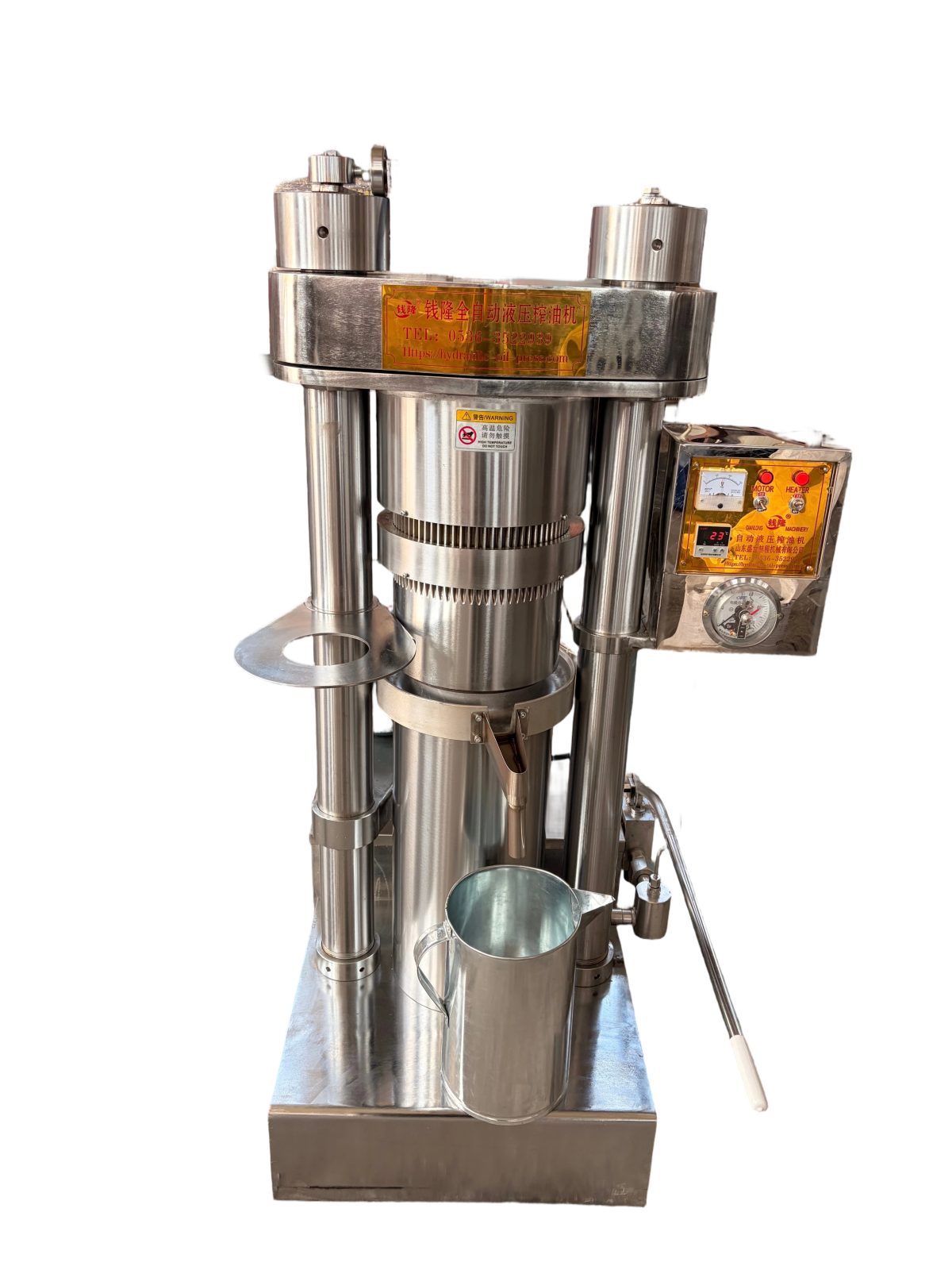
Compact shop press
The current KHOP family uses named 10, 15, and 20 kg batch classes. Confirm the exact oilseed and preparation route because its parent page contains conflicting suitability statements.
Review compact presses →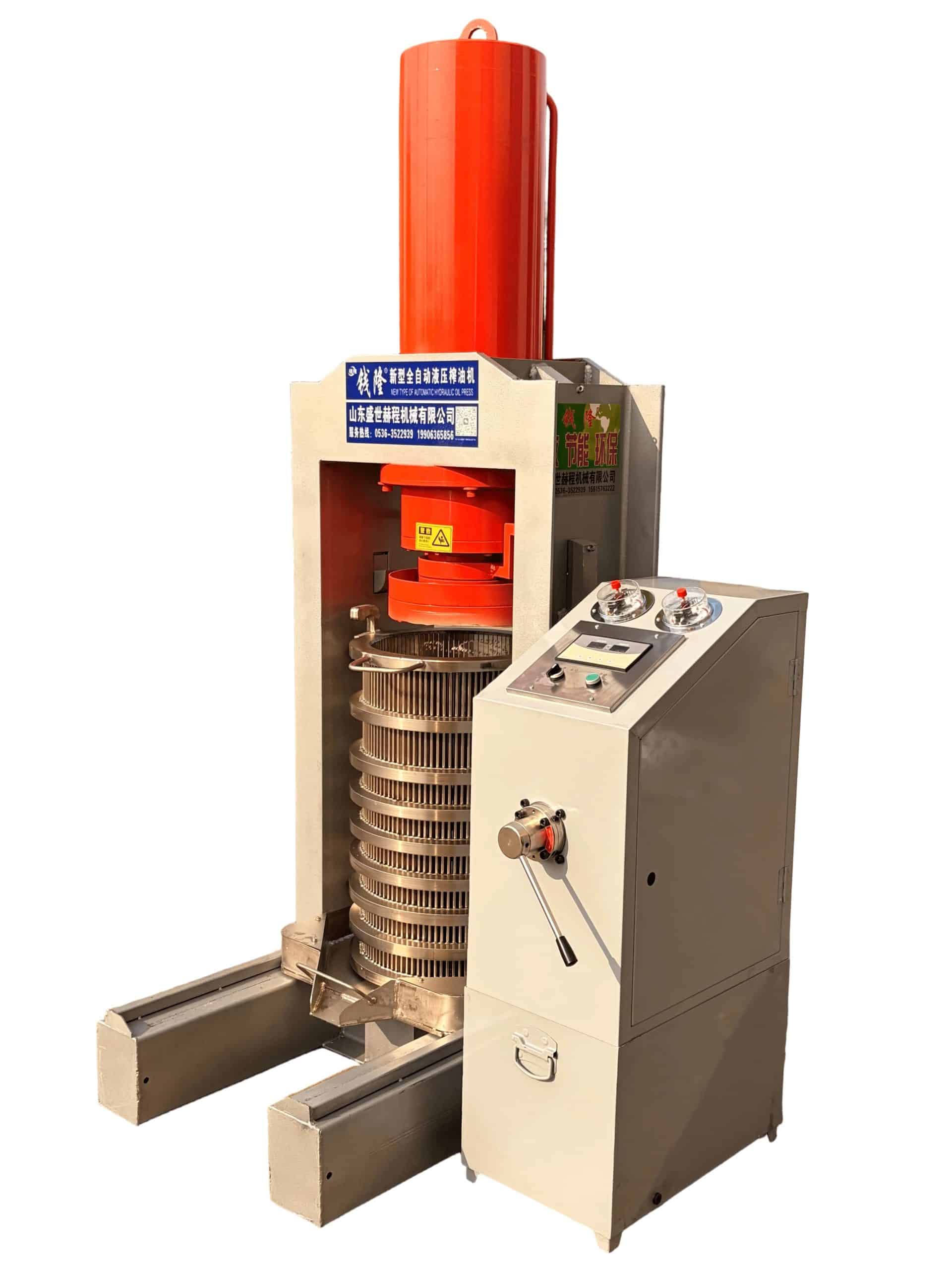
Prepared hot-press material
Full-size batch workshop
Models 300 and 325 publish a 5-100 kg press-volume range with the 390 mm barrel and 5-60 kg with the 300 mm option. Cleaning, crushing, roasting, filtration, and handling are separate scope decisions.
Review hot-press models →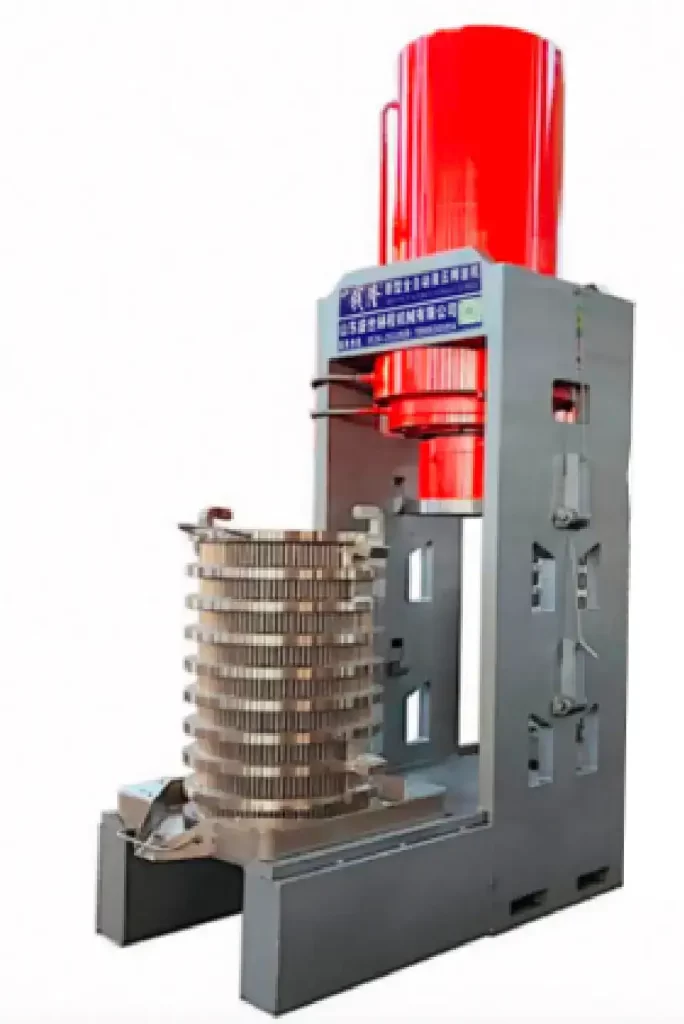
Lower-temperature route
Specialty cold-press workshop
The 355-500 family covers higher source-listed press forces with the same two barrel-volume ranges. Specify the oilseed, feed condition, maximum process temperature, cycle plan, and finished-oil requirement.
Review cold-press models →Selection worksheet
Resolve these questions before requesting a quotation
| Decision | What the buyer must define | How it changes equipment selection |
|---|---|---|
| Raw material | Oilseed, variety, shell, cleanliness, moisture, particle form, and sample | Determines preparation steps and whether the proposed press route is suitable. |
| Finished product | Fresh, settled, filtered, refined, bulk, or packaged oil | Defines oil clarification, storage, optional refining, and packaging scope. |
| Work pattern | Batch target, operating hours, staffing, cleaning, and changeovers | Shows whether a compact batch press or larger production section fits the workload. |
| Sales format | Press-to-order, own retail counter, wholesale container, or branded bottle | Changes storage, filling, capping, labeling, coding, and traceability needs. |
| Site and utilities | Room, access, floor, power, ventilation, water, drainage, and local rules | Limits machine envelope and determines installation and supporting services. |
| Growth boundary | What must run now and what may be added later | Allows space, utilities, and material flow to be reserved for expansion. |
Minimum operating sequence
Plan the whole batch, not only the pressing stroke
Each stage may be manual or mechanized depending on the material and workload. The sequence reveals labor, floor-space, hygiene, and storage needs that a press-only quote can hide.
Core startup scope
Separate essential functions from optional automation
- Clean raw-material receiving and protected storage
- Preparation appropriate to the confirmed oilseed route
- Oil press with documented barrel, electrical, and control configuration
- Clean oil collection and the required settling or filtration step
- Food-contact storage and a defined container-filling method
- Cake collection, cleaning tools, records, and spare-parts plan
Add when the product requires it
Supporting and downstream sections
- Screening, shelling, crushing, roasting, or conditioning
- Pneumatic filtration or another validated clarification method
- Refining for a defined finished-oil specification
- Semi-automatic or automatic filling, capping, labeling, and packing
- Additional tanks, transfer pumps, testing, and traceability controls
Small-workshop site check
Compact sales volume does not mean lightweight equipment
Published compact and full-size models can still require substantial floor capacity, access, service clearance, and electrical preparation. Use the selected model drawing and nameplate data rather than estimating from a product photo.
- Measure doorways, turning space, machine position, and delivery path.
- Confirm floor loading, leveling, anchoring, and lifting method.
- Separate raw material, pressing, oil finishing, packaging, and customer traffic.
- Verify voltage, phase, frequency, protection, grounding, and local electrical work.
- Provide cleaning access, ventilation, drainage, and waste handling as required locally.
Do not treat a daily-tonnage headline as saleable oil output
Throughput depends on batch load, feed preparation, cycle time, loading and cake removal, cleaning, downtime, oilseed oil content, and operating hours. Finished oil also depends on clarification or refining losses. Build capacity from a documented cycle and material test.
Oilseed-first planning
Open the dedicated process route before choosing the press
Source limitation
The previous page described oil pressing as inherently profitable and published generic 30-100 kg batch and 1-3 ton/day figures without model, material, cycle, or finished-oil conditions. Those statements are not used here. Business viability must be calculated from local raw-material cost, verified production data, labor, utilities, losses, compliance, packaging, and achievable sales.
Send a small-business operating brief
Include the oilseed, sales format, target batches, work hours, preparation route, site, power, packaging, destination, and expansion plan for a relevant configuration.