
On this page
Sunflower oil is one of the four most-traded vegetable oils in the world, and small-to-mid edible-oil factories across India, Egypt, Russia, Ukraine, Turkey, Argentina and East Africa keep asking us the same question: can a hydraulic oil press machine produce sunflower oil profitably, or do we have to use a screw press? The short answer is yes — for cold-pressed, high-end retail sunflower oil and for sunflower kernel oil, a hydraulic oil press is the right tool. This guide gives you the technical parameters, the recommended Shengshi Hecheng model, real oil-yield numbers and the pricing range so you can build a buying decision without going back and forth.
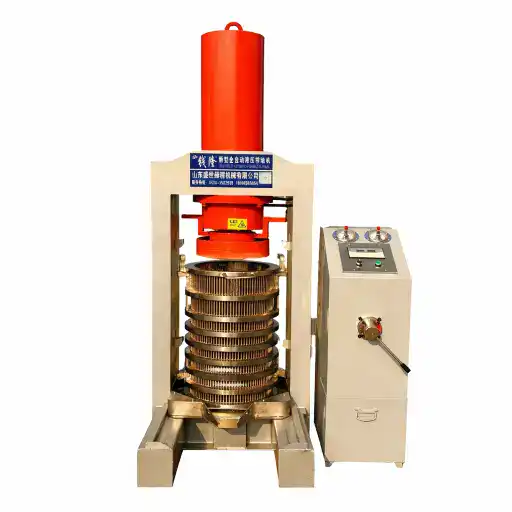
What Is a Sunflower Oil Hydraulic Press Machine?
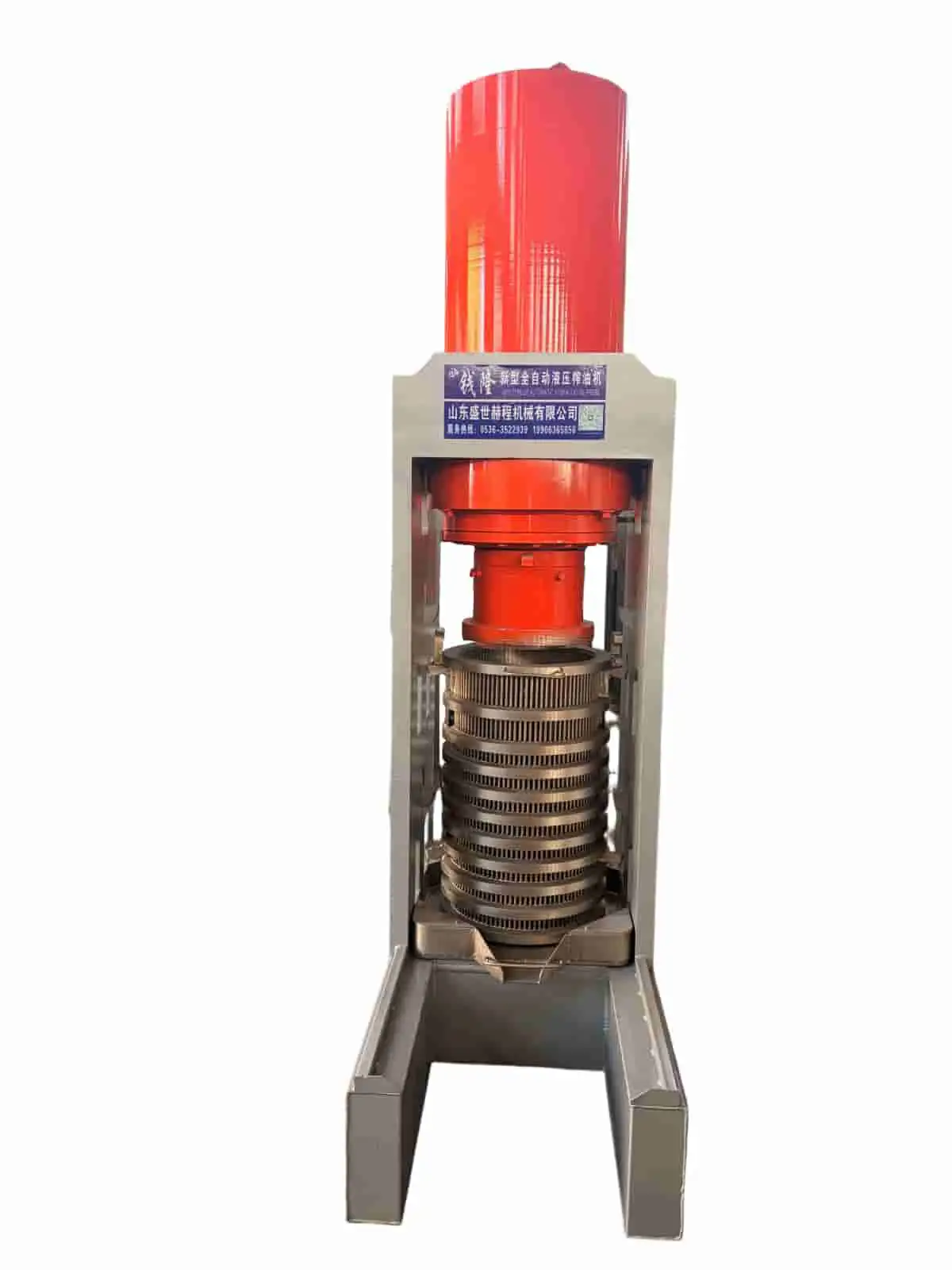
A sunflower oil hydraulic press machine uses static hydraulic pressure — 60 MPa system pressure, translating into 25–89 MPa/cm² of cake surface pressure depending on barrel size — to squeeze pre-treated sunflower kernels (or whole hulled seeds) inside a cylindrical pressing chamber. Unlike a screw expeller that grinds and shears the seed continuously, a hydraulic oil press compresses the oilseed in a single slow stroke, which means lower temperature in the cake, less mechanical damage to the oil, and a cleaner, lighter-colored sunflower oil that holds its natural Vitamin E and linoleic acid.
For sunflower specifically, two pressing routes are common:
- Cold-press route — material temperature kept below 60 °C. Sells as “cold-pressed sunflower oil” at a 30–80% retail premium.
- Hot-press route — kernels roasted to 110–120 °C before pressing. Higher yield, deeper aroma, popular in South Asian and African retail markets.
If you are unsure which route fits your market, our breakdown of cold-pressed vs hot-pressed oil walks through yield, shelf life and price positioning.
Key Technical Specifications for Sunflower Pressing
Sunflower kernels need different prep parameters than sesame or peanut. Get these wrong and your residual oil in the cake will sit above 12% — which is money walking out the door. Use this table as a working spec sheet.
| Parameter | Cold-press value | Hot-press value |
|---|---|---|
| Seed moisture before pressing | 5–7% | 4–6% |
| Pressing temperature | ≤ 60 °C | 105–120 °C |
| Hydraulic system pressure | 60 MPa | 60 MPa |
| Cake surface pressure | 50–89 MPa/cm² | 25–46 MPa/cm² |
| Pressing time per cake | 20–28 min | 15–22 min |
| Typical oil yield (on dry kernel) | 38–42% | 44–48% |
| Residual oil in cake | 9–12% | 6–8% |
| Recommended dehulling | Yes (kernel only) | Optional |
Two practical notes that cost beginners money: sunflower has 35–45% oil content but also 20–25% hull, so dehulling before pressing raises your effective yield by 10–15%. And if you skip the roasting / steaming step on the hot-press route you will lose 3–5 percentage points of yield even with a 630-ton machine. The full prep sequence (cleaning → dehulling → roasting → flaking) is handled by our pre-press support equipment line.
Recommended Machine Models for Sunflower Oil
Shengshi Hecheng makes seven hydraulic oil press models. The model number is a frame code, not the tonnage — please don’t confuse the two when you read the spec sheet. The actual press tonnage and the recommended pressing route are:
| Model | Press tonnage | System pressure | Batch per stroke | Recommended route |
|---|---|---|---|---|
| Model 300 | 300 tons | 60 MPa | 5–100 kg (or 5–60 kg compact) | Hot press |
| Model 325 | 325 tons | 60 MPa | 5–100 kg (or 5–60 kg compact) | Hot press |
| Model 355 | 370 tons | 60 MPa | 5–100 kg | Cold press |
| Model 400 | 410 tons | 60 MPa | 5–100 kg | Cold press |
| Model 426 | 500 tons | 60 MPa | 5–100 kg | Cold press |
| Model 480 | 600 tons | 60 MPa | 5–100 kg | Cold press |
| Model 500 | 630 tons | 60 MPa | 5–100 kg | Cold press |
Daily output depends on batch size and cycle time. A typical sunflower cold-press cycle runs 20–28 minutes, giving roughly 35–60 strokes per day in single-shift operation. So a 50 kg / stroke loading on Model 426 (500 tons) gives 1.7–3.0 t/day of pressed kernel; the same loading on Model 500 (630 tons) reduces residual oil in the cake by about 1–2 percentage points instead of pushing volume.
How to pick:
- Boutique / shop-front cold-pressed sunflower oil (200–400 kg seed/day) — start with our Korean-type small hydraulic press (KHOP-10/15/20KG). Low capex, suitable for retail-shop on-site pressing.
- Small factory, hot-press route (0.5–1.5 t/day) — Model 300 or Model 325 from our hot-pressing series. Pairs with a roaster + steamer for aromatic sunflower oil for the South Asian and African retail market.
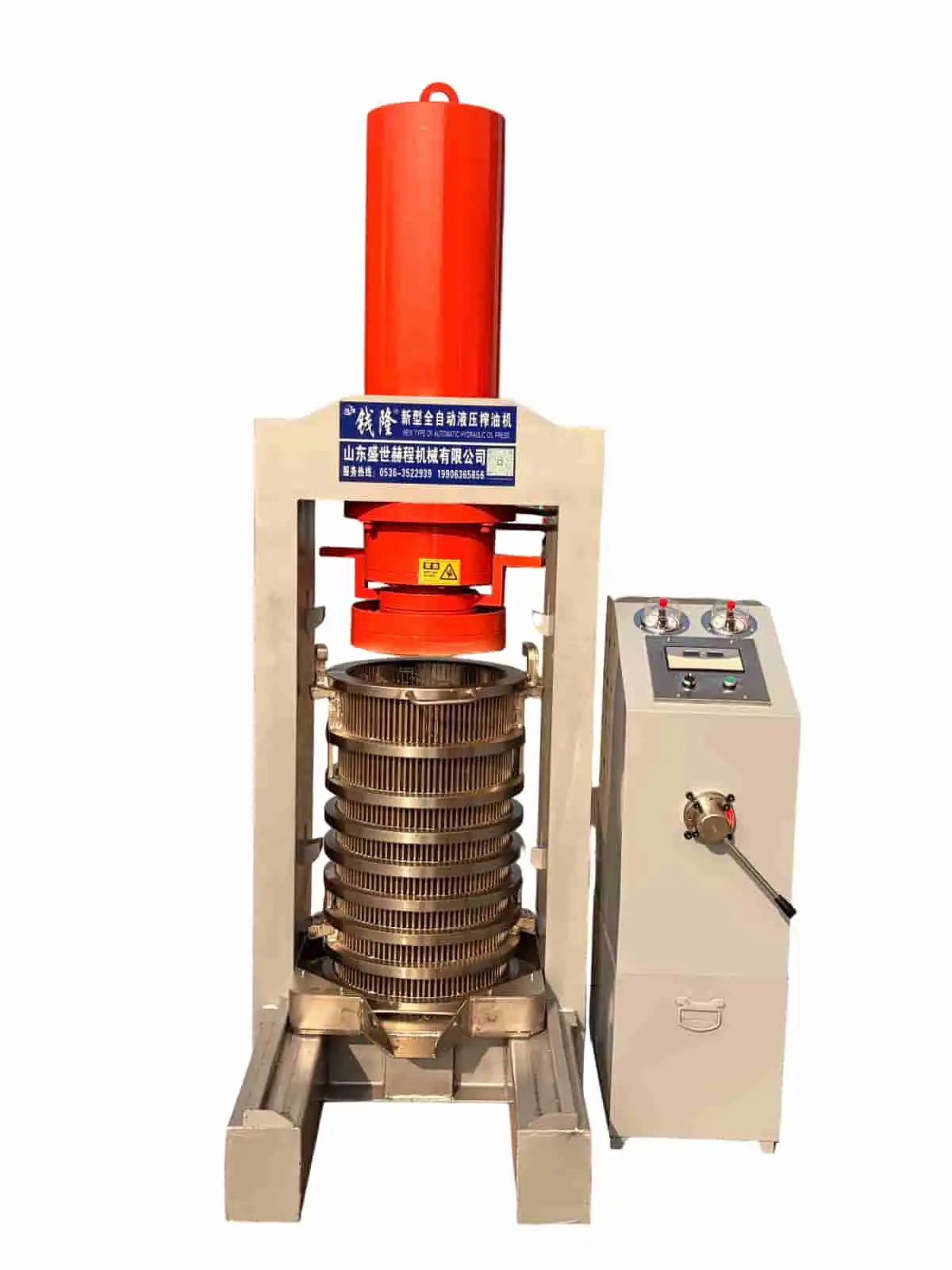
- Mid-scale cold-press brand (1.5–3 t/day) — Model 355 (370 t) or Model 400 (410 t) from the 370–630 ton cold-press series. Best balance of capex and residual-oil rate.
- Industrial cold-press, low residue priority (3–5 t/day, premium brand) — Model 426 (500 t), Model 480 (600 t) or Model 500 (630 t). Higher tonnage on a cold cake brings residual oil down to 8–9% even without warming the seed, which is what you need to compete on yield with a screw expeller while keeping the cold-press label.
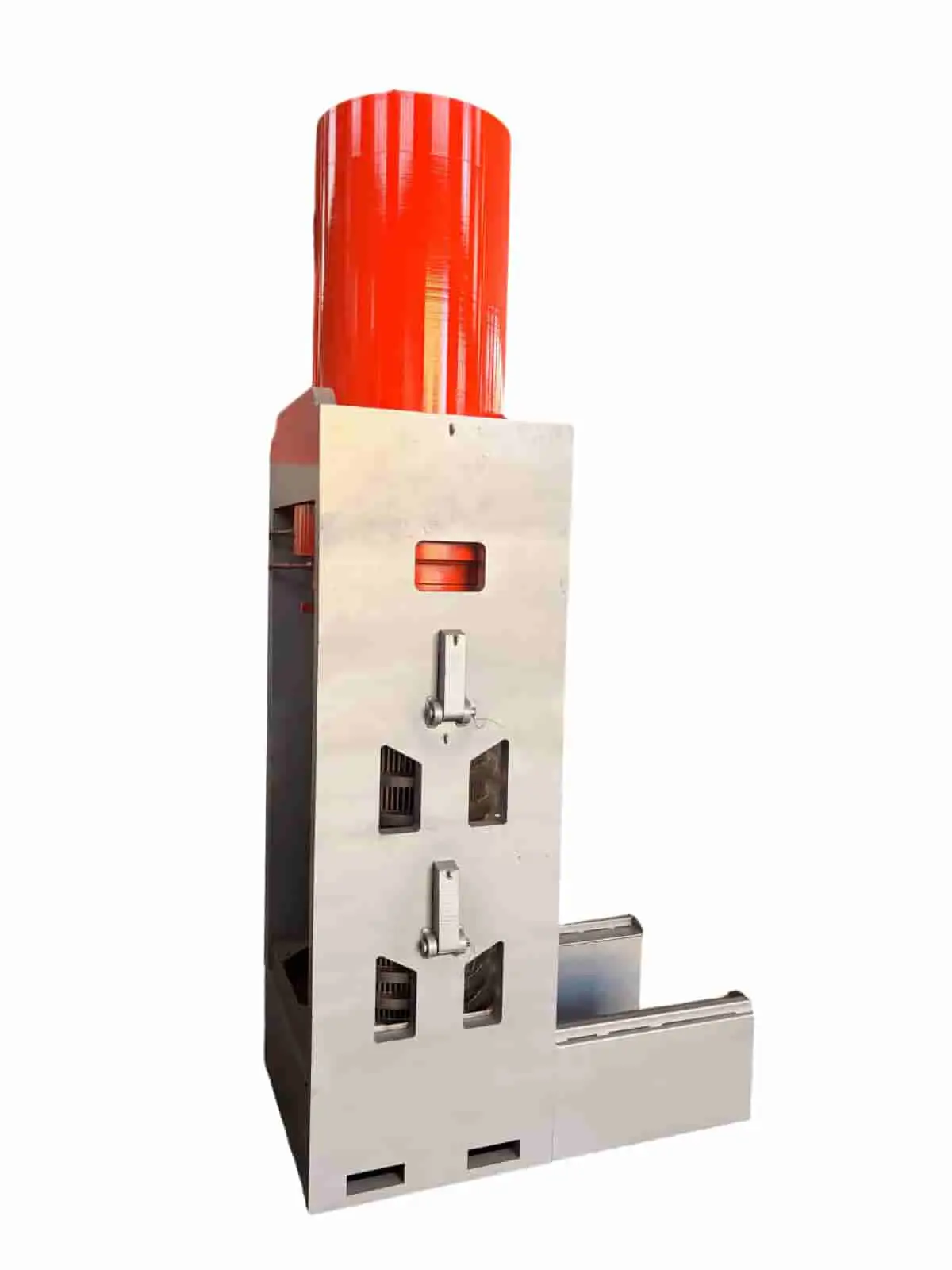
If you’re not sure which one fits your raw material volume and target cake residue, our capacity buyer guide walks you through the math step by step.
Sunflower Oil Production Process Flow
A complete sunflower hydraulic pressing line looks like this:
- Cleaning — remove stones, metal, dust, broken seeds.
- Dehulling — separate hulls from kernels (raises yield by 10–15%).
- Conditioning — adjust moisture to 5–7% (cold) or 4–6% (hot).
- Roasting (hot route only) — bring kernels to 110–120 °C using our automatic drum roaster.
- Flaking — break kernel cell walls so oil releases under pressure.
- Wrapping — form pressing cakes with the cake wrapping machine.
- Hydraulic pressing — 60 MPa system pressure, 15–28 min per stroke.
- Filtration — remove fines and waxes through the oil press filter.
- Optional refining / dewaxing — for retail sunflower oil sold in cold markets, dewaxing prevents cloudy bottles in winter.
- Filling and packaging — handled by our oil filling line.
Customers building a complete plant usually buy the press together with the prep, filter and filling line. We engineer-match the equipment so throughput is balanced — no bottleneck where one stage waits on another.
Cost and ROI for a Sunflower Hydraulic Pressing Line
Pricing depends on tonnage, automation level and how complete the line is. As a working range for sunflower:
| Configuration | FOB price range (USD) | Output |
|---|---|---|
| Single Model 300 press only (300 t) | $5,800 – $8,500 | 0.8–1.2 t/day |
| Model 325 press + roaster + filter | $11,000 – $16,000 | 1.0–1.5 t/day |
| Model 400 (410 t) complete cold-press line | $22,000 – $35,000 | 2–3 t/day |
| Model 426 (500 t) complete line + refining + filling | $55,000 – $90,000 | 4–5 t/day |
| Model 500 (630 t) industrial line + dewaxing | $95,000 – $160,000 | 6–8 t/day |
For a clean walk-through of payback period under different sunflower market prices see our hydraulic oil press ROI analysis. As a rule of thumb on a 2 t/day cold-press sunflower line in a market where retail cold-pressed oil sells at $3.50–$4.50/L, payback runs 8–14 months.
Frequently Asked Questions
Can a hydraulic oil press handle whole sunflower seeds with hulls?
Technically yes, but yield drops by 10–15% and the cake will hold more residual oil. For commercial production we always recommend dehulling first and pressing the kernels only. Hulls can be sold as biomass fuel or animal feed.
What is the difference between hydraulic and screw press for sunflower oil?
Screw presses give higher continuous throughput at lower unit cost but heat the oil to 90–110 °C from friction alone, which makes “cold-pressed” labelling impossible. Hydraulic presses run slower and at lower temperature, producing lighter, longer-shelf-life sunflower oil that retails at a premium. Full comparison: hydraulic vs screw oil press.
How much sunflower oil can I get from 1 ton of kernels?
On a properly tuned hot-press hydraulic line, 440–480 kg of crude oil per ton of dehulled kernel. On the cold-press route, 380–420 kg/ton. Add 5–8% loss for filtration and you arrive at sellable oil volume.
Do I need to refine sunflower oil after hydraulic pressing?
For cold-pressed retail oil sold within 6 months, filtration is enough. For longer shelf life, bulk supply, or markets where consumers expect clear oil even in winter, a small refining + dewaxing unit is recommended. We integrate this with the same line on request.
What is the lead time and shipping arrangement?
Standard models: 15–25 working days production, plus sea freight (20–45 days depending on destination). We support FOB Qingdao, CIF and DAP, and arrange installation guidance via video call or on-site engineer for orders above $30,000.
Can the same machine press both sunflower and peanut / sesame later?
Yes — the press itself is oilseed-agnostic. You only need to switch the cake plate diameter and adjust the prep parameters (roasting temperature, moisture). Many of our customers run sunflower in season and switch to peanut or sesame off-season on the same machine.
Why Choose Shengshi Hecheng
- 15 years of focused hydraulic oil press manufacturing in Shandong, China
- 3,000+ machines delivered to 125+ countries
- Seven press models from Model 300 (300 t) up to Model 500 (630 t), plus complete supporting equipment
- Engineering team that designs the full line — pressing, filtering, refining, filling — as one balanced system
- Factory-direct pricing, no trader markup
- English / Russian / French / Vietnamese / Bengali sales support
Already running a sunflower processing plan or planning your first line? Tell us your daily kernel volume, target route (cold or hot) and shipping destination — we’ll come back within 24 hours with a model recommendation, layout drawing and FOB quote.
Request a Quote for Your Sunflower Oil Hydraulic Press →
Related Reads
Project planning
Configure the right oil press and production line
Send your oilseed, target output, bottle or packaging requirements, power supply, and destination country. We will match the machine, supporting equipment, and line layout.